
Where the Familiar Ends, Aman Leads Us Further
There are journeys that begin with a departure.
And then there are journeys that begin when the familiar disappears.
Beyond Bali’s eastern shores, the Indonesian archipelago begins to change character. The resorts become fewer, the islands more distant, and the sea assumes a deeper, more elemental presence. The landscape no longer feels arranged for the traveller. It feels as though the traveller has been allowed, briefly, into a world that existed long before anyone thought to name it.
This is where the second chapter of Aman’s story begins.
In the closing pages of our first chapter, the horizon opened towards Moyo Island—a place of forest, reef and open water, far removed from Bali’s celebrated coastline.
There, Amanwana waits beneath the canopy.
From Indonesia, the journey turns towards Java, where an ancient Buddhist monument rises above the Kedu Valley. From there, it moves north into Bhutan, across a chain of Himalayan valleys where pilgrimage, architecture and landscape remain inseparable. Sri Lanka follows, first through the stone walls and colonial grandeur of Galle Fort, then towards a quieter southern coastline.
And eventually, the geography changes completely.
The palms disappear.
The ocean gives way to sandstone.
In southern Utah, Aman finds another expression of solitude—one written not in tropical foliage or ancient temples, but in canyon walls, desert light and immense expanses of stone.
This is Aman hotels beyond the horizon.
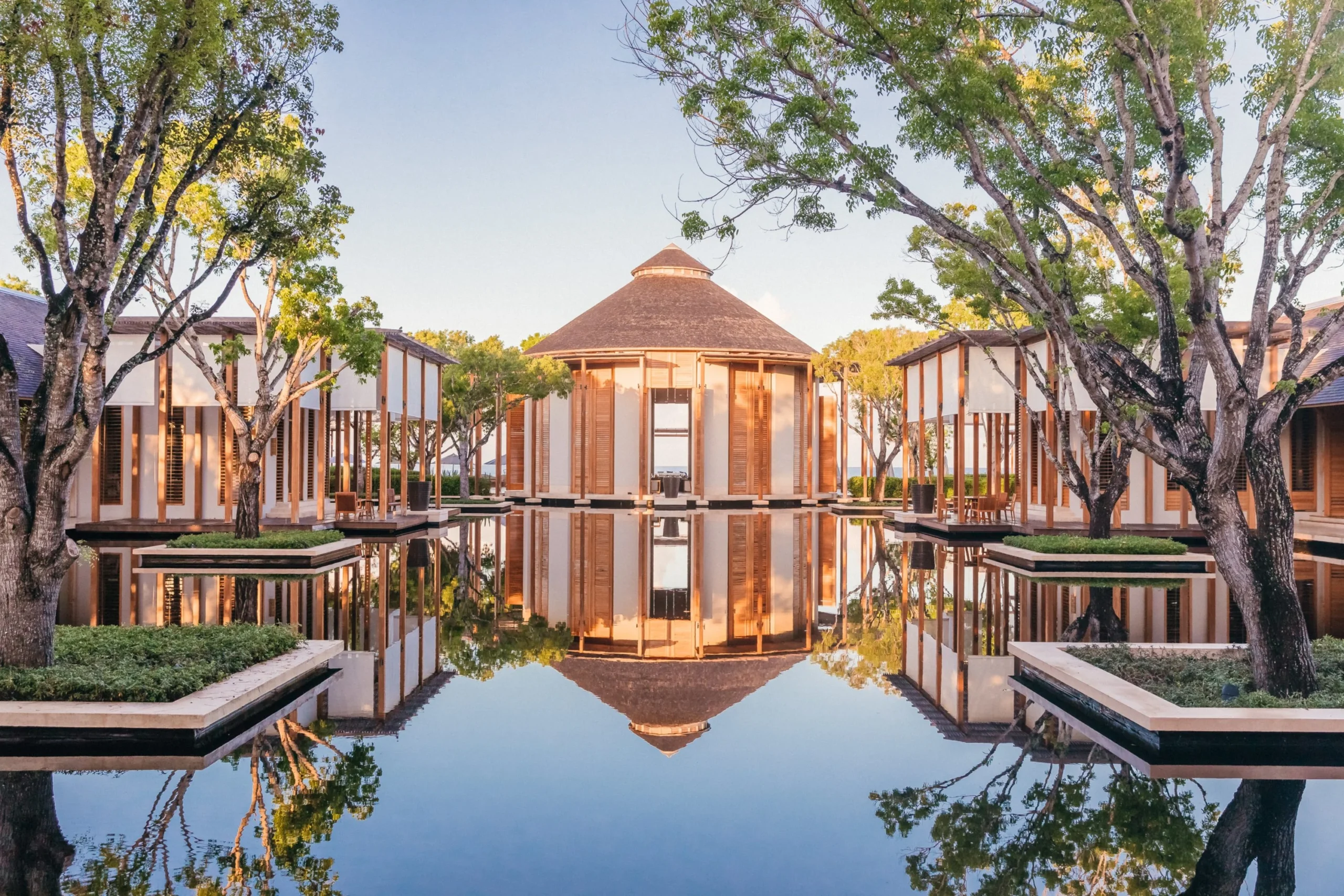
Amanwana — Moyo Island, Indonesia
Where the Sea Becomes the Landscape
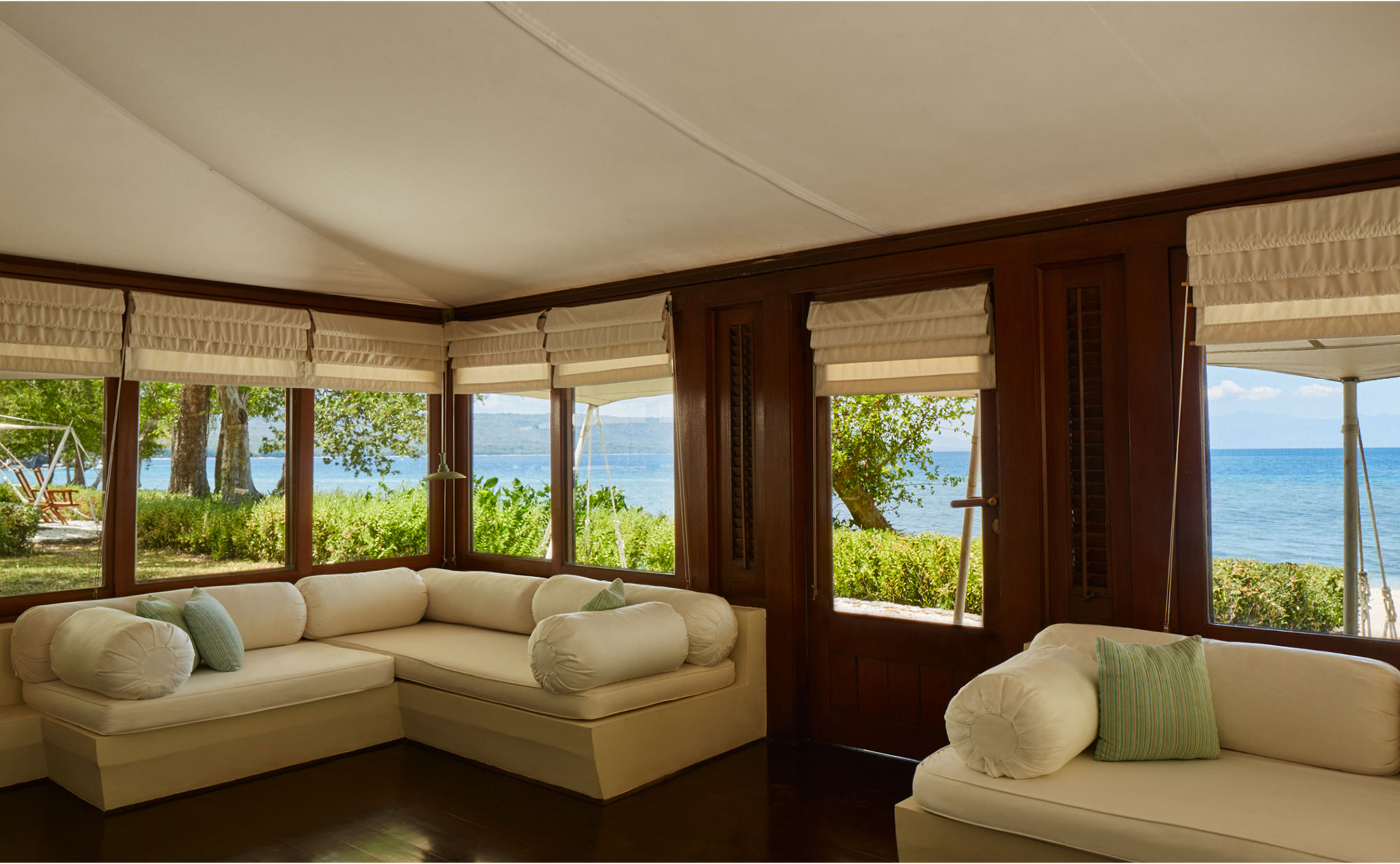
The journey from Bali to Moyo Island is not merely a transfer between two destinations.
It is a gradual withdrawal from the familiar.
After flying from Bali to Sumbawa Besar, the final approach continues by road to a private jetty, followed by a 45-minute speedboat journey across the Flores Sea. By the time Amanwana appears, the ordinary architecture of travel has almost completely disappeared.
There are no city streets waiting beyond the arrival point.
No procession of buildings.
Only the island.
Amanwana occupies a beach-fringed bay on Moyo Island, within Moyo Satonda National Park, where dense tropical vegetation meets the waters of the Flores Sea. The camp consists of just 17 luxury tents, allowing the surrounding landscape to remain the dominant presence rather than the backdrop.
The name itself suggests something elemental: a place where the distinction between accommodation and wilderness becomes deliberately thin.
Here, mornings belong to the sea.
The water around Moyo is known for its coral reefs and marine life, while the surrounding island offers jungle trails, waterfalls and a landscape that rewards those willing to leave the shoreline behind. Aman highlights opportunities for scuba diving and snorkelling, as well as encounters with whale sharks in the Flores Sea.
Yet the real attraction of Amanwana is not any single experience.
It is the accumulation of small encounters.
A boat cutting through glassy water.
The sound of the forest beyond the tent.
Salt drying slowly on sun-warmed skin.
A horizon with nothing built upon it.
The camp was established in 1993, when Aman began its relationship with Moyo Island. The island had already been protected as a nature reserve since 1976, and Aman’s creation of the camp was tied to an agreement that its ecosystem would remain unharmed.
That history matters.
Because at Amanwana, remoteness is not an aesthetic applied to the property. It is the defining condition of the place.
The tents sit within that condition rather than attempting to overpower it.
The Luxury of Being Somewhere Else
Amanwana is particularly compelling for travellers who regard distance itself as part of the experience.
The journey requires intention. The island does not happen to be on the way to somewhere else.
It is somewhere else.
And that distinction changes the atmosphere completely.
Days can unfold around diving and snorkelling, jungle exploration, boat journeys and quiet hours beside the sea. The property can also be reserved as a private camp for bookings of eight tents or more, turning the remote setting into an unusually intimate island escape.
There is something almost cinematic about that degree of separation.
Not because Amanwana attempts to create theatre.
But because the landscape requires none.
Amanjiwo — Central Java, Indonesia
Where Borobudur Rises Through the Mist
From the marine wilderness of Moyo Island, the journey moves towards one of Southeast Asia’s most extraordinary cultural landscapes.
Central Java.
Here, the sea recedes and the land becomes older.
Volcanic mountains shape the horizon. The Kedu Valley stretches through fertile countryside. And beyond Amanjiwo, the silhouette of Borobudur emerges as one of the defining presences of the landscape.
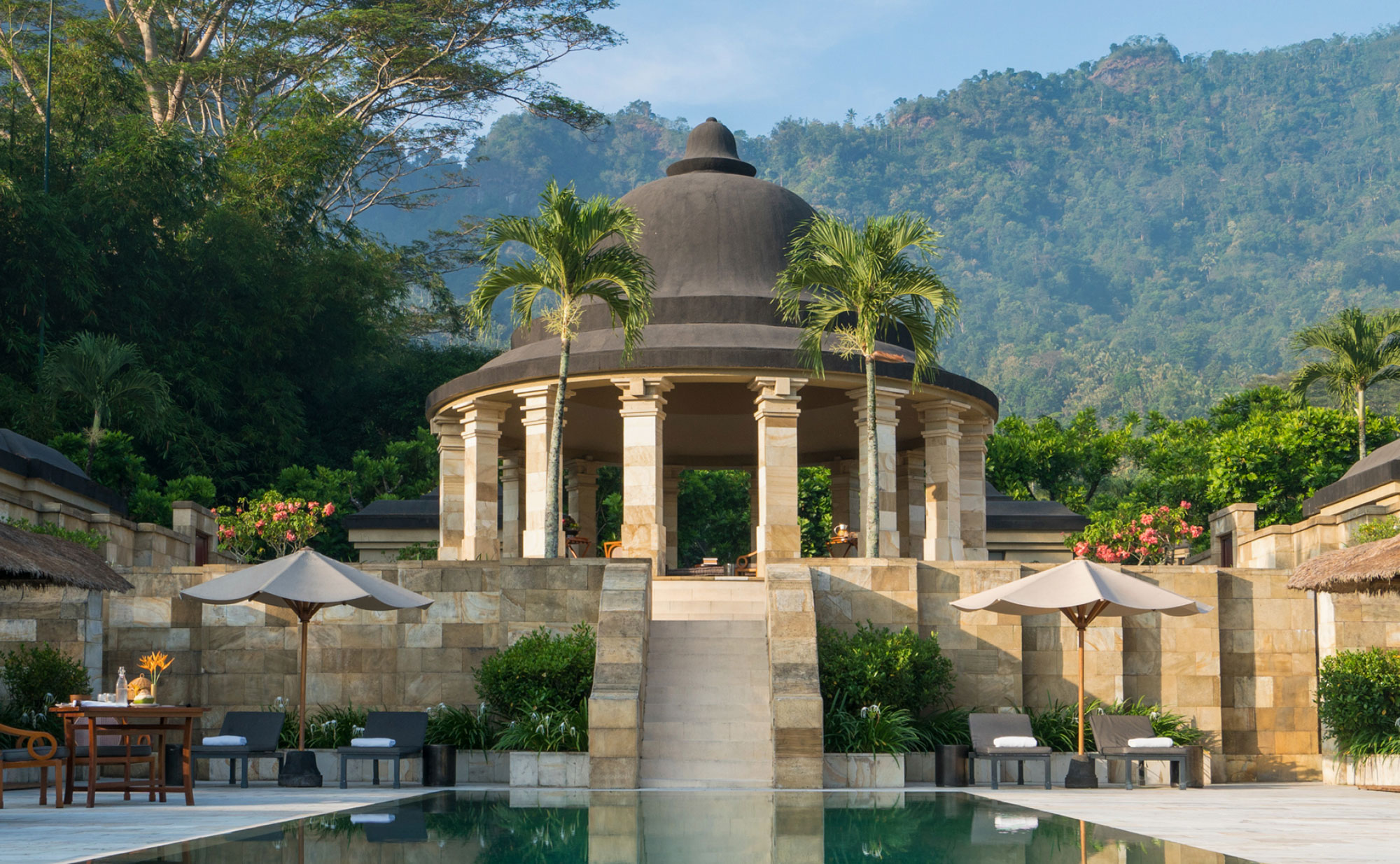
Amanjiwo takes its name from two Sanskrit-derived words interpreted by Aman as “Peaceful Soul.” The property overlooks Borobudur, the UNESCO World Heritage Site and one of the world’s largest Buddhist temple complexes.
But what makes Amanjiwo remarkable is not simply its proximity to the monument.
It is the way the architecture acknowledges it.
The resort cascades down the hillside from a lofty circular rotunda towards its pool, with two graceful crescents of pavilions extending from the central structure. The arrangement creates a visual relationship between architecture and the landscape, allowing Borobudur and the surrounding volcanic terrain to remain part of the experience.
At Amanjiwo, the view is not decoration.
It is narrative.
A Temple, a Valley, and Centuries of Memory
Borobudur is one of those places that changes depending on the hour.
At dawn, mist can gather across the valley. The surrounding volcanic landscape becomes softer, almost dreamlike, before the rising sun begins to separate stone from shadow.
Amanjiwo’s location makes it possible to encounter this setting with unusual intimacy.
One of the property’s featured experiences is sunrise meditation at Borobudur, joining a meditative Pradakshina procession associated with local monks. The experience places the traveller not simply before the monument, but within a living tradition of movement and contemplation.
This distinction is important.
Amanjiwo does not treat Java as an open-air museum.
The surrounding region is alive with craft, ritual, food, agriculture and religious traditions. Guided temple visits, hikes, blessing ceremonies, local dining and cultural experiences form part of the property’s current programme.
Even wellness takes its cues from the landscape.
Amanjiwo’s spa treatments draw upon traditional Javanese healing and beauty rituals, connecting contemporary restoration with practices that have travelled through generations.
A View That Becomes Part of the Stay
The accommodation follows the same restrained architectural language.
Pavilions are arranged in two crescents around the Rotunda, opening onto private terraces and views across the surrounding countryside. The two-bedroom Villa Amanjiwo goes further, with expansive private living spaces, a pool and uninterrupted views towards Borobudur.
But the defining room at Amanjiwo may be the landscape itself.
At sunrise, the temple appears almost suspended between earth and sky.
By afternoon, the valley becomes intensely green.
And towards evening, the volcanic terrain takes on the muted colours of old stone and fading light.
Amanjiwo is a place where architecture does not compete with history.
It frames it.
Amankora — Bhutan
Five Valleys, One Journey
There are destinations where the hotel is the destination.
Bhutan asks for something different.
Here, the road itself becomes part of the experience.
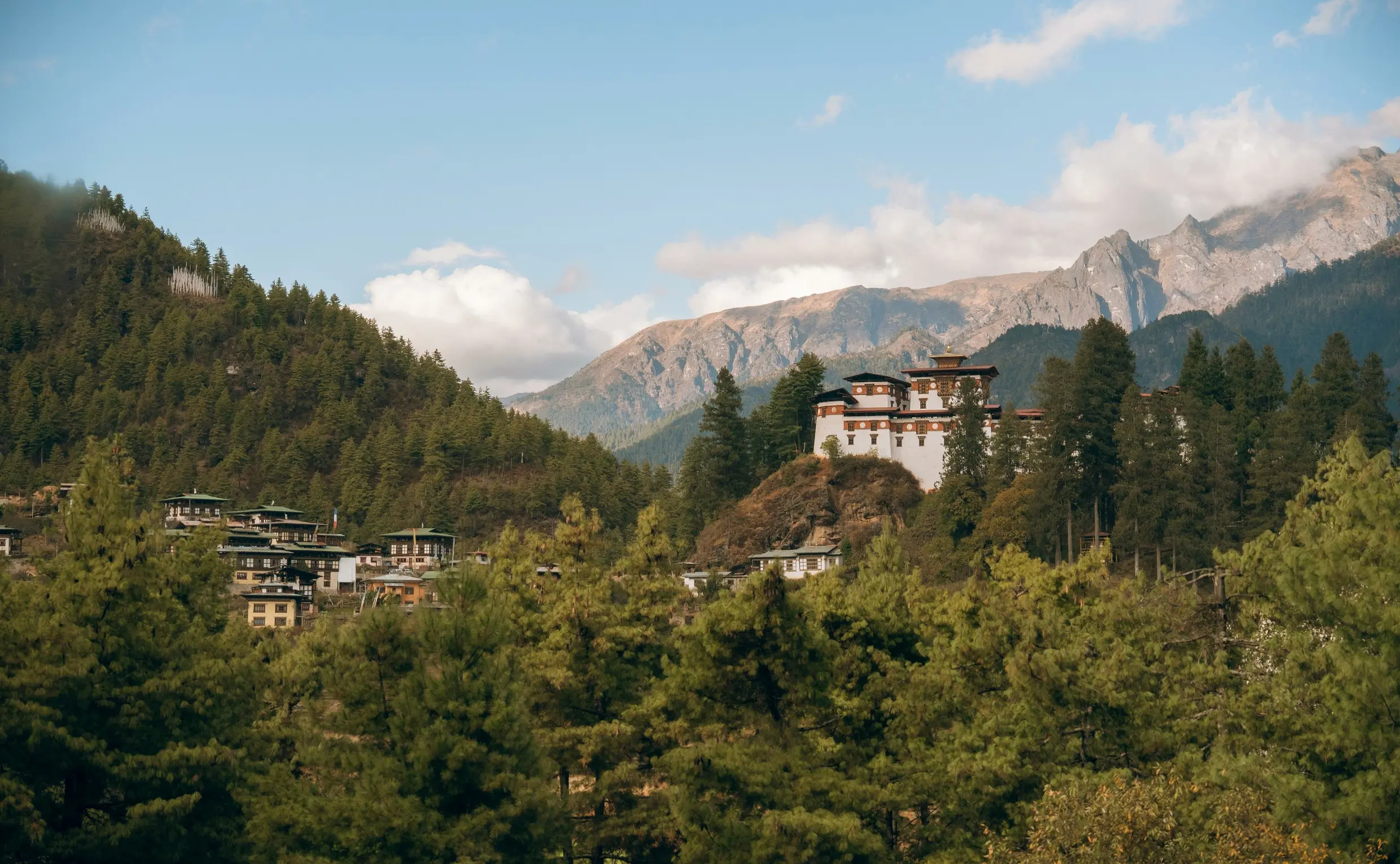
Amankora is not one lodge but a collection of five, positioned across the valleys of Paro, Thimphu, Punakha, Gangtey and Bumthang. Together, they form a journey through different landscapes and cultural regions of Bhutan.
The idea is rooted in the Dzongkha word kora—a pilgrimage or circumambulation.
That idea gives Amankora its distinctive character.
Instead of arriving at one beautiful place and remaining there, the traveller moves through the country itself.
Valley by valley.
Monastery by monastery.
Landscape by landscape.
Paro — The Beginning
In Paro, the lodge sits among pine forests, with 24 suites, a two-storey spa and a glass-walled yoga studio. Its location provides access to some of the valley’s most important cultural landmarks, including the celebrated Tiger’s Nest.
The experience begins quietly.
Pine trees frame the mountains. Prayer flags move with the wind. The architecture remains unmistakably Bhutanese without feeling theatrical.
And somewhere above the valley, Taktsang Monastery clings to its mountainside.
The ascent towards it is less about reaching a landmark than understanding the geography of Bhutan itself: steep, wooded, spiritual and profoundly vertical.
Thimphu — The Capital in the Forest
Thimphu introduces another rhythm.
Bhutan’s capital has its own energy, yet Amankora Thimphu remains tucked within forested surroundings in the Motithang area. The lodge has 16 suites and is designed in the style of a traditional dzong fortress.
The contrast is subtle.
A capital city nearby.
Forest immediately outside.
The possibility of entering Bhutanese urban life and then retreating into silence within minutes.
Punakha — Rice Fields and River Valleys
Further east, the landscape opens.
Punakha Lodge is housed within a 300-year-old farmhouse near Punakha Dzong, with views over rice paddies and the valley below. Its eight suites create an intimate setting within one of Bhutan’s most evocative agricultural landscapes.
Here, the relationship between architecture and place becomes especially tangible.
The old farmhouse is not merely preserved as a decorative gesture.
It belongs to the landscape.
The surrounding fields give the lodge a sense of agricultural continuity, while Punakha Dzong remains one of the defining cultural landmarks of the region.
Gangtey — The High Valley
Gangtey changes the scale once again.
The lodge overlooks Gangtey Goemba and sits among rural farmland and hiking trails. Its eight suites face the valley, where the landscape feels wider, quieter and more exposed to the changing Himalayan weather.
The valley is also associated with the rare black-necked cranes that migrate to Bhutan.
Here, nature is not a backdrop to the stay.
It is part of the calendar.
Bumthang — Bhutan’s Spiritual Heartland
The final lodge lies in Bumthang, adjacent to the Royal Wandichholing Palace.
With 16 suites, the lodge provides access to monasteries, temples and the spiritual traditions of one of Bhutan’s most culturally significant regions.
By the time the journey reaches Bumthang, Amankora’s concept becomes clear.
The five lodges are not five variations of the same hotel.
They are five chapters of one geographical story.
Amankora’s own history reflects that ambition. The first lodge sites were acquired in 2000, with architect Kerry Hill appointed to realise Aman’s vision. The circular route was completed in 2007 with the opening of the Bumthang Lodge, connecting five valleys into a single journey.
It is one of the rare Aman experiences where movement is essential to the story.
The destination is Bhutan itself.
The lodges simply give the journey a place to rest.
Amangalla — Galle, Sri Lanka
Behind the Walls of Galle Fort
From the mountains of Bhutan, the journey descends towards the Indian Ocean.
Sri Lanka introduces another kind of historical atmosphere.
Here, the past is not isolated in a temple or archaeological site.
It lives within the streets.
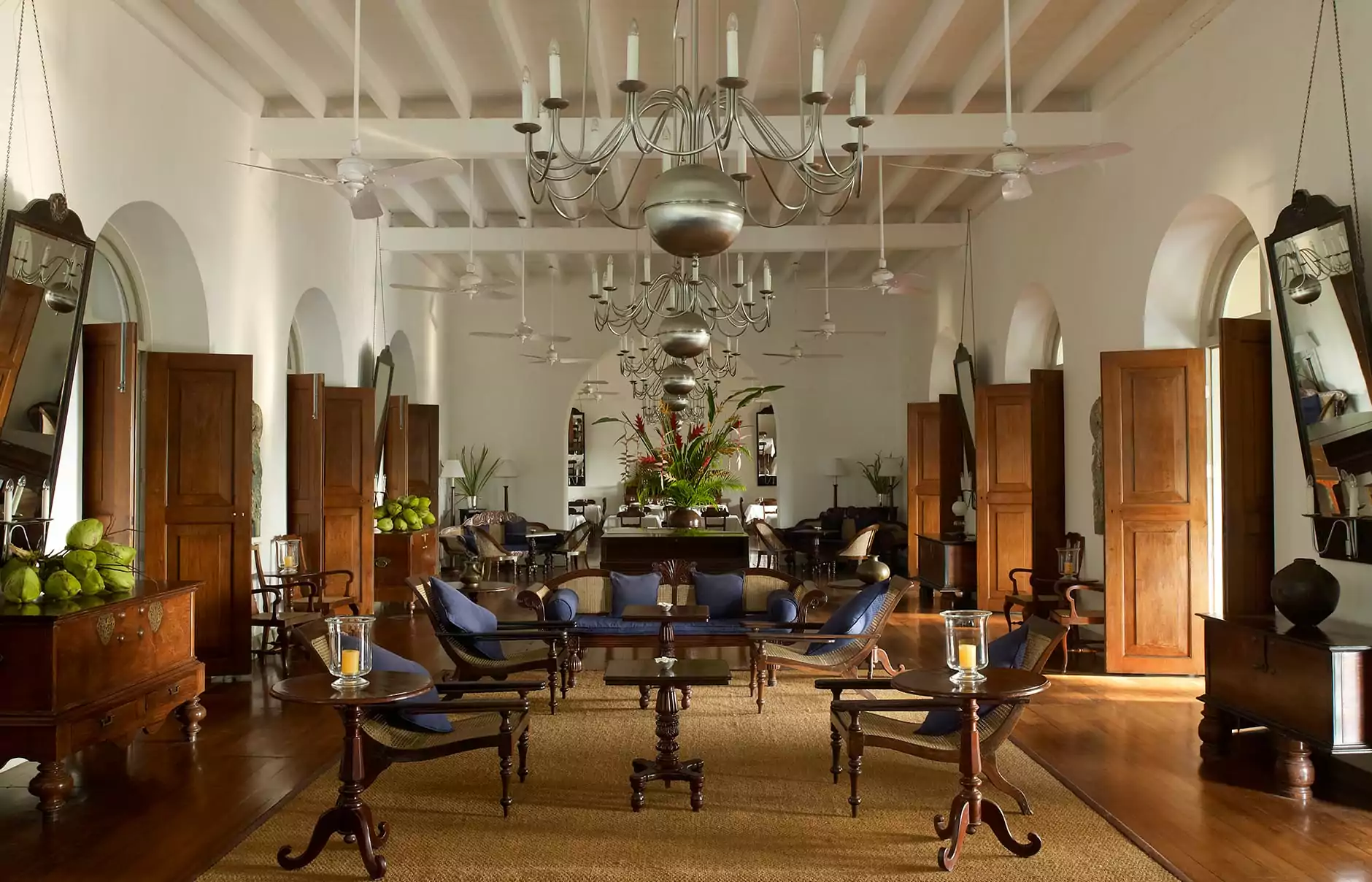
Amangalla occupies a historic residence inside the ramparts of 17th-century Galle Fort, a UNESCO World Heritage Site. From the property, the Fort and harbour unfold in one direction, while gardens and the swimming pool create a quieter interior world in the other.
The first impression is architectural.
High ceilings.
Original wooden floors.
Tall sash windows.
Four-poster beds.
A sense of proportion that belongs to another era.
Amangalla does not need to manufacture atmosphere.
The building already possesses it.
The Romance of Another Century
There is a particular pleasure in walking through Galle Fort early in the morning.
The streets are narrow.
Old houses sit beside churches, boutiques and restaurants.
The walls look towards the sea.
And throughout it all, the layers of Sri Lanka’s colonial history remain visible in the architecture.
Amangalla places the traveller directly inside this historic environment.
Its Dining Room, with white linen and chandeliers, opens onto a veranda overlooking Church Street, while the Aman Spa introduces Ayurveda and hydrotherapy within the old residence.
The contrast is beautiful.
Outside, Galle is a living historic quarter.
Inside, Amangalla becomes a quieter interpretation of the same heritage.
The Fort as a Living Experience
The most memorable experience here may require no elaborate itinerary.
It may simply be stepping through the gates and walking.
Past old walls.
Past courtyards.
Past buildings whose proportions still carry traces of another age.
Past the harbour where the history of Galle was shaped by trade and the movement of people across the Indian Ocean.
Amangalla works because it understands that history should not always be explained.
Sometimes it should be inhabited.
Amanwella — Tangalle, Sri Lanka
Where the Island Opens to the Ocean
If Amangalla is defined by walls, Amanwella is defined by what lies beyond them.
The journey south from Galle leads towards Tangalle, where the landscape becomes greener, the coastline more expansive and the Indian Ocean takes over the horizon.
Amanwella sits on Sri Lanka’s southern coast, reached by a winding track through jungle before the landscape opens onto a broad stretch of golden sand bordered by coconut palms.
The architectural language changes completely.
There are no historic corridors here.
No colonial ceilings.
No fortified walls.
Instead, Amanwella is contemporary and elemental.
Open.
Horizontal.
Ocean-facing.
Each of its contemporary suites has a private plunge pool and a sea-facing terrace with dining space and sun loungers.
The effect is immediate.
The architecture steps back.
The coastline takes command.
A Southern Coast With Room to Breathe
Amanwella is especially compelling because of what surrounds it.
The resort provides access not only to the beach but also to temples, tea-growing regions and national parks. Aman currently highlights wildlife experiences within approximately 1.5 hours of the resort, allowing a stay here to combine coastal life with encounters in Sri Lanka’s wildlife-rich interior.
That juxtaposition gives the southern coast its character.
A morning can begin beside the Indian Ocean and end among the island’s forests.
A long lunch can become an afternoon of swimming.
A day of exploration can dissolve into the sound of waves after sunset.
And unlike the architectural richness of Galle, Amanwella’s beauty is deliberately stripped back.
The emphasis is on proportion, light and horizon.
The Fort and the Beach
Aman offers a particularly elegant way to experience both sides of southern Sri Lanka through its Fort & Beach journey, combining Amangalla and Amanwella.
It is an itinerary of contrasts.
Stone and sand.
History and horizon.
Urban heritage and coastal wilderness.
Amangalla asks you to look backwards.
Amanwella asks you to look towards the sea.
Together, they reveal how dramatically one island can change within a relatively short distance.
Amangiri — Utah, United States
Where Architecture Meets the Desert
And then the colour changes.
Green gives way to ochre.
Palm trees disappear.
The ocean is replaced by immense skies and sandstone.
The journey has reached the American Southwest.
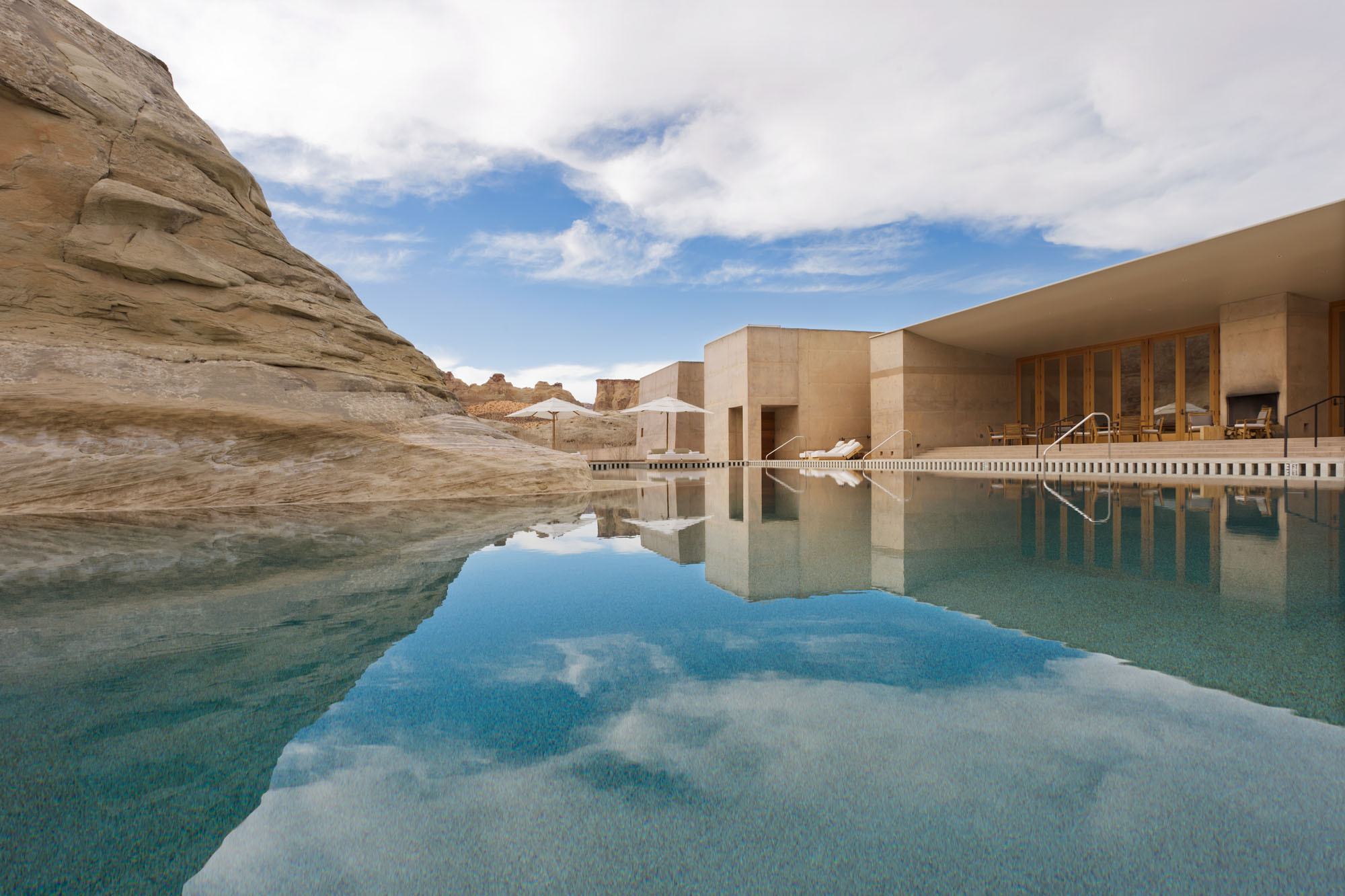
In southern Utah, within the vast landscape of the Colorado Plateau, Amangiri occupies more than 900 acres of desert terrain. Its architecture is deliberately integrated into the canyon country around it, while its 34 modernist suites, Aman Spa and central pool create a composed counterpoint to the surrounding rock formations.
This is perhaps one of the clearest examples of Aman using architecture to interpret its setting rather than conceal it.
The desert does not sit outside the resort.
It enters the design.
Light moves across stone.
Shadows lengthen across concrete.
The geometry of the buildings responds to the severe simplicity of the landscape.
Nothing needs to be softened.
The Desert as Architecture
Amangiri is difficult to understand through photographs alone.
The desert has a scale that photography often compresses.
Standing within it is different.
The rock formations seem almost impossibly large. The sky feels closer and farther away at the same time. Colours shift constantly with the sun.
Amangiri responds with restraint.
Its 34 suites frame the surrounding dunes, plateaus and ridges, while the central pool is embraced by the mesa landscape.
The effect is architectural, but never ornamental.
Stone.
Concrete.
Light.
Water.
Sky.
The vocabulary is deliberately limited because the landscape requires very little assistance.
Camp Sarika
Beyond the main resort lies another interpretation of the same wilderness.
Camp Sarika at Amangiri consists of ten tented pavilions, each with its own private plunge pool. The camp offers a more intimate relationship with the desert and a distinctly adventurous character.
Here, the experience moves closer to the landscape.
The day belongs outdoors.
The evening belongs to firelight and the changing colours of the canyon country.
And the night reveals a sky that feels almost exaggerated in its scale.
Amangiri’s surroundings are part of what gives the property its identity. The resort is positioned within one of the most visually distinctive regions of the American Southwest, with opportunities for exploration across the surrounding canyon country. Aman describes the property as a base for discovery as much as a retreat in its own right.
That distinction matters.
Amangiri is not attempting to domesticate the desert.
It is asking the traveller to encounter it.
Beyond the Horizon
From Moyo Island to Central Java.
From the Himalayan valleys of Bhutan to the ancient walls of Galle.
From Sri Lanka’s southern coast to the sandstone country of Utah.
The geography has changed almost completely.
Yet the thread connecting these places is not a particular architectural style, colour palette or resort format.
It is the relationship between the property and the world around it.
At Amanwana, the island remains wild.
At Amanjiwo, Borobudur remains the great visual and spiritual presence.
At Amankora, the journey through Bhutan becomes inseparable from the five lodges.
At Amangalla, the history of Galle Fort becomes part of everyday life.
At Amanwella, the architecture recedes towards the ocean.
And at Amangiri, the desert becomes almost architectural in its own right.
Perhaps this is where Aman becomes most interesting.
Not in the rooms themselves.
Not even in the service.
But in the decision to let each destination dictate what the experience should become.
There is no single Aman landscape.
There is only the landscape that exists when the doors open.
A coral-fringed island.
A Javanese valley.
A Himalayan monastery.
A fortified coastal city.
A palm-lined beach.
A canyon carved by geological time.
Each asks something different of the traveller.
And each leaves something different behind.
The first chapter of this journey began with the origins of Aman and followed its evolution through Asia, from Phuket to Tokyo, Kyoto and Bali.
This chapter has taken us farther from the familiar.
Into places where distance becomes part of the experience and where the landscape is not merely something to look at, but something that shapes the entire stay.
Yet the map is far from complete.
There are still cities where Aman occupies the spaces between contemporary design and centuries-old culture.
There are Mediterranean shores where architecture meets another kind of history.
There are urban sanctuaries hidden behind the rhythm of some of the world’s great cities.
And there are landscapes where Aman has created retreats so closely tied to their surroundings that the boundary between hotel and destination almost disappears.
The story, therefore, does not end in the Utah desert.
It simply changes direction.
Perhaps the most beautiful journeys are the ones that leave something unfinished—not because the story has ended, but because somewhere beyond the horizon, another place is waiting to become part of it. And this story, like every journey worth taking, is not yet over.
See you soon.
Missed the beginning of the journey?
Read Chapter I — The Origins of Peace and discover where the Aman story first began.

