There are destinations one travels to, and there are destinations one remembers long after the journey has ended.
Sicily belongs to the latter.
Suspended between Europe and North Africa, Sicily has always occupied a world of its own. Its shores have welcomed empires, its cities have absorbed centuries of influence, and its landscapes continue to carry the marks of those who came before. Greek temples stand beneath an intensely blue Mediterranean sky; Baroque façades glow in the late afternoon sun; vineyards rise across volcanic slopes; and ancient villages appear almost untouched above the sea.
Yet Sicily’s allure lies in more than its extraordinary history.
It is found in the quiet details.
A terrace overlooking the Ionian Sea as Taormina slips into evening. The scent of citrus carried through the streets of Palermo. The warm, honeyed stone of Noto beneath the fading light. A glass of Etna wine poured among vineyards on volcanic soil. A private boat disappearing beyond the coast as the afternoon sun turns the Mediterranean silver.
This is an island where beauty rarely announces itself.
It reveals itself slowly.
From the grandeur of Palermo to the timeless elegance of Taormina, from the Baroque poetry of Noto to the ancient soul of Syracuse, Sicily unfolds through a succession of landscapes and experiences that feel deeply connected to place.
Beyond the mainland, the Aeolian Islands rise from the Tyrrhenian Sea—seven volcanic worlds shaped by wind, fire and water. On Stromboli, the presence of the volcano becomes almost theatrical. On Salina, vineyards and gardens descend towards the sea. On Panarea, Mediterranean glamour takes on a more intimate expression.
And above eastern Sicily stands Mount Etna, immense and elemental.
Its volcanic slopes have shaped not only the geography of the island, but its vineyards, cuisine and traditions. Here, ancient soil and contemporary refinement exist naturally alongside one another.
Sicily does not lend itself to hurried travel.
It rewards those who linger.
Those who take the longer road.
Those who leave room for an afternoon without an itinerary, a lingering dinner, an unexpected village, or a sunset that deserves to be watched until the very last light disappears.
Because the true luxury of Sicily is not found in excess.
It is found in time, in beauty, and in the privilege of experiencing both without hurry.
Taormina: An Elegance Suspended Above the Ionian Sea
Few places embody the romance of Sicily as effortlessly as Taormina.
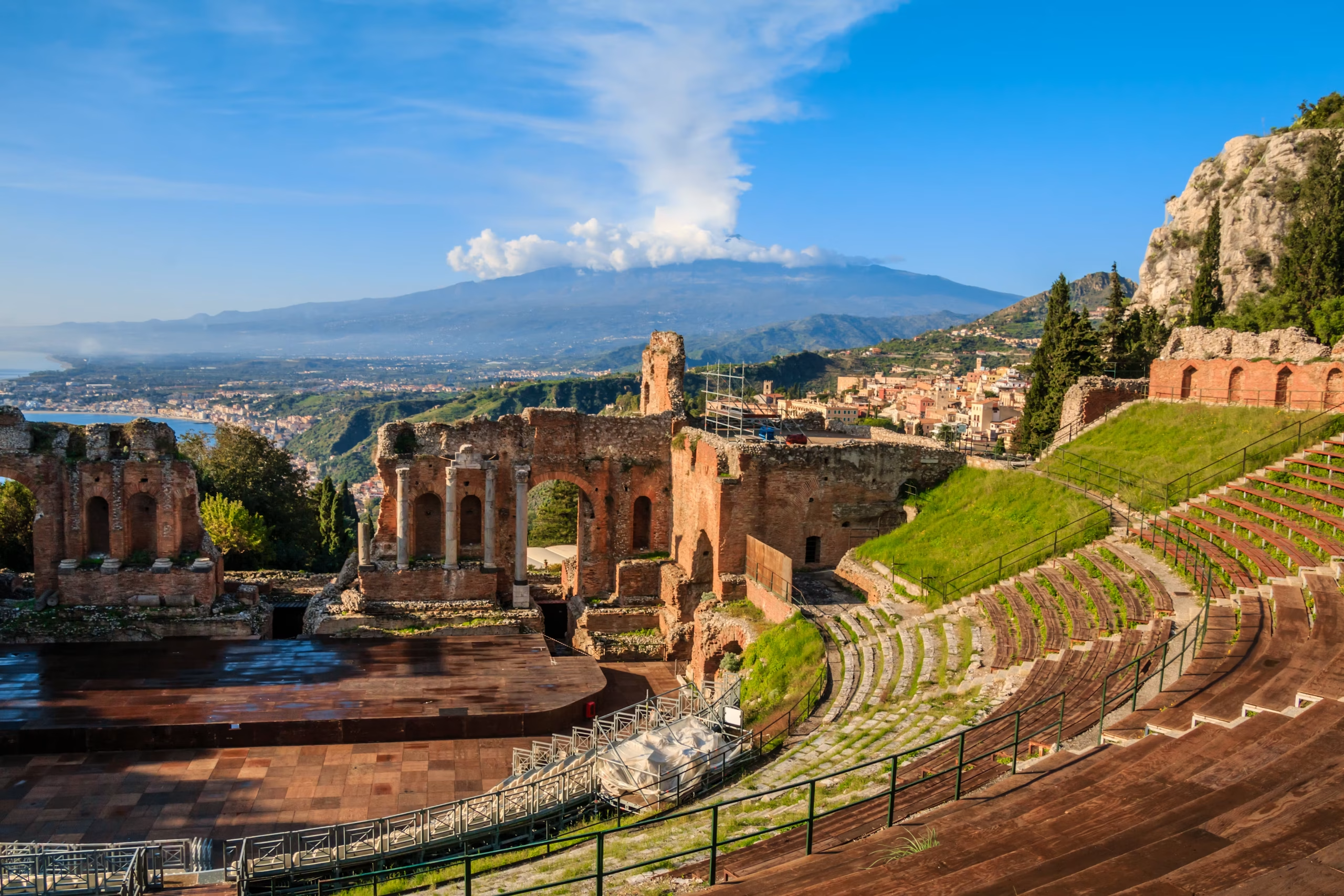
Perched high above the Ionian coast, the town seems almost composed for the imagination: ancient stone, flowering terraces, elegant palazzi and the distant silhouette of Mount Etna meeting the sea.
At its centre stands the Ancient Theatre of Taormina, one of Sicily’s most evocative monuments. Its weathered stone frames an extraordinary panorama of the coastline, with Etna rising beyond it. Here, history is not confined to a museum. It exists in the open air, surrounded by light, sea and mountains.
Stroll along Corso Umberto, the town’s principal promenade, but allow yourself to wander beyond it. The real pleasure of Taormina lies in its quieter lanes, small piazzas, hidden courtyards and stairways that suddenly reveal the sea.
Below the town, Isola Bella rests in the clear waters of the Ionian Sea, a small island connected to the shore by a narrow strip of beach. The surrounding coastline invites a slower kind of exploration—ideally from the water, where the cliffs and terraces of Taormina take on an entirely different scale.
As evening arrives, Taormina becomes softer. The crowds begin to recede, the façades take on warmer tones, and the sea below becomes a dark blue horizon.
This is when the town feels most itself.
Palermo: A City of Civilisations
If Taormina expresses Sicily through elegance, Palermo reveals it through complexity.
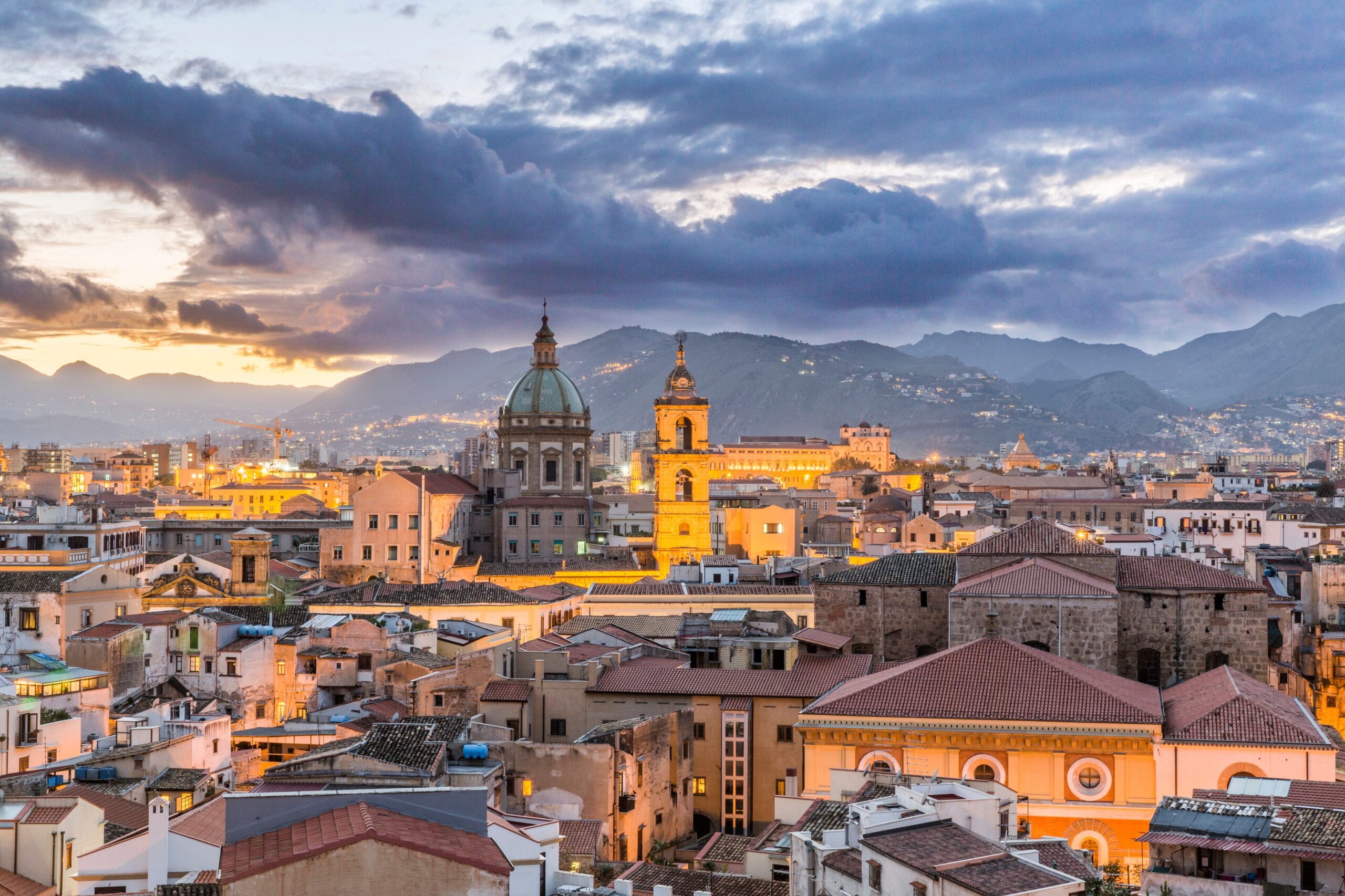
The island’s capital carries centuries of Mediterranean exchange within its streets. Norman, Arab, Byzantine, Spanish and Italian influences exist side by side, producing an architectural and cultural language that belongs uniquely to Palermo.
The Palazzo dei Normanni and the Palatine Chapel offer perhaps the clearest expression of that history. Gold mosaics, Byzantine craftsmanship and Norman architecture come together in a setting that feels both monumental and intimate.
Yet Palermo should never be experienced solely through its grand monuments.
Its markets are equally revealing.
Ballarò and the city’s other historic markets bring you closer to the rhythm of everyday Palermo—loud, colourful, spontaneous and unapologetically local. Here, the island’s culinary traditions are displayed almost theatrically: citrus, seafood, pistachios, aubergines, bread and pastries appearing in countless forms.
There is an important distinction between seeing Palermo and understanding it.
The latter requires time.
A long morning through its historic quarters. An unhurried lunch. An afternoon spent inside a palazzo or church. And an evening when the city begins to change character beneath the Mediterranean light.
Palermo rewards curiosity more than a checklist.
Syracuse & Ortygia: The Ancient Soul of Sicily
On the southeastern coast, Syracuse offers one of the island’s most profound encounters with antiquity.
Founded by the Greeks and later shaped by Romans, Byzantines, Arabs, Normans and others, Syracuse has accumulated history rather than simply preserving it.
Its historic heart, Ortygia, is particularly captivating.
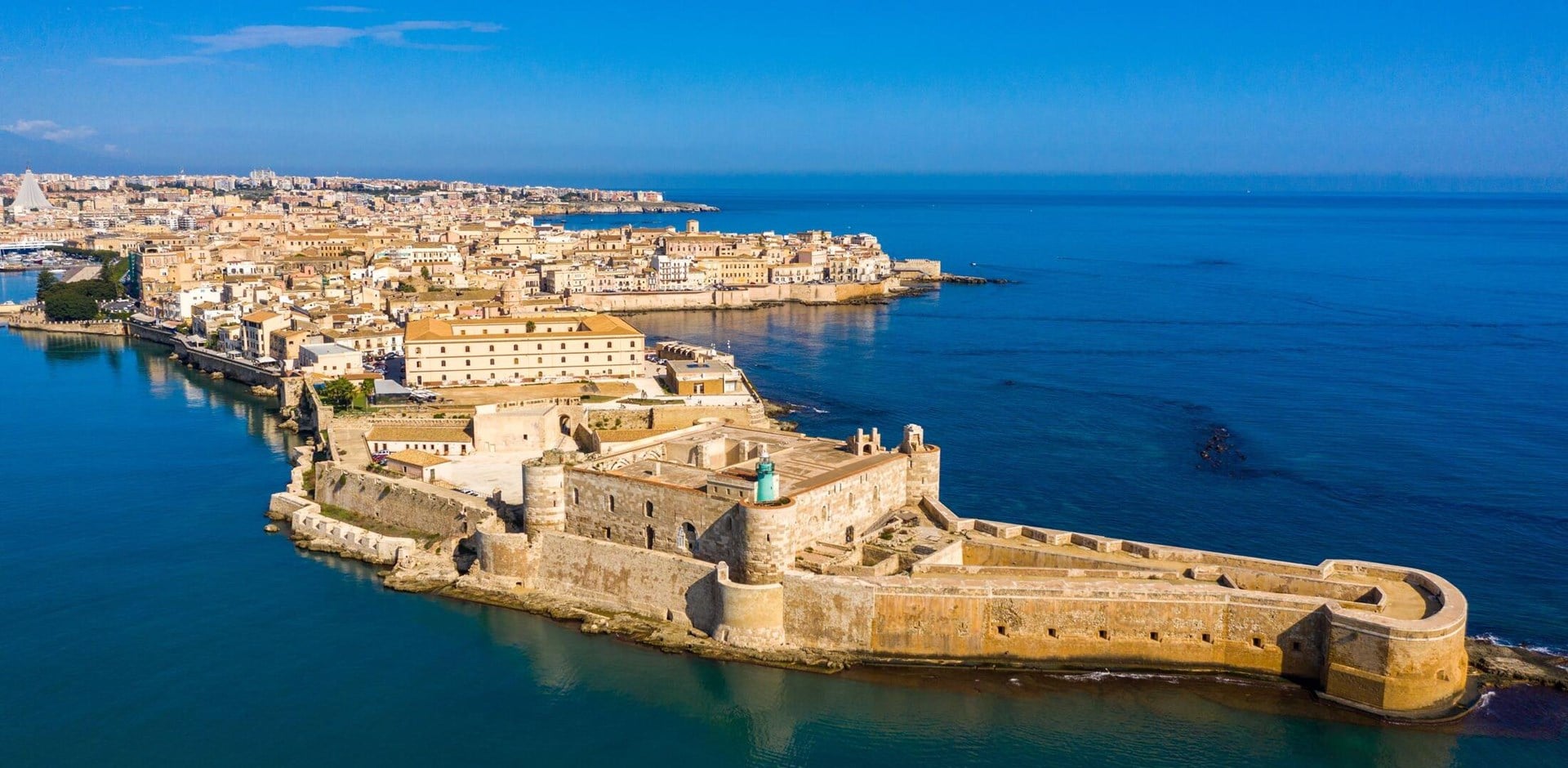
A compact island connected to the mainland, Ortygia unfolds through narrow streets, luminous piazzas and centuries-old buildings. The Cathedral of Syracuse incorporates the remains of an ancient Greek temple, an extraordinary reminder of how Sicily’s past continues to live within its present.
At Piazza Duomo, the pale stone seems to gather the afternoon sun. Elsewhere, balconies, carved doorways and small churches appear almost unexpectedly as you wander.
Then there is the sea.
The edges of Ortygia are made for lingering: a quiet walk beside the water, an aperitivo as the light softens, or a late dinner when the historic streets become almost still.
Syracuse does not feel like a reconstructed historical destination.
It feels inhabited by its history.
Noto: The Golden Poetry of the Baroque
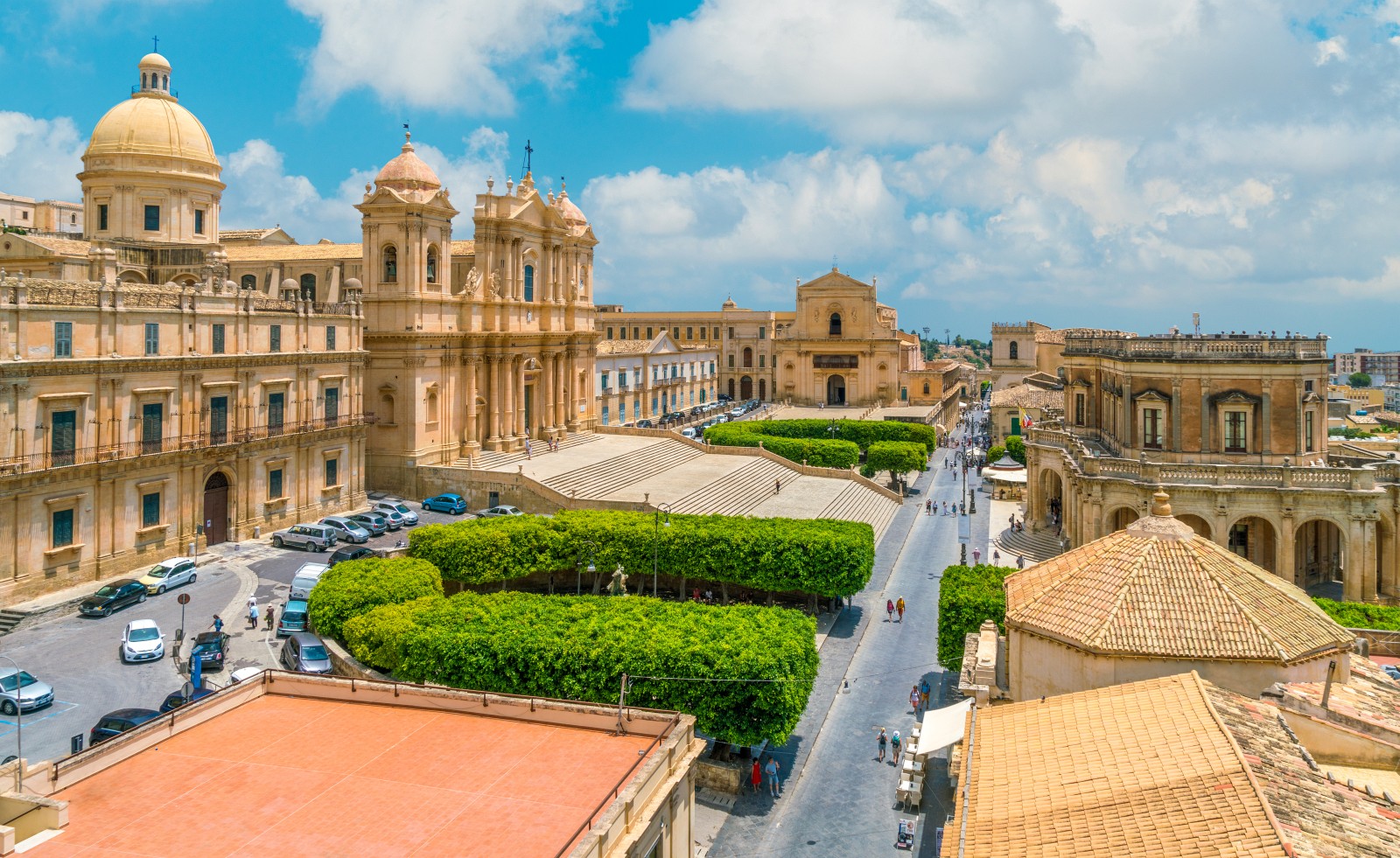
There are few places in Sicily where architecture and light interact as beautifully as Noto.
Rebuilt following the earthquake of 1693, the town became one of the great expressions of Sicilian Baroque. Its churches, palaces and monumental stairways were constructed from local limestone whose warm tones become almost golden beneath the afternoon sun.
Corso Vittorio Emanuele forms the elegant spine of the historic centre, but Noto is best appreciated without haste. Walk, pause, look upward, and allow the details to emerge.
The Cathedral, Palazzo Nicolaci and the town’s ornate churches reveal the extraordinary confidence of the architects and craftsmen who rebuilt this corner of Sicily.
By late afternoon, when the crowds begin to thin and the stone turns amber, Noto becomes particularly beautiful.
It is a town made for the final hour of daylight.
Ragusa & Modica: Baroque Landscapes and Ancient Flavours
Further inland, the southeastern towns of Ragusa and Modica offer another interpretation of Sicily.
Ragusa Ibla appears to rise organically from the surrounding hills, its churches and palazzi following the contours of the landscape. The result is a town that feels almost theatrical without ever becoming artificial.
Modica possesses a similar sense of vertical drama. Streets climb and descend through the historic centre, revealing churches, stone façades and viewpoints across the valley.
But Modica has another distinction: its chocolate.
Produced according to a traditional method that leaves the cocoa crystals partially intact, Modica’s chocolate has a distinctive texture and character. It is one of those Sicilian traditions that becomes more memorable when encountered in its place of origin.
Together, Ragusa and Modica reveal a side of Sicily that feels more intimate than the celebrated coastal towns—a Sicily of stone, craft, food and slow afternoons.
Mount Etna: The Elemental Heart of the Island
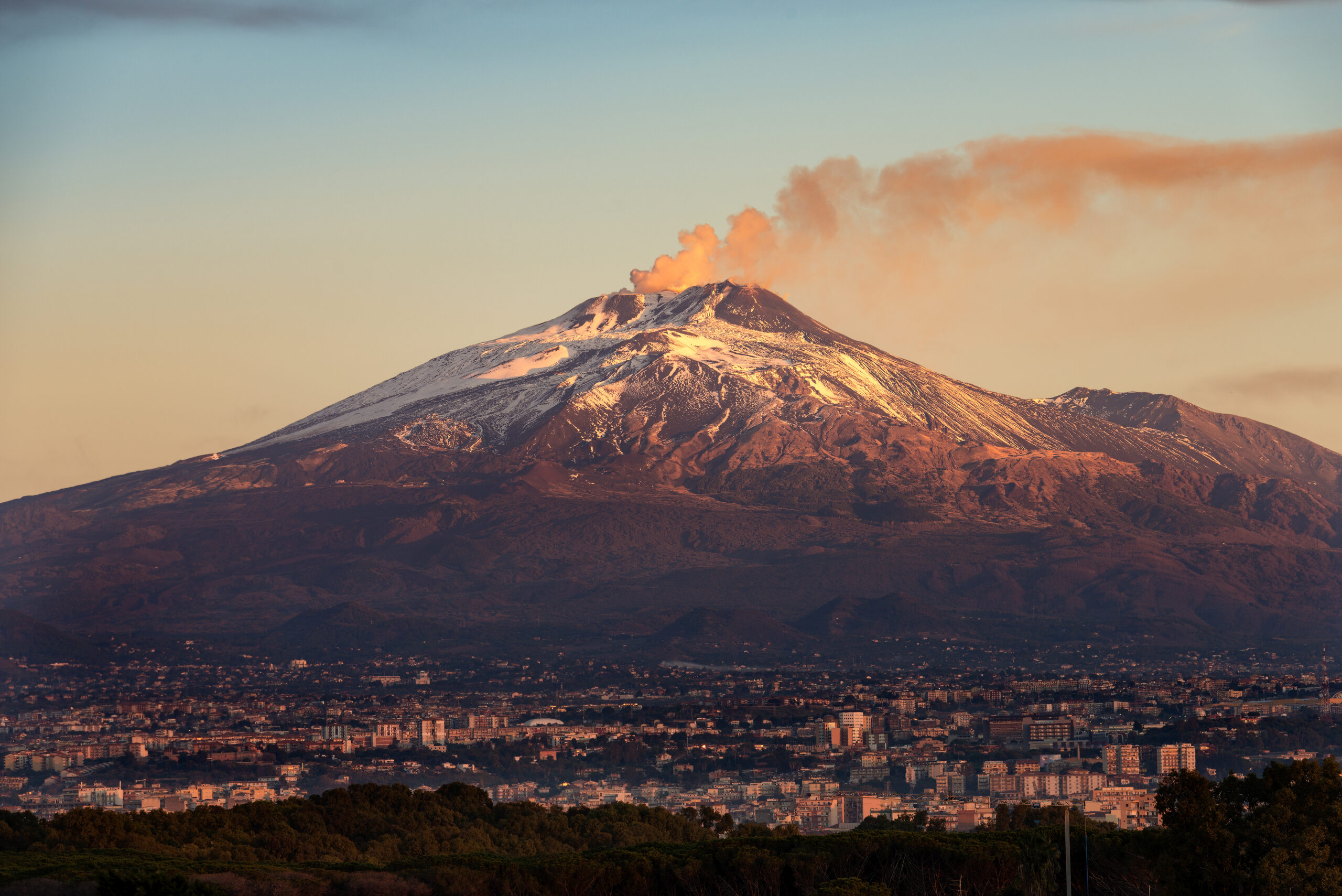
As the road rises towards the volcano, the landscape gradually transforms. Vineyards climb the slopes. Forests appear. The earth darkens. The Mediterranean landscape begins to reveal its volcanic foundations.
Etna is one of Europe’s most remarkable active volcanoes and one of the defining natural forces of Sicily.
Its presence is felt far beyond the crater. Volcanic soils have shaped vineyards, agriculture and the character of the villages scattered across the mountain’s slopes.
For the discerning traveller, Etna offers experiences that extend well beyond simply reaching a viewpoint.
Spend time with a local winemaker. Walk through vineyards surrounded by black volcanic stone. Discover indigenous grape varieties. Explore the landscape with a specialist guide who can explain the geological forces beneath your feet.
There is something particularly compelling about tasting wine in the landscape that created it.
Etna offers that connection.
Here, luxury becomes less about grandeur and more about access—to knowledge, landscape and experiences that cannot be replicated elsewhere.
The Aeolian Islands: Seven Worlds Beyond the Shore
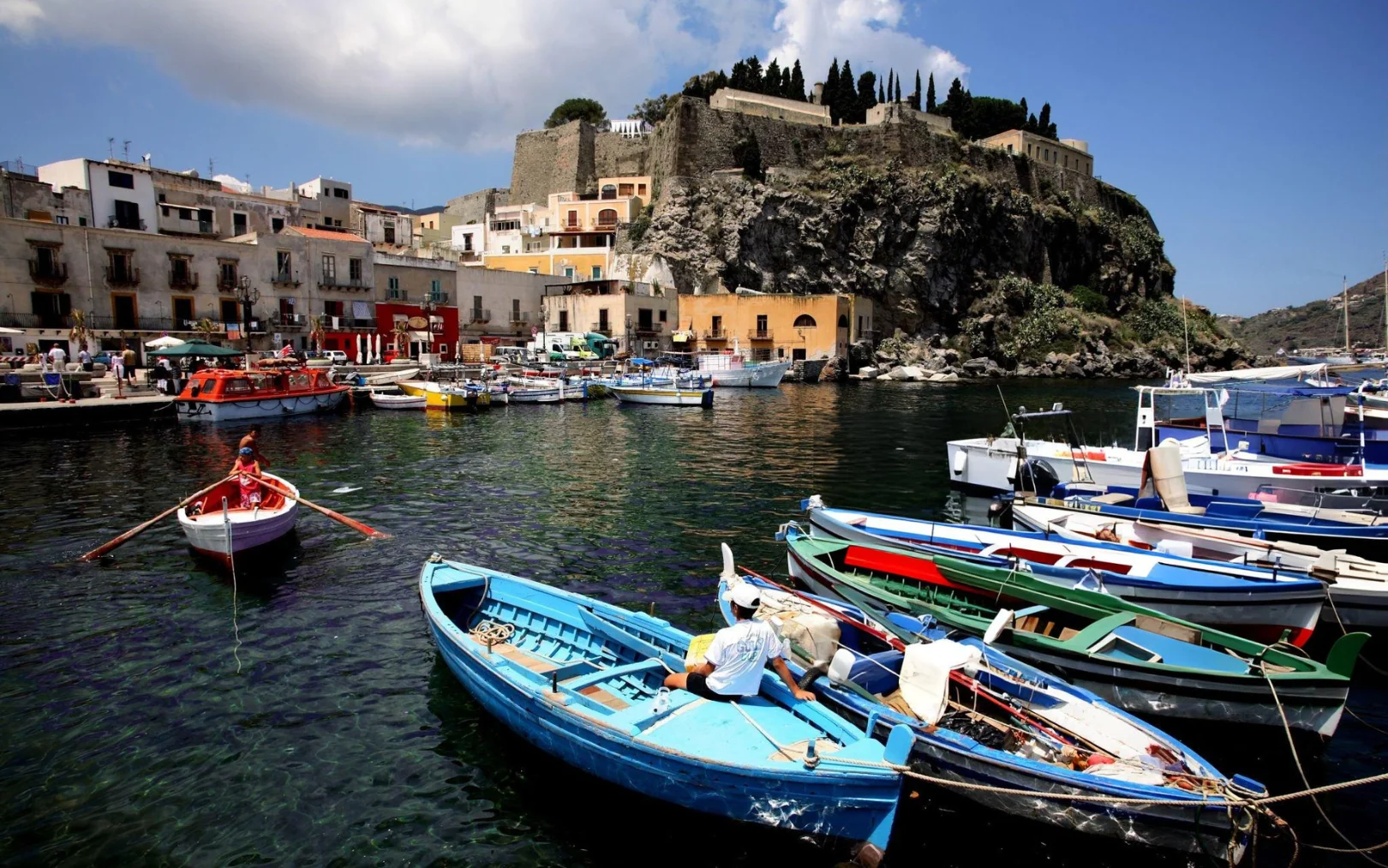
North of Sicily, the Aeolian Islands rise from the Tyrrhenian Sea like fragments of another world.
Lipari, Salina, Vulcano, Stromboli, Panarea, Filicudi and Alicudi each possess their own rhythm and personality. Together, they create one of the Mediterranean’s most distinctive island landscapes.
Panarea has long carried an air of understated glamour, with whitewashed houses, secluded coves and an elegant summer atmosphere.
Salina feels greener and more contemplative. Vineyards and gardens descend towards the sea, and the island invites a slower pace.
Stromboli is altogether more dramatic. Its volcano dominates the landscape, reminding you that these islands were born from fire.
Alicudi offers something rarer still: genuine remoteness.
There are no grand urban boulevards here and no need for them. The experience is defined by the sea, the landscape, walking paths and the simple pleasure of being somewhere that feels removed from the ordinary.
For a journey through Sicily, the Aeolian Islands offer a natural change of tempo.
The mainland gives you history and architecture.
The islands give you space.
Sicily by Sea
Some of the island’s most beautiful moments begin where the road ends.
From Taormina’s coastline to the volcanic islands of the north, Sicily is best understood from the water.
A private boat opens access to secluded coves, sea caves, hidden beaches and dramatic cliffs that remain difficult to appreciate from land.
Begin in the morning while the water is still calm. Stop for a swim in a quiet bay. Enjoy a leisurely lunch on board with fresh seafood and Sicilian wine. Continue along the coast as the afternoon light begins to soften.
The experience is not about seeing more.
It is about seeing differently.
From the sea, Sicily appears quieter. The towns become silhouettes against the hills, ancient architecture seems to emerge naturally from the landscape, and the scale of the island becomes easier to understand.
It is perhaps one of the most graceful ways to experience the Mediterranean.
The Taste of Sicily
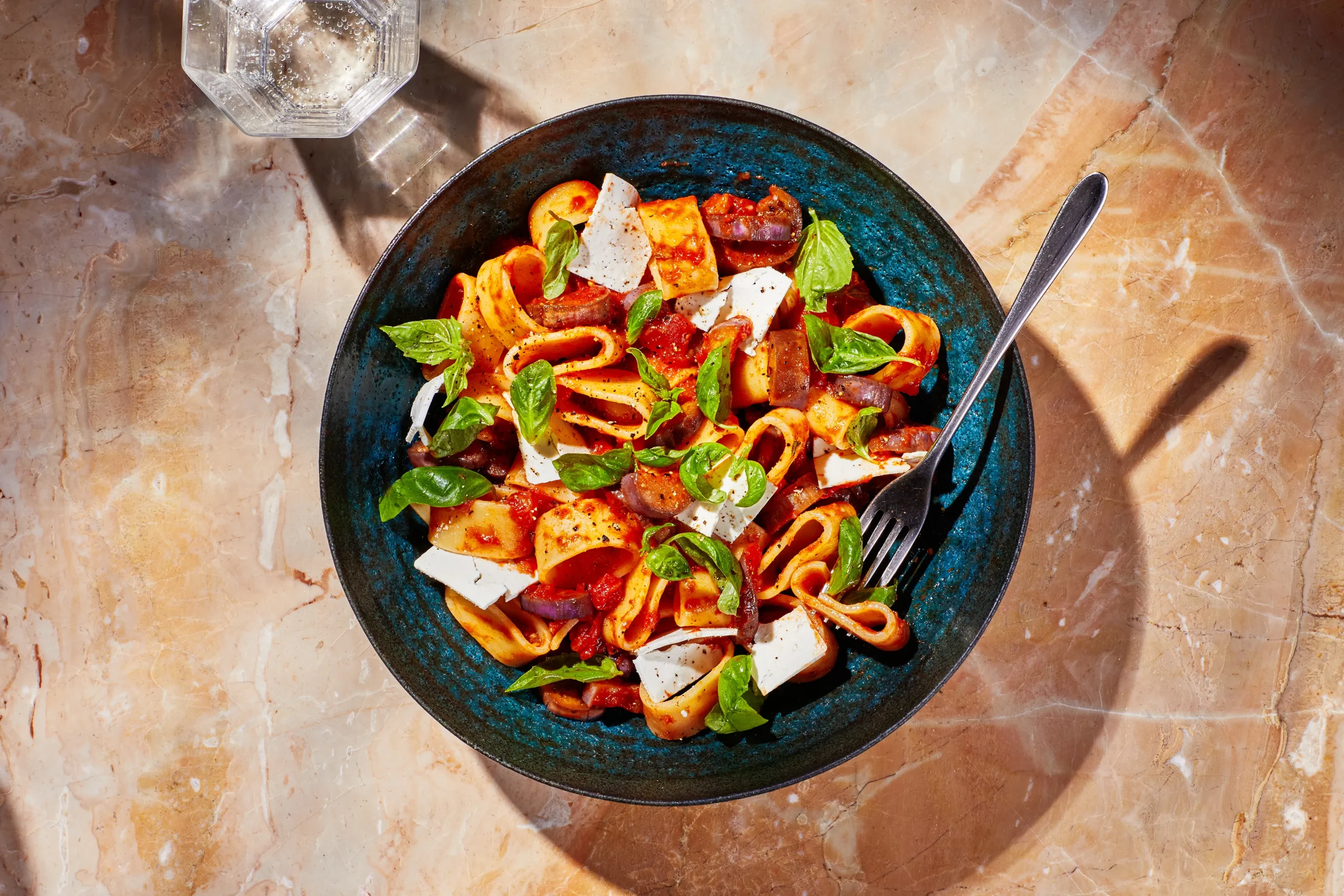
Sicilian cuisine is a reflection of the island itself: layered, generous and shaped by centuries of cultural exchange.
The ingredients are often beautifully simple. Citrus, tomatoes, aubergines, almonds, pistachios, seafood, wheat and olive oil appear throughout the island’s cooking, transformed through techniques and traditions that vary from one region to another.
Pasta alla Norma carries the flavours of eastern Sicily. Arancini offer the satisfying simplicity of rice, filling and crisp golden crust. Cannoli and granita bring sweetness into the story, while fresh seafood reflects the island’s intimate relationship with the surrounding Mediterranean.
Wine deserves its own chapter.
The vineyards around Mount Etna have become particularly distinctive, their high-altitude volcanic landscapes producing wines with a strong sense of place. Across the island, native varieties add further depth to Sicily’s wine culture.
For the luxury traveller, the most memorable culinary experiences are often those that go beyond a restaurant reservation.
A private tasting among vineyards.
A chef-led market visit.
Lunch at a family estate.
A long table overlooking the countryside.
In Sicily, a meal is rarely only a meal.
It is an invitation into the culture.
An Invitation to Stay: Sicily’s Finest Retreats
Sicily’s most exceptional hotels understand something fundamental about the island: luxury is most compelling when it belongs to the landscape.
Historic convents, aristocratic villas, coastal retreats and countryside estates become part of the journey itself, allowing the character of Sicily to continue long after the day’s explorations are over.
San Domenico Palace, Taormina
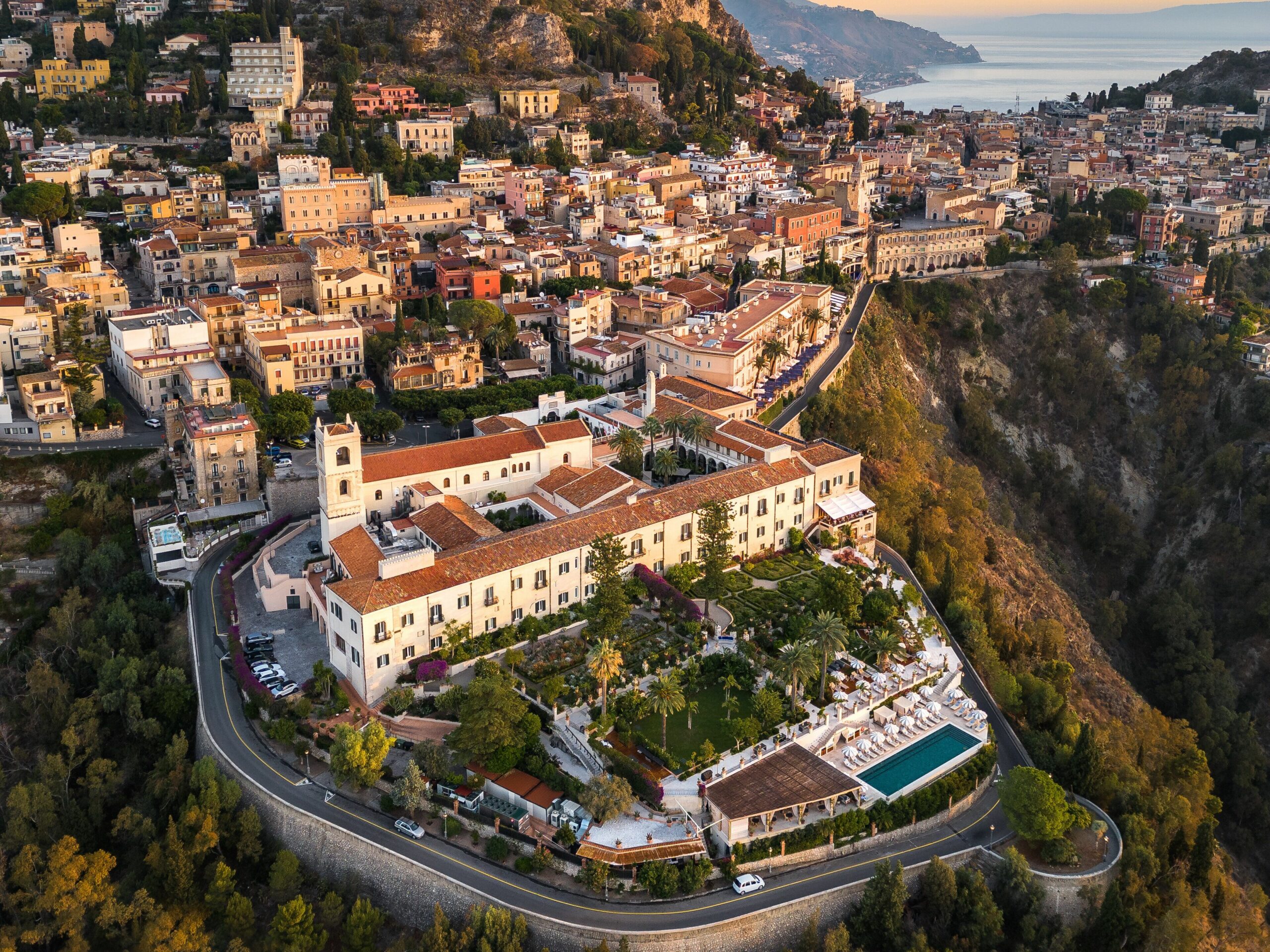
Set within a former Dominican convent overlooking the Ionian Sea, San Domenico Palace brings together centuries of history and contemporary refinement.
Its elevated position above Taormina creates a sense of privacy while keeping the town’s historic centre within reach. Terraces, gardens and sea views make the property particularly compelling in the softer hours of the day.
Hotel Timeo, Taormina
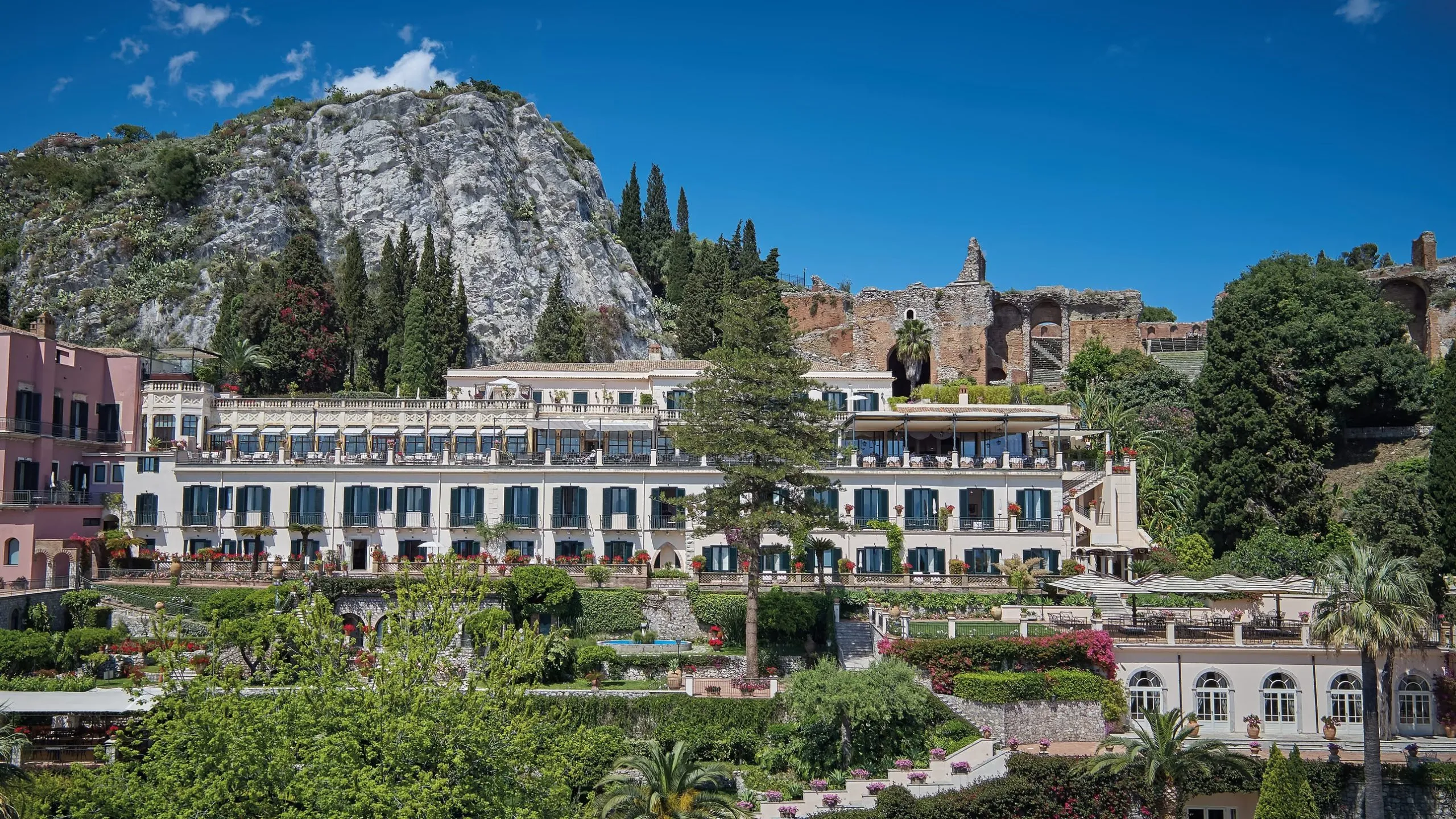
Positioned beside the Ancient Theatre of Taormina, Hotel Timeo is among the town’s most evocative addresses.
Its gardens and terraces open towards Mount Etna and the Ionian Sea, creating an atmosphere in which the surrounding landscape becomes part of the experience.
Villa Sant’Andrea, Taormina
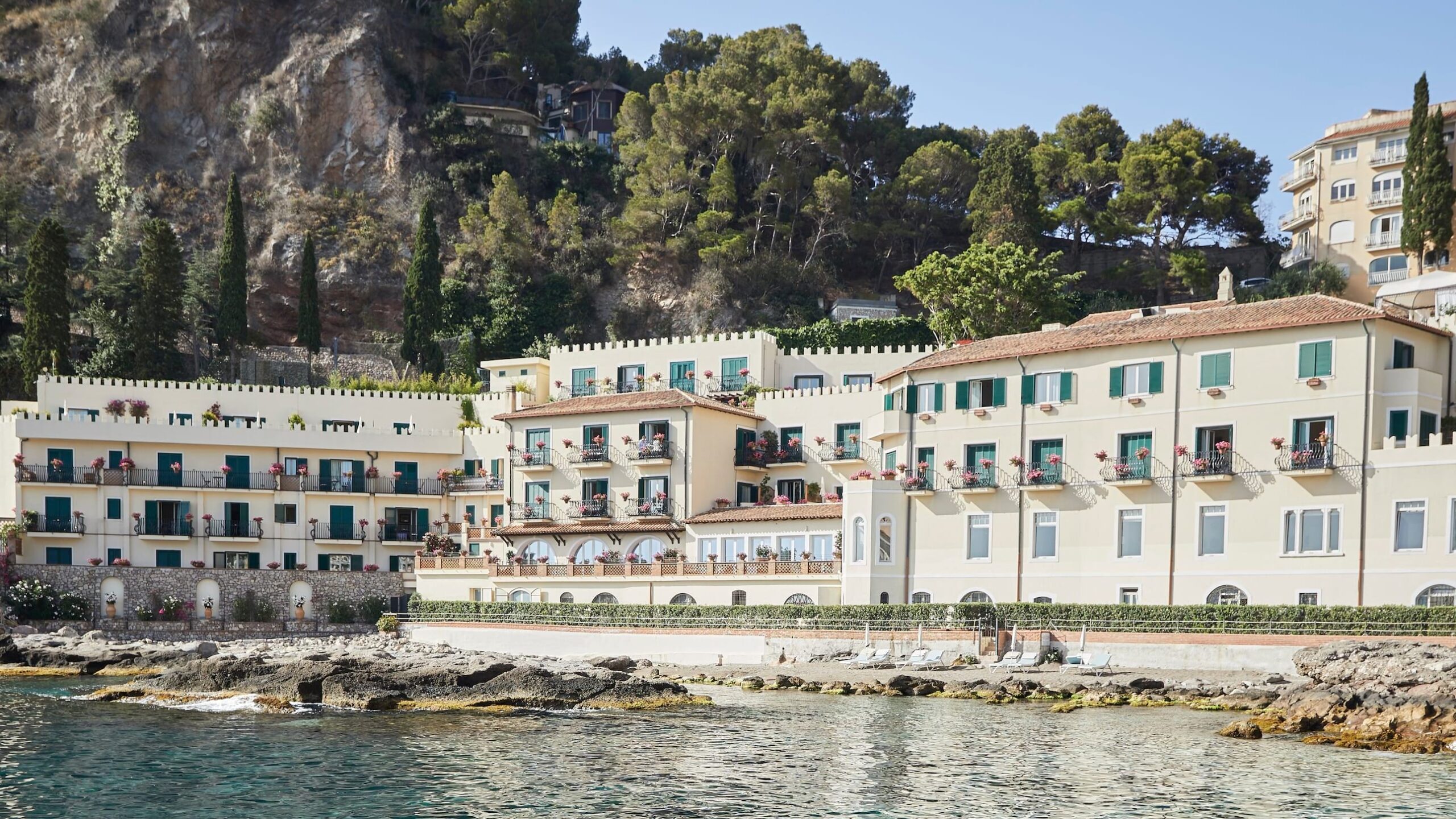
Set above Mazzarò Bay, Villa Sant’Andrea offers a more intimate relationship with the coast.
The property combines the elegance associated with Taormina with immediate access to the sea, making it an appealing choice for travellers who want the Mediterranean to remain at the centre of their stay.
Villa Igiea, Palermo
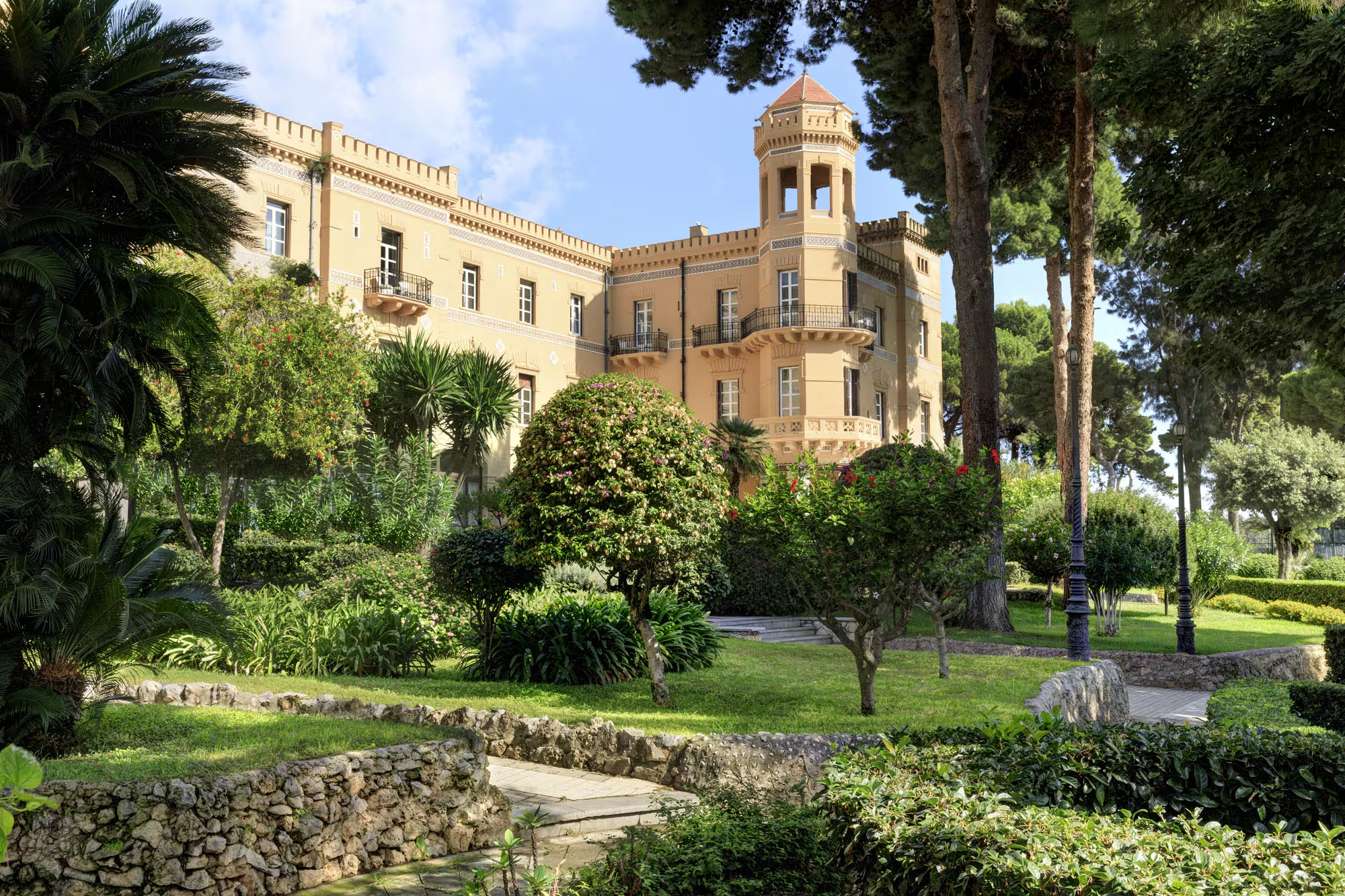
Overlooking the Gulf of Palermo, Villa Igiea occupies an elegant historic setting away from the intensity of the city centre.
Its architecture and position provide a refined base from which to discover Palermo while preserving a sense of retreat.
Monaci delle Terre Nere, Mount Etna
On the slopes of Mount Etna, Monaci delle Terre Nere offers a quieter interpretation of Sicilian luxury.
The property sits within a landscape of vineyards, volcanic earth and Mediterranean vegetation, making it particularly suited to travellers seeking nature, privacy and a strong sense of place.
Verdura Resort, Sciacca
On Sicily’s southwestern coast, Verdura Resort stretches across a broad Mediterranean estate.
Its coastal setting, open landscapes, wellness facilities and leisure experiences create a different expression of luxury—one defined by space and the freedom to remain within the landscape.
The Sicily Worth Discovering
Sicily is not a destination to be hurried through.
Its beauty is cumulative.
One experience becomes another: Palermo’s layered history leads towards the elegance of Taormina; Taormina opens onto the Ionian Sea; the road continues towards Noto’s golden Baroque; beyond it lie Ragusa and Modica, while Etna rises over the eastern landscape.
And when the mainland begins to feel familiar, the Aeolian Islands offer another world entirely.
This is what makes Sicily so enduring.
It refuses to be reduced to a single image.
It can be grand or intimate. Ancient or contemporary. Refined or wonderfully unpolished. It can be experienced through architecture, wine, cuisine, sailing, art, landscape or simply through the pleasure of being somewhere beautiful without needing to fill every moment.
The greatest luxury in Sicily may therefore be the simplest one.
Time.
Time to take the longer road.
Time to linger over lunch.
Time to watch Etna change colour at sunset.
Time to remain beside the sea after everyone else has left.
Because Sicily does not ask to be conquered.
It asks to be felt.
And once you have experienced it at its own rhythm, the island has a way of remaining with you—long after the Mediterranean has disappeared beyond the horizon.
Sicily Through the Seasons
Sicily reveals a different character with every season.
Spring — Sicily in Bloom
Fresh landscapes, citrus-scented air and quieter historic towns make spring ideal for discovering Noto, Ragusa, Modica and Mount Etna at an unhurried pace.
Summer — Sicily by the Sea
Summer belongs to the Mediterranean. Taormina, the Aeolian Islands and the southern coast invite long days on the water, secluded swims and evenings beneath the stars.
Autumn — Wine & Harvest
As the light softens, Sicily’s vineyards take centre stage. The slopes of Mount Etna become especially captivating for wine, food and countryside experiences.
Winter — Sicily in Solitude
Winter brings a quieter Sicily, perfect for discovering Palermo, Syracuse and Noto through their architecture, history, art and cuisine.
A Day Around Sicily, the Luminara Way
Morning begins slowly.
A terrace overlooking the Mediterranean, a Sicilian breakfast and the first light touching the hills of Taormina.
By late morning, take the road towards the countryside. Stop among the vineyards of Mount Etna, where volcanic soil and centuries-old traditions shape the island’s wine culture.
Lunch is unhurried—a table beneath olive trees, local seafood, seasonal produce and a glass of Etna wine.
By afternoon, return to the coast.
A private boat carries you past dramatic cliffs and hidden coves, with time for a swim in the clear Mediterranean before the sun begins its descent.
As evening arrives, return to shore.
The final hours belong to a long Sicilian dinner, candlelight and the sound of the sea beyond the terrace.
This is Sicily, the Luminara way: never rushed, never overplanned, and always experienced through the beauty of the moment.
The Luminara Perspective
Sicily is more than an itinerary of celebrated places.
It is the contrast between ancient stone and deep blue water, between volcanic landscapes and elegant coastal towns, between a centuries-old recipe and a beautifully considered table.
At Luminara Voyages, we believe the finest journeys are not defined by how much you see, but by how deeply you experience a place.
Sicily rewards exactly that kind of travel.
Slow mornings. Beautiful landscapes. Exceptional tables. Meaningful encounters. And enough time to simply be there.
Continue Your Italian Journey
Sicily is one chapter of a much larger Italian story.
Continue towards the Renaissance elegance of Florence, the timeless canals of Venice, the dramatic beauty of the Amalfi Coast, or the rolling vineyards and historic estates of Tuscany.
Explore Italy →
Florence →
Venice →
Amalfi Coast →
Tuscany →
Until Sicily Calls Again
Sicily has no single perfect season.
Each season reveals another side of the island—and another reason to return.