There is a particular moment in Zermatt when the mountain stops feeling like scenery.
You may see the Matterhorn from a private terrace, between the timbered façades of the old village, from a railway carriage climbing into the Alps, or mirrored perfectly in an alpine lake. Yet every view carries a different mood. The mountain is never simply there; it seems to shape the rhythm of the entire destination.
At 1,620 metres in the Valais Alps, Zermatt has evolved into one of Switzerland’s most distinguished mountain retreats without surrendering the character of the village that existed before international tourism arrived. Cars do not enter the village itself, the surrounding peaks rise dramatically into the sky, and historic wooden buildings still recall an older alpine way of life.
For the discerning traveller, luxury Zermatt travel is therefore less about collecting experiences and more about choosing how to inhabit the landscape.
A slow morning overlooking the Matterhorn. A private guide leading you into the high Alps. Lunch in a mountain hamlet. An afternoon returning to an elegant spa. Dinner beside a fire while snow settles quietly outside.
This is Zermatt at its most compelling.
The Matterhorn: Zermatt’s Defining Presence
Few mountains have achieved the visual identity of the Matterhorn. Rising to 4,478 metres, its distinctive pyramid dominates the landscape above Zermatt and gives the village a silhouette recognised far beyond Switzerland.
The mountain’s first ascent in 1865 helped establish Zermatt as an international mountaineering destination. Yet its enduring appeal has little to do with history alone. The Matterhorn changes constantly with the light, weather and season, giving even a familiar viewpoint an entirely different character.
The finest Matterhorn luxury experience is often remarkably uncomplicated: watching the summit catch the first light of morning, seeing its profile sharpen against a winter sky, or discovering its reflection on a still mountain lake.
Zermatt does not need to manufacture spectacle. It already has one.
Old Zermatt: A Village Beneath the Mountain
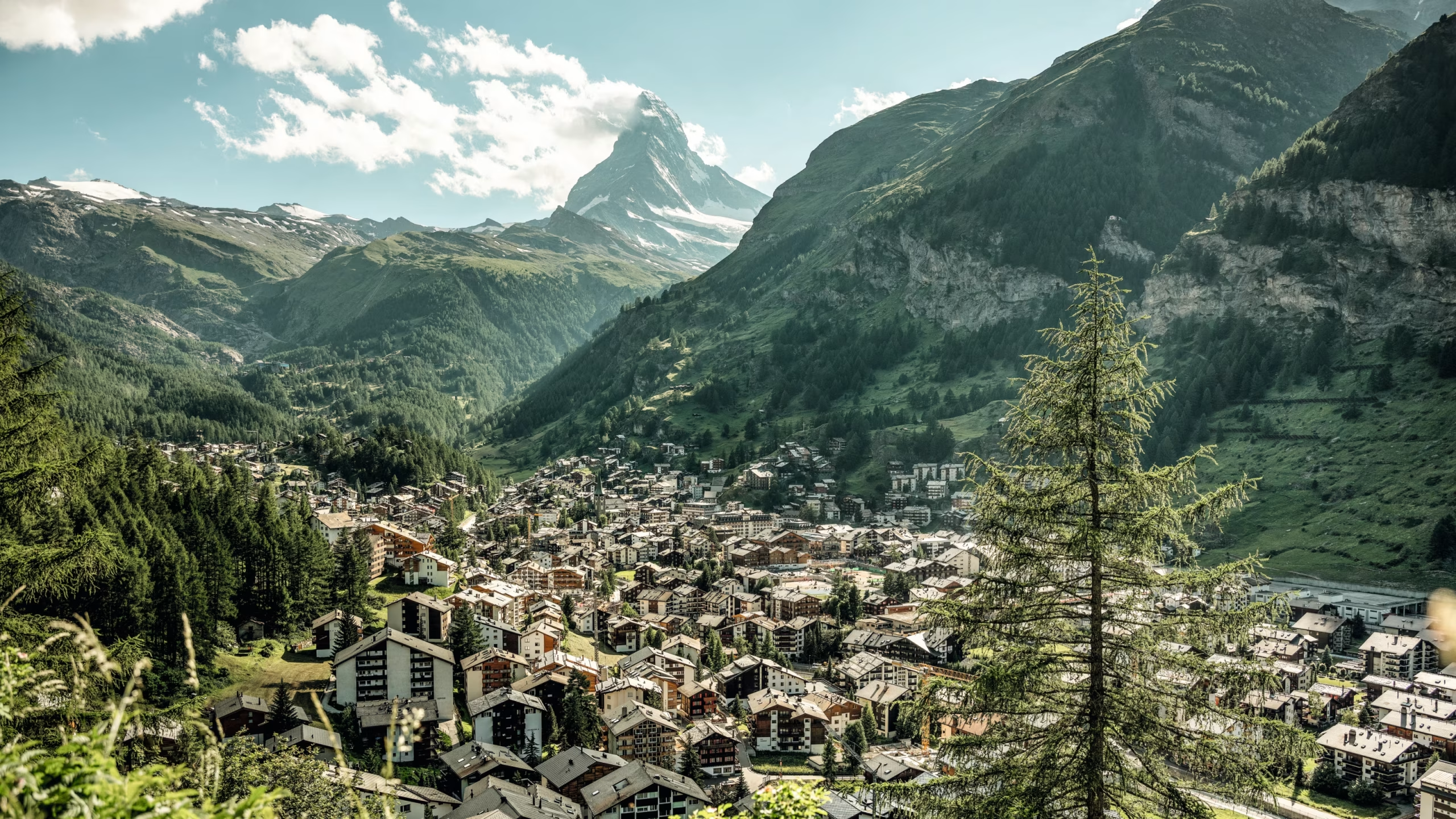
Beyond the polished hotels and sophisticated restaurants, Zermatt retains a more intimate identity. The historic village reveals narrow lanes, traditional timber structures and old agricultural buildings that recall the community that existed before mountaineering transformed the valley.
The historic Hinterdorf area is particularly evocative. Traditional wooden Stadel buildings, raised on stone supports, preserve the visual language of an older alpine economy. Their weathered timber and compact forms offer a striking contrast to the contemporary architecture found elsewhere in the resort.
The pleasure is in wandering without an itinerary. Zermatt is compact enough to explore slowly, and its traffic-free character allows the experience to remain unusually peaceful.
For luxury travel in Switzerland, this sense of continuity matters. Zermatt feels refined without becoming anonymous; international without losing its local accent.
Gornergrat: A Front-Row Seat to the Alps
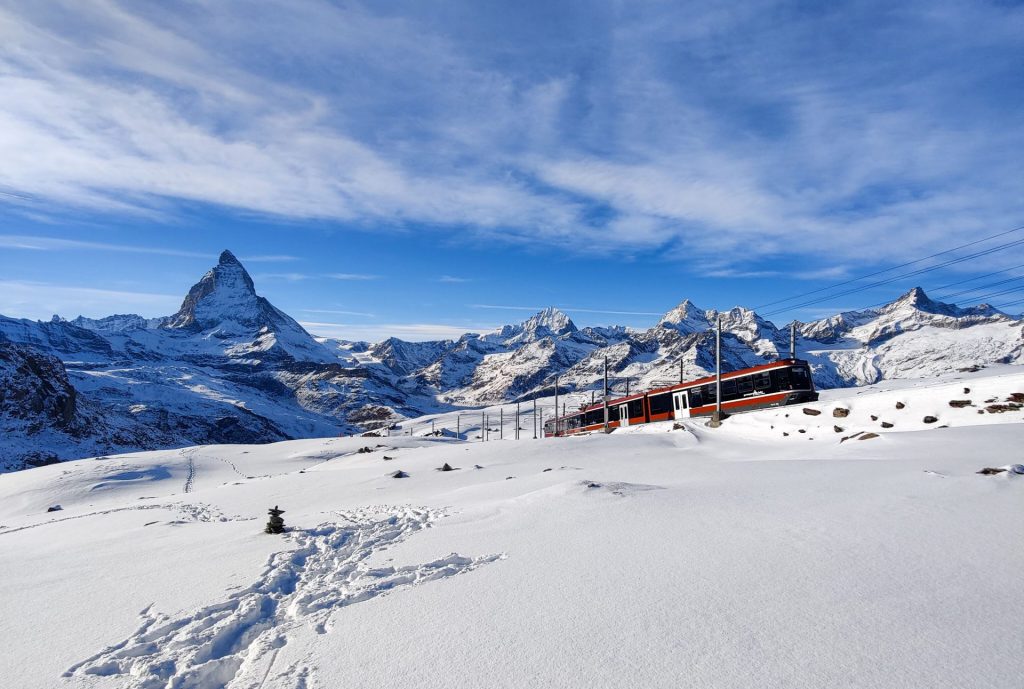
The journey to Gornergrat deserves to be experienced for the journey itself. The historic cog railway climbs from Zermatt into increasingly open alpine terrain, gradually replacing the village below with forests, ridgelines, glaciers and an extraordinary procession of peaks.
At the summit, the panorama places the Matterhorn within a wider composition of the Alps. The Gorner Glacier and surrounding four-thousand-metre peaks create a landscape of remarkable scale.
Rather than treating Gornergrat as a conventional excursion, approach it as one of the great perspectives of a luxury Zermatt itinerary. Watch the landscape change as the train rises. Let the village become smaller. Allow the mountains to become larger.
For travellers drawn to photography, landscape and quiet observation, the journey can become one of the defining moments of a stay.
Riffelsee: When the Mountain Appears Twice
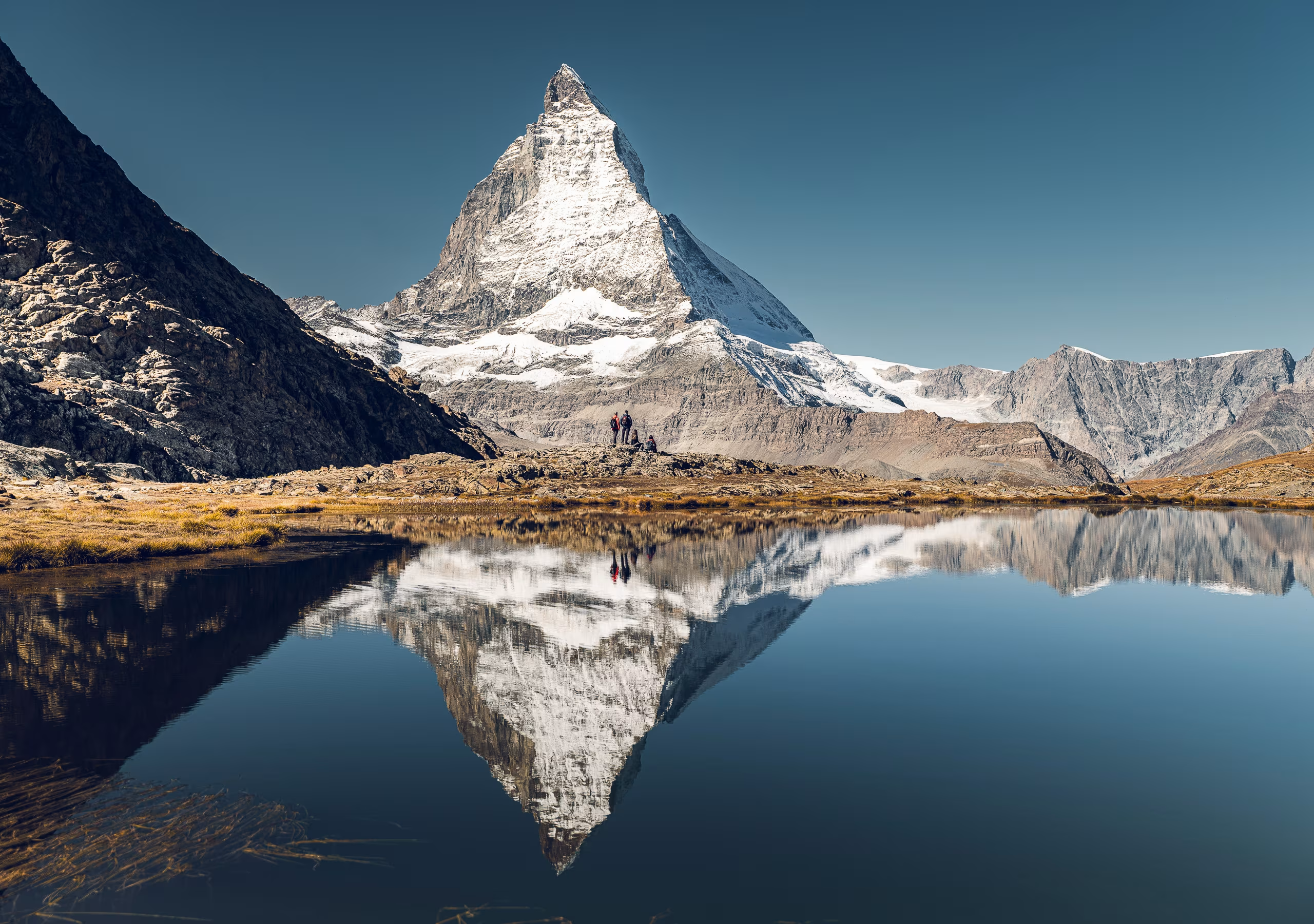
Some alpine landscapes need very little interpretation. Riffelsee is one of them.
The small mountain lake is renowned for the reflection of the Matterhorn on its surface, creating an image that can feel almost deliberately composed when the water is still. Yet the appeal is not simply photographic.
The atmosphere changes with the hour, weather and season. In the quieter periods, the lake creates a remarkable sense of stillness against the scale of the surrounding peaks.
This is the kind of place that suits the Luminara philosophy: linger rather than tick a box. Let the mountain dominate the horizon. Let the water remain undisturbed. Give the landscape enough time to reveal itself.
Sunnegga: Morning Above the Valley
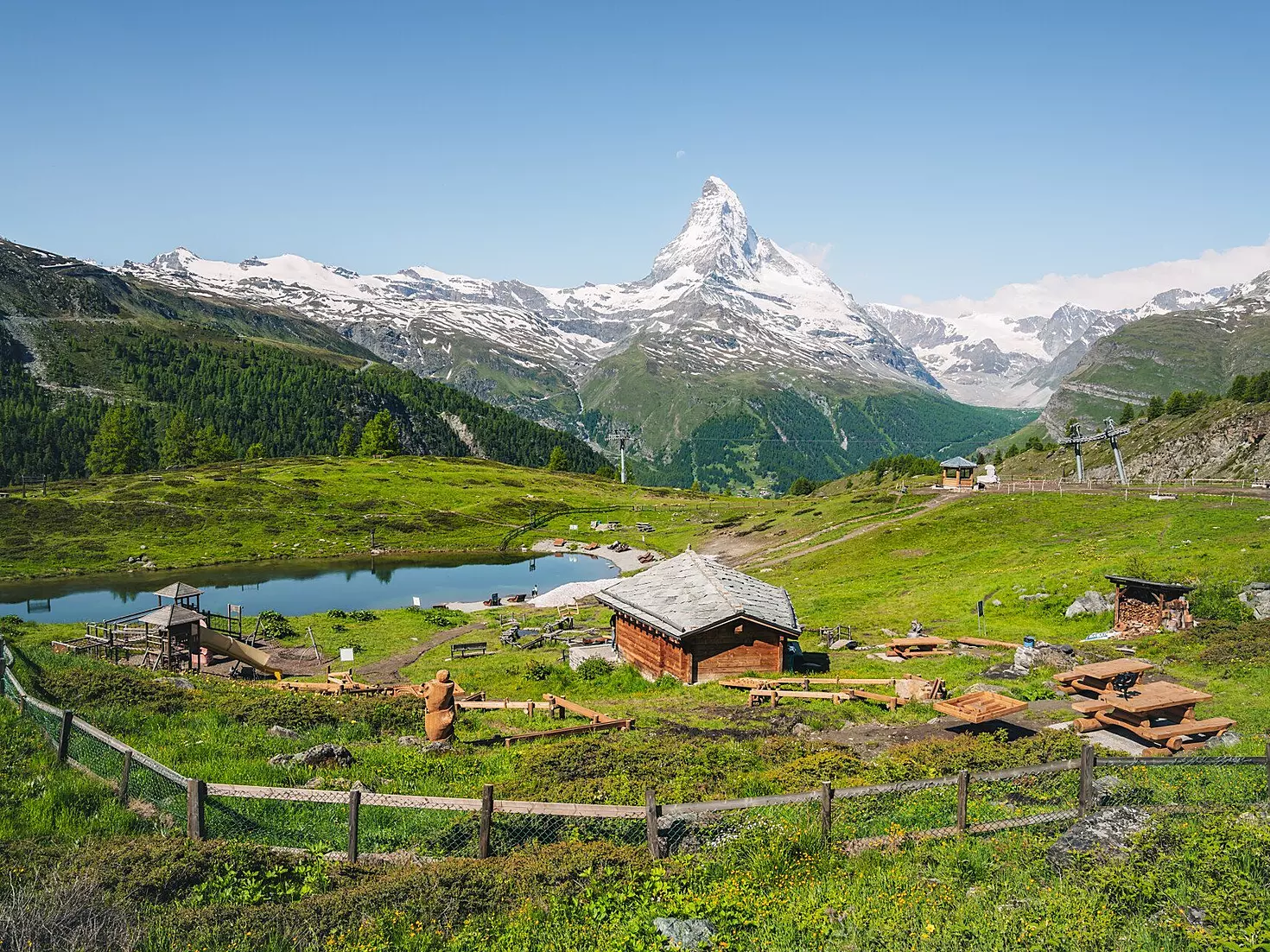
Zermatt has several ways of entering the high mountains, but Sunnegga offers an especially elegant transition. The underground funicular rises quickly from the village, exchanging streets and rooftops for open alpine views and a broad perspective towards the Matterhorn.
Sunnegga works beautifully as part of a slower morning. Begin with breakfast in the village, ascend into the mountains, walk at an unhurried pace and return later for an afternoon of spa, shopping or simply doing very little.
The experience feels less like an excursion and more like an extension of Zermatt itself. That is precisely what makes it valuable to the luxury traveller.
Findeln: The Quiet Side of Zermatt
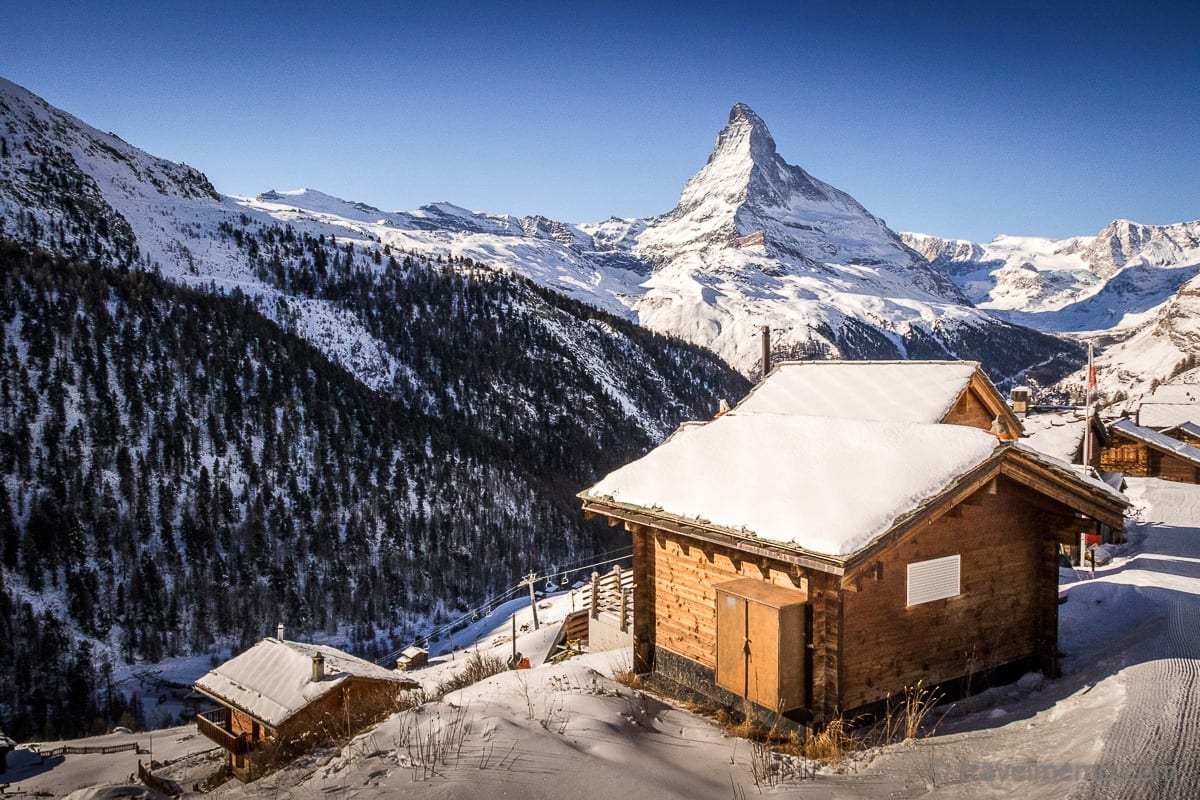
For travellers searching for a more intimate side of the destination, the mountain hamlet of Findeln offers a different rhythm.
Set above Zermatt, Findeln feels removed from the energy of the central village while remaining closely connected to it. Traditional alpine architecture, mountain paths and expansive views create an atmosphere particularly suited to long lunches and unhurried afternoons.
This is where the culinary side of luxury Zermatt travel becomes inseparable from the landscape. A refined mountain lunch followed by a gradual descent towards the village can feel more memorable than a tightly scheduled day of sightseeing.
In Zermatt, time is not merely something to manage. It becomes part of the experience.
Matterhorn Glacier Paradise: Into the High Alps
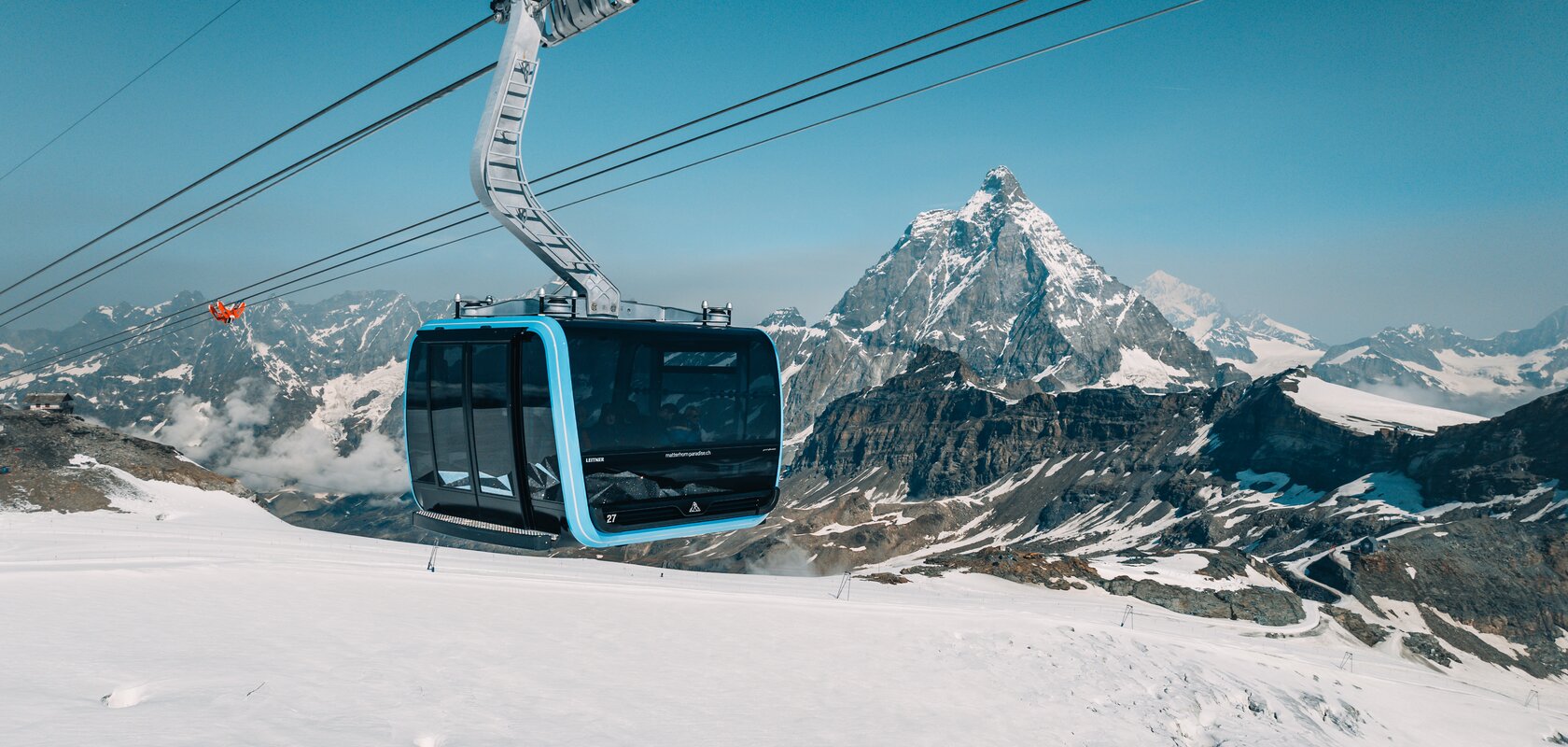
At Matterhorn Glacier Paradise, the journey reaches another scale altogether. The cable-car ascent takes travellers to 3,883 metres on Klein Matterhorn, the highest cable-car station in Europe.
Here, glaciers dominate the landscape and the surrounding peaks appear almost within reach. The altitude creates a more elemental atmosphere: thinner air, brilliant light and an extraordinary sense of perspective.
For adventurous travellers, this high-alpine world also provides access to experiences such as guided Breithorn ascents. The important distinction is that luxury does not mean avoiding adventure. In Zermatt, it can mean experiencing adventure with expert mountain guidance, meticulous planning and the comfort of returning to an exceptional hotel at the end of the day.
This balance between wilderness and refinement is one of the defining strengths of luxury travel in Switzerland.
Luxury Stays in Zermatt
Where you stay matters in Zermatt because the hotel becomes part of the alpine experience. The strongest properties combine sophisticated hospitality with a genuine sense of place rather than attempting to hide the mountain environment behind conventional five-star design.
The Omnia
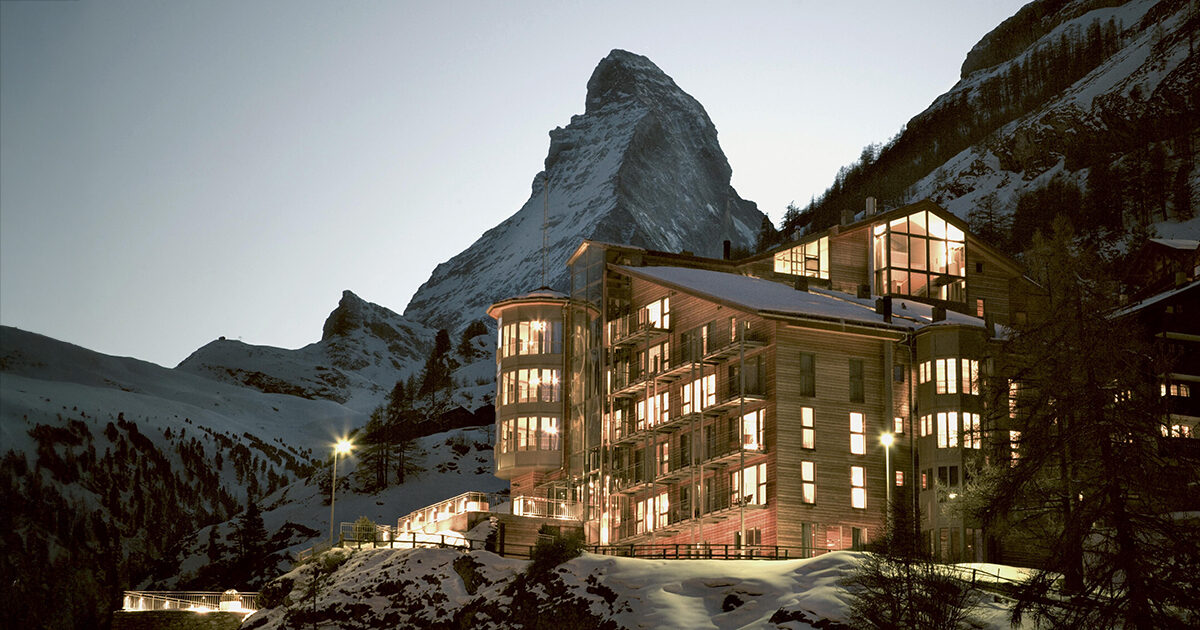
Perched above the village, The Omnia is one of Zermatt’s most distinctive luxury addresses. Its intimate scale, contemporary alpine design, spa facilities and panoramic setting create a retreat that feels both private and closely connected to the Matterhorn landscape.
For travellers who prefer understated luxury over grand-hotel formality, it offers an especially compelling interpretation of a mountain stay.
Mont Cervin Palace
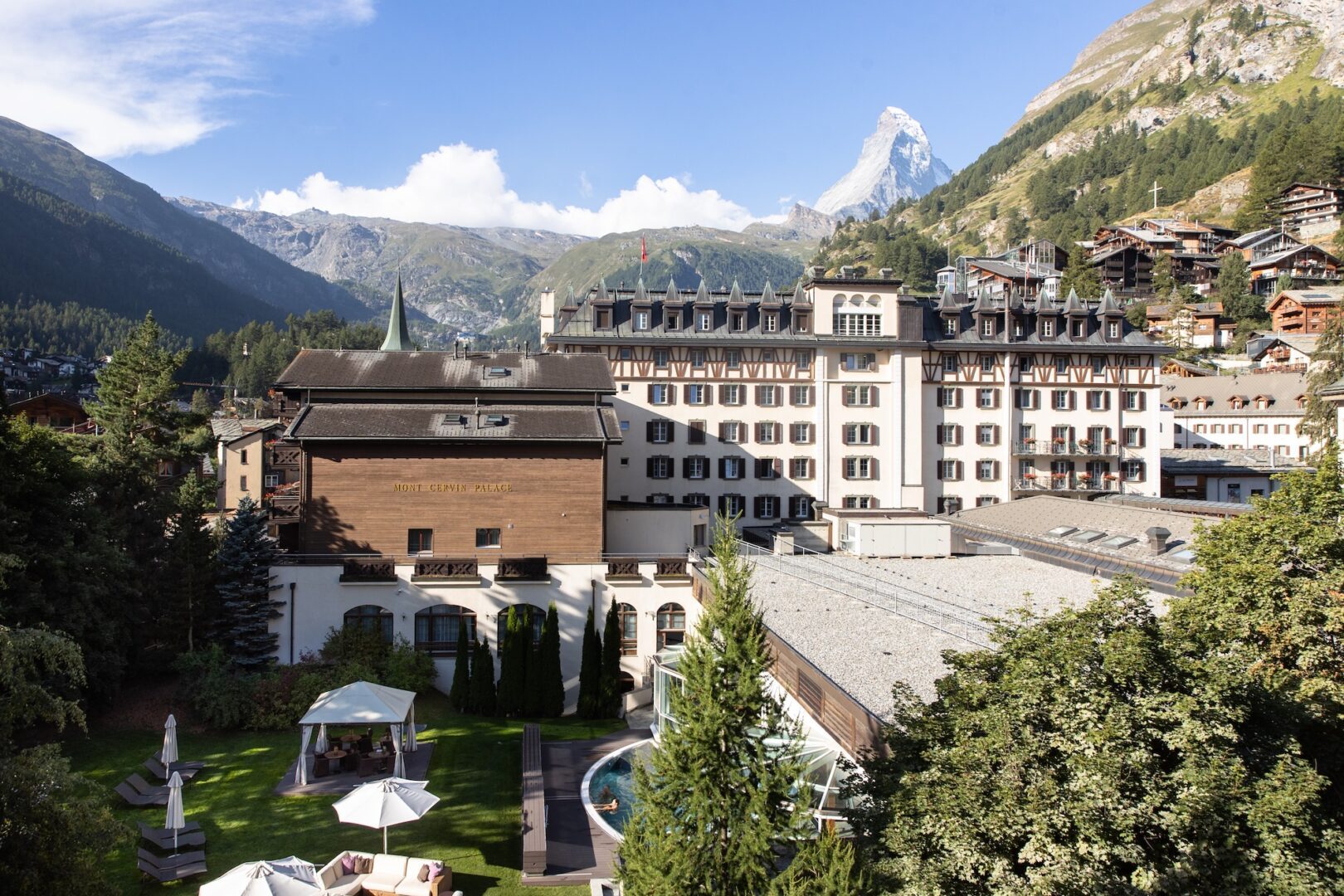
For travellers drawn to heritage, Mont Cervin Palace offers a different expression of luxury. Its history is closely connected to Zermatt’s transformation into an international mountain destination, while its contemporary facilities provide the level of comfort expected from a leading Swiss hotel.
Its spa, dining spaces and classic hospitality make it particularly suited to travellers who appreciate the romance of an established alpine grand hotel.
CERVO Mountain Resort
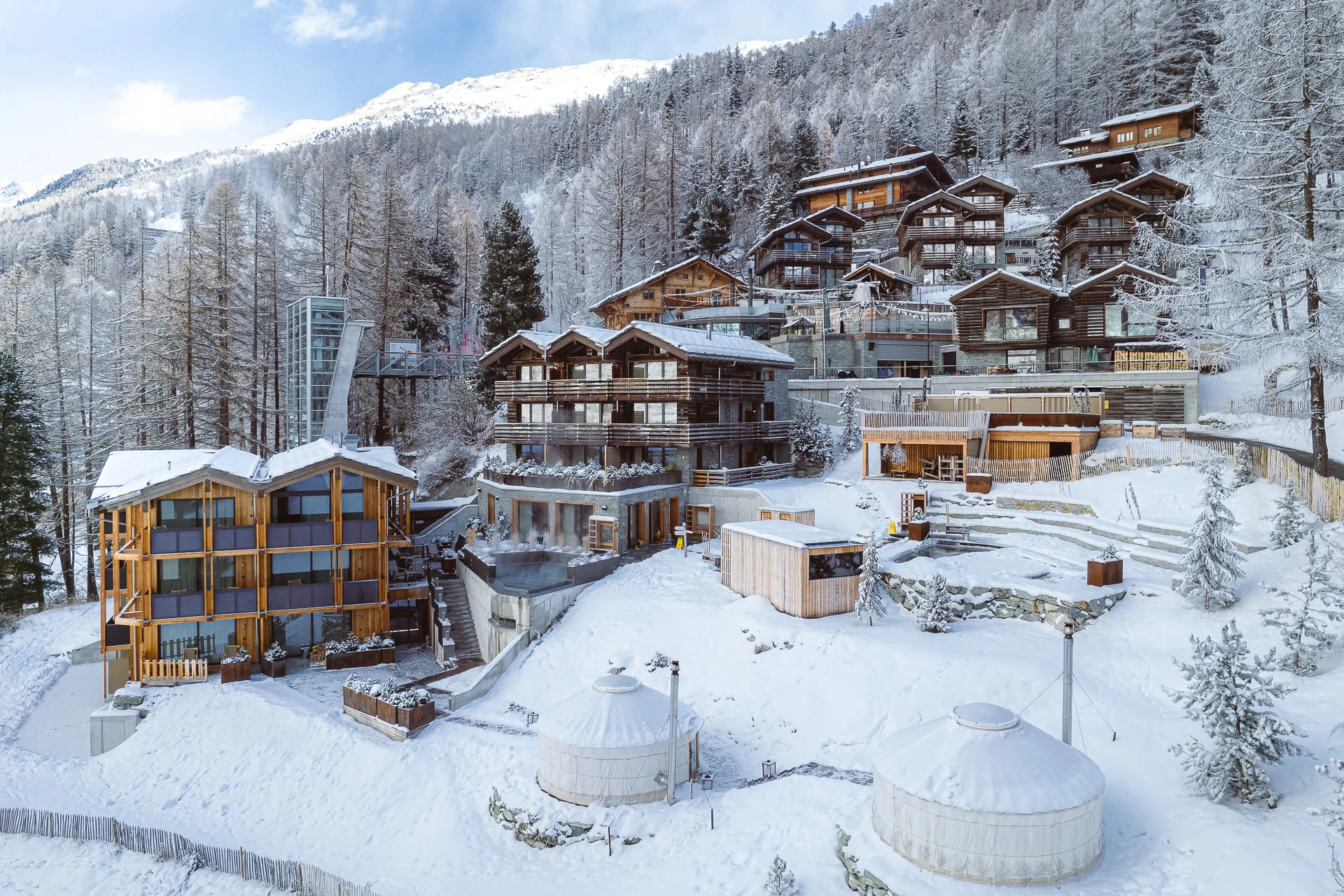
CERVO Mountain Resort approaches alpine luxury with a more contemporary spirit. Its design, restaurants, spa and proximity to the mountains create an atmosphere that feels sophisticated without becoming formal.
For the modern traveller, its appeal lies in the balance between adventure and comfort: a place where an active day in the Alps can transition naturally into an evening of exceptional dining and wellness.
Winter in Zermatt: The Alpine Season at Its Most Refined
Winter gives Zermatt its most recognisable identity. Snow settles across the village rooftops, the Matterhorn rises above a landscape of white, and the surrounding mountains become the setting for one of Europe’s most celebrated ski destinations.
The ski domain extends across the Swiss and Italian sides of the Matterhorn, offering experienced skiers remarkable variety. Yet a sophisticated Zermatt ski holiday does not need to revolve entirely around skiing.
Private mountain guiding, snowshoe walks, scenic railway journeys, long lunches and restorative spa rituals allow winter to be experienced at a more measured pace.
That contrast is part of the destination’s charm: cold alpine air outside, warmth inside; snow-covered peaks beyond the window, a beautifully prepared dinner waiting downstairs.
Zermatt in Summer: Alpine Luxury Without the Snow
Summer reveals a softer side of the destination. The surrounding slopes turn green, alpine flowers emerge, and hiking routes open into landscapes that feel remarkably spacious.
Mountain lakes including Stellisee, Riffelsee, Grindjisee and Grünsee provide different perspectives across the alpine terrain, while private guides can transform a day in the mountains into a carefully curated journey through lesser-known paths and viewpoints.
Summer also encourages a slower interpretation of luxury Zermatt travel. A long mountain lunch can replace a hurried picnic. A scenic walk can become the principal event of the day. An afternoon spa treatment can follow a morning in the high Alps.
The destination feels less like a winter resort and more like an alpine sanctuary.
The Culinary Character of Zermatt
Zermatt’s dining culture reflects its position between Swiss tradition and international sophistication. Regional classics such as raclette and fondue remain part of the experience, while contemporary restaurants have created a more diverse culinary identity.
At its best, dining here follows the same philosophy as the destination itself: local ingredients, alpine surroundings and international technique.
The most memorable meal may not always be the most formal. It could be a long lunch above the village, a glass of Valais wine overlooking the peaks, or a carefully prepared dinner after a day spent in the mountains.
In Zermatt, the setting is often as important as what arrives at the table.
Wellness, Silence and Alpine Restoration
There is something naturally restorative about Zermatt. The mountain air, altitude and distance from urban life encourage a slower pace, while the destination’s finest hotels extend that feeling through sophisticated wellness spaces.
Mont Cervin Palace’s Spa Nescens, The Omnia’s intimate spa and CERVO’s Ātman Mountain Spa each interpret alpine wellness differently, from pools and thermal rituals to treatments, yoga and quiet spaces designed for recovery.
The most compelling approach is to treat wellness not as a separate hotel facility but as part of the journey itself. A morning in the mountains, an afternoon of restorative treatments and an evening without urgency can become one of the most luxurious rhythms in Zermatt.
The Best Time for Luxury Zermatt Travel
Zermatt has two especially distinctive personalities.
Winter is ideal for snow, skiing, alpine atmosphere and the classic image of a Swiss mountain retreat. Summer is more expansive, revealing hiking routes, mountain lakes, wildflowers and long days beneath clear alpine skies.
Spring and autumn can offer a quieter atmosphere, although mountain transport, weather conditions and individual hotel operating schedules should be considered carefully when planning.
For a first journey, the best season depends on the story you want Zermatt to tell. Winter can feel glamorous and cinematic. Summer can feel spacious and contemplative.
Neither is more authentic. They simply reveal different sides of the mountain.
Arriving in Zermatt
Part of the Zermatt experience begins before arrival. The village is car-free, with private vehicles generally stopping at Täsch before travellers continue by train or approved transfer services.
Zermatt can also be reached by Switzerland’s rail network, making the journey itself part of the alpine experience. The landscape changes gradually as the valley narrows and the mountains become larger.
And then the village appears beneath the Matterhorn.
It is a fitting introduction to a destination where the journey is rarely separate from the experience.
The Luminara Perspective
Zermatt does not need exaggeration. Its reputation is already enormous, but its real appeal lies beyond the famous photograph of the Matterhorn.
It is in the quiet lanes of the old village. In a railway carriage climbing towards Gornergrat. In the reflection of the Matterhorn on Riffelsee. In a long lunch above Findeln. In returning from the high Alps to a warm suite. In the first light touching the summit while the village below is still waking.
This is why luxury Zermatt travel is best understood not as a collection of activities, but as a way of moving through one of Europe’s most extraordinary mountain landscapes.
The Matterhorn may be the reason people first look towards Zermatt. But it is the combination of place, pace, hospitality, landscape and silence that makes them remember it.
And perhaps that is the greatest luxury Zermatt offers:
the opportunity to spend a little longer somewhere that has no need to rush.