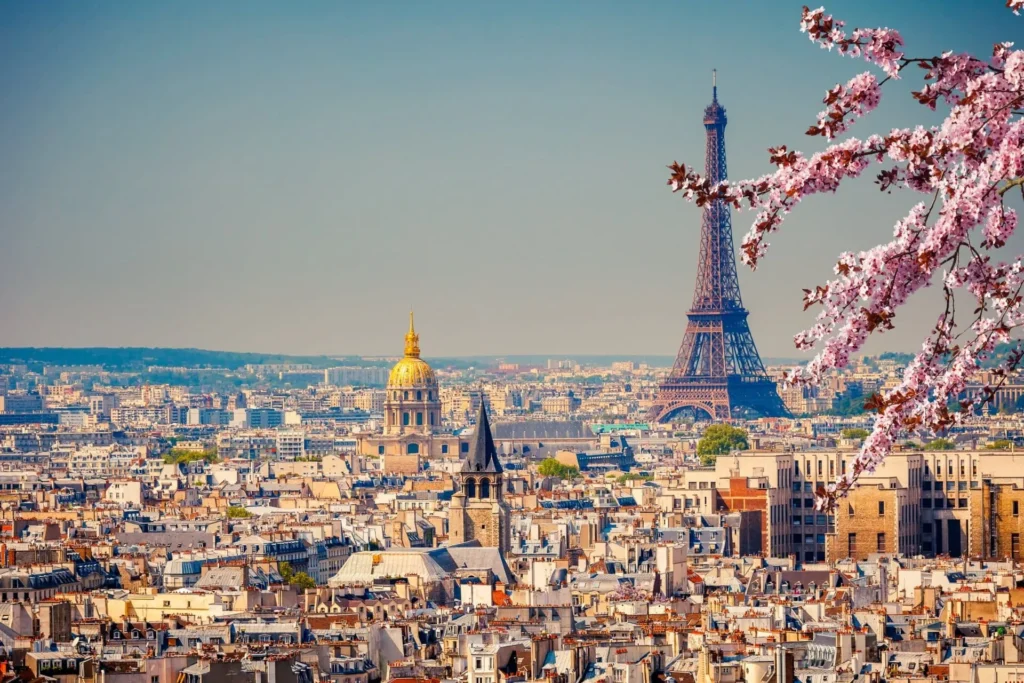
Interlaken reveals itself gradually.
At first, it is the water that commands attention. Lake Thun stretches west beneath wooded slopes and distant summits, while Lake Brienz gathers an almost luminous blue-green light to the east. Between them, the Aare passes through a narrow stretch of land where the town has made its home.
Then the mountains begin to take over the horizon.
The Eiger, Mönch and Jungfrau rise beyond the valleys, their scale becoming increasingly apparent as the railway or road leaves the lower country behind. Villages appear higher on the slopes. Waterfalls descend from cliffs. Mountain railways begin to climb. The geography changes constantly, yet never feels fragmented.
This is the particular pleasure of luxury Interlaken travel. The destination is not contained within the town itself. Interlaken is a beautifully positioned threshold to the Bernese Oberland — a place from which lakes, valleys, villages and the high Alps can be approached with equal ease.
It is also a destination that rewards restraint.
A private boat across the lake can be more memorable than an over-scheduled afternoon. A long lunch above Lauterbrunnen can hold more meaning than a catalogue of viewpoints. And an evening spent watching the last light move across the Jungfrau massif may be the finest experience of the day.
Interlaken does not ask to be conquered. It asks to be experienced.
The Geography of Elegance: Between Thun and Brienz
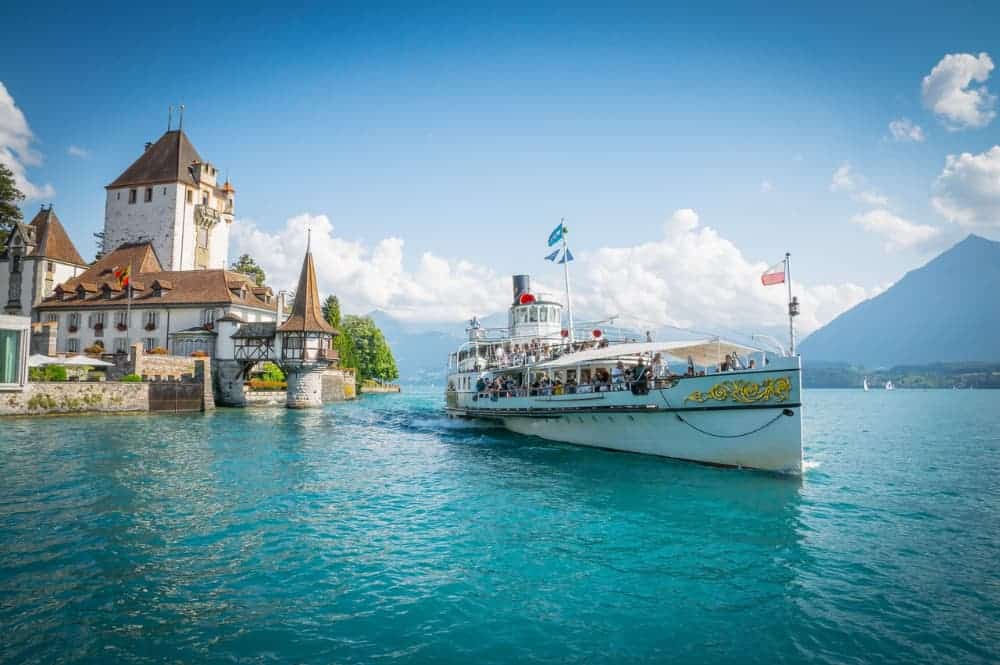
The name Interlaken comes from its position between two lakes, but the phrase does little justice to the sophistication of the landscape.
Lake Thun and Lake Brienz are not variations of the same scenery. They possess entirely different temperaments.
Lake Thun feels broad and composed, its shoreline opening towards cultivated hills, historic settlements and the distant architecture of the Alps. Lake Brienz is more dramatic. Its intensely coloured water sits beneath steeper mountain walls, giving the eastern side of the region a more secluded, almost cinematic character.
Together they create an extraordinary foundation for a journey.
The traveller can spend one day moving slowly across the water and another ascending into the mountains, returning each evening to the same elegant base. That combination of accessibility and visual drama is one of the reasons Interlaken remains such a compelling address for luxury travel in Switzerland.
The pleasure is not in seeing how much can be fitted into a day. It is in knowing that almost every direction leads somewhere worth lingering.
Lake Thun: A Refined Escape Within Luxury Interlaken Travel
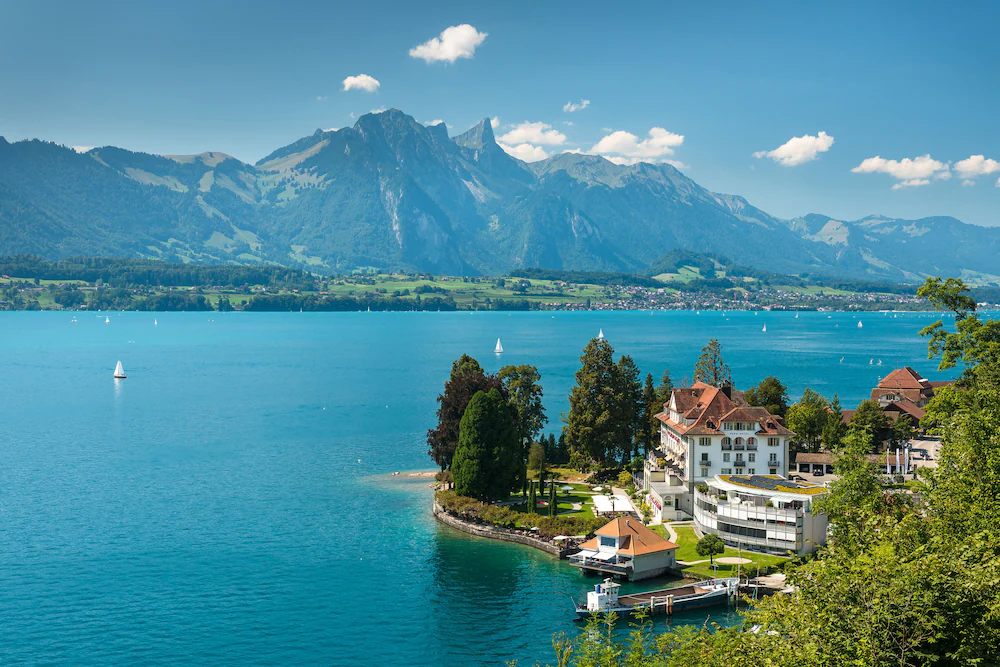
Lake Thun possesses a quieter kind of beauty.
Its broad surface gives the landscape room to breathe. Villages and historic architecture punctuate the shoreline, while the mountains remain sufficiently distant to create depth rather than enclosure.
From the water, the perspective changes completely. The shoreline withdraws, the sound of the town disappears, and the Bernese Alps begin to dominate the horizon. A private or carefully curated lake journey becomes less an excursion than an exercise in perspective.
The lake also opens the way towards Thun, whose old town and castle lend the western end of the journey a distinctly historic character.
For the Luminara traveller, Lake Thun is best understood through pace. There is no reason to rush across it. Let the boat move slowly. Allow the scenery to rearrange itself. Stop for lunch when the setting deserves it.
In a country celebrated for precision, Lake Thun offers something equally valuable: time without urgency.
Lake Brienz: Colour, Stone and Alpine Silence
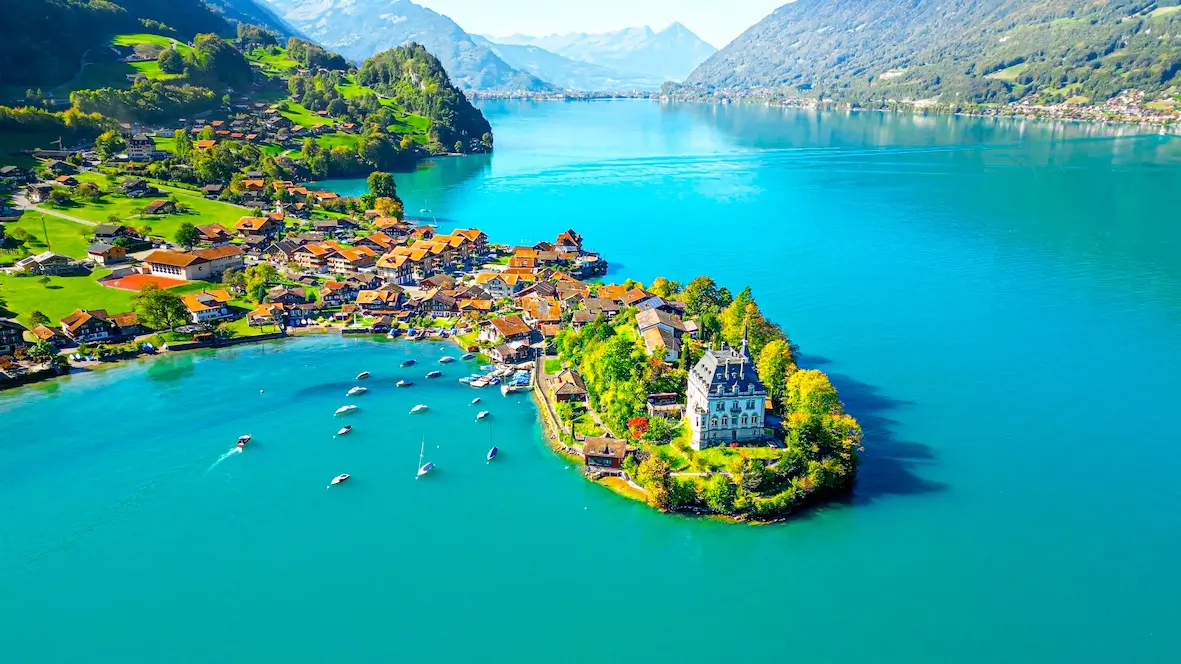
Lake Brienz has a different temperament altogether.
The water can take on an extraordinary blue-green clarity beneath an alpine sky, while the surrounding mountains rise with a severity that makes the lake feel almost secluded.
The eastern shore leads towards Brienz, a village associated with woodcarving and traditional Swiss craftsmanship. Yet the most persuasive way to understand the lake is from the water itself.
As the boat moves away from Interlaken, the familiar scale of the shore begins to disappear. Forested slopes descend towards the water. Cliffs gather height. Small settlements become almost incidental against the mountains.
It is a landscape that does not need embellishment.
The luxury lies in experiencing it without interruption — perhaps with an unhurried lunch, perhaps simply from the quiet of a private deck, watching the colour of the water shift as the light changes.
Lake Brienz is not merely beautiful. It is beautifully self-contained.
Harder Kulm: The View That Explains Interlaken
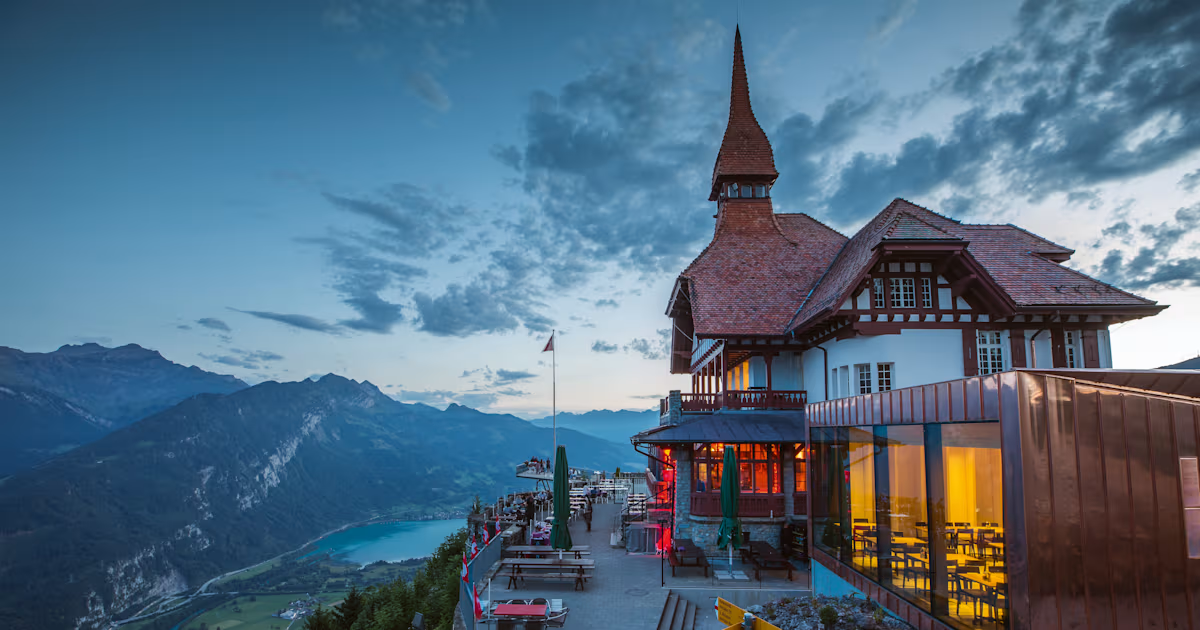
Some viewpoints are memorable because they are beautiful. Harder Kulm is memorable because it explains the destination.
From above Interlaken, the relationship between the two lakes becomes immediately legible. Lake Thun stretches in one direction, Lake Brienz in the other, while the town occupies the narrow land between them. Beyond this intimate geography, the high Bernese Alps form an imposing horizon.
Seen from street level, Interlaken can feel like a mountain town with two lakes. Seen from Harder Kulm, it becomes something more precise: a natural crossroads between the lower lake country and the high alpine world.
It is worth arriving without treating the viewpoint as a photograph to collect. Stay long enough for the light to change. Watch the lakes lose their daytime intensity. Observe the first lights appearing below.
Interlaken becomes particularly beautiful when the day begins to withdraw.
The Jungfrau Horizon
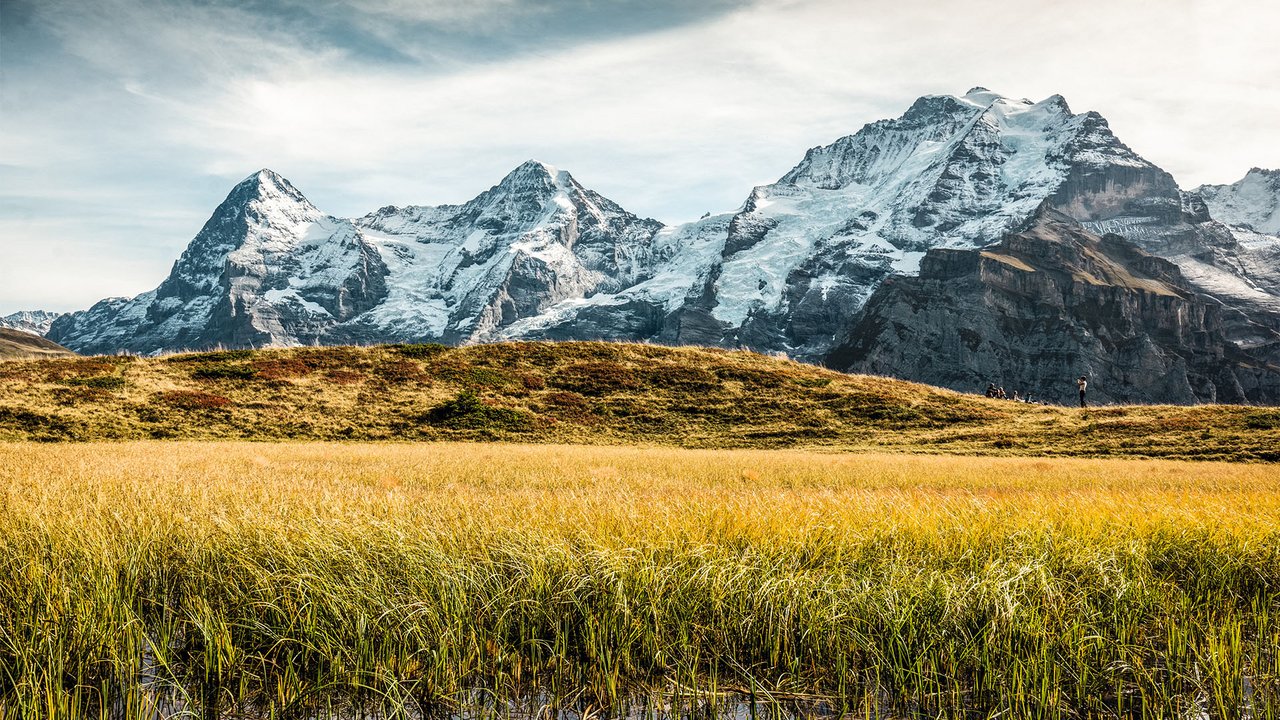
Beyond the immediate landscape stands the mountain world that gives the entire region its grandeur.
The Eiger, Mönch and Jungfrau form one of the most recognisable alpine compositions in Switzerland. Their presence changes according to distance. From Interlaken, they seem remote and almost impossibly high. As the railway climbs into the Jungfrau region, their scale becomes progressively more intimate.
This is why the journey matters.
Luxury travel in Switzerland is often misunderstood as an exercise in comfort alone. In the Bernese Oberland, comfort is only half the story. The other half is access — being able to move through an extraordinary landscape without compromising the quality of the experience.
A private guide, an intelligently planned rail journey, a mountain lunch and time left deliberately unoccupied can transform the same geography into something far more personal.
The Alps reward those who give them attention.
Jungfraujoch: Beyond the Valley
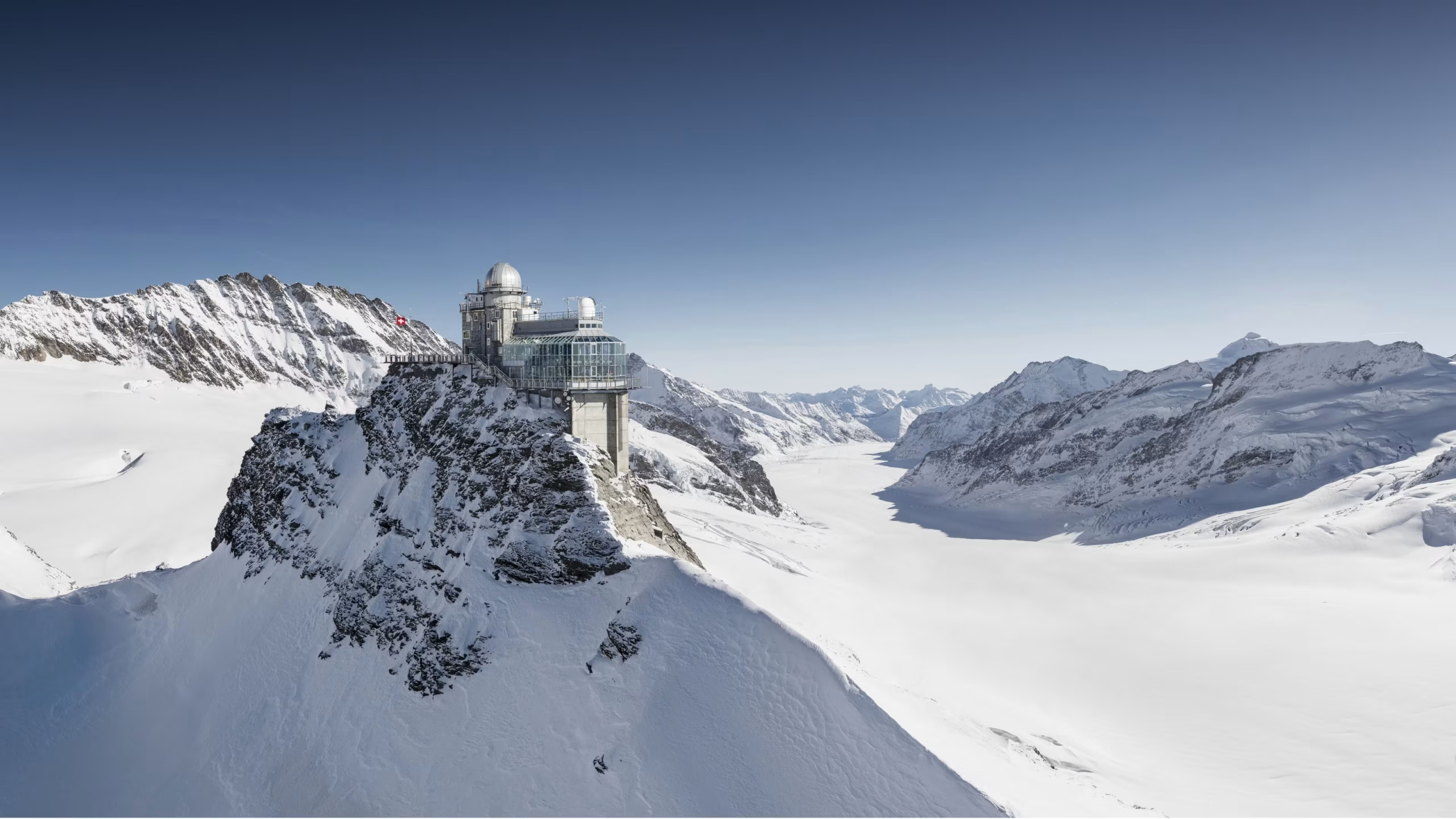
Jungfraujoch represents the moment when Interlaken’s landscape becomes truly alpine.
The ascent is part of the experience. Green valleys and settled villages gradually give way to steeper terrain, rock and snow. The atmosphere changes before the final destination is even reached.
At the high point, the landscape is stripped back to its essentials: ice, rock, light and immense distance.
The phrase ‘Top of Europe’ has become inseparable from Jungfraujoch, but the more meaningful experience is not the slogan. It is the transition from the cultivated world below into a high-altitude environment where human presence feels almost incidental.
That change of scale is what makes the journey memorable.
For a luxury Interlaken itinerary, Jungfraujoch is best approached with enough time to absorb the ascent rather than treating it as a hurried box to be checked. The journey should have space around it — a thoughtful departure, time at altitude, and an unhurried return.
At this elevation, the mountains deserve more than a photograph.
Lauterbrunnen Valley: A Landscape of Verticality
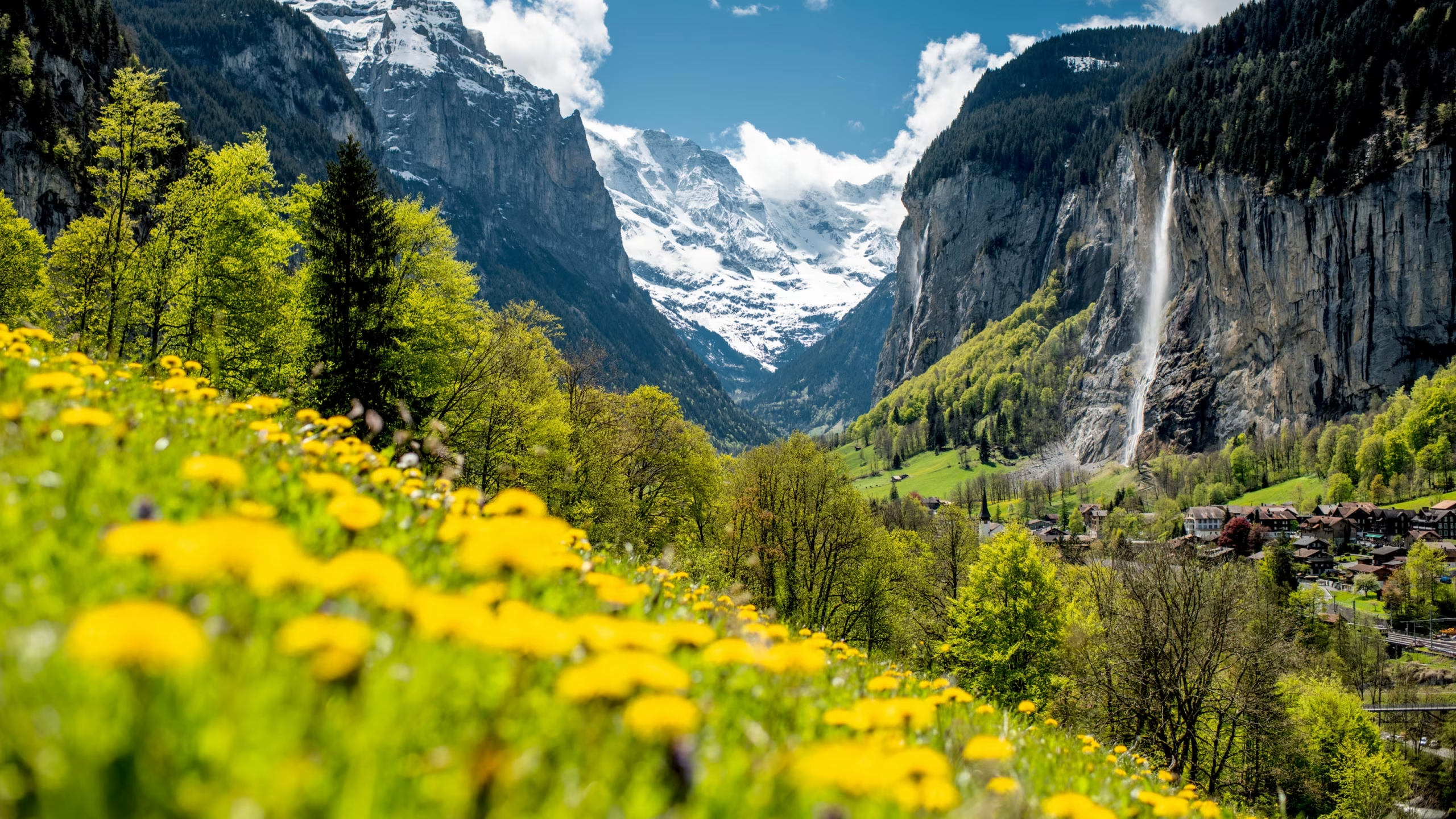
Lauterbrunnen changes the language of the landscape.
The valley floor appears almost impossibly narrow beneath towering limestone walls, while waterfalls descend from the heights in delicate vertical threads. Meadows occupy the spaces between the cliffs, creating a contrast between softness below and immense geological structure above.
Staubbach Falls is the most recognisable expression of this landscape, but the waterfall is only one element of the valley’s atmosphere.
The real experience is looking upwards.
Here, the mountains do not sit politely on the horizon. They rise directly from the valley, enclosing it and creating a sense of drama that photographs rarely convey.
Lauterbrunnen is therefore better experienced slowly. Walk without rushing towards the next viewpoint. Allow the sound of water to become part of the journey. Notice how quickly the character of the valley changes as clouds move across the cliffs.
For travellers seeking a more contemplative side of Switzerland, this may be one of the region’s most affecting landscapes.
Mürren: An Alpine Village Above the Noise
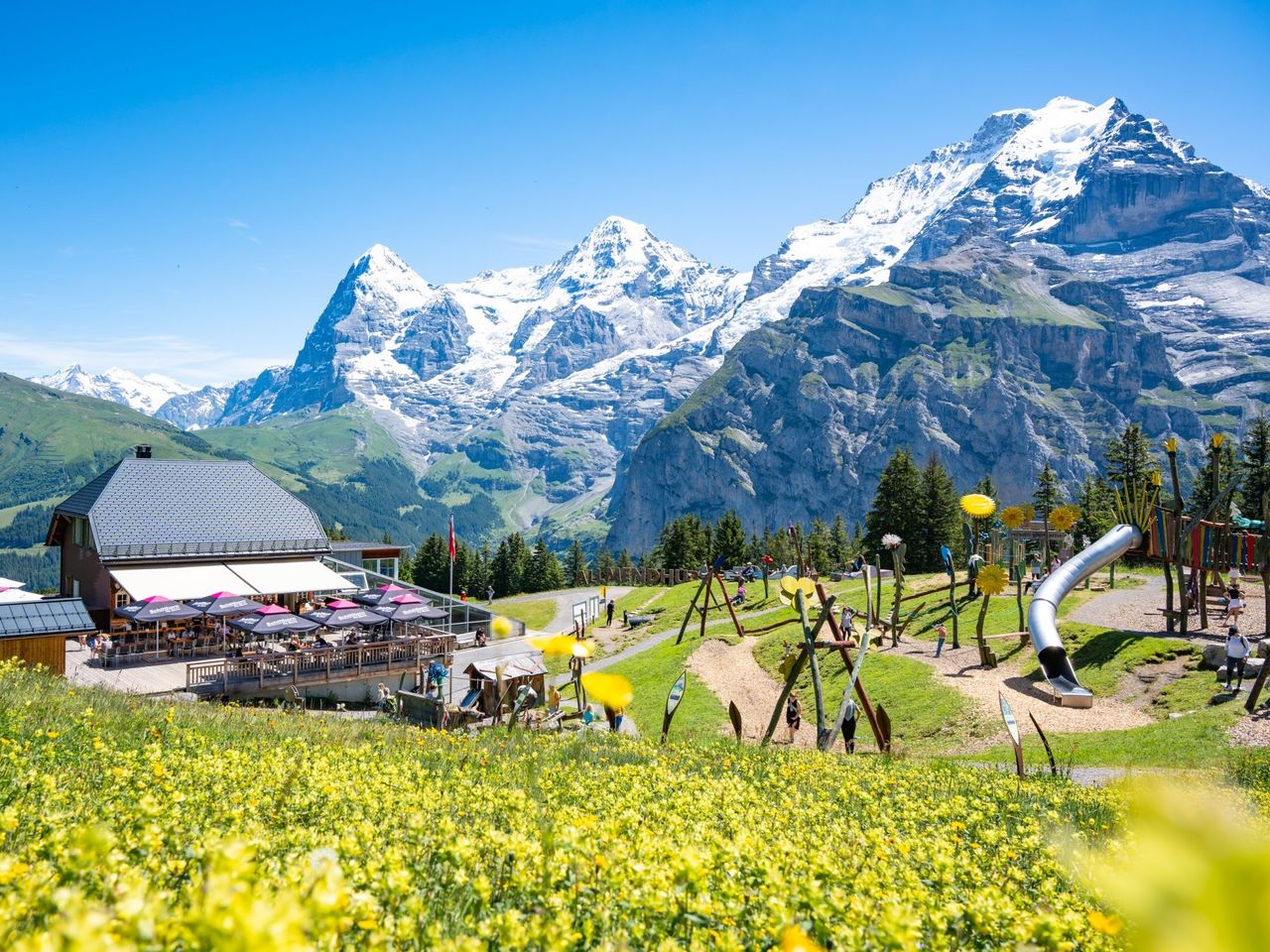
Above Lauterbrunnen, Mürren feels like a world that has deliberately stepped away from the road.
The village’s elevated position places it directly within the great mountain panorama, with the Jungfrau, Mönch and Eiger forming an almost architectural backdrop to daily life.
That is what makes Mürren so compelling.
The mountains are not an attraction here. They are the setting for breakfast, the walk to lunch, the view from a terrace and the final scene of the evening.
For the luxury traveller, this creates a rare sense of intimacy. A stay in Mürren can be active without feeling hurried and remote without feeling inaccessible.
The greatest luxury may simply be the absence of unnecessary movement. One beautiful view can be enough.
Wengen: Alpine Grace Above the Valley
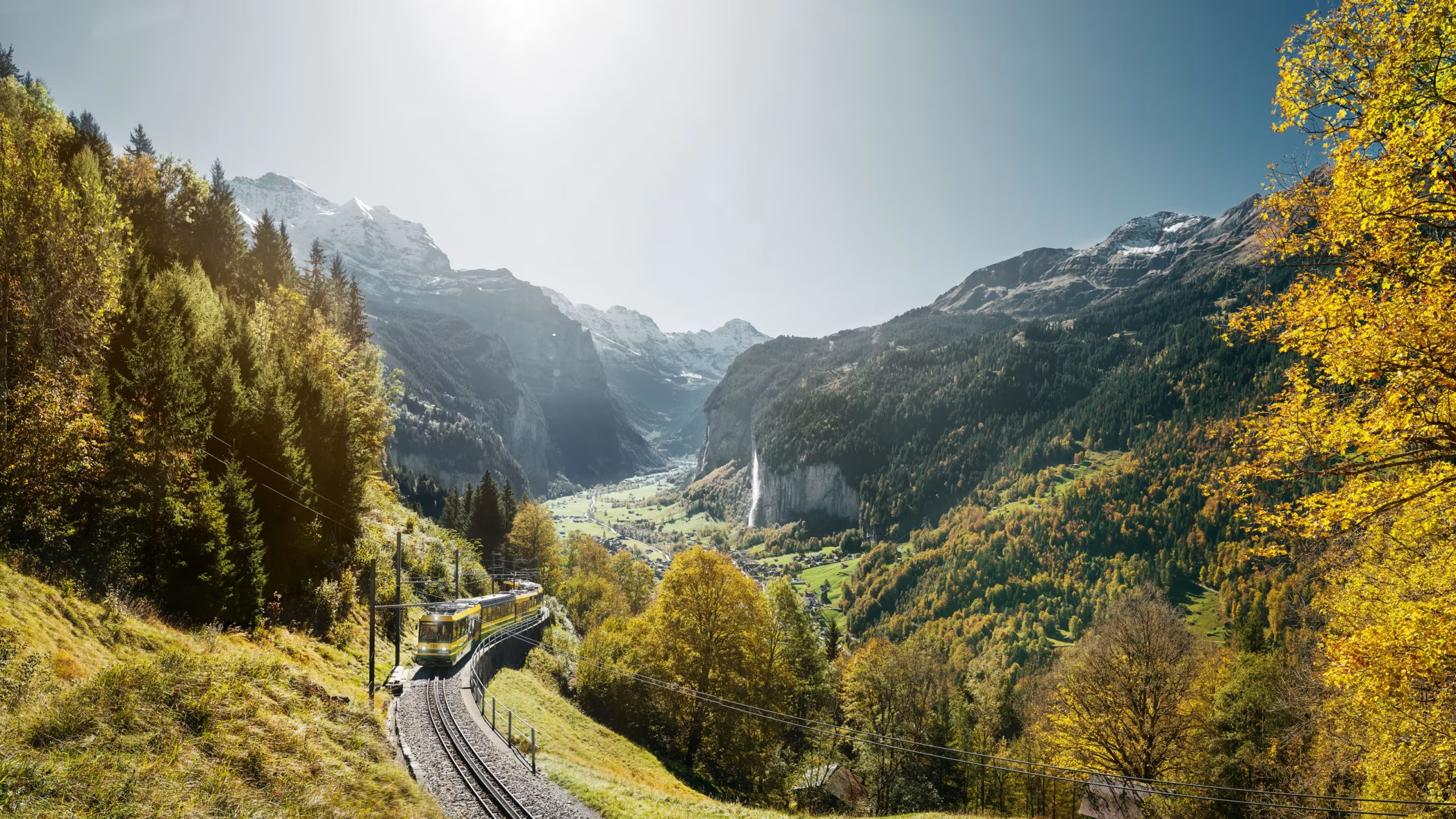
Wengen carries a different kind of alpine elegance.
Perched above Lauterbrunnen, the village faces the Jungfrau massif and retains the visual language of a traditional mountain settlement. Its setting is dramatic, yet the atmosphere remains remarkably composed.
In winter, snow gives the village its classic alpine character. In summer, the surrounding meadows open into walking routes and long mountain days.
Wengen works particularly well for travellers who want to remain close to the major landscapes of the Bernese Oberland while staying somewhere with a more intimate village identity.
It is not grand in scale. It is gracious in proportion.
Grindelwald: Beneath the Eiger
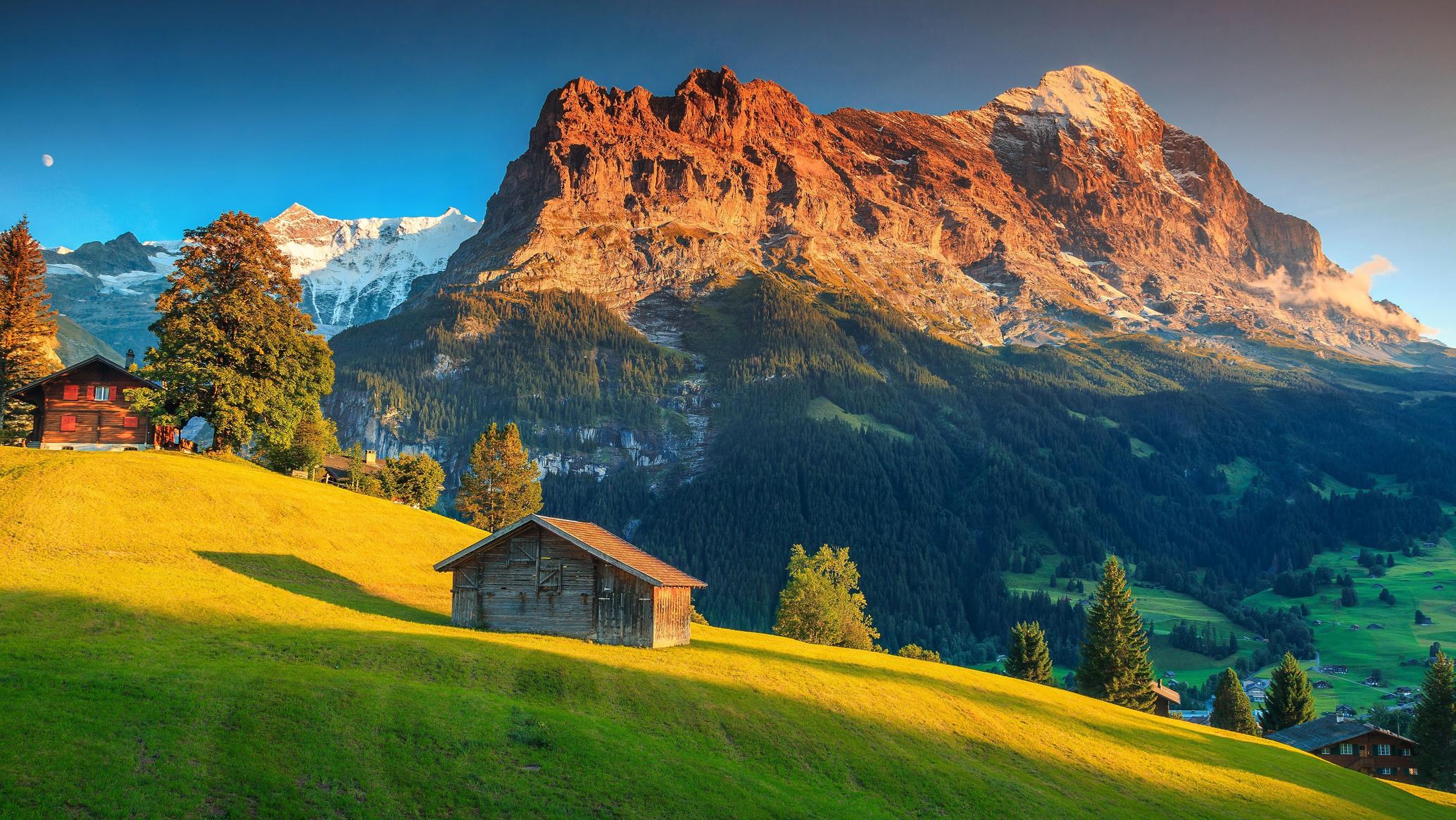
Grindelwald belongs to a different chapter of the Bernese Oberland.
Here, the Eiger becomes the defining presence, its immense northern face rising above the valley and giving the village an unmistakable sense of drama.
The surrounding mountain world offers access to celebrated landscapes around First, Bachalpsee and the higher alpine terrain. Yet the most rewarding way to experience Grindelwald is not necessarily to pursue every attraction.
A private mountain guide can make the day feel more considered — choosing a route according to weather, light and the traveller’s interests rather than following a predetermined sequence.
Perhaps the morning belongs to the mountains, lunch to an alpine terrace and the afternoon to a slow return through the valley.
The distinction is subtle but important. Luxury is not doing more. It is having the freedom to choose better.
Kleine Scheidegg: Beneath the Great Peaks
At Kleine Scheidegg, the Bernese Alps feel almost architectural.
The Eiger, Mönch and Jungfrau rise around the landscape with an immediacy that makes the surrounding railway lines and mountain paths appear almost delicate.
It is one of those rare places where scale becomes the principal experience.
The mountains are not simply visible. They occupy the entire field of vision.
Kleine Scheidegg also forms part of the journey towards Jungfraujoch, giving it a natural place within a broader exploration of the region.
But even without a fixed itinerary, the setting rewards a pause. Stand still for a while. Watch the clouds move across the peaks. Notice how quickly the light changes.
The Alps are constantly in motion, even when they appear completely still.
Luxury Stays in Interlaken
The finest luxury hotels in Interlaken understand a simple principle: accommodation should not compete with the landscape. It should frame it.
Victoria-Jungfrau Grand Hotel & Spa
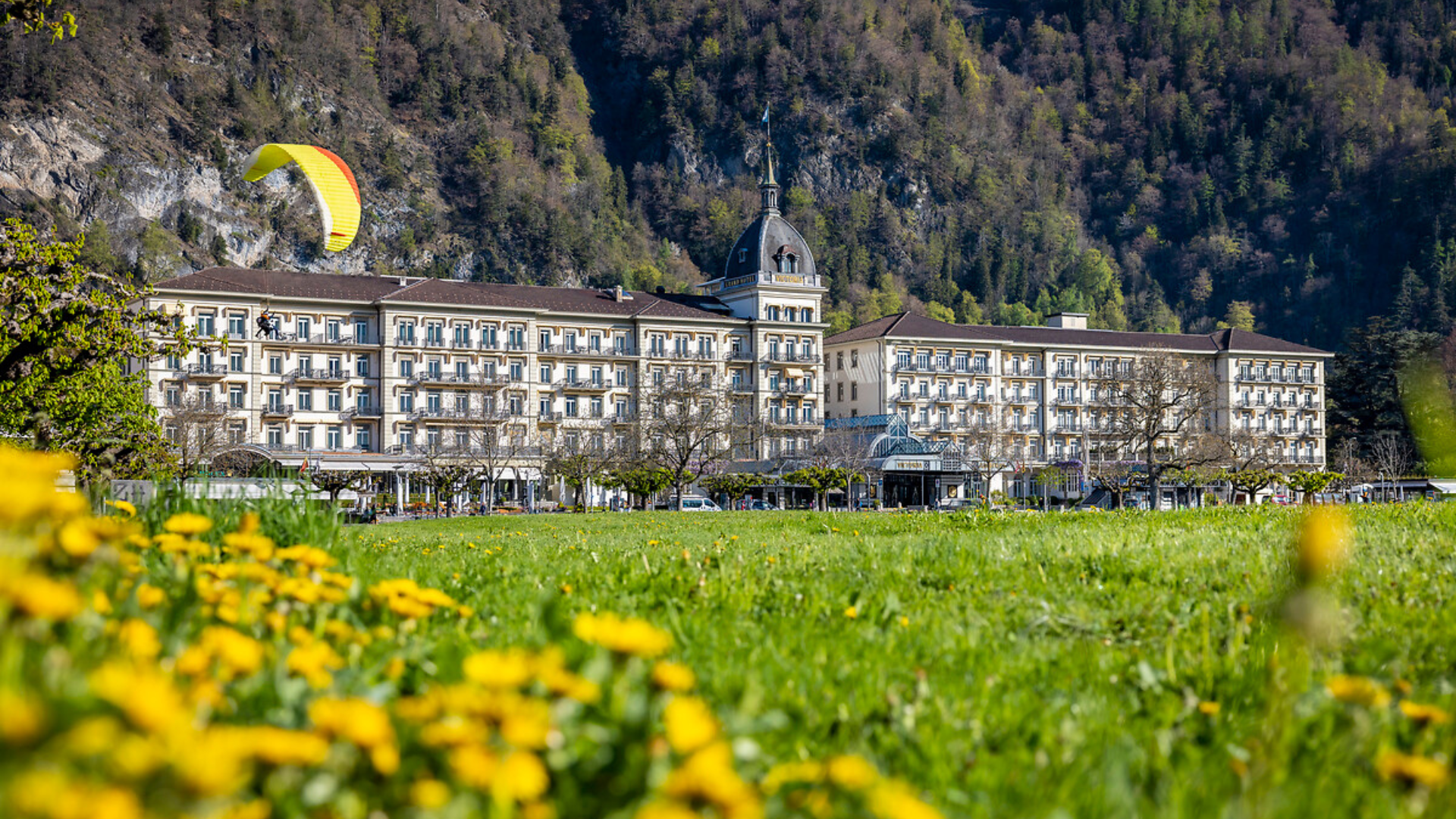
Among the town’s most established addresses, Victoria-Jungfrau Grand Hotel & Spa carries the atmosphere of a classic European grand hotel.
Its heritage, central position and long relationship with the destination give it a sense of permanence that newer properties cannot easily reproduce. Interiors, service and wellness facilities provide the refinement expected of a leading Swiss hotel, while the surrounding mountains keep the experience unmistakably tied to place.
For travellers who appreciate tradition rather than trend, this is an especially fitting interpretation of Interlaken luxury.
The Luxury of Returning
The deeper pleasure of luxury accommodation in Interlaken is what happens after the mountains.
Cold air gives way to warm interiors. Boots are exchanged for something more comfortable. A treatment replaces the day’s exertion. Dinner becomes unhurried.
The hotel is no longer simply somewhere to sleep. It becomes the final movement of the day’s story.
The Culinary Character of the Bernese Oberland
The region’s cuisine is rooted in the mountains, but it does not have to remain rustic in expression.
Swiss cheeses, seasonal produce, regional meats and traditional preparations form the foundation, while contemporary restaurants reinterpret the landscape through more precise techniques and international influences.
The most memorable meal, however, may have little to do with formality.
It could be raclette enjoyed after a cold day in the mountains, a long lunch above Lauterbrunnen, a lakeside dinner as the water turns silver, or an elegant final course in a hotel dining room while the peaks disappear into evening.
In the Bernese Oberland, the setting is part of the cuisine. A meal tastes different when the Eiger is outside the window.
Wellness Between Water and Mountains
Interlaken lends itself naturally to restoration.
The lakes encourage stillness. The mountains invite movement. Together they create a rhythm that is unusually well suited to contemporary wellness.
A considered day might begin with a quiet walk beside the Aare, continue into the high Alps, return for a private treatment and end with an evening that has nowhere else to be.
The most sophisticated approach is not to turn wellness into another itinerary item. It is to allow the entire journey to become restorative.
Fresh air. Long walks. Deep sleep. Excellent food. Water. Silence.
Sometimes the most luxurious itinerary is the one that leaves enough room to breathe.
Interlaken Through the Seasons
Spring arrives unevenly in the Bernese Oberland. The lower landscape begins to soften while snow remains across the higher peaks, creating a striking contrast between valley and mountain.
Summer opens the region fully. The lakes become central to the experience, mountain trails stretch into the high country and the surrounding villages take on their most expansive character.
Autumn brings a more restrained palette. Forests begin to change colour, the air becomes cooler and the high peaks regain their winter presence.
Winter transforms the region into an alpine theatre of snow. Wengen, Mürren and Grindelwald become particularly compelling bases for skiing and mountain experiences, while Interlaken retains its role as a refined gateway to the surrounding landscape.
Arriving in Interlaken
Interlaken’s position within Switzerland’s rail network is one of its greatest practical luxuries.
The journey can be seamless, but there is no reason for it to feel purely functional. Approaching by rail allows the landscape to unfold naturally — the countryside becoming more alpine, the horizon gathering peaks and the lakes eventually revealing themselves.
By the time Interlaken appears, the transition has already begun.
The destination has announced itself before the traveller has even checked in.
The Luminara Perspective
Interlaken is not a destination that reveals itself in a single image.
It is cumulative.
First comes the water. Then the mountains. Then the villages suspended above the valleys. Then the waterfalls, the railways, the forests and the high alpine world beyond them.
That accumulation is precisely what distinguishes Interlaken from the more singular drama of a destination such as Zermatt.
Zermatt belongs to one great mountain. Interlaken belongs to an entire landscape.
One morning may belong to Lake Thun. Another to Lake Brienz. A third may carry you towards Jungfraujoch, while another unfolds slowly in Mürren or beneath the Eiger at Grindelwald.
And then there are days when the most memorable decision is to do very little at all.
That is the deeper appeal of luxury Interlaken travel.
Nothing is far away, yet nothing has to be rushed.
The lakes provide stillness. The mountains provide perspective. The villages provide intimacy. And the spaces between them provide something increasingly rare in modern travel: room to pay attention.
Interlaken does not ask the traveller to collect experiences.
It offers something more enduring.
A landscape spacious enough to slow you down, refined enough to make the slowing down feel effortless, and extraordinary enough that you will remember exactly why you did.
The Bernese Alps offer one interpretation of Switzerland’s mountain world; in Zermatt, that story takes on another character, shaped by the singular presence of the Matterhorn.