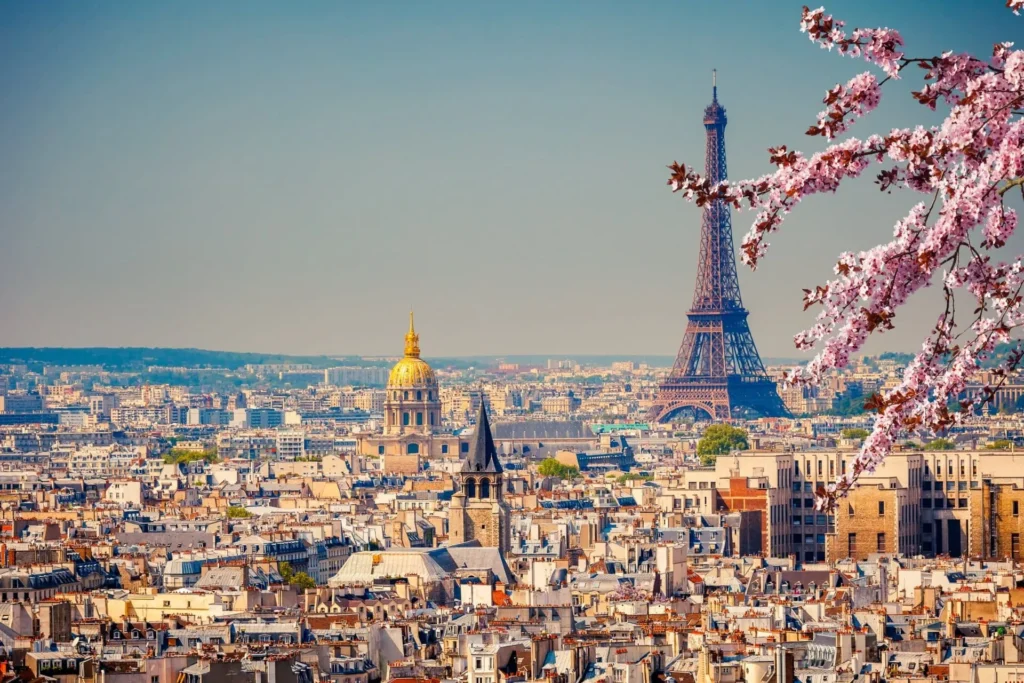
Lucerne does not reveal itself all at once. It arrives in fragments: the pale movement of the Reuss beneath an old wooden bridge, a church tower appearing between painted façades, the sudden expanse of Lake Lucerne beyond a narrow street, and, farther still, the Alps gathering along the horizon.
The first impression is visual. The lasting one is atmospheric.
Set beside Lake Lucerne and framed by the mountains of Central Switzerland, the city possesses an unusual intimacy. Medieval streets, lakefront promenades, grand hotels and Alpine landscapes exist within remarkably close reach of one another. A morning can belong to architecture, an afternoon to open water, and an evening to the quiet theatre of the mountains after sunset.
This is the particular character of Luxury Lucerne Travel: not a destination built around spectacle, but one in which beauty has been allowed to accumulate naturally. Water, history, art and landscape continually answer one another.
Lucerne is often described as a gateway to the Swiss Alps. That is true, but incomplete. The city deserves to be experienced as a destination in its own right—a place where the journey is not measured by how many sights are collected, but by how deeply a landscape is allowed to settle into memory.
Luxury Lucerne Travel: Where Water, History and the Alps Meet
To understand Lucerne, begin with the water.
Lake Lucerne is not scenery placed behind the city; it is part of its identity. Its irregular shoreline reaches deep into the surrounding landscape, creating bays, peninsulas and constantly changing perspectives. Under morning cloud it can appear silver and restrained; beneath clear summer light, almost luminous.
The city gathers at the western end of this extraordinary geography, where the Reuss carries the lake onward. That meeting of river and lake gives Lucerne its visual rhythm. The historic centre feels close and human in scale, yet the landscape beyond it is immense.
For the discerning traveller, that compression is one of the city’s greatest pleasures. Lucerne allows several distinct worlds to exist within a single day without demanding that the day become hurried.
The Old Town: Lucerne’s Living Memory
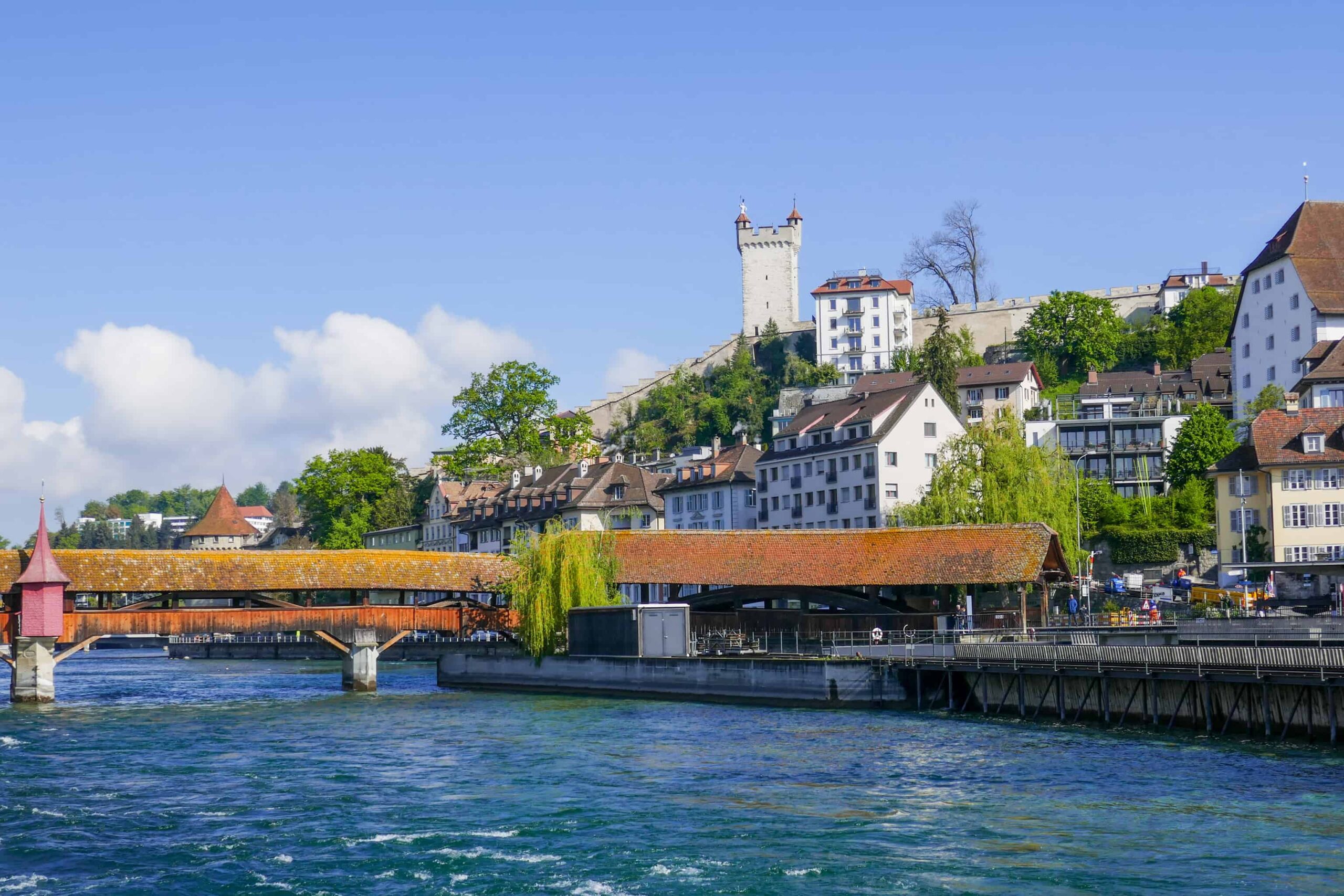
Early morning is when Lucerne’s historic centre becomes most eloquent.
Before the streets fill, the Old Town seems to belong to itself. Painted façades catch the first light, shutters open slowly, and the narrow streets lead towards squares whose proportions still recall another century. Weinmarkt and Hirschenplatz are particularly evocative, their buildings carrying decorative details that turn an ordinary walk into a quiet study of the city’s past.
Yet the Old Town’s appeal is not simply its age. History here remains inhabited. Restaurants, boutiques and everyday addresses occupy buildings whose architecture has outlived generations, creating a continuity that photographs cannot fully capture.
Walk without a fixed route. Follow the Reuss when it appears, cross a square when the light draws you in, and allow the city to reveal its details between the landmarks. Luxury Lucerne Travel is at its most rewarding when there is enough time for the destination to interrupt the itinerary.
Chapel Bridge: The Image That Defines Lucerne
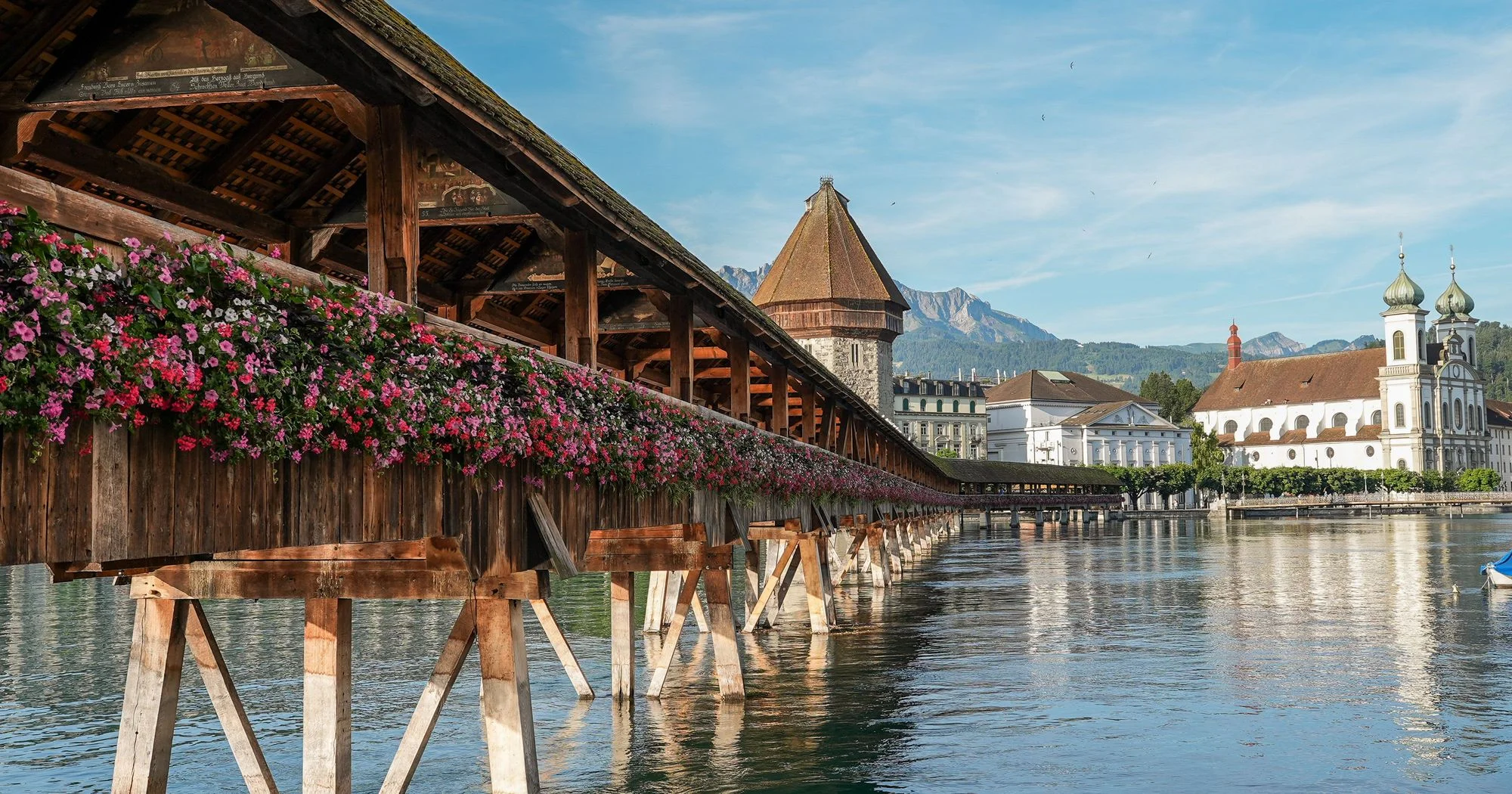
Across the Reuss, Chapel Bridge remains Lucerne’s defining image.
Known as Kapellbrücke, the covered timber bridge dates to the 14th century. Its diagonal line across the river, together with the octagonal Water Tower beside it, has become one of Switzerland’s most recognisable urban silhouettes.
Cross it early, before the city fully wakes. The painted triangular panels beneath the roof introduce scenes from Swiss history, while the openings between them frame shifting views of water, stone and sky.
The bridge is famous, but its fame has not erased its intimacy. It still functions as a crossing rather than a monument sealed behind glass. That living quality matters. Lucerne’s history is most compelling when it remains part of the city’s present.
The Lion Monument and the Quiet Side of Lucerne
Lucerne has another historical register, quieter and more contemplative.
The Lion Monument, carved into natural rock, commemorates the Swiss Guards who died during the French Revolution. Its power comes from restraint: the monumental animal, the surrounding stone and the stillness of the setting create an atmosphere far removed from the movement of the waterfront.
Nearby, the Rosengart Collection introduces a different cultural dimension, bringing important works of modern European art into the historic city. Together, these places reveal why Lucerne rewards more than a first glance. Beneath the postcard image lies a city shaped by memory, art and a surprisingly deep cultural life.
Lake Lucerne: The City Seen from the Water
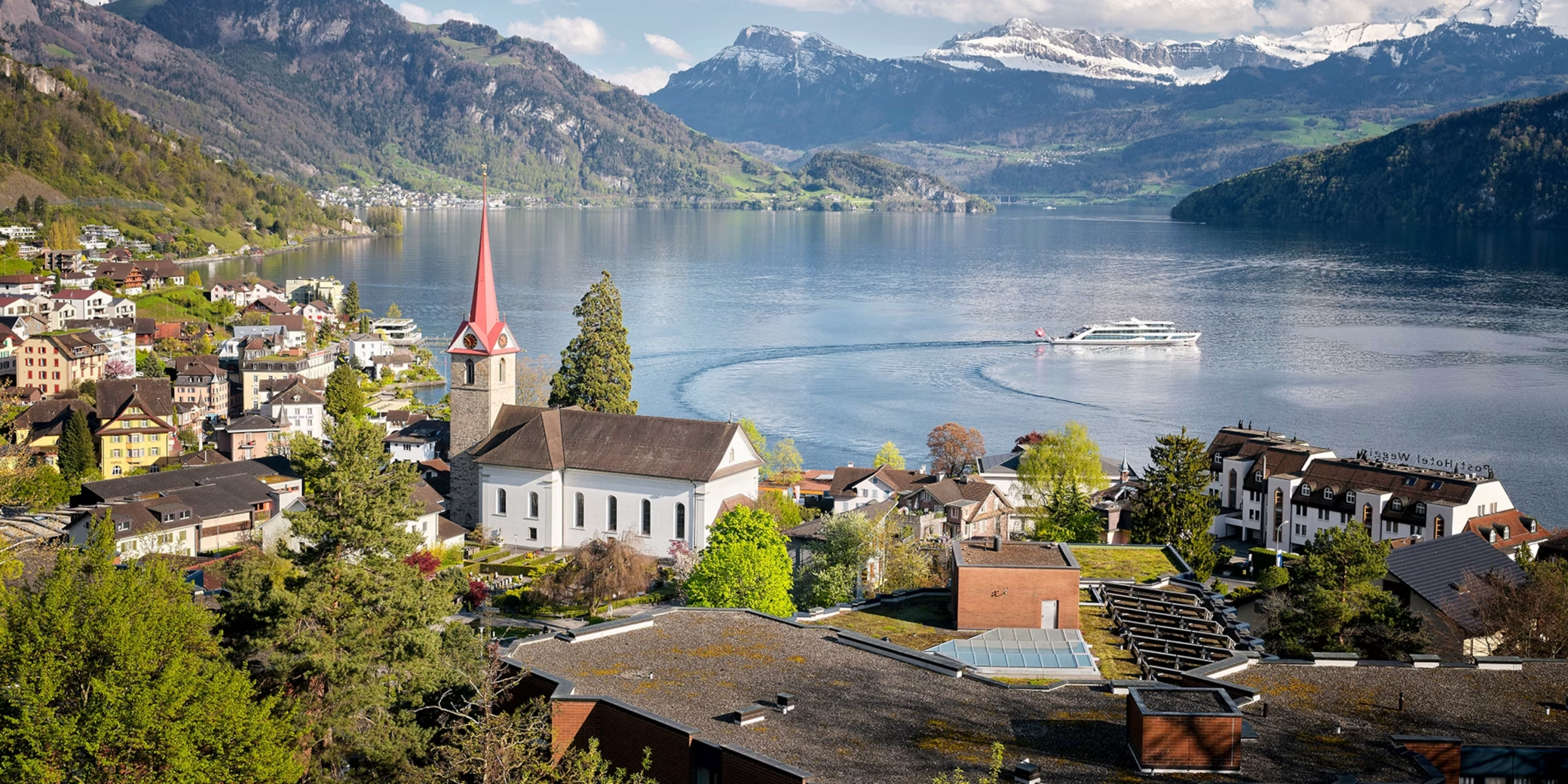
Eventually, Lucerne asks to be viewed from a different angle.
Aboard a historic paddle steamer or contemporary lake vessel, the city begins to recede. The waterfront becomes a delicate line of architecture; the mountains occupy more of the horizon; villages and wooded slopes appear where streets had been.
A Lake Lucerne cruise changes the tempo of the journey. Nothing needs to be rushed. The shoreline unfolds rather than being visited, and the geography gradually becomes legible as a whole.
Routes towards Weggis and Vitznau open views towards the surrounding mountains and the approaches to Rigi, while longer journeys reveal just how deeply water shapes this part of Switzerland.
For Luminara, the appeal is precisely its lack of complication. The lake does not require an elaborate performance. It asks only that you sit, look, and let the landscape move.
Mount Pilatus: Above the Lake, Beyond the City
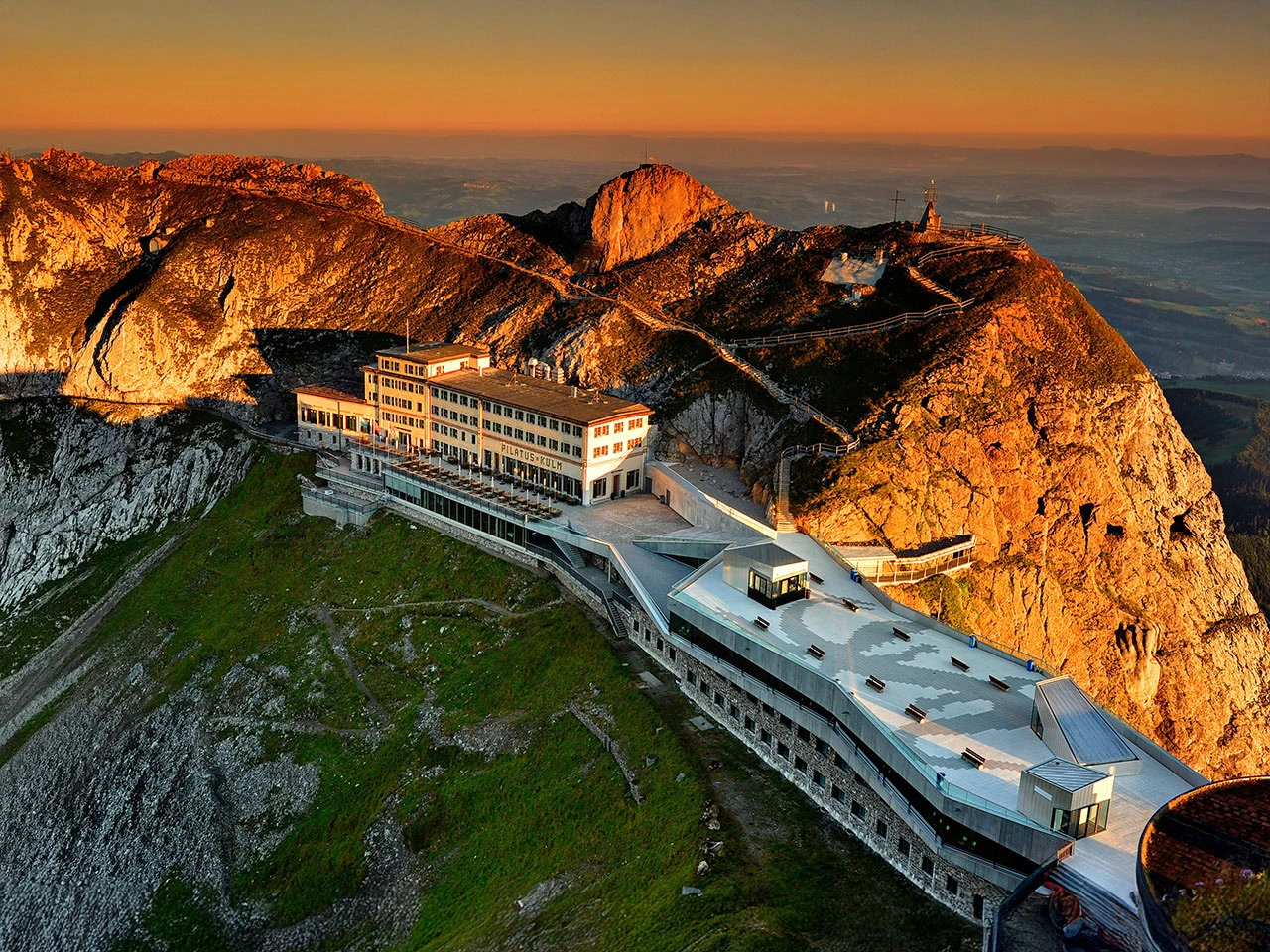
South of Lucerne, Mount Pilatus changes the scale of the journey.
The ascent is part of the experience. Depending on the route, boat, mountain railway and cableway can become successive chapters of the same day, carrying the traveller from the lake to an increasingly Alpine landscape.
At the summit, Lucerne appears transformed. The city becomes a small geometric presence beside the water; forests and valleys spread beneath the viewpoint; distant peaks establish the larger geography in which the city sits.
Pilatus possesses a certain drama. Its ridges, changing weather and high-altitude panoramas make it one of the region’s most memorable mountain encounters. On clear days the horizon seems to widen indefinitely. When cloud gathers, the mountain becomes something more atmospheric—a landscape of stone, mist and sudden openings of light.
Mount Rigi: The Mountain of Light
If Pilatus feels theatrical, Mount Rigi is more contemplative.
Rising between Lake Lucerne and Lake Zug, the mountain has long been associated with expansive views across Central Switzerland. Its accessibility makes it easy to reach, but the experience is anything but hurried.
From the higher paths, the geography resolves itself: lakes below, villages scattered across green slopes, distant peaks layered behind one another, and Lucerne positioned within a landscape considerably larger than its historic centre suggests.
Rigi suits travellers who prefer an unhurried mountain day. Walk a panoramic trail, pause at a viewpoint, and allow the changing light to become the principal event. Sometimes the most memorable part of an excursion is the moment when the itinerary stops asking anything of you.
Luxury Hotels in Lucerne: Where the City Becomes a Stay
In Lucerne, the choice of hotel can quietly change the character of the journey.
A lakeside palace places the water and mountains directly into the rhythm of the day. A historic city address keeps the old town within walking distance, allowing the traveller to experience Lucerne from within rather than simply observe it. Higher above the city, a secluded retreat changes the perspective altogether, replacing the movement of the streets with uninterrupted views across the lake.
The finest luxury hotels in Lucerne understand this distinction. They do not attempt to overshadow the destination. Instead, they create a setting from which its beauty can be experienced more intimately.
Mandarin Oriental Palace, Luzern
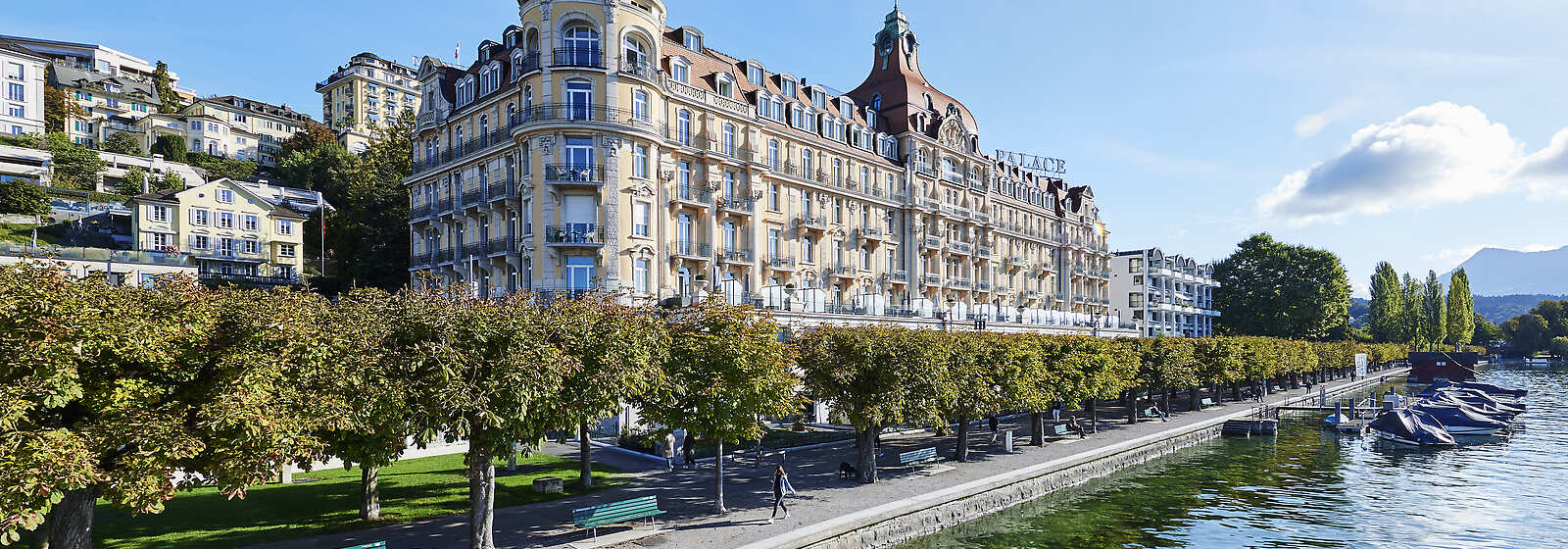
On the shores of Lake Lucerne, Mandarin Oriental Palace, Luzern occupies one of the city’s most coveted waterfront settings.
The property carries the memory of Lucerne’s grand hotel tradition while presenting it through a contemporary lens. Its historic character is complemented by carefully considered interiors, polished service and a sense of space that allows the lake to remain the principal visual presence.
Here, the setting becomes part of the stay. From the waterfront, Lake Lucerne stretches towards the mountains, while the city remains close enough to reach on foot. Mornings can begin slowly beside the water before the historic centre draws you into its streets; evenings return the attention to the lake as the surrounding peaks disappear into the changing light.
The hotel’s culinary offering adds another layer to the experience, with dining spaces designed not merely as places to eat but as part of the wider rhythm of the property. Wellness provides a quieter counterpoint, allowing a day spent exploring Lucerne or the surrounding mountains to end in an atmosphere of calm.
For travellers seeking a refined combination of Lake Lucerne, historic character, contemporary hospitality and direct access to the city, Mandarin Oriental Palace, Luzern offers one of the most compelling addresses in the destination.
Bürgenstock Resort Lake Lucerne
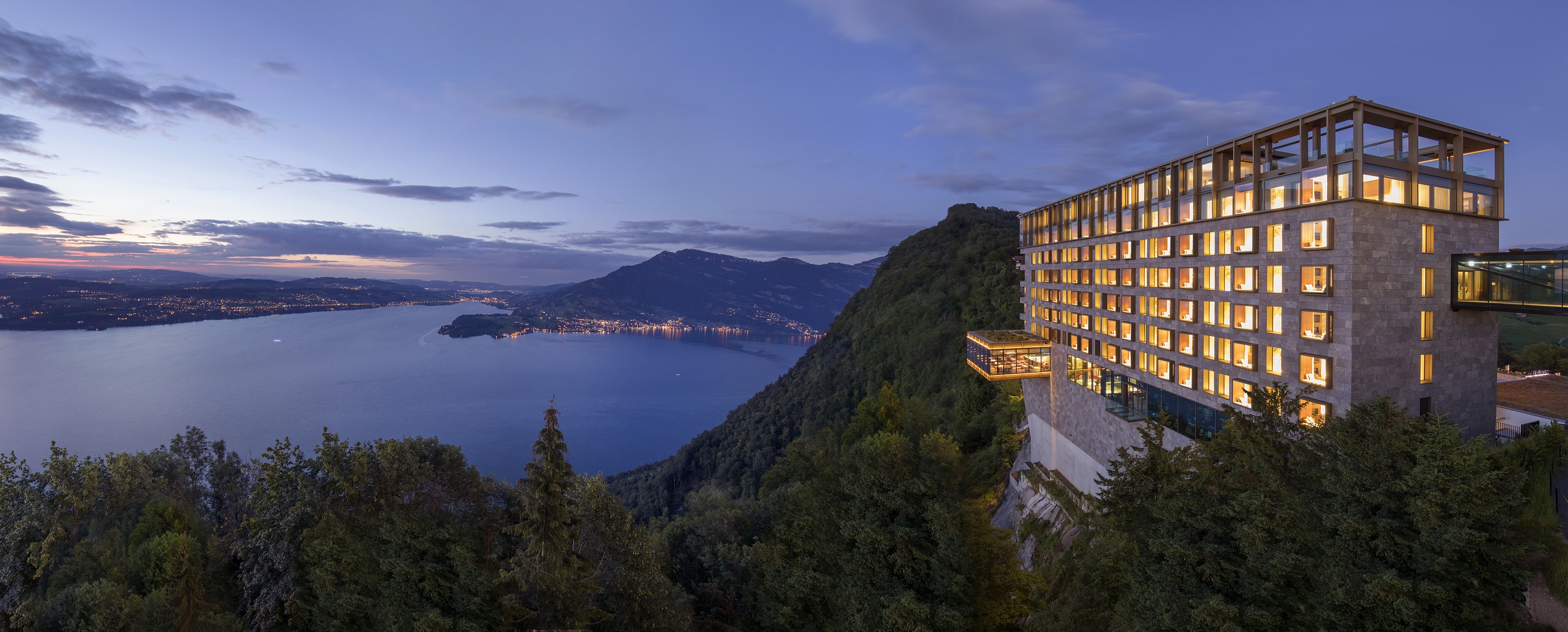
Some stays are defined less by the city they overlook than by the feeling of having stepped away from it.
High above Lake Lucerne, Bürgenstock Resort Lake Lucerne belongs to that category.
Its position on the Bürgenstock gives the property an almost cinematic relationship with the landscape. The lake lies far below, the mountains extend across the horizon, and the elevation creates a sense of separation that is difficult to reproduce within the city itself.
The resort is expansive in character, combining accommodation, dining and wellness within a mountain setting designed for extended stays rather than brief visits. Its spa experience is particularly central to the identity of the property, giving travellers the opportunity to slow down after days spent exploring Central Switzerland.
Yet the greatest luxury may simply be the view.
From elevated terraces and carefully positioned spaces across the resort, Lake Lucerne becomes a vast composition of water, forest and mountain. The landscape changes continuously with the weather, creating a different atmosphere from one hour to the next.
Bürgenstock is particularly suited to travellers who want privacy, wellness and a sense of retreat while remaining within reach of Lucerne. The journey between the resort and the city can itself become part of the experience, transforming a simple transfer into a movement between two very different interpretations of Switzerland.
Hotel Schweizerhof Luzern
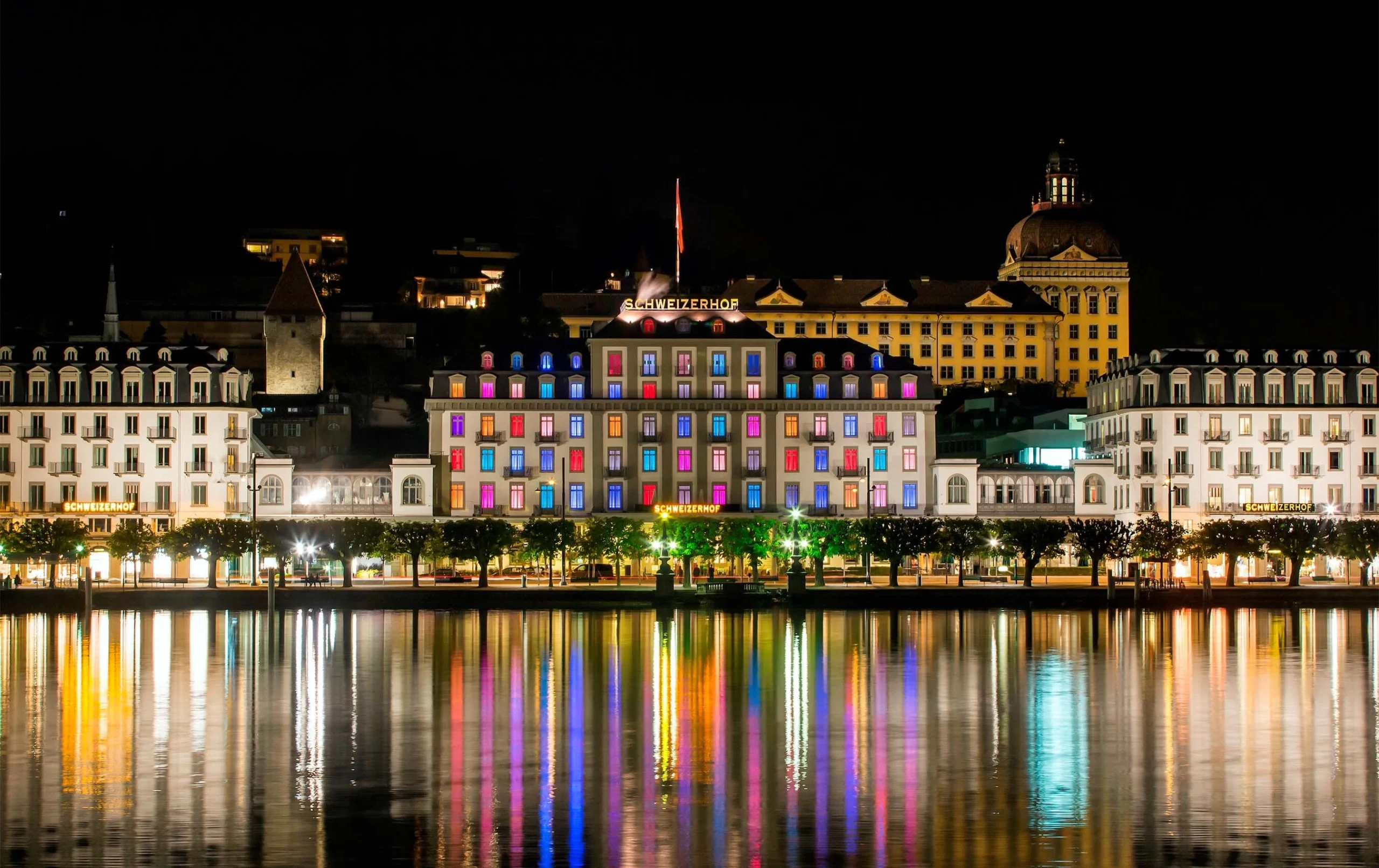
In the heart of Lucerne, Hotel Schweizerhof Luzern offers a different proposition.
Here, the city is not something viewed from a distance. It is immediately outside the door.
The hotel has been part of Lucerne’s story for generations, and its heritage gives the property a character that feels closely connected to the city around it. Its position beside the lake and near the Old Town makes it particularly appealing to travellers who want to move easily between Lucerne’s cultural life, historic streets and waterfront.
The rooms and suites carry a sense of individuality rather than anonymous uniformity, while the hotel’s hospitality retains the warmth expected from a property with such a long relationship with its guests and its city.
Its location is perhaps its greatest privilege.
Step outside and the architecture of the Old Town, the Reuss, Chapel Bridge and Lake Lucerne are all within the natural rhythm of the day. There is no need to arrange every movement around transport. One can simply walk.
For travellers who want to experience Lucerne from within its historic centre, Hotel Schweizerhof Luzern offers an elegant balance between heritage, location and contemporary comfort.
Château Gütsch
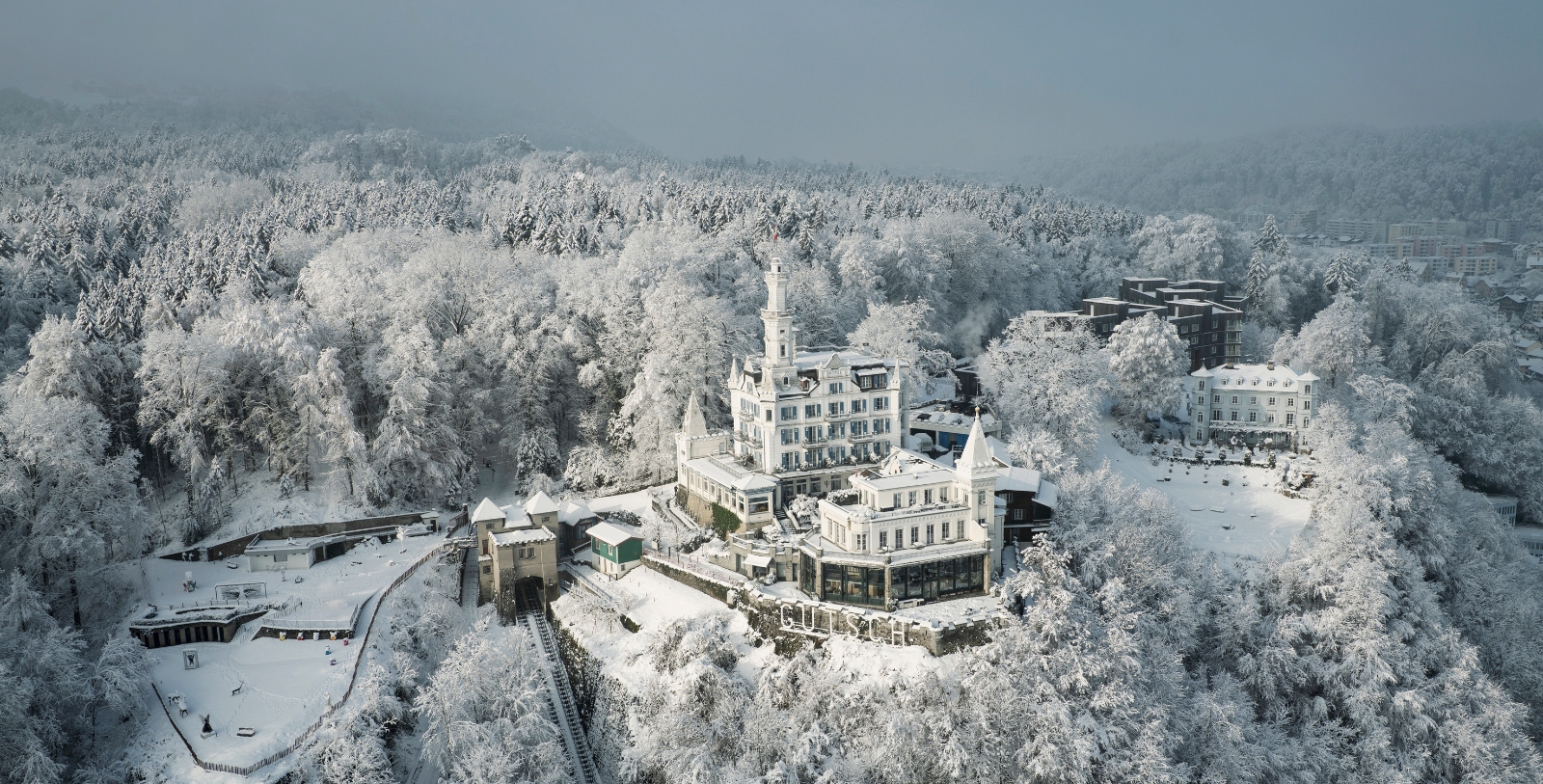
Above the rooftops of Lucerne, Château Gütsch offers perhaps the most dramatic change of perspective.
The historic property sits high above the city, where Lucerne unfolds below like a carefully composed landscape. The lake stretches beyond the rooftops, while the mountains establish a distant horizon that gives the entire setting a remarkable sense of depth.
The experience here is less about being in the middle of Lucerne and more about looking back towards it.
That distinction becomes especially beautiful towards evening. As daylight begins to fade, the city’s historic centre takes on a softer character, the lake reflects the remaining light and the surrounding mountains gradually become silhouettes.
The château atmosphere adds to the sense of occasion. Rather than feeling like another contemporary hotel inserted into the city, the property possesses a distinct identity shaped by its elevated position and historic architecture.
For couples and travellers drawn to panoramic views, romance and atmosphere, Château Gütsch offers one of the most memorable ways to experience Lucerne after the streets have begun to quieten.
Choosing Your Lucerne Stay
There is no single definition of the perfect luxury hotel in Lucerne.
For a lakeside experience with contemporary refinement, Mandarin Oriental Palace, Luzern places the traveller directly beside the water.
For a secluded mountain retreat centred around wellness and expansive Alpine views, Bürgenstock Resort Lake Lucerne offers an entirely different rhythm.
For those who want the historic city at their doorstep, Hotel Schweizerhof Luzern provides an intimate connection with Lucerne’s cultural heart.
And for a more elevated, romantic perspective across the city and lake, Château Gütsch transforms the view itself into part of the stay.
The choice ultimately depends on how you want Lucerne to feel.
Close to the water.
Inside the city.
Above it all.
Or somewhere quietly removed from everything.
At Luminara, the hotel is never simply where the traveller sleeps. It is part of the destination’s story—and in Lucerne, that story can begin the moment the room opens towards the lake, the mountains appear beyond the window, and the city begins to unfold below.
Fine Dining in Lucerne: An Evening by the Water
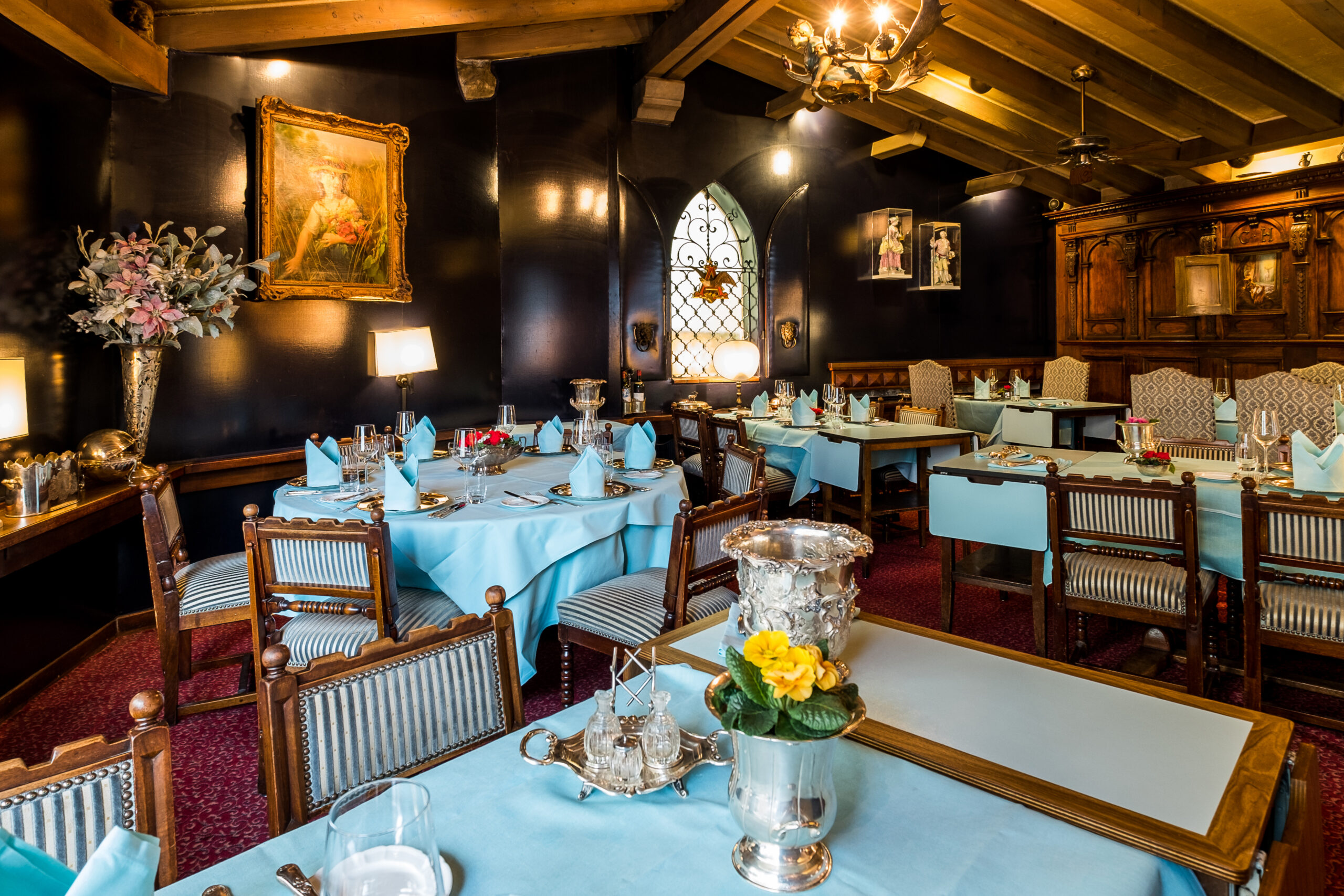
By evening, Lucerne changes its voice.
The movement of the daytime waterfront softens. Reflections gather beneath the windows, historic façades lose their sharper edges, and the mountains retreat into the darkness beyond the lake.
The city’s culinary scene sits comfortably within this atmosphere. Swiss ingredients remain central—lake fish, seasonal produce, Alpine cheeses and carefully sourced meats—while contemporary kitchens bring a lighter, more international sensibility to the table.
For the Luminara traveller, the finest dinner is not necessarily the most elaborate. It is the one in which setting, service, food and pace feel inseparable from the destination. A late meal beside the water, with the last trace of daylight disappearing from the mountains, can become one of the journey’s quietest highlights.
Wellness and the Art of Slowing Down
Lucerne lends itself naturally to slower travel.
The lake creates space. The mountains create distance. The historic centre provides enough detail to occupy the eye without demanding constant movement.
A morning walk along the waterfront, an afternoon on the lake, a private wellness ritual or an hour spent simply watching the mountains can be more restorative than a crowded schedule of attractions.
This is one of the understated privileges of luxury travel in Switzerland: the freedom to leave part of the day deliberately unfilled.
In Lucerne, an empty afternoon is not wasted time. It is often when the destination begins to feel personal.
The Best Time for Luxury Lucerne Travel
Lucerne changes considerably with the seasons.
Spring brings a freshness to the lakefront and surrounding hills as daylight lengthens. Summer opens the full possibilities of lake travel, mountain excursions and long evenings outdoors, although the most popular weeks naturally bring more visitors.
Autumn is particularly compelling for travellers drawn to atmosphere. Forests deepen in colour, the light becomes softer, and the city often acquires a more reflective character.
Winter introduces another Lucerne: crisp air, quieter streets, seasonal traditions and snow-covered mountain horizons. The contrast between warm interiors and the landscape outside can be especially beautiful.
The best time for Luxury Lucerne Travel is therefore less about a universal answer than about the mood you want to inhabit.
How to Experience Lucerne: A Journey Designed Around Rhythm
Lucerne rewards an itinerary with breathing room.
Begin in the historic centre before the day gathers momentum. Walk Chapel Bridge, follow the Reuss, and allow the streets to determine the next turn rather than treating the Old Town as a checklist.
Give another day to the lake. Water provides the transition between city and mountain, and a carefully timed cruise can become one of the journey’s defining memories.
Then choose one mountain experience rather than trying to collect them all. Pilatus offers drama; Rigi offers breadth and calm; Bürgenstock offers retreat. Each reveals a different side of the landscape.
Evenings should remain unhurried. Return to the city, dress for dinner, and allow the waterfront to become part of the final hours of the day.
The objective is not to see everything. It is to experience Lucerne deeply enough that its separate places begin to form one continuous story.
The Luminara Perspective
Lucerne’s greatest quality is not any single monument, mountain or hotel.
It is the way they belong together.
The wooden geometry of Chapel Bridge leads the eye towards the Reuss. The river opens into the lake. The lake carries the gaze towards the mountains. The mountains, in turn, place the city within a landscape that feels far larger than its elegant centre suggests.
History remains present without becoming theatrical. Contemporary hospitality sits comfortably beside centuries-old architecture. The lake provides movement and stillness in equal measure. The mountains offer escape without demanding isolation.
Perhaps that is why Lucerne stays in the memory differently.
Not as a catalogue of sights, but as a sequence of impressions: first light across the Reuss, the sound of a boat leaving the harbour, the sudden scale of the Alps from the water, the hush of an old square after sunset.
For Luminara, this is the essence of Luxury Lucerne Travel—not simply to arrive in Switzerland, but to inhabit one of its most beautifully composed places, and to leave with the rare feeling that, for a little while, the city had slowed its rhythm just enough for you to notice everything.
The Many Moods of Switzerland
Lucerne occupies a gentler place within Switzerland’s Alpine story. The lake, the old city and the mountains beyond create a sense of balance that feels distinctly its own. Yet the country reveals other moods as the journey continues: in Interlaken, the landscape becomes a meeting point of luminous lakes and the high Bernese Alps, while Zermatt draws the traveller deeper into a world shaped by altitude, silence and the singular presence of the Matterhorn. Together, these destinations form three very different expressions of Switzerland—water and history in Lucerne, mountain horizons in Interlaken, and pure Alpine character in Zermatt.