The First Light
There is a moment, just before the morning begins, when St. Moritz seems to belong to another century.
The lake lies beneath a veil of winter stillness. Beyond its pale surface, the Engadin mountains rise in magnificent silence, their summits catching the earliest light while the valley remains suspended between shadow and dawn. Windows begin to glow across the town. Somewhere, a fire has been lit in a room overlooking the water. Behind the grand façades of its legendary hotels, the first rituals of the day are quietly underway.
Nothing here needs to announce itself.
The elegance of St. Moritz is already understood.
In the high country of southeastern Switzerland, at approximately 1,800 metres above sea level, this small Alpine town has spent generations refining a particular idea of luxury. Not merely the possession of beautiful things, nor the performance of exclusivity, but the art of inhabiting a place so completely that even the simplest moments acquire distinction.
A breakfast overlooking the mountains. The measured rhythm of horses crossing a snow-covered landscape. The warmth of a historic hotel after an afternoon in the cold. A table prepared for dinner while the last light disappears beyond the peaks.
These are the details through which St. Moritz reveals itself.
For more than a century and a half, the destination has attracted travellers drawn to its extraordinary combination of mountain beauty, sporting heritage and international sophistication. Yet its enduring appeal cannot be explained by reputation alone. Other Alpine resorts offer beautiful scenery. Others possess exceptional hotels. Others promise adventure in the snow.
St. Moritz has something more elusive: a world of its own.
Here, the mountains provide the setting, but the experience is shaped by everything that unfolds between them. The architecture, the hospitality, the culinary traditions, the social rituals and the extraordinary clarity of the Engadin light form a destination that is as much about atmosphere as geography.
This is luxury travel in St. Moritz at its most compelling—not a collection of experiences to be completed, but an invitation to enter a different rhythm of life.
And once the rhythm reveals itself, the reason for its enduring fascination becomes unmistakable.
I. The Engadin: A Landscape Written in Light
Before St. Moritz became a name associated with grand hotels and international glamour, there was the Engadin.
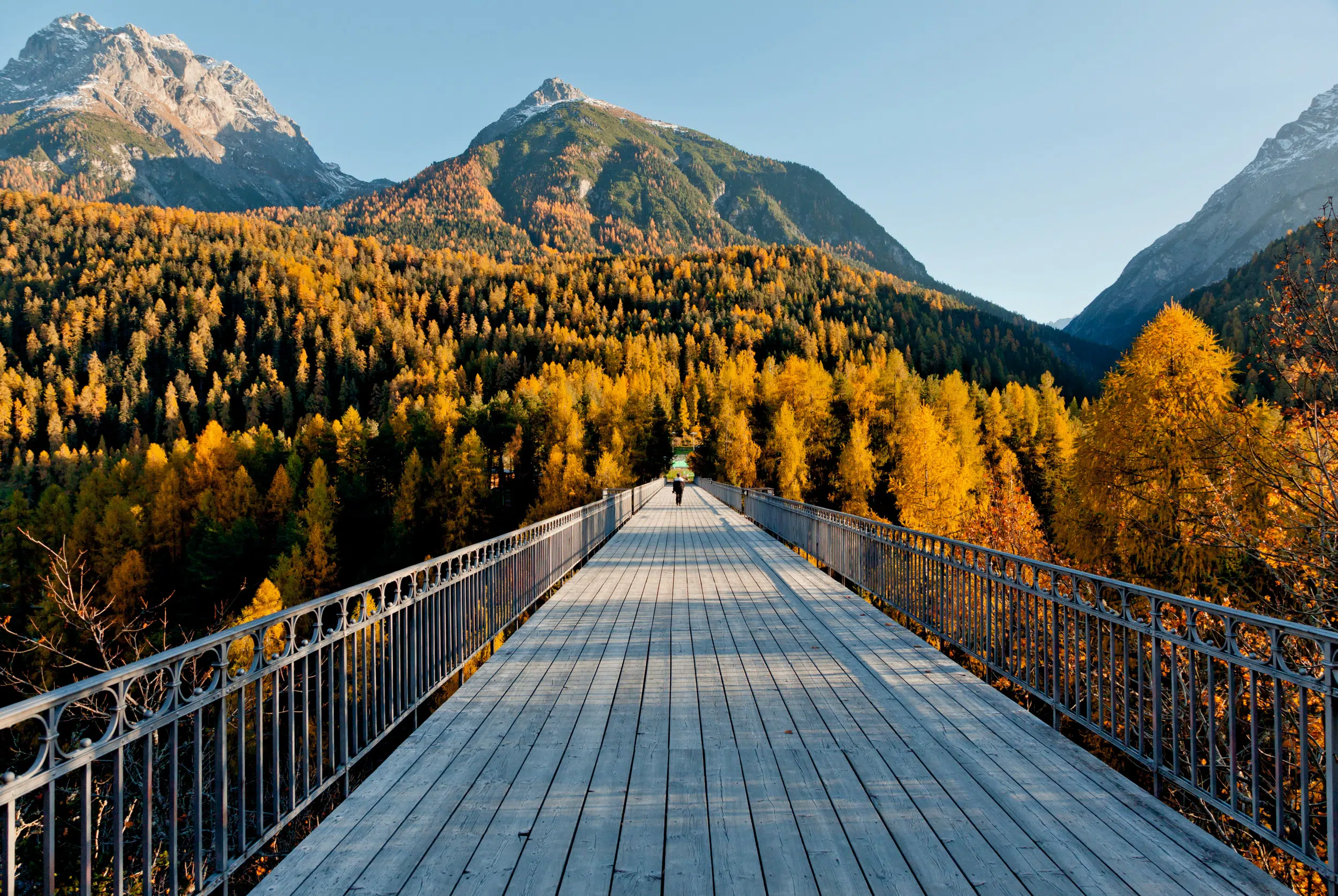
The valley stretches through the southeastern Swiss Alps, where forests, high meadows, mountain lakes and historic settlements exist beneath an immense Alpine sky. The landscape has a distinct visual character: open rather than enclosed, luminous rather than sombre, its vastness softened by the quiet precision of traditional villages and the changing colours of the surrounding peaks.
At this altitude, light becomes part of the experience.
In winter, the snow reflects the sun into the valley, illuminating façades and mountain slopes with an almost crystalline clarity. On clear days, the sky seems impossibly deep above the white landscape. Shadows move slowly across the frozen lake, while distant peaks acquire shades of silver, blue and pale gold.
Summer brings another transformation. Forests deepen in colour, meadows open into green expanses and the surrounding mountains become a world of walking trails, panoramic viewpoints and quiet excursions. The lakes reflect a different palette, and the valley reveals its character beyond the familiar imagery of winter.
The Engadin does not depend on spectacle at every turn. Its beauty is cumulative. It emerges during a drive through the valley, along a path between villages, from a terrace overlooking the mountains or through the windows of a train travelling across the Alpine landscape.
This is why the setting matters so profoundly to the experience of St. Moritz.
The town’s celebrated hotels and sophisticated social life might attract the traveller, but the landscape gives the journey its meaning. It creates the contrast between movement and stillness, between the polished interiors of a grand hotel and the elemental scale of the mountains beyond.
For those exploring luxury travel in Switzerland, the Engadin offers a particularly distinctive expression of the country: expansive, quietly dramatic and deeply connected to the natural world.
To understand St. Moritz, one must first allow the valley to set the pace.
II. The Winter That Changed Everything
The story of St. Moritz contains a moment that has become almost legendary in the history of Alpine travel.
In 1864, hotelier Johannes Badrutt made a proposition to a group of English summer visitors staying at his establishment. He invited them to return during winter, promising to reimburse their stay if they failed to enjoy the season. The visitors accepted, discovered the pleasures of the winter landscape and helped establish a new chapter in the evolution of mountain tourism.
The significance of that invitation extended far beyond a hotelier’s confidence in his destination.
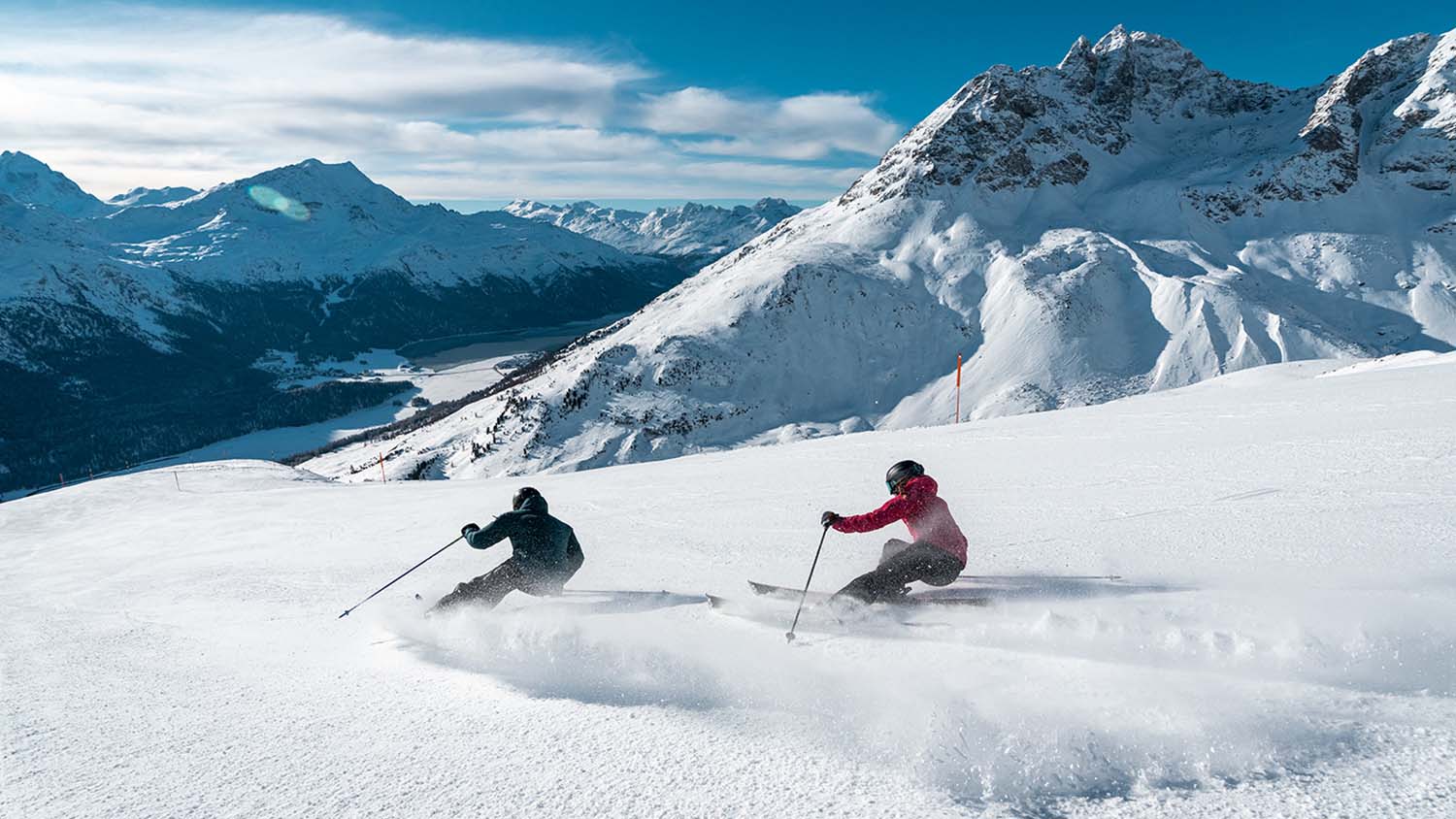
Until then, the Alps were widely associated with summer travel, when milder conditions made mountain landscapes more accessible. Badrutt recognised that winter possessed an entirely different appeal: the brilliance of snow, the exhilaration of outdoor pursuits and the extraordinary atmosphere of a high-altitude valley transformed by the cold.
St. Moritz began to establish itself as a place where winter was not something to endure, but a season to experience.
Hotels developed. Sporting traditions grew. An international community of visitors arrived, bringing with it the customs, expectations and cultural influences that would shape the resort’s identity.
The town subsequently hosted the Winter Olympic Games in 1928 and 1948, further strengthening its association with winter sport. Over time, St. Moritz became a meeting place for those who approached the mountains not simply as scenery, but as a setting for a distinctive way of life.
The legacy remains visible today.
It lives in the architecture of the grand hotels, in the traditions surrounding the frozen lake and in the confidence with which the destination balances outdoor adventure with refined hospitality.
Yet history is only part of the story. St. Moritz has never been content to remain a monument to its past. Its appeal depends on the continuing evolution of its hotels, restaurants, wellness experiences and cultural life.
The result is a destination where heritage is not preserved behind glass. It is lived, renewed and experienced.
III. The Grand Hotels: Three Expressions of Alpine Grandeur
In St. Moritz, a hotel can be more than the place in which a journey unfolds. It can become the journey itself.
The great properties of the Engadin possess identities shaped by their histories, architecture, settings and traditions of hospitality. Some draw guests into the social life of the resort. Others offer a more secluded relationship with the mountains. Each creates a different interpretation of what an Alpine escape can be.
Badrutt’s Palace Hotel — The Art of Arriving
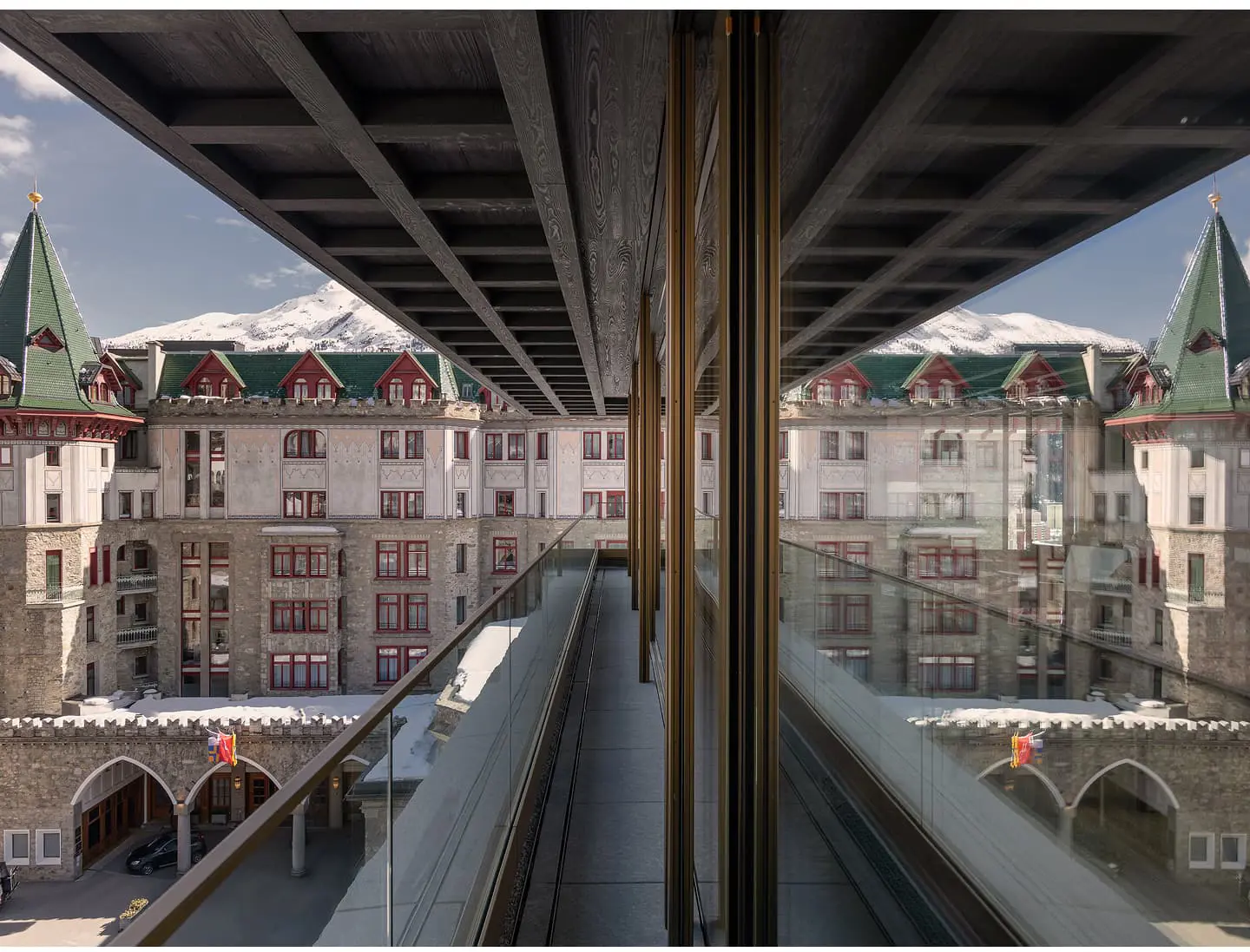
There are hotels that occupy an address, and there are hotels that help define a destination.
Badrutt’s Palace Hotel belongs to the latter.
Since opening in 1896, its distinctive tower and grand presence above Lake St. Moritz have become inseparable from the resort’s image. The property stands as an emblem of the town’s international character, where historic architecture and contemporary hospitality coexist within a setting of extraordinary natural beauty.
Arrival is part of the experience. The hotel rises above the lake and the surrounding rooftops, its silhouette immediately recognisable against the Engadin landscape. Inside, the atmosphere shifts from the crispness of the Alpine air to the warmth of richly appointed interiors, attentive service and spaces designed for lingering.
The experience is not confined to the guest room.
At Le Grand Hall, afternoon tea becomes an occasion in its own right, with the social atmosphere of the hotel unfolding around the quiet pleasure of conversation and elegant surroundings. Matsuhisa brings the distinctive culinary vision associated with Nobu Matsuhisa to St. Moritz, while Chesa Veglia offers a more intimate encounter with the property’s historic character.
The hotel’s collection of dining venues and bars allows the day to evolve without the need to leave its world behind.
There is also something compelling about the contrast between its interior life and the landscape outside. A morning spent in the mountains can end beneath chandeliers and historic ceilings. An afternoon overlooking the lake can lead into an evening shaped by exceptional dining and the particular energy of a resort that has long welcomed an international audience.
Badrutt’s Palace is for the traveller who appreciates the theatre of a grand hotel: the anticipation of arrival, the rituals of service and the sense that the building itself belongs to the cultural history of the destination.
Its luxury is not simply architectural. It lies in the experience of becoming part of a place with a story of its own.
Kulm Hotel St. Moritz — Where Alpine History Began
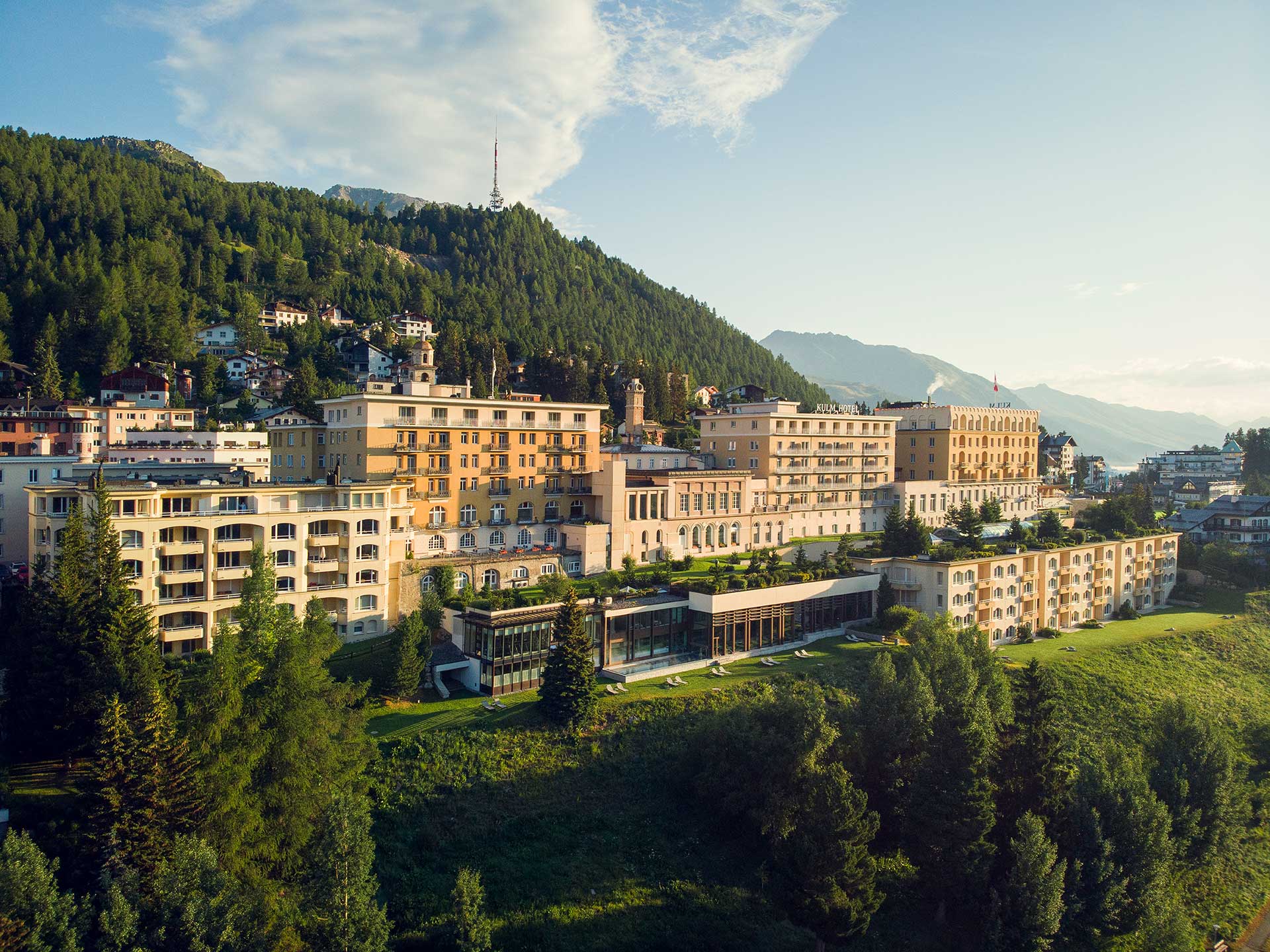
If Badrutt’s Palace embodies the social glamour of St. Moritz, Kulm Hotel speaks to the pioneering spirit that helped make the resort famous.
Founded in 1856 by Johannes Badrutt, Kulm is closely connected to the origins of winter tourism in the Engadin. Its history gives the property an unusual depth: the story of the hotel is also part of the story of how St. Moritz became an international destination.
Its elevated position offers sweeping views across the valley and Lake St. Moritz, while the atmosphere combines traditional grand-hotel character with contemporary comfort.
The experience is particularly rewarding for travellers who appreciate the relationship between place and history. Here, the elegance of the present exists alongside the memory of an era when winter travel was still an emerging idea and the pleasures of the mountains were being discovered by a new generation of visitors.
Dining offers another dimension to the stay.
The Grand Restaurant brings a formal setting to the hotel’s culinary experience. Chesa al Parc provides a connection to regional cooking, while Kulm Country Club offers a more contemporary atmosphere. Amaru introduces Peruvian influences, demonstrating how the destination’s international outlook continues to shape its hospitality.
The Kulm Spa offers a quieter counterpoint, with pools, saunas and treatment spaces providing an opportunity to retreat from the energy of the slopes and the town.
The appeal of Kulm lies in its balance. It is a historic hotel that remains connected to the way people travel today, offering both a sense of continuity and the comforts expected of a contemporary luxury stay.
For those who want to understand St. Moritz rather than simply visit it, Kulm provides an especially meaningful perspective.
Suvretta House — A World Apart
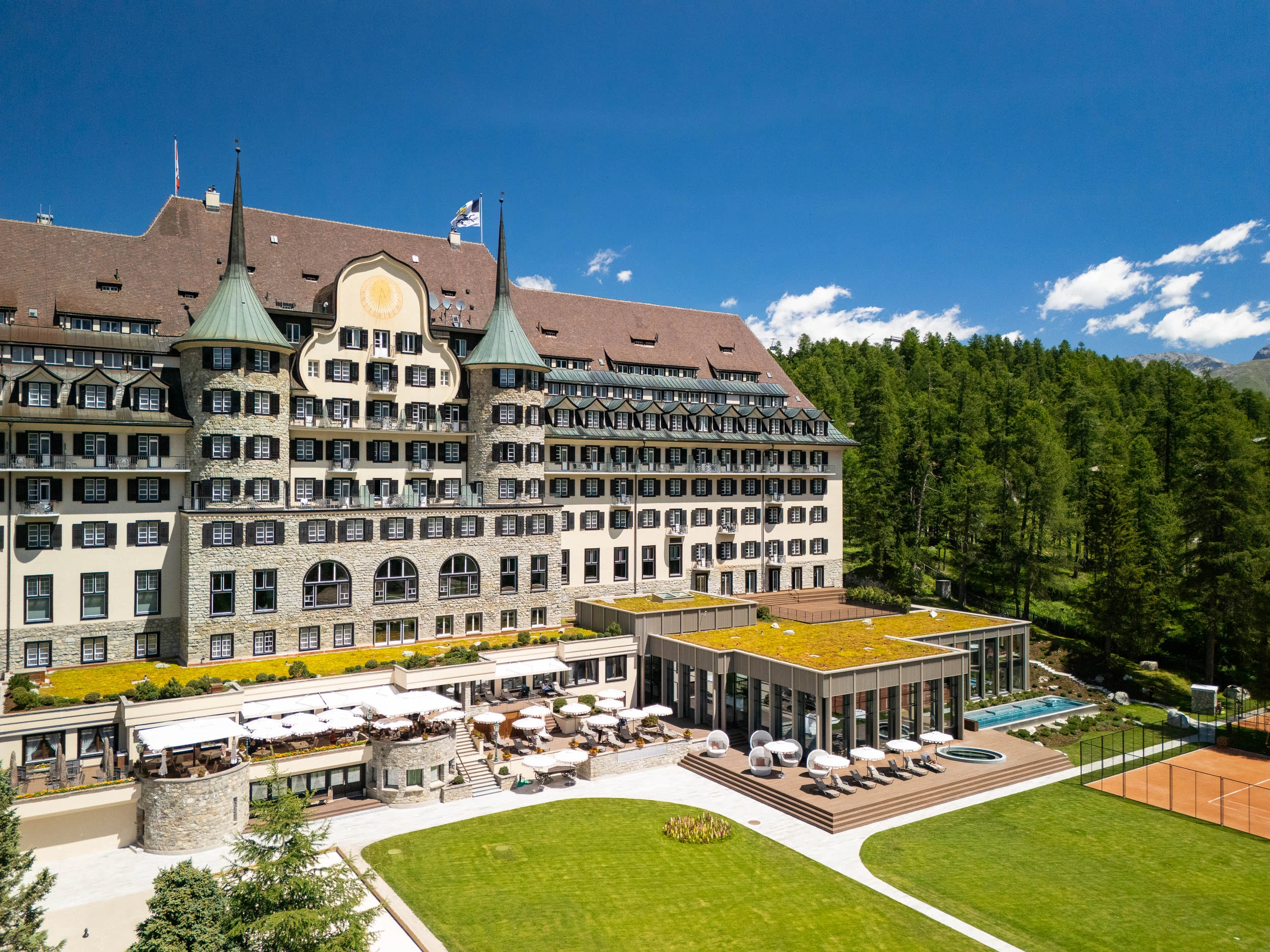
Beyond the centre of St. Moritz, the atmosphere becomes more secluded.
Established in 1912, Suvretta House occupies a setting surrounded by the landscape of the Engadin, offering a different relationship with the destination. The emphasis shifts from the social life of the town towards privacy, outdoor pursuits and the pleasures of returning to a place designed for restoration.
Its grand-hotel architecture retains a sense of traditional Alpine elegance. Inside, the experience is shaped by generous spaces, attentive hospitality and an atmosphere that encourages guests to slow down.
The surrounding landscape becomes an extension of the stay. Winter invites time on the slopes and in the snow-covered surroundings; summer opens the region to walking, cycling and exploration. Between these experiences, the hotel’s wellness facilities provide a quieter setting in which to unwind.
There is a particular appeal to this form of Alpine luxury.
The day need not revolve around a sequence of reservations or attractions. It can begin with the mountains, continue through an afternoon of outdoor discovery and conclude with a long, unhurried evening.
Suvretta House is especially suited to travellers who value discretion, space and a sense of retreat. Its distinction lies not in separating guests from the landscape, but in allowing them to experience it without surrendering the comfort and attentiveness of exceptional hospitality.
Choosing Your St. Moritz
These three hotels reveal different sides of the destination.
Badrutt’s Palace offers the glamour and social energy of a legendary address. Kulm Hotel provides a direct connection to the history of winter tourism and the enduring traditions of grand-hotel hospitality. Suvretta House offers a more secluded atmosphere, where the landscape and the pleasure of retreat take centre stage.
The right choice depends on the experience you want to create.
In St. Moritz, where a hotel can influence the entire rhythm of a stay, choosing well is part of the art of travelling.
IV. Lake St. Moritz: The Stage of Winter
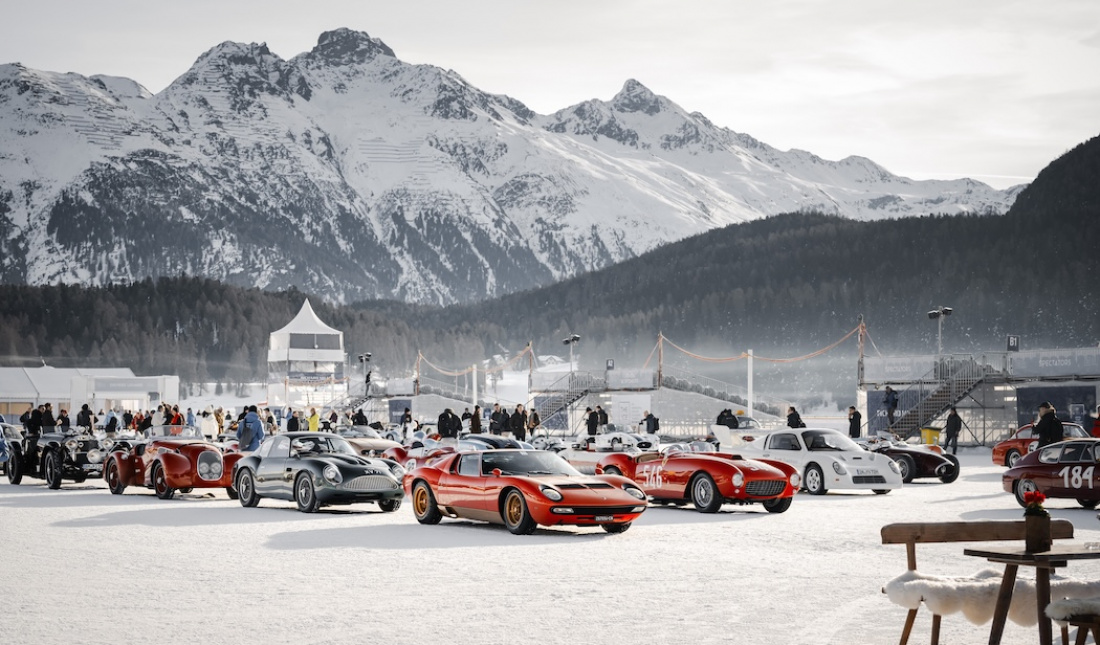
At the heart of the resort lies Lake St. Moritz, a landscape that changes its character with the seasons while remaining central to the identity of the town.
In winter, when conditions permit the lake to freeze safely, its broad surface becomes an extraordinary setting for sporting events and seasonal traditions. The mountains frame the horizon, the surrounding buildings appear almost theatrical against the snow, and the openness of the landscape creates a sense of scale that is difficult to reproduce elsewhere.
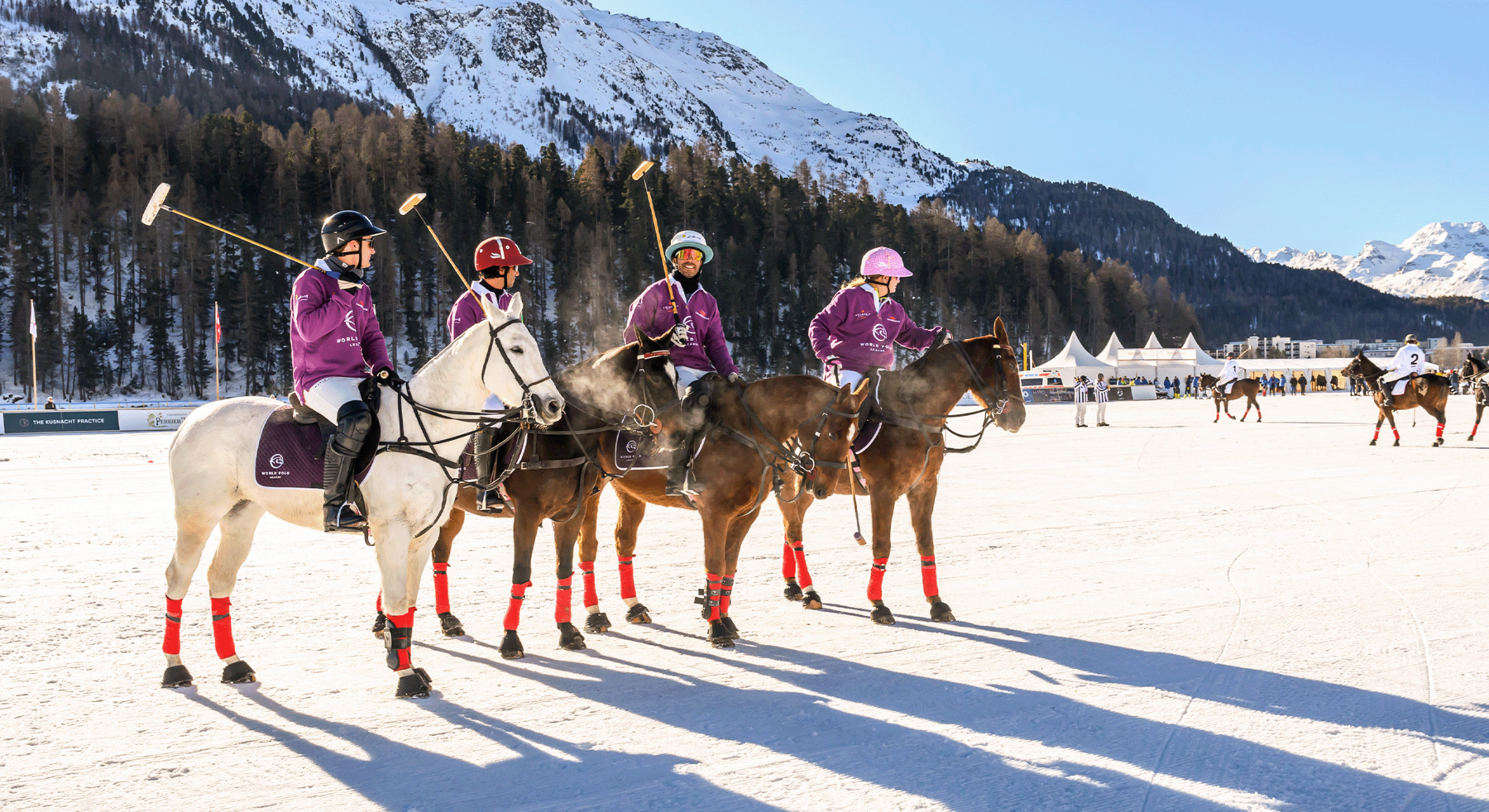
One of the destination’s most distinctive winter events is the Snow Polo World Cup St. Moritz, which has been held on the frozen lake since 1985.
The sight of polo played against the backdrop of the Engadin mountains captures something essential about St. Moritz. A sport associated with open fields and established sporting traditions is reimagined within an Alpine setting, where snow and ice become part of the spectacle.
The event draws an international audience, but its significance extends beyond the competition. It reflects the resort’s longstanding ability to bring together sport, hospitality and social life in a setting that feels unmistakably its own.
The lake has a quieter side, too.
Away from event days, its surroundings invite unhurried walks and moments of observation. The light changes across the water, the mountains shift in colour, and the grand hotels appear as part of a wider landscape rather than separate architectural landmarks.
In summer, the scene is transformed. The water reflects the open sky, the surrounding paths invite exploration and the lake becomes part of the valley’s outdoor life.
The essential experience is not tied to a single season. It is the opportunity to witness a landscape that changes profoundly while retaining its identity.
For a traveller, Lake St. Moritz is both a destination and a point of orientation—a place to return to, to observe and to understand the relationship between the resort and the mountains that surround it.
V. Above the Valley: Muottas Muragl and the Grandeur of Perspective
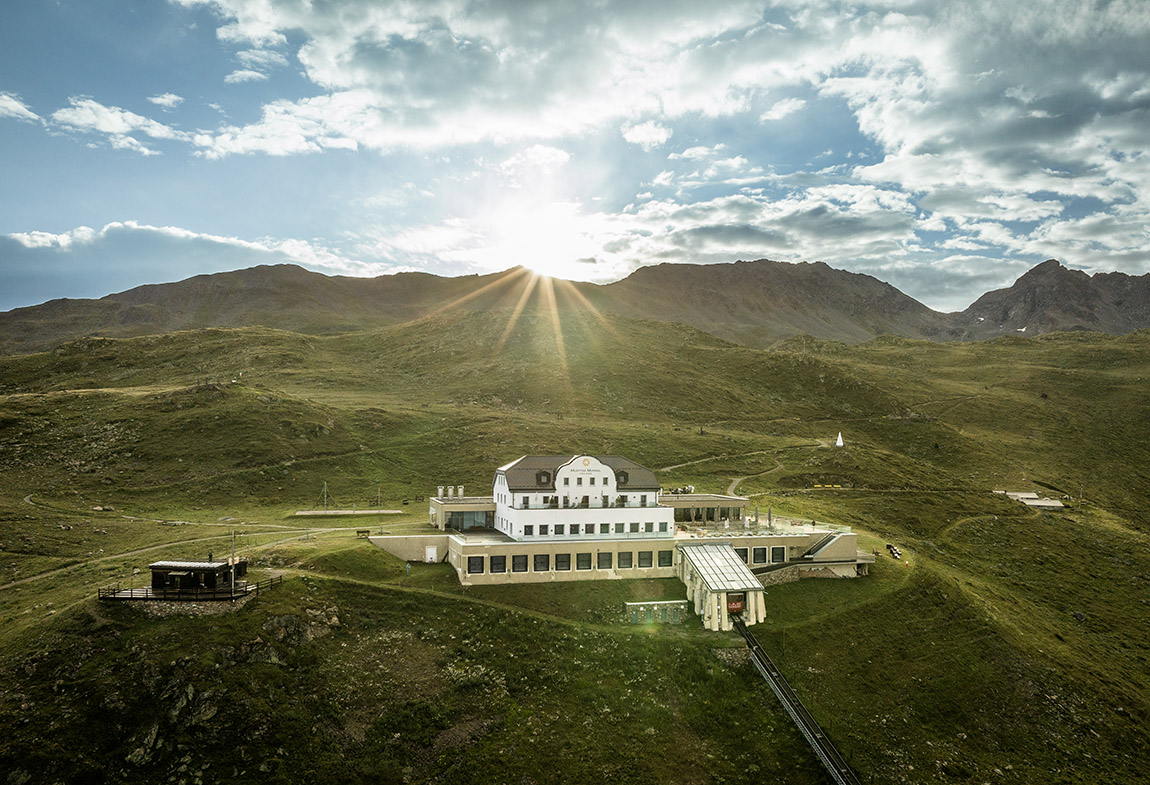
Some landscapes are best understood from within them. Others reveal their full character when seen from above.
Muottas Muragl belongs to the second category.
Reached by a historic funicular, this elevated viewpoint offers a sweeping perspective across the Upper Engadin. The valley’s lakes, forests and settlements unfold beneath the surrounding peaks, revealing the scale of the landscape and the extraordinary clarity that defines this part of Switzerland.
The ascent itself becomes part of the experience. As the funicular climbs, the view opens gradually, allowing the valley to reveal its structure. What seemed like a collection of individual mountains and lakes begins to form a coherent landscape, held together by light, distance and the contours of the terrain.
At the summit, the panorama invites a different pace.
There is no need to move quickly from one viewpoint to another. The pleasure lies in staying long enough to notice the details: the shape of the lakes, the lines of the mountain ridges and the changing relationship between sunlight and shadow.
The panoramic restaurant offers an opportunity to extend the visit over a meal, while designated walking routes provide possibilities for exploration according to the season and conditions.
Muottas Muragl also reveals why St. Moritz should never be understood only through its hotels and social calendar. The destination’s glamour exists within a landscape of considerable scale, and the mountains remain its defining presence.
From this height, the resort becomes one element within a much larger composition.
It is a perspective worth seeking, particularly for travellers who want to experience the Engadin beyond its most familiar addresses.
VI. The Pleasure of the Table
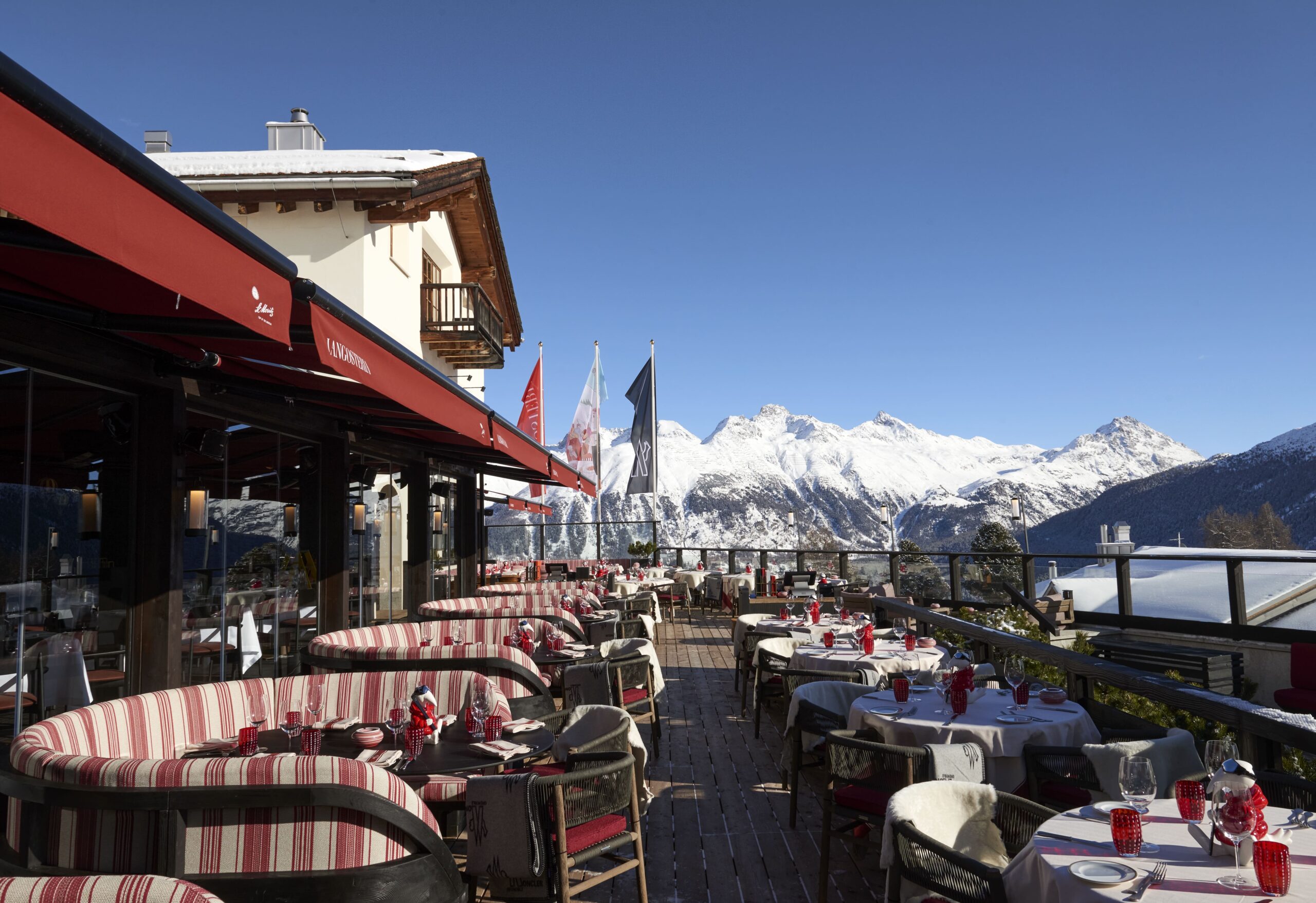
In St. Moritz, dining is an extension of the destination’s wider character: rooted in Alpine traditions, shaped by international influences and elevated by an appreciation for setting and occasion.
The Engadin has its own culinary identity, influenced by the mountain environment and the cultural history of southeastern Switzerland. Regional specialities, local ingredients and traditional preparations remain part of the experience, even as the resort’s restaurants explore contemporary techniques and global flavours.
At the grand hotels, dining becomes a way to experience the destination through several different moods.
An elegant breakfast sets the rhythm for a day in the mountains. Lunch can be an occasion to linger over regional dishes or contemporary cuisine. In the evening, the atmosphere changes once more, as formal dining rooms and intimate restaurants offer a different expression of Alpine hospitality.
At Badrutt’s Palace, the range extends from the international influences of Matsuhisa to the historic setting of Chesa Veglia. At Kulm, guests can move between the Grand Restaurant, the regional character of Chesa al Parc and the distinctive culinary direction of Amaru.
Beyond the hotels, traditional mountain restaurants offer a more informal connection to the region. A meal in such a setting can feel especially rewarding after time outdoors, when the warmth of the room and the simplicity of a well-prepared dish become part of the pleasure.
The finest dining experiences do not always require elaborate ceremony. They require the right setting, a sense of place and enough time to appreciate what is in front of you.
In St. Moritz, the table can be another way of discovering the Engadin—its traditions, its international outlook and its ability to make even an ordinary evening feel considered.
VII. Beyond the Snow: The Other St. Moritz
To know St. Moritz only in winter is to know one extraordinary expression of the destination.
When the snow recedes, the Engadin opens into a landscape of green meadows, forested slopes and clear mountain lakes. The architecture of the villages becomes more visible against the surrounding terrain, while the longer daylight hours invite a different kind of exploration.
Summer does not diminish the resort’s elegance. It changes its rhythm.
Mornings may begin with a walk beside the lake or a journey into the surrounding mountains. The middle of the day can be devoted to cycling, a guided excursion or a leisurely lunch overlooking the valley. By evening, the grand hotels and restaurants offer the familiar pleasures of hospitality in a setting transformed by the season.
For travellers who prefer to experience a destination through its natural environment, summer provides a particularly rewarding perspective. The Engadin’s walking routes, mountain viewpoints and cycling opportunities allow visitors to explore at a pace suited to their interests.
The region’s villages also deserve attention. Their architecture and cultural traditions reveal a side of the Engadin that is easily overlooked when the focus remains on the resort’s international reputation.
Winter presents St. Moritz as a destination of snow, sport and social spectacle. Summer reveals a quieter world of outdoor discovery, open landscapes and extended days.
Neither season is a lesser version of the other. Each offers a distinct reason to return.
VIII. The Private Rituals of Alpine Living
Luxury is often described through what a destination offers. Yet the most compelling journeys are sometimes defined by what they allow a traveller to leave behind.
St. Moritz creates room for that possibility.
The mountains offer an invitation to be active, but they also create a setting in which stillness feels natural. A day can be shaped around skiing, walking or exploring the valley. It can equally be devoted to wellness, reading beside a window or enjoying the quiet of a hotel while the weather moves across the peaks.
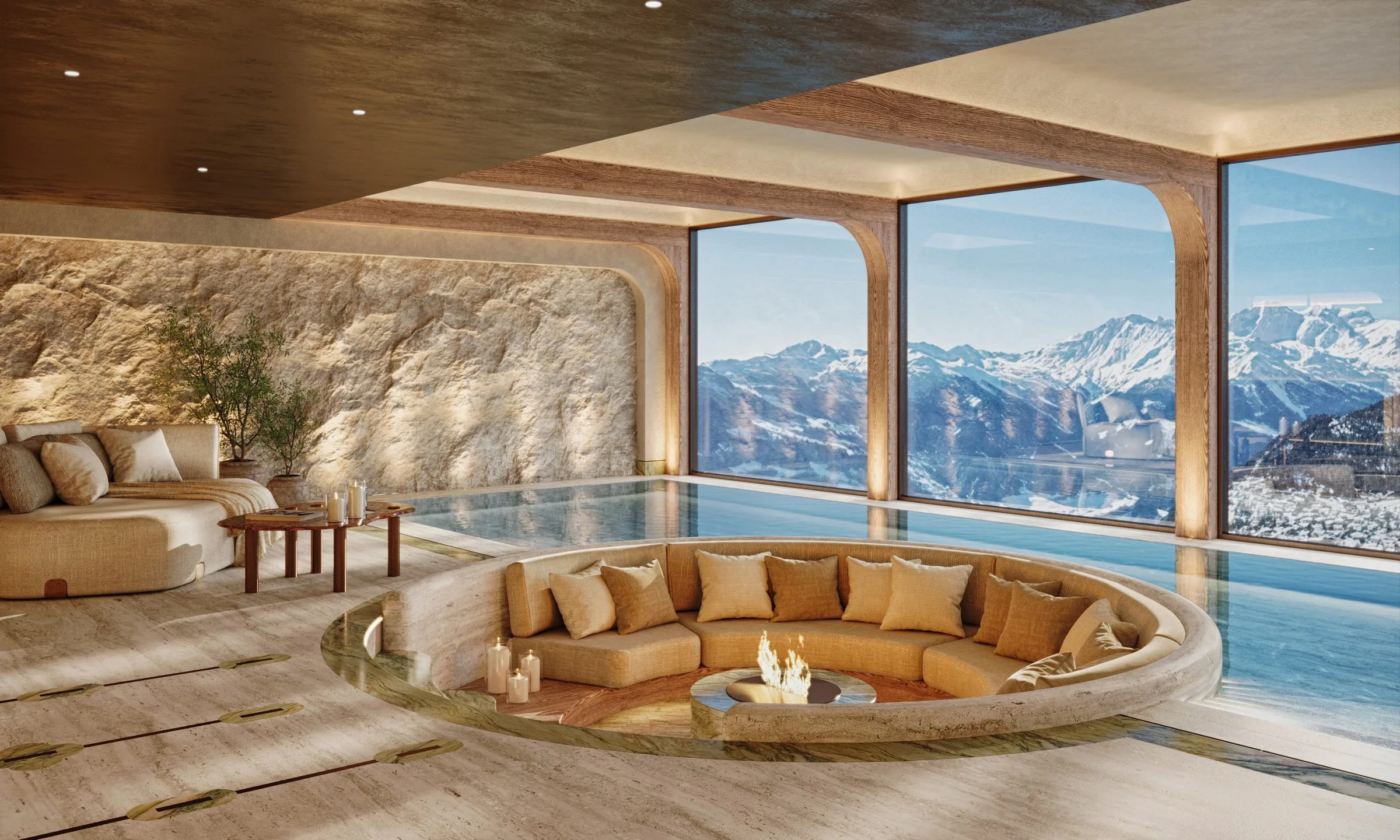
At properties such as Kulm Hotel and Suvretta House, wellness facilities provide a setting for recovery and restoration after time outdoors. The appeal is not simply the presence of pools, saunas or treatments. It is the contrast between the cold, expansive landscape and the warmth of an interior designed for comfort.
The experience can be deeply personal.
Perhaps it begins with an early morning swim, before the day’s activities gather pace. Perhaps it is an afternoon spent in a spa, followed by dinner without the need to travel elsewhere. Perhaps it is nothing more elaborate than a long period of looking out towards the mountains.
These moments are difficult to plan in the same way as an excursion or restaurant reservation. They depend on allowing enough space in the itinerary for the destination to work upon you.
This is one of the quiet advantages of a well-considered luxury journey: the freedom to be present without continually moving towards the next experience.
In St. Moritz, the mountains are always there. There is no need to hurry towards them every hour of the day.
IX. When St. Moritz Reveals Its Finest Character
Choosing the right season is essential to experiencing St. Moritz on your own terms.
Winter: The Classic Alpine Experience
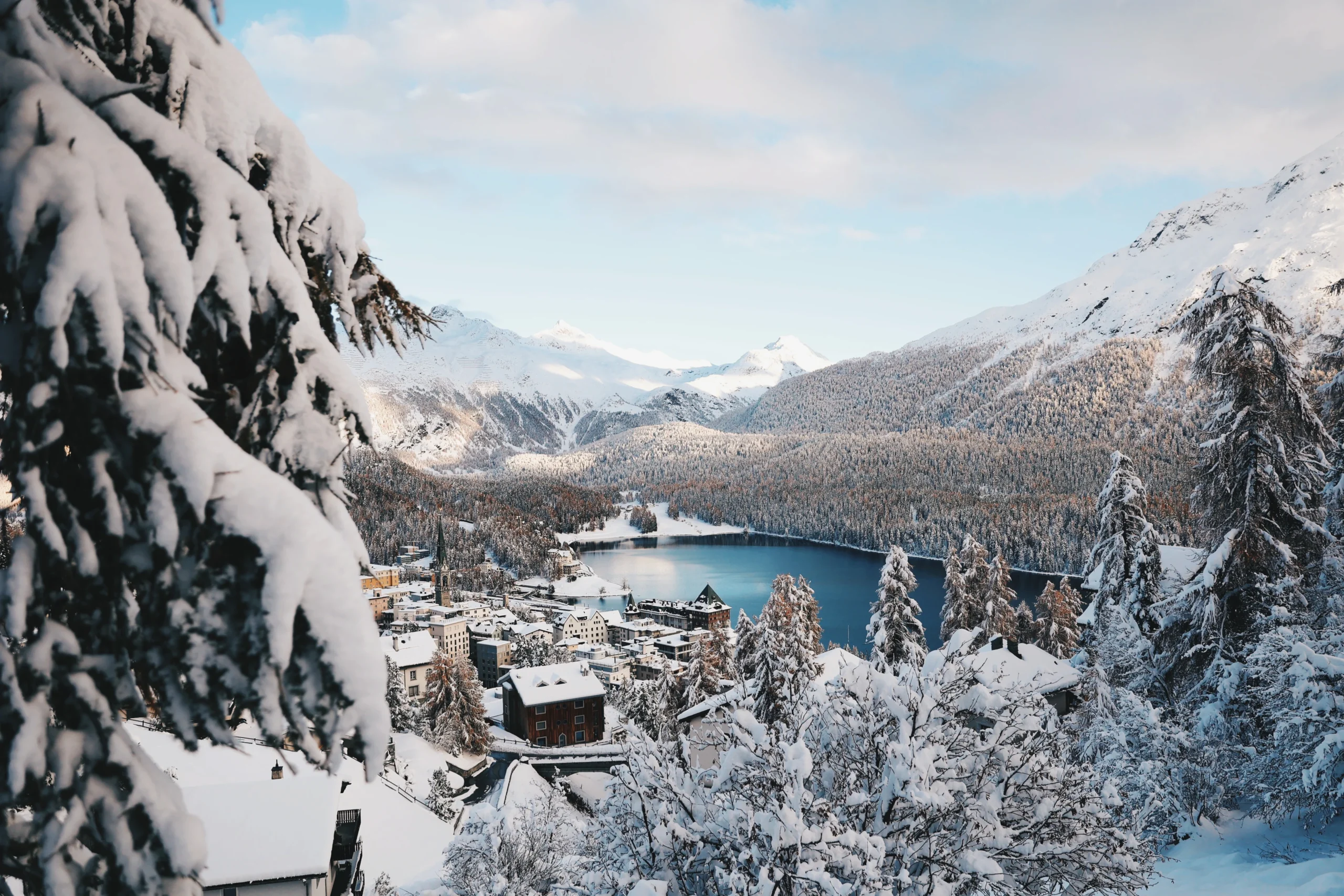
Winter remains the season most closely associated with the resort’s international identity. Snow-covered landscapes, skiing, winter walking and the social traditions of the grand hotels create the atmosphere that has made St. Moritz famous.
For travellers seeking the destination’s celebrated winter character, the period from December through March is generally the principal season to consider, although exact conditions vary from year to year.
The Snow Polo World Cup is a particular highlight when scheduled, but the experience does not depend on attending a major event. Much of winter’s appeal lies in the relationship between outdoor activity and the rituals of the resort itself.
Summer: A Different Kind of Grandeur
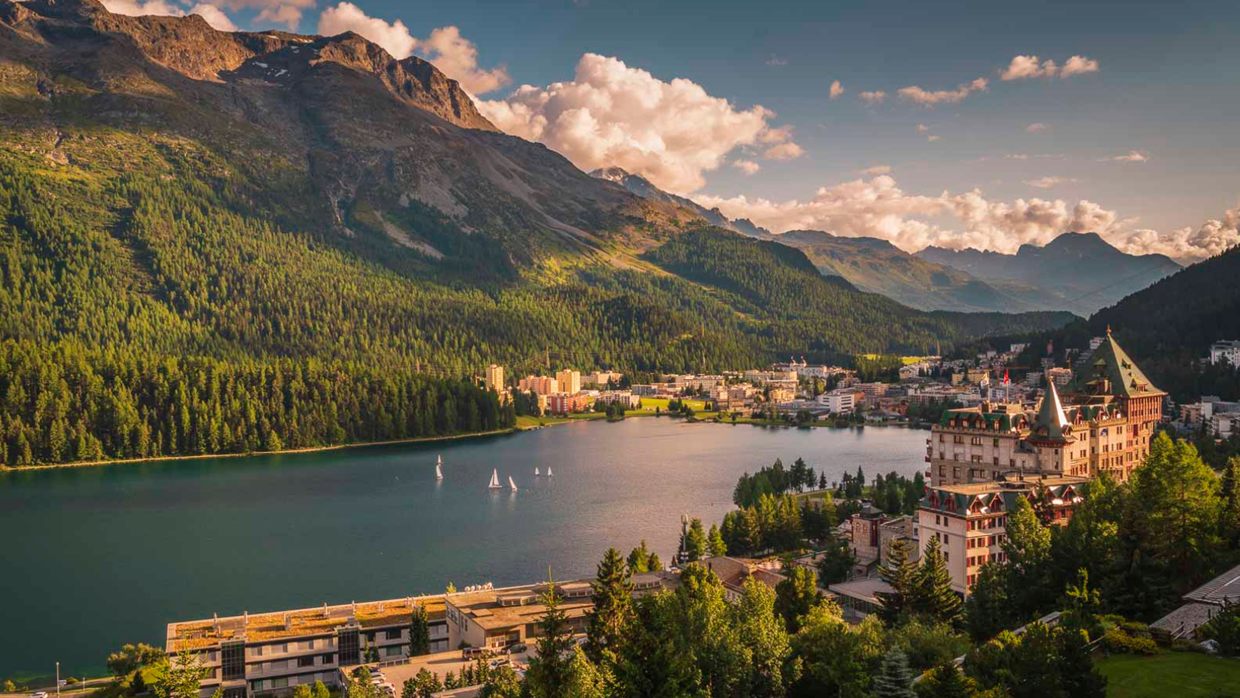
From June into early autumn, the Engadin offers a landscape of open meadows, walking routes, mountain excursions and lakeside experiences.
The atmosphere becomes less focused on snow sports and more closely connected to the natural environment. Long days provide opportunities to explore the valley, discover its villages and experience the mountains without the demands of a winter itinerary.
For travellers who value scenery, outdoor pursuits and a more expansive sense of Alpine life, summer can be an exceptional time to visit.
The Importance of Timing
Spring and autumn can offer their own atmosphere, but they also require more careful planning. Hotels, mountain transport and individual activities may operate seasonally, while weather can affect access to certain routes and experiences.
Before confirming a journey, check the opening dates of your chosen hotel, the availability of mountain transport and the operating schedules of any planned activities.
In a destination where the season shapes so much of the experience, thoughtful timing can make the difference between a good stay and an extraordinary one.
X. Planning a St. Moritz Journey with Intention
The most rewarding Alpine journeys are rarely those that attempt to include everything.
St. Moritz offers enough experiences to fill an extended stay, yet its character is best appreciated when the itinerary leaves room for spontaneity. A few well-chosen experiences, a hotel suited to your preferences and time to enjoy the landscape can create a more meaningful journey than a schedule filled from morning to evening.
Begin with the atmosphere you want.
If historic glamour and the social life of the resort appeal to you, a central grand hotel may be the natural choice. If privacy and a stronger sense of retreat matter more, a property outside the centre may better suit the experience.
Consider the balance between outdoor pursuits and time at the hotel. Travellers planning to ski or explore the mountains may value convenient access to transport and activities. Those seeking a wellness-led escape may prefer to make the hotel itself a central part of the journey.
Travel between destinations also deserves attention. Mountain roads and seasonal conditions can influence journey times, so allow sufficient flexibility when planning transfers or combining St. Moritz with other parts of Switzerland.
For a wider Swiss itinerary, the contrast with Zermatt can be particularly appealing. Both destinations offer extraordinary Alpine scenery, but each possesses its own atmosphere and identity. St. Moritz brings together the expansive Engadin landscape, a distinctive grand-hotel tradition and a longstanding international social culture.
You can continue exploring the country through our Zermatt, Interlaken and Lucerne Travel Journals, each revealing another perspective on Switzerland’s extraordinary diversity.
Ultimately, planning well should not make a journey feel overmanaged. It should create the conditions in which the experience can unfold naturally.
XI. The Luminara Perspective: The Art of Belonging Somewhere, Even Briefly
There is a reason certain destinations remain in the imagination long after the journey has ended.
It is not always the most famous landmark or the most expensive experience. Sometimes it is the atmosphere of a place—the particular quality of its light, the rhythm of its days or the feeling that, for a short time, life has taken on a different shape.
St. Moritz possesses this quality in abundance.
It is present in the first light over Lake St. Moritz, when the mountains emerge from the darkness and the town begins to awaken. It is present in the quiet grandeur of a historic hotel, where generations of hospitality have shaped the experience of arrival. It is present above the Engadin, where the landscape opens into a vast panorama and the familiar scale of daily life seems to fall away.
And it is present in the smaller moments that no itinerary can fully anticipate: a conversation that continues long after dinner, the warmth of a room after a day in the snow, the unexpected pleasure of an afternoon with nowhere particular to be.
These are the experiences that make luxury travel more than a sequence of beautiful places.
At Luminara Voyages, we believe the finest journeys are shaped by a sense of coherence. The destination, the accommodation, the experiences and the pace of travel should belong together, creating something more meaningful than the sum of individual reservations.
St. Moritz offers a remarkable setting for that philosophy.
Its glamour is undeniable, but glamour alone does not explain its appeal. Its hotels possess history, yet the destination is not confined to the past. Its mountains invite adventure, yet some of its greatest pleasures are found in stillness.
It is a place where contrasts do not compete. They create balance.
Perhaps that is the true art of St. Moritz: the ability to offer the exhilaration of the mountains and the intimacy of a private retreat, the energy of an international resort and the silence of an immense Alpine landscape.
You arrive for the scenery, the hotels, the winter traditions or the promise of an extraordinary escape.
But what stays with you may be something quieter.
A certain quality of light. The outline of the mountains beyond the lake. The feeling of a day that unfolded exactly as it should, without ever needing to be hurried.
And somewhere in the memory of the Engadin, St. Moritz remains—not simply as a destination you visited, but as a world you were fortunate enough to inhabit for a while.
For another expression of the Swiss Alps’ extraordinary beauty, discover the timeless mountain grandeur of Zermatt beneath the Matterhorn, or immerse yourself in the lakeside elegance and dramatic landscapes of Interlaken, where Alpine adventure meets understated luxury.