Geneva reveals itself through nuance. The lake changes colour with the hour; the Alps appear and disappear behind shifting weather; a narrow street in the Old Town may lead from the solemnity of a cathedral to a sunlit square where conversation lingers over coffee. The city’s character is not built around spectacle. It is shaped by discernment: the measured confidence of a place that has spent centuries refining its relationship with craft, culture, diplomacy and the natural world.
Set at the western edge of Switzerland, where the Rhône leaves Lake Geneva and begins its journey towards France, Geneva occupies a meeting point of languages, landscapes and ideas. French-speaking in spirit and international in outlook, it is at once intimate and outward-looking. Its scale makes it wonderfully navigable, yet its layers reward a slower approach. One afternoon may belong to the waterfront; the next, to antique streets, contemporary art, a long lunch or the intricate mechanics of a watchmaker’s craft.
For travellers drawn to Geneva luxury travel, the city’s appeal lies in this balance. There is polish without ostentation, heritage without theatricality, and access to extraordinary scenery without surrendering the pleasures of urban life. Geneva is best experienced not as a checklist of landmarks, but as a sequence of carefully chosen moments—each one revealing another facet of its understated elegance.
The Lake as the City’s Living Centre
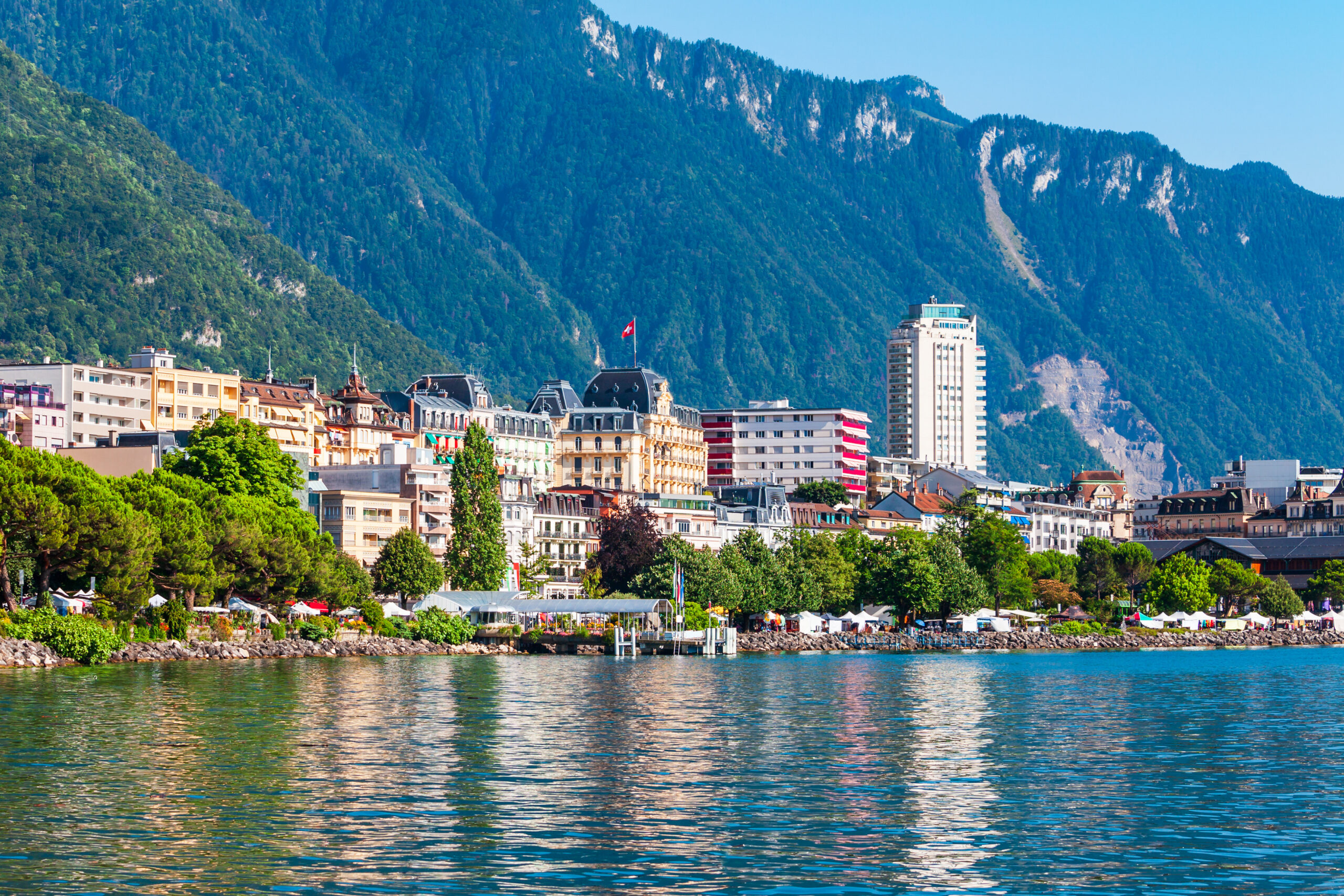
Lake Geneva—Lac Léman to the French-speaking world—gives the city its sense of openness. Its surface is rarely the same twice. On clear mornings it can appear almost metallic, holding the outlines of the mountains in a blue-grey stillness; later, sunlight breaks into fragments across the water and the promenades become a stage for the everyday rituals of the city. Runners pass beneath plane trees, boats cross the harbour, and café terraces gather the soft murmur of several languages at once.
The Jet d’Eau, rising high above the harbour, is the most immediately recognisable punctuation mark on this panorama. Yet its presence is more compelling when seen in context than when treated as a photograph to collect. Walk the waterfront towards the Bains des Pâquis and allow the city to fall into perspective: elegant façades behind you, open water ahead, and the distant ridgeline lending scale to the scene. The fountain becomes part of a larger composition rather than the whole story.
The Old Town: A City Beneath the Present
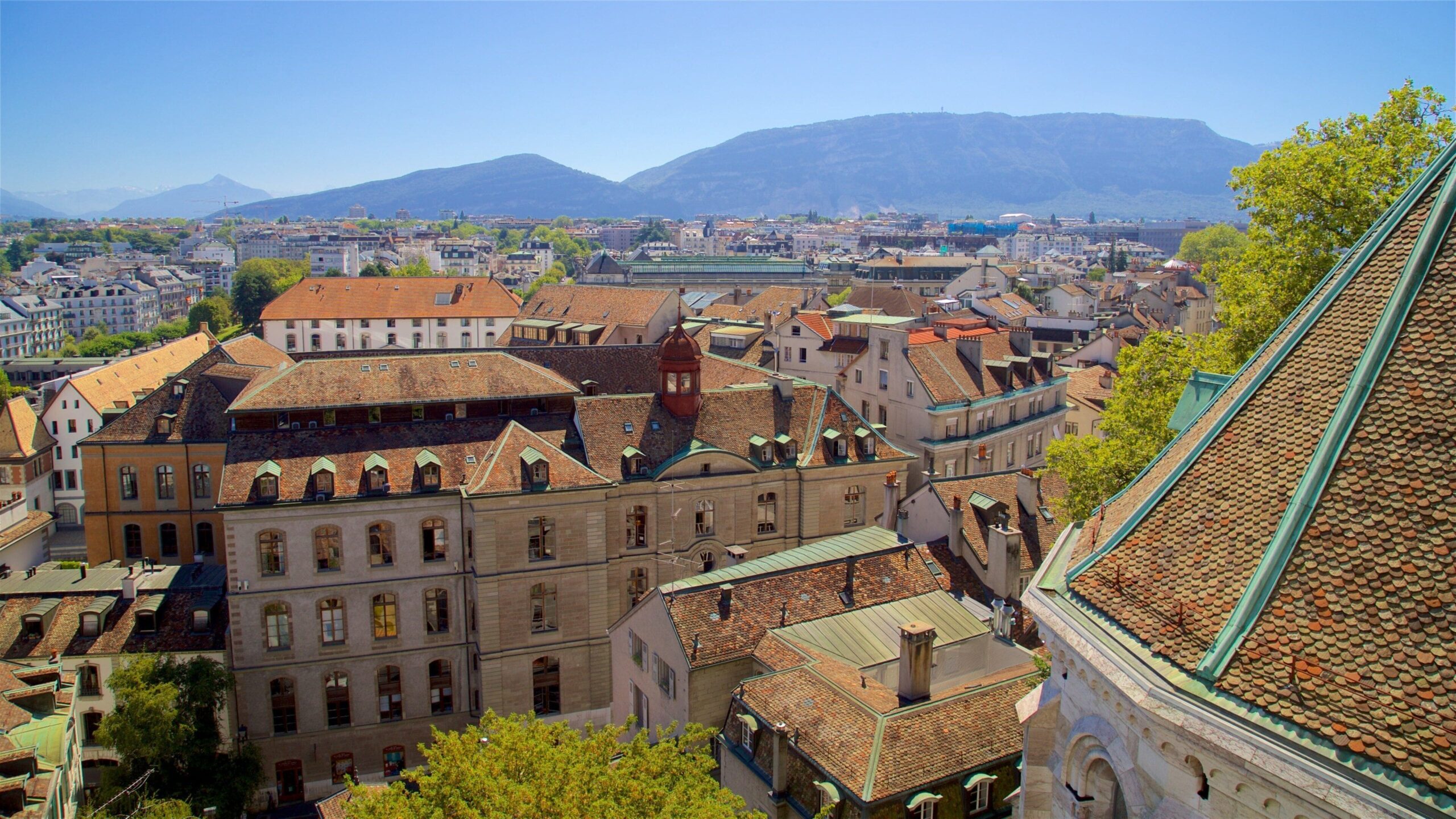
Above the waterfront, Geneva’s Old Town gathers around steep lanes, small squares and façades whose restraint conceals a turbulent intellectual and religious history. The streets do not unfold as a grand set piece. They narrow, turn unexpectedly and open into courtyards where the city’s earlier life remains legible in stone. Take them on foot, without hurrying towards the next landmark, and the district begins to feel less like a preserved quarter than a living archive.
St Peter’s Cathedral anchors the neighbourhood, its long history inseparable from Geneva’s place in the Protestant Reformation. The surrounding streets carry that legacy in subtler ways: bookshops, galleries, historic residences and passages worn smooth by generations of use. Place du Bourg-de-Four, one of the Old Town’s enduring gathering places, is particularly suited to a pause. From a terrace, the movement of the square becomes a small theatre of local life—residents meeting, visitors finding their bearings, the day moving at its own pace.
Precision, Patina and the Culture of Craft
Geneva’s reputation for watchmaking is often reduced to the luxury object itself: the polished case, the dial, the name engraved on a clasp. The deeper story is more absorbing. Horology is a discipline of patience, proportion and microscopic decisions, and it reflects something essential in the city’s wider character. Here, precision is not merely a commercial promise; it is a cultural inheritance, sustained by generations of artisans who understand that excellence often depends on what the eye can barely detect.
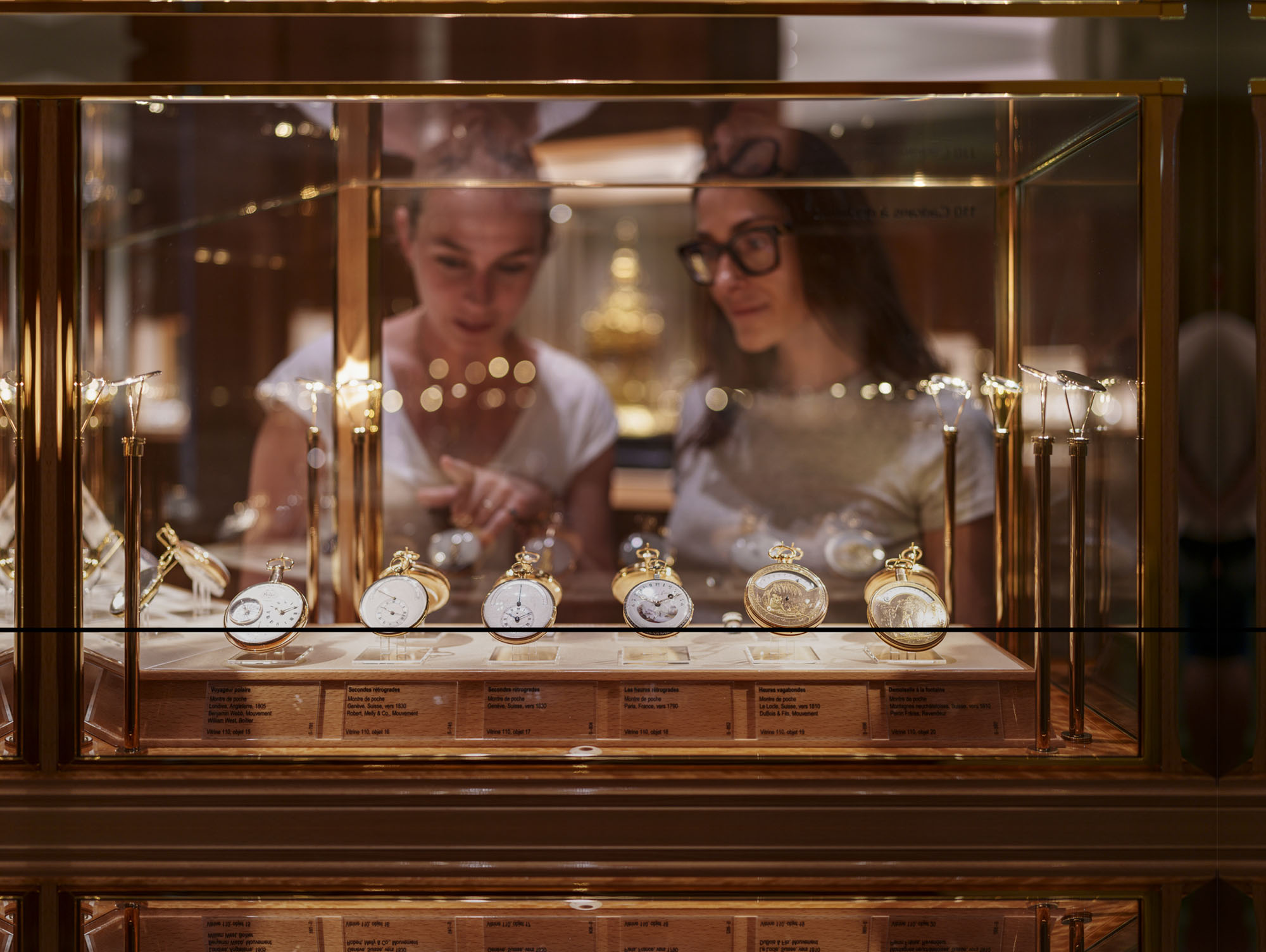
The Patek Philippe Museum offers a compelling encounter with this world. Its collections trace centuries of horological ingenuity, from elaborate early timepieces to mechanisms whose delicacy seems almost improbable. Musical automata, enamel miniatures and historical watches reveal how technical invention once travelled alongside decorative art. Even visitors with little prior interest in watches can find themselves absorbed by the ingenuity involved: springs, gears and finely finished surfaces arranged to make time measurable, portable and beautiful.
Approach the museum as a study in human skill rather than a showroom of prestige. The objects speak of a period when scientific curiosity, patronage and craftsmanship developed in close conversation. Afterwards, the city’s boutiques and ateliers take on a different resonance. The most meaningful luxury is rarely the loudest thing in a room; more often, it is the result of knowledge, discipline and a refusal to leave the smallest detail unresolved.
International Geneva: A Global City with a Human Scale
Geneva’s international significance is visible in its institutions, yet its influence is not confined to formal buildings or conference halls. For generations, the city has served as a meeting ground for diplomacy, humanitarian work, scientific exchange and multilateral cooperation. The presence of the United Nations and other international organisations has given Geneva a distinct outward-facing energy, one that sits alongside the intimate rhythms of neighbourhood life rather than replacing them.
A visit to the Palais des Nations area offers a different perspective on the city. The broad avenues and institutional architecture speak to ambitions that extend well beyond Switzerland’s borders. Nearby, museums and public spaces help place this work in a wider historical context. The result is a city whose internationalism feels embedded rather than imported: a place where conversations about global affairs occur within walking distance of bakeries, parks and lakeside benches.
For the traveller, this dimension gives Geneva depth. It is not only a beautiful city beside water, nor simply a centre of finance and fine craftsmanship. It is also a place where ideas, negotiations and cultural traditions intersect. The contrast is part of its appeal: a morning spent considering global questions can give way to an afternoon devoted to art, food or the simple pleasure of watching the light move across the lake.
Carouge, Galleries and the Pleasure of Wandering
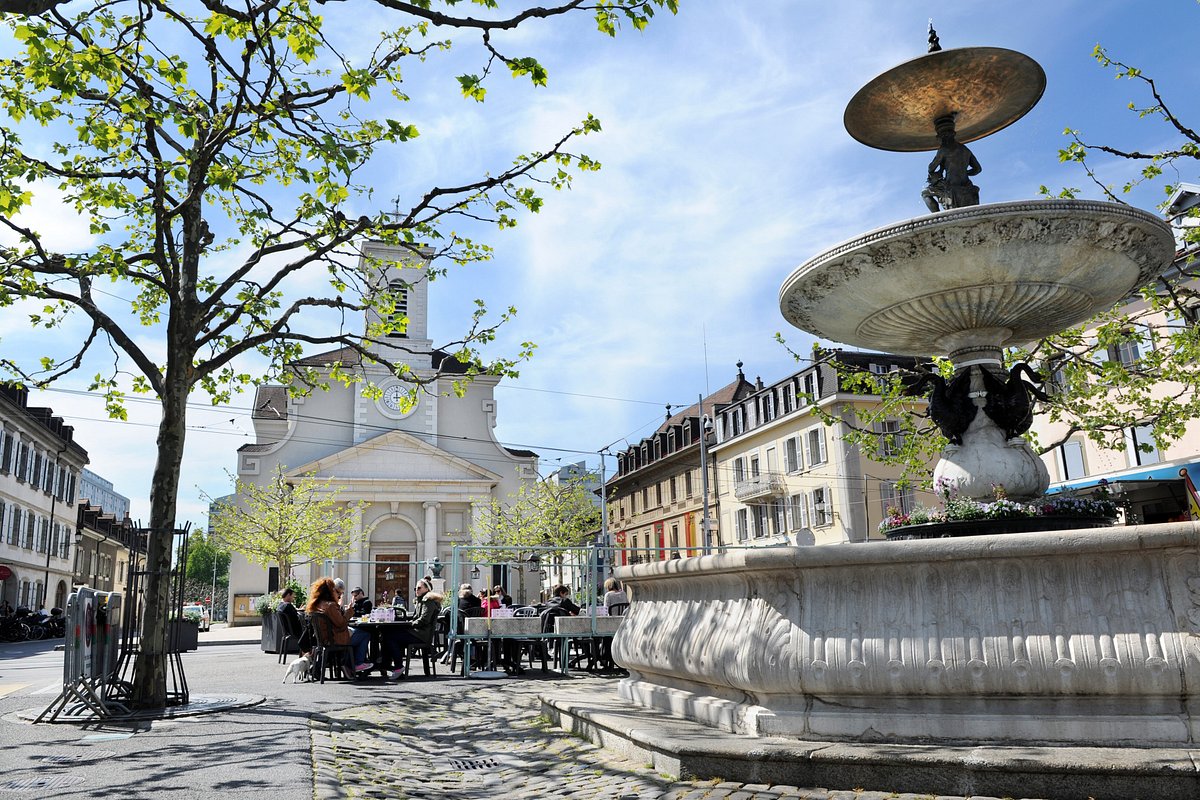
To understand Geneva beyond its best-known landmarks, cross towards Carouge. With its Mediterranean inflections, intimate streets and independent shops, the neighbourhood feels distinct from the formal elegance of the city centre. Small courtyards, artisan workshops, cafés and local restaurants create an atmosphere better discovered than scheduled. It is an ideal place to browse without a fixed destination, allowing a shop window or shaded terrace to determine the next turn.
Back in the centre, galleries and cultural institutions offer another route into the city’s creative life. Rather than attempting to see everything, choose one collection or exhibition that genuinely interests you, then leave room for an unplanned discovery. Geneva is particularly satisfying when the itinerary has space around its edges. A day with fewer appointments often yields a richer impression than one spent moving briskly from attraction to attraction.
A Table Set Between France and Switzerland
Geneva’s dining culture reflects its geography. Swiss traditions meet the culinary language of neighbouring France, while the city’s international population brings further influences to the table. The result is varied rather than easily categorised: classic restaurants, contemporary kitchens, neighbourhood bistros and places where the lake’s presence seems to encourage a slower, more considered meal.
Local specialities offer a useful point of entry. On cooler days, a fondue or raclette brings a sense of alpine comfort to the table; in warmer weather, lake fish and seasonal produce can feel more appropriate. Chocolate deserves attention beyond a souvenir purchase, particularly when approached through the city’s independent chocolatiers, where texture, origin and technique are treated with the seriousness of any other craft.
Luxury Stays: Three Distinct Expressions of Geneva
Choosing among the luxury hotels in Geneva is less a question of ranking than of atmosphere. Some travellers are drawn to historic grandeur and the continuity of service; others prefer a family-owned address with a deeply rooted identity, or a contemporary all-suite retreat where design and gastronomy take centre stage. These three properties offer different interpretations of the city’s hospitality, each with a distinct relationship to the lake.
Four Seasons Hotel des Bergues Geneva
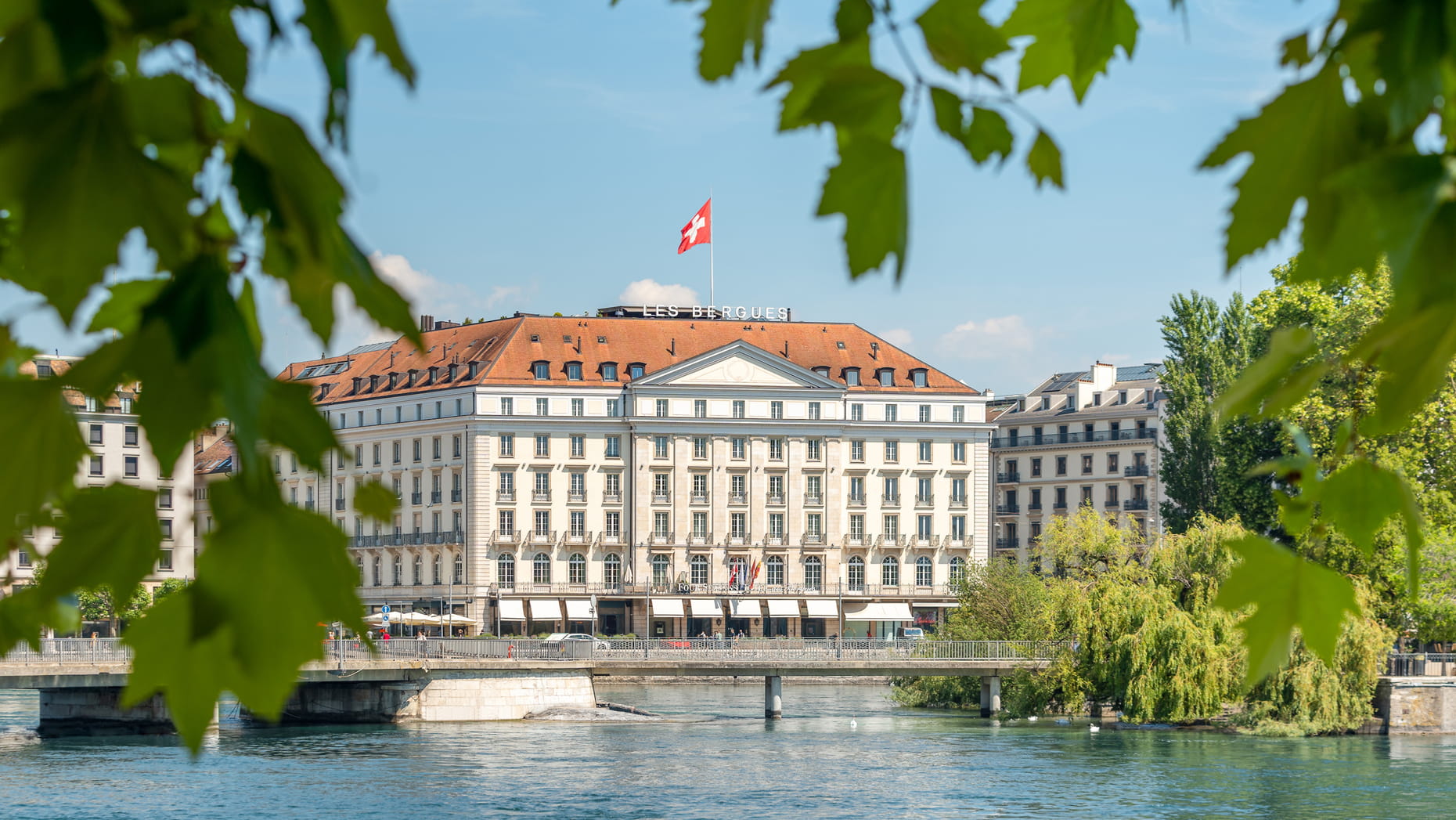
Occupies a landmark position on Quai des Bergues, where the Rhône meets the lake. Its story reaches back to 1834, and that historical weight gives the property a sense of continuity uncommon in a city that has repeatedly reinvented its international role. The neoclassical setting and classic interiors are balanced by a contemporary approach to comfort, while lake-facing rooms frame the water and distant Alpine silhouettes as part of the experience. Dining, wellness and attentive service make it a particularly compelling choice for travellers who value established grand-hotel traditions without wanting the stay to feel frozen in time.
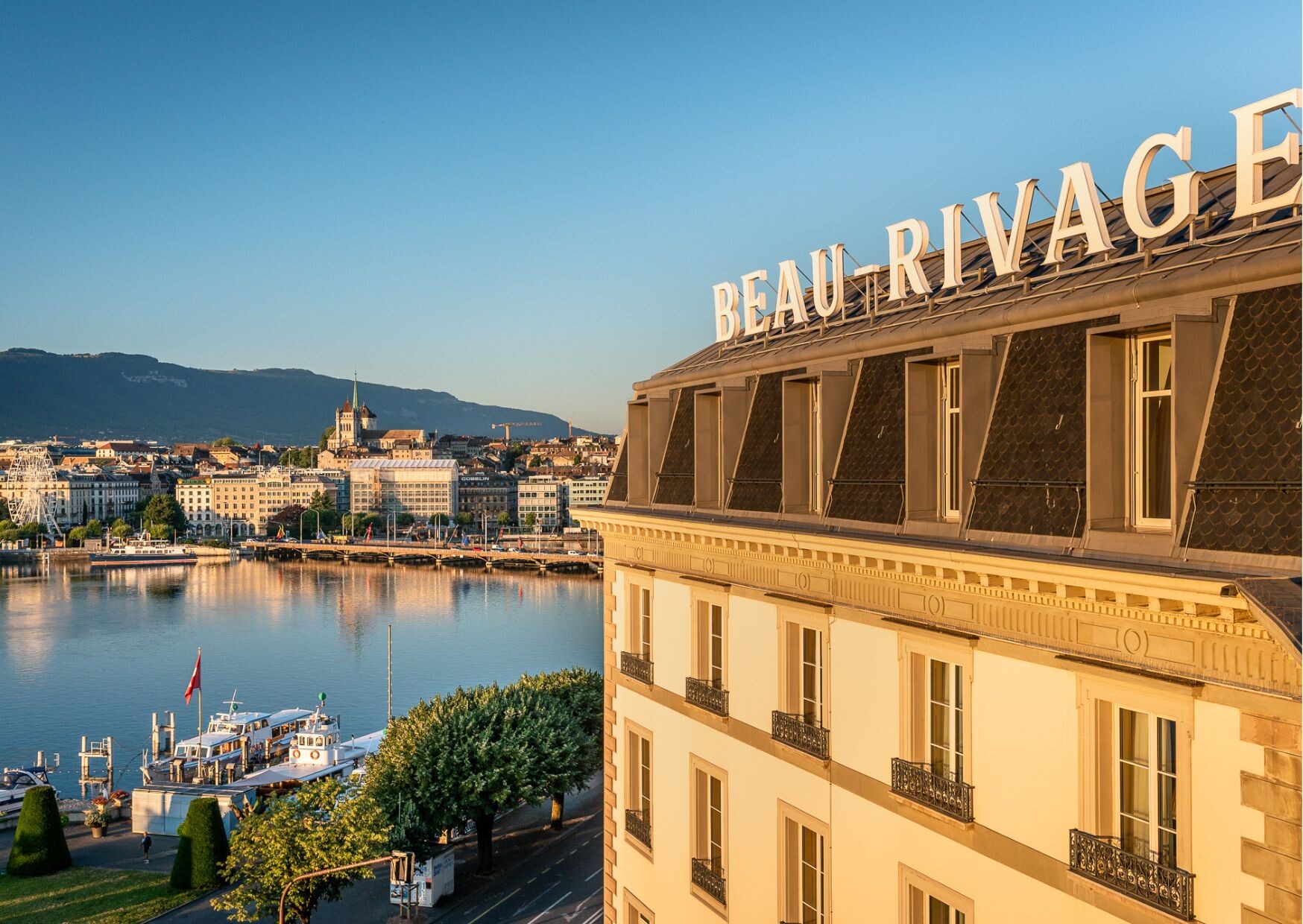
Brings a more intimate, family-led character to the waterfront. Established in 1865, it has a long relationship with the city’s social and cultural life, yet its appeal is not merely historical. The setting beside Lake Geneva gives many moments of the stay an effortless sense of occasion, from the arrival at the entrance to a quiet pause overlooking the water. Its identity is grounded in personalised hospitality and a strong culinary dimension, making it well suited to guests who appreciate a classic address with a human, individual sense of welcome.
The Woodward, Auberge Collection
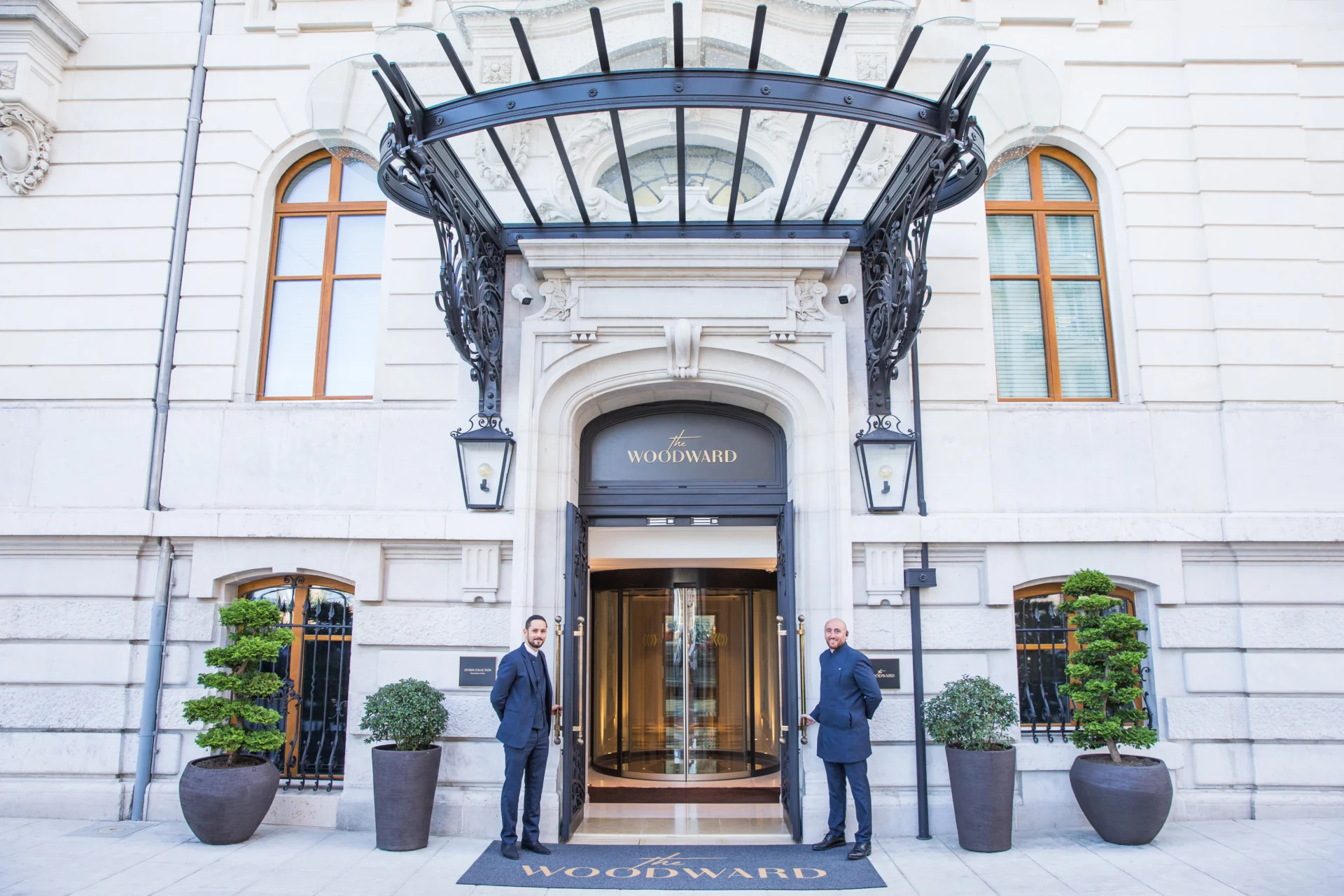
Offers a more contemporary interpretation of lakeside luxury. Set along Quai Wilson in a historic building reimagined for modern hospitality, it is Geneva’s all-suite hotel, with interiors shaped by designer Pierre-Yves Rochon. The emphasis is on space, privacy and a residential sensibility, complemented by a substantial Guerlain spa and a serious culinary programme that includes L’Atelier de Joël Robuchon and Le Jardinier. For travellers who prefer contemporary design and a quieter, suite-led experience to traditional grand-hotel formality, The Woodward provides a distinct alternative.
The Best Time to Visit Geneva
Geneva is a year-round destination, but the character of a visit changes with the season. Spring brings fresh colour to the parks and a sense of reawakening along the waterfront. The days grow longer, café terraces return to life, and the surrounding landscape begins to soften after winter. It is a rewarding period for travellers who prefer a measured pace and do not need every day to be reliably warm.
Summer is the season of the lake. Outdoor dining, boat journeys and long evening walks become central to the experience, while the city’s public spaces feel more animated. It is also a popular period, so desirable rooms and sought-after tables benefit from advance planning. Autumn brings a more contemplative mood: the light becomes gentler, the air cooler, and the city’s cultural life offers an appealing counterpoint to walks beside the water.
A Natural Gateway to the Swiss Landscape
Geneva can stand alone as a destination, but it also makes an elegant beginning or ending to a wider Swiss journey. Rail connections and road routes place the city within reach of landscapes that feel dramatically different from the lakeside urban setting. The transition is part of the pleasure: from the measured rhythm of the waterfront to the altitude and stillness of the mountains, Switzerland reveals its variety without requiring a change in sensibility.
For a journey shaped around alpine scenery, the mountain village of Zermatt offers a world of high peaks, car-free streets and the unmistakable presence of the Matterhorn. Interlaken, positioned between Lake Thun and Lake Brienz, provides a different kind of drama, with water, valleys and mountain excursions converging in one compact region. Further east, St. Moritz brings a polished alpine atmosphere, winter sport heritage and a distinctive Engadine landscape. These destinations should not be treated as interchangeable extensions of Geneva; each has its own pace and personality, and each deserves time to be experienced on its own terms.
Geneva’s advantage is the contrast it offers. After days shaped by mountain air and outdoor pursuits, the city restores a different rhythm: museums, thoughtful dining, galleries and the quiet pleasure of being beside the lake. For travellers planning a broader Swiss itinerary, it is a natural place to pause, recalibrate and let the journey settle before the next departure.
How to Experience Geneva Well
Above all, resist the idea that a luxury journey must be densely programmed. Geneva’s finer pleasures are often quiet: a view that changes with the weather, a conversation that extends beyond its intended hour, the discovery of a craft whose mastery is visible only when someone explains it. The city rewards attention, and attention is a luxury in itself.
Frequently Asked Questions
Is Geneva Switzerland worth visiting for a luxury holiday?
Yes. Geneva combines a beautiful lakeside setting with exceptional hospitality, watchmaking heritage, fine dining, cultural institutions and easy access to the Swiss Alps. Its appeal is understated rather than theatrical, making it especially suited to travellers who value quality, privacy and cultural depth.
How many days should I spend in Geneva?
Two to three full days allow time for the lakefront, the Old Town, a museum visit, Carouge and relaxed meals. Add another day if you prefer private experiences, slower cultural exploration or a day trip into the surrounding region.
What are the best things to do in Geneva?
Walk along Lake Geneva, see the Jet d’Eau, explore the Old Town and St Peter’s Cathedral, visit the Patek Philippe Museum, spend time in Carouge and experience the city’s varied dining scene. A boat journey is also a rewarding way to appreciate the landscape.
When is the best time to visit Geneva?
Late spring through early autumn is ideal for lakefront walks, cruises and outdoor dining. Spring and autumn can offer a quieter atmosphere, while winter is well suited to museums, restaurants and a more intimate city break.
Can Geneva be combined with other Swiss destinations?
Certainly. It can be paired with Zermatt for dramatic alpine scenery, Interlaken for lakes and mountain excursions, or St. Moritz for an elegant Engadine escape. Allow enough time in each destination to appreciate its distinct character rather than rushing between them.
Geneva, in Its Own Time
Geneva leaves its strongest impression not through a single landmark, but through the relationship between its many parts: the lake and the city, precision and pleasure, international ambition and neighbourhood intimacy. It is a place where a watch can be understood as an expression of patient craft, where history remains present without becoming a performance, and where the landscape lends every ordinary moment a sense of scale.
For the discerning traveller, Geneva Switzerland offers a form of luxury that is less concerned with display than with discernment. Spend time here, and the city begins to reveal its particular rhythm—measured, cosmopolitan and quietly assured. The memory that remains may be as simple as the last light over the water, the hush of an old street, or the feeling that for a little while, the day had been allowed to unfold exactly as it should.
Discovering Switzerland Beyond Geneva
For those wishing to discover more of the country beyond the shores of Lake Geneva, Switzerland reveals a remarkable diversity of landscapes and experiences. The alpine drama of Zermatt, where the Matterhorn commands the horizon, offers a striking contrast to Geneva’s cosmopolitan elegance, while Interlaken draws the traveller into a world of crystalline lakes, deep valleys and sweeping mountain panoramas. Further east, St. Moritz presents a more rarefied interpretation of alpine life, shaped by its distinctive Engadine setting, celebrated winter heritage and enduring sophistication. Together, these destinations reveal different expressions of Swiss beauty, each deserving its own unhurried exploration.