
Where the Escarpment Unfolds into Immensity
Where the Escarpment Unfolds into Immensity
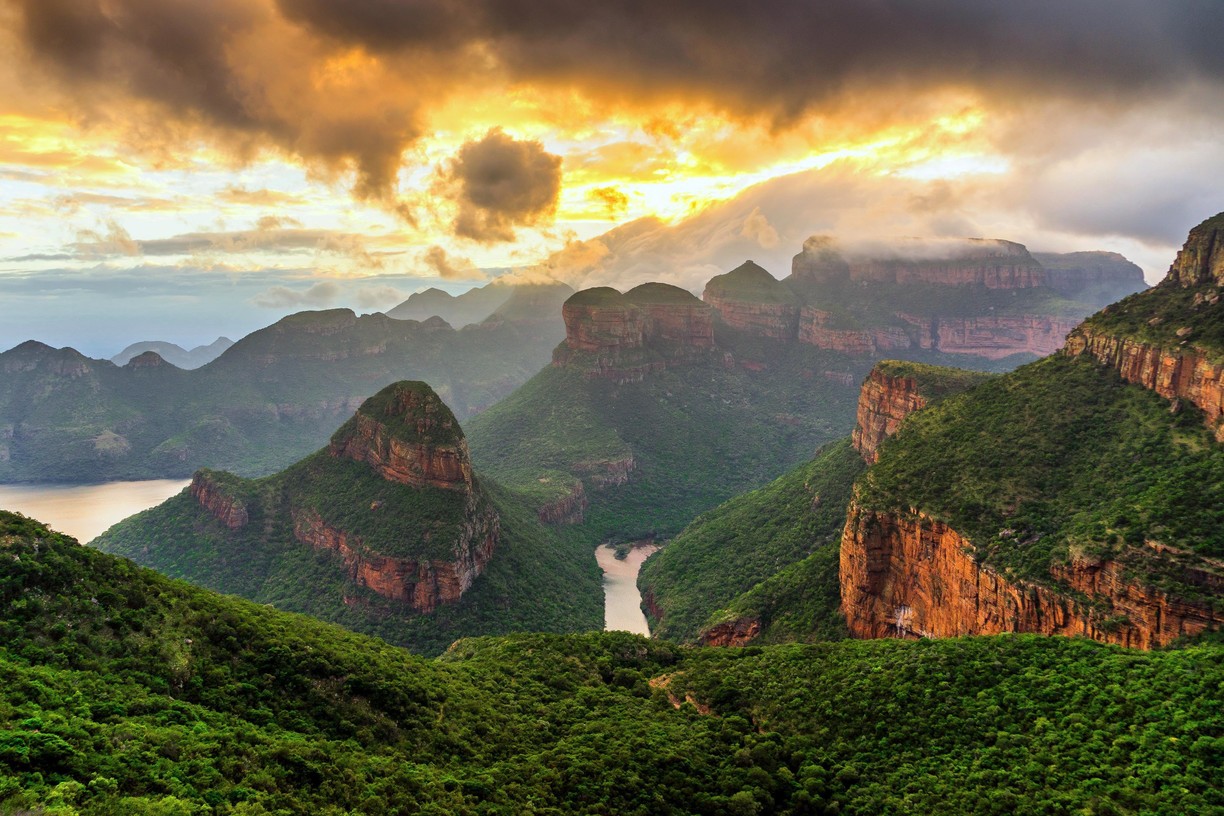
Some landscapes announce themselves with spectacle. Others reveal their scale gradually, allowing the eye to travel from a nearby ridge to a forested ravine, then farther still, towards a horizon that seems to recede with every passing cloud. Blyde River Canyon belongs to the latter kind. Along South Africa’s northeastern escarpment, the land breaks into immense folds of rock and vegetation, and the Blyde River threads its way through a world shaped by water, time and extraordinary geological drama.
The approach is part of the experience. Mountain roads rise through cool highland air before opening onto viewpoints where the Lowveld lies far below. The colours shift with the weather: deep green after rain, russet and ochre where the rock is exposed, and soft blue where distant ridgelines dissolve into the atmosphere. At times, mist gathers over the canyon and conceals the farthest reaches; moments later, the landscape may open again in a single sweep.
For the discerning traveller, Blyde River Canyon offers a quieter expression of luxury. Its rewards are not found in conspicuous grandeur, but in space, perspective and the freedom to move without hurry. A carefully planned drive along the Panorama Route, a private terrace overlooking the surrounding hills, or an unhurried pause at a viewpoint can feel every bit as restorative as a more conventional retreat. It is a landscape that asks for attention rather than an itinerary crowded with obligations.
Within a wider South African journey, the canyon also creates a striking counterpoint. The wildlife-rich expanses of Kruger National Park offer a different kind of encounter with the natural world, while the mountain landscapes of the Drakensberg reveal another face of the country’s dramatic interior. Together, these regions make a compelling case for travelling through South Africa slowly enough to appreciate how profoundly its landscapes can change.
A Landscape Written in Stone and Water
Blyde River Canyon is celebrated for its steep cliffs, wooded slopes and expansive views across the Lowveld. Its character is inseparable from the escarpment itself: a dramatic transition between elevated terrain and the warmer country below. Over geological time, erosion and the movement of water have shaped ravines, exposed rock faces and sculptural formations that give the region its distinctive profile.
The canyon is best understood as a sequence of perspectives rather than a single attraction. From above, the landscape appears monumental, almost architectural in its arrangement of ridges and plunging valleys. Closer to the water, the details become more intimate: textured stone, dense vegetation, shifting reflections and the sound of streams moving through narrow channels. The change in scale is part of what makes the region so absorbing.
The surrounding Panorama Route connects many of the area’s most memorable natural landmarks. Waterfalls descend through green ravines, unusual rock formations rise beside the road, and successive viewpoints reveal different relationships between the escarpment and the Lowveld. Travellers who allow time for pauses and short walks will often take away a richer impression than those who attempt to collect every stop in a single hurried circuit.
The Three Rondavels: A Monumental Silhouette
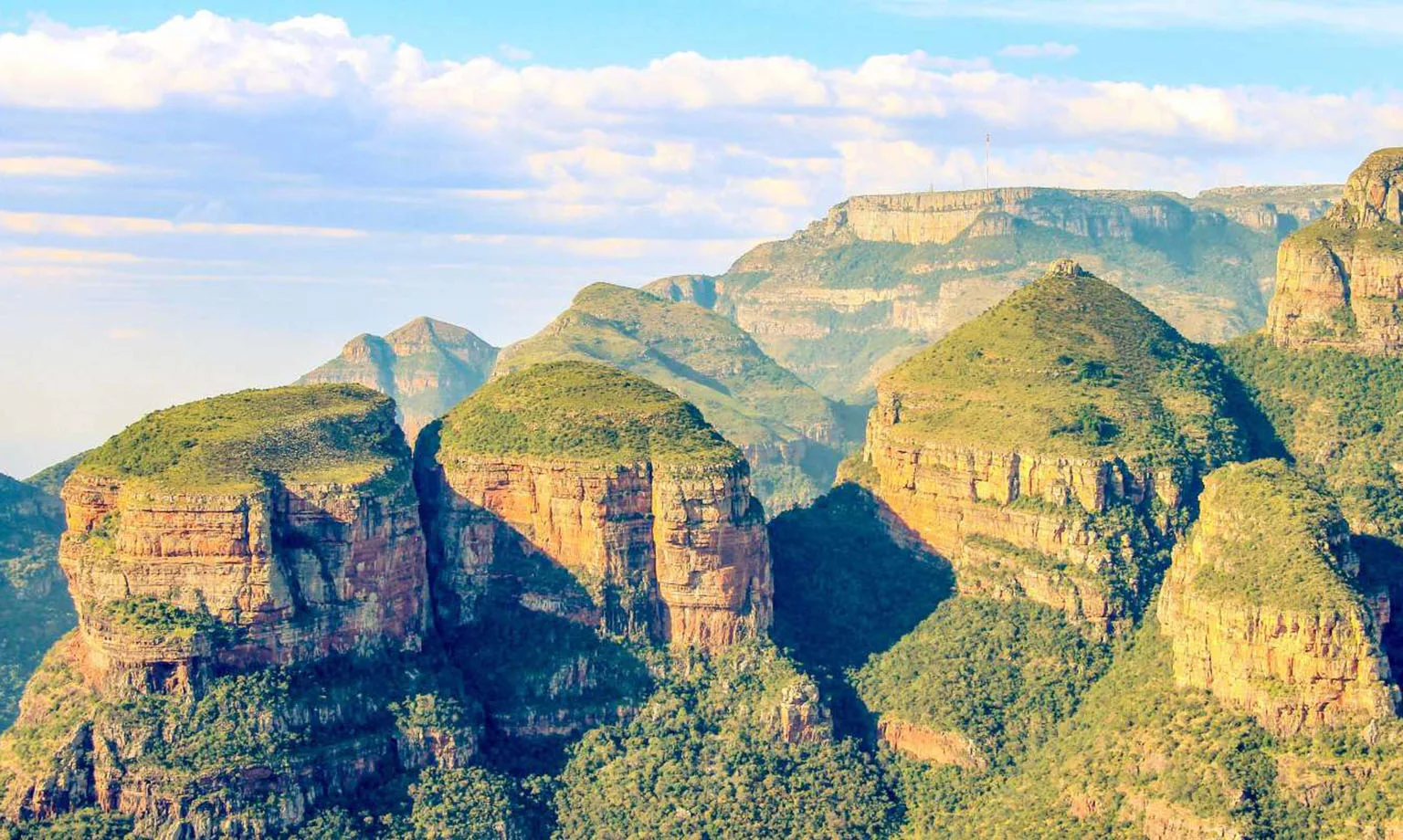
Few views are more closely associated with Blyde River Canyon than the Three Rondavels. These immense, rounded formations rise above the surrounding cliffs, their layered surfaces displaying earthy shades of brown, rust and muted green. Their name evokes the rounded form of traditional African rondavel dwellings, giving the formations a familiar outline against a landscape of almost unimaginable scale.
From the designated viewpoint, the formations command the foreground while the canyon falls away behind them. The most rewarding visit is rarely a hurried one. Early light can pick out the contours of the rock, while passing clouds create moving shadows across the slopes. On clearer days, the view stretches deep into the Lowveld; when the weather turns atmospheric, the landscape becomes a study in mist, texture and partial revelation.
Photographers will find an abundance of natural geometry here: rounded peaks against angular cliffs, layered rock against forest, and a distant horizon that gives the scene its extraordinary depth. Yet the view has an appeal beyond the camera. Standing above the canyon, with the formations rising from the land and the river far below, it is difficult not to become aware of the immense timescales that shaped this terrain.
God’s Window: Looking Across the Lowveld
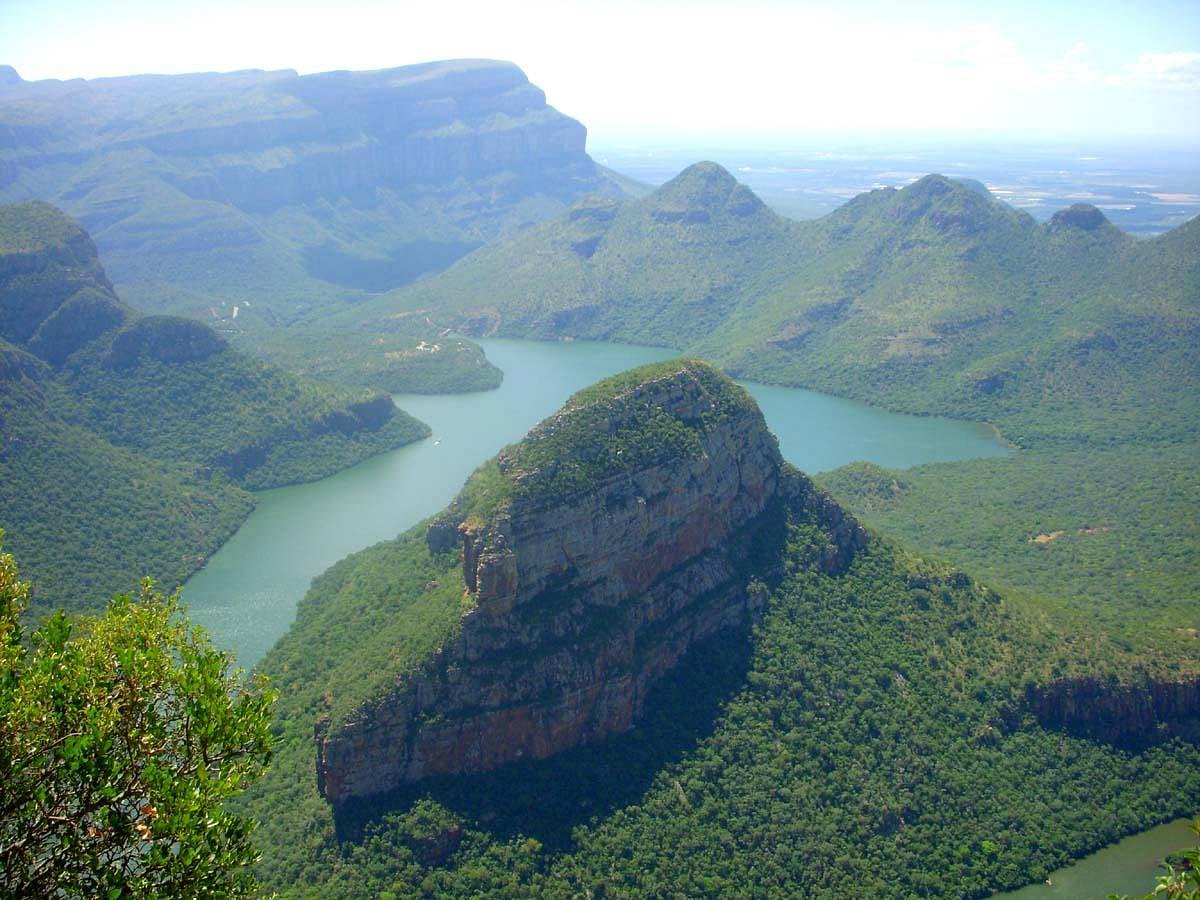
God’s Window offers a different perspective on the escarpment. Rather than focusing on a single formation, the viewpoint opens towards an immense sweep of forested slopes and distant lowland. On a clear day, ridges appear in successive layers, drawing the eye towards the horizon; in cloud or mist, the view becomes more intimate, with the forest emerging and disappearing through shifting veils of moisture.
The surrounding vegetation is part of the experience. Forested paths and shaded sections bring a welcome contrast to the exposed viewpoints, where wind and changing weather can be more noticeable. Conditions may shift quickly at this elevation, so flexibility is useful. A visit that begins with limited visibility can become unexpectedly rewarding as the cloud lifts, while a mist-filled scene may offer its own quiet beauty.
Bourke’s Luck Potholes: Water as Sculptor
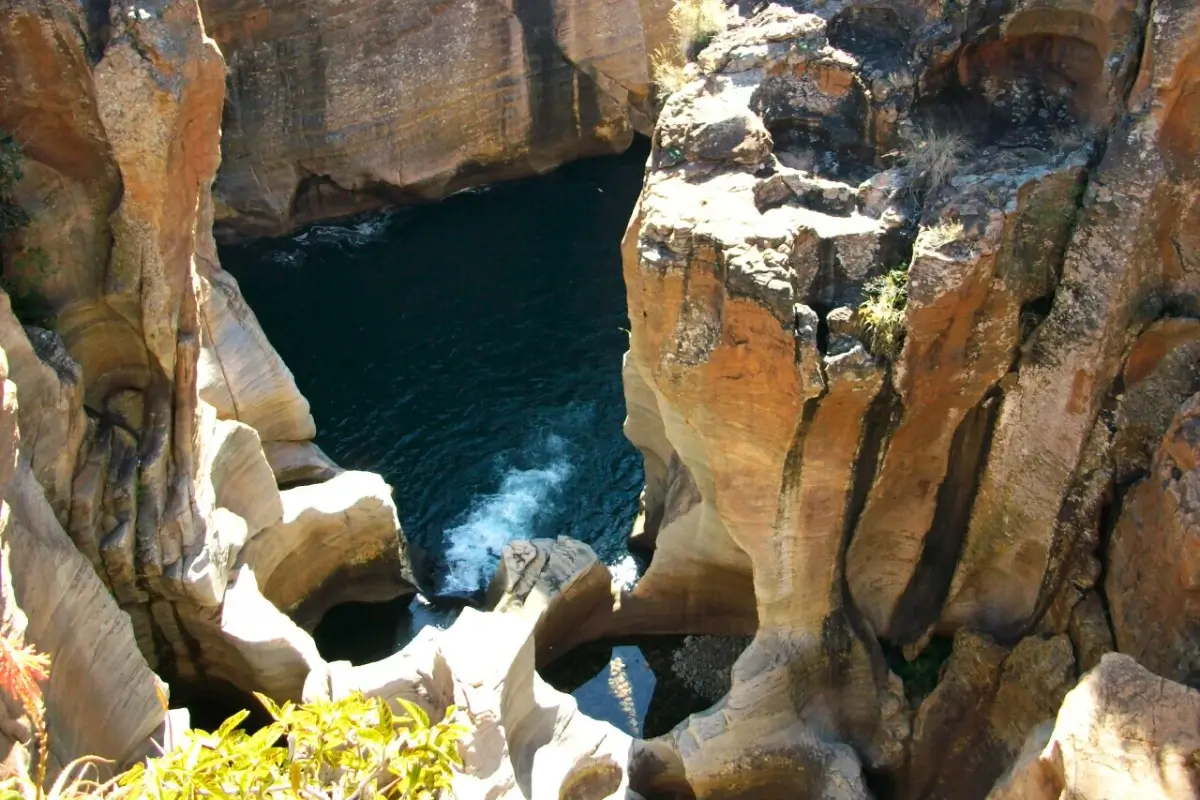
At Bourke’s Luck Potholes, the meeting of the Blyde and Treur rivers has created a remarkable series of cylindrical hollows in the bedrock. Water, sediment and time have worn the stone into rounded forms and narrow channels, producing a natural sculpture that is both intricate and immense in its own way.
Bridges and designated viewing areas allow visitors to study the formations from different angles. The colour of the rock changes with the light, while the movement of water draws attention to the processes that continue to shape the landscape. Where the canyon’s principal viewpoints impress through distance, the potholes reward close observation. They offer a reminder that the region’s drama is not only a matter of scale, but also of patient, persistent natural forces.
The Panorama Route: A Scenic Journey, Not a Checklist
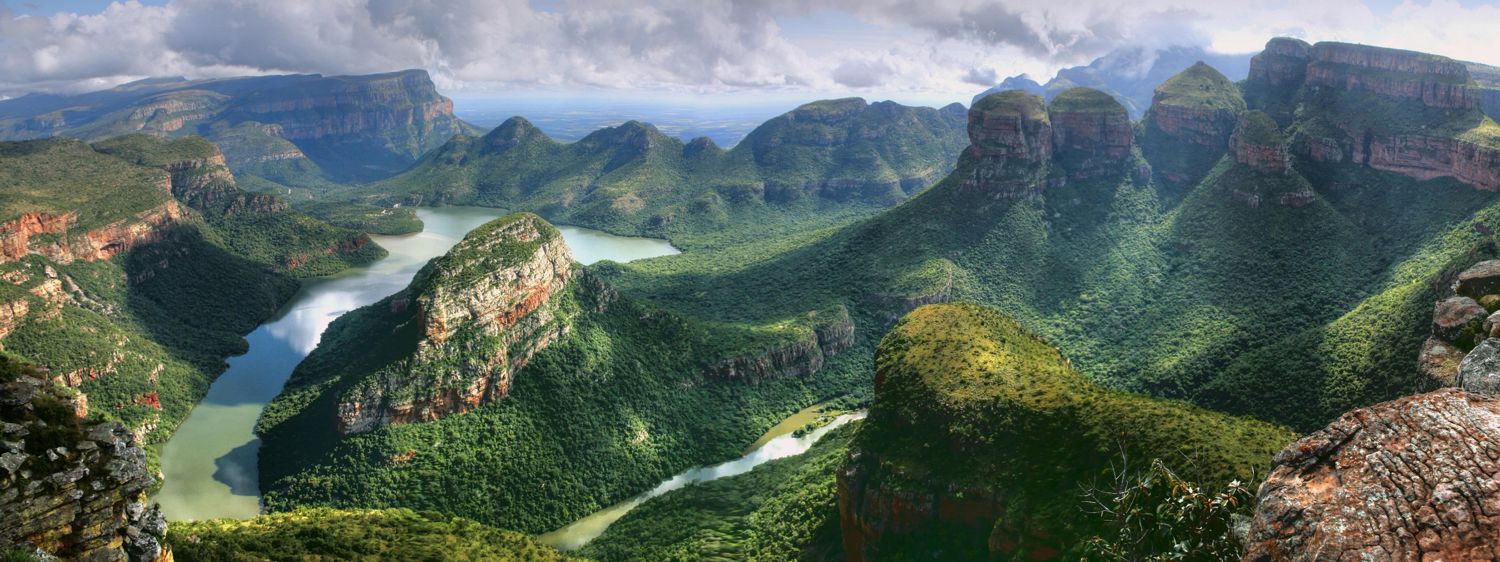
The Panorama Route is most satisfying when treated as a journey in its own right. Along the way, Lisbon Falls and Berlin Falls bring the drama of falling water into the landscape; the Pinnacle Rock rises above the surrounding forest; and the highland town of Graskop provides a practical pause between excursions. Pilgrim’s Rest, with its gold-rush history and preserved historic character, adds a cultural dimension to a day otherwise dominated by geology and scenery.
Distances, walking paths and weather conditions can make a full day pass quickly. A private vehicle offers the freedom to pause when the light changes, while a knowledgeable guide can add context to the region’s geology, ecology and history. The best itinerary leaves room for the unexpected: an overlooked viewpoint, a short walk through forest, or simply a longer pause than planned when the canyon opens into view.
Before setting out, check current access conditions and local guidance for the attractions you intend to visit. Some viewpoints involve uneven paths or exposed edges, and rain or mist can affect visibility and footing. Remaining within marked areas is essential, both for personal safety and to protect the landscape.
Luxury Stays: Let the Landscape Set the Pace
Accommodation around Blyde River Canyon is spread across a broad area, so the most suitable property depends on the shape of the itinerary. Some travellers will prefer an intimate retreat with a strong sense of design; others will value gardens, river frontage or a convenient base for exploring the Panorama Route. The properties below offer different ways to experience the region, but travellers should confirm current facilities, location, and availability directly before booking.
Timamoon Lodge
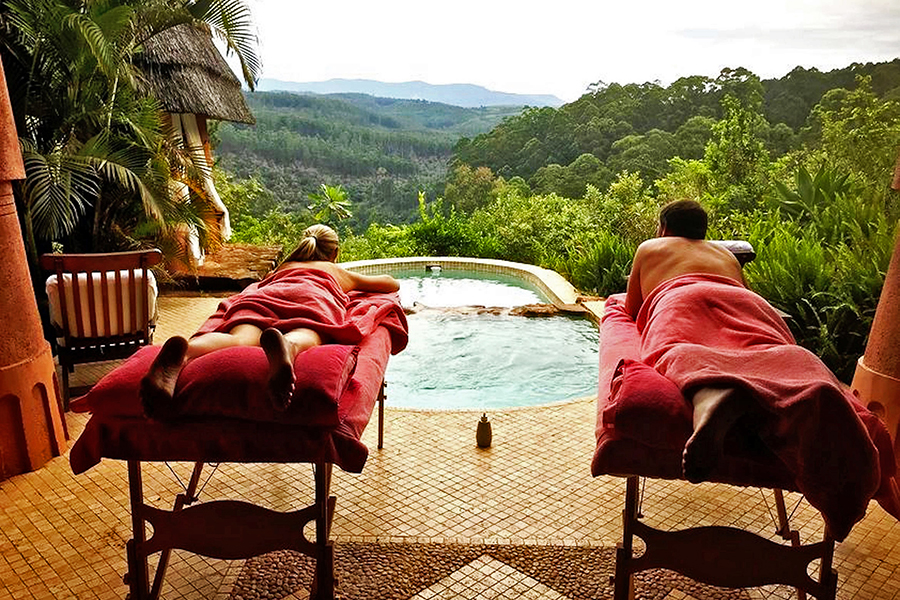
Timamoon Lodge is known for its individually styled villas, tropical gardens and private-pool atmosphere. Its eclectic design gives the property a distinctive personality, making it a compelling option for couples seeking privacy and a romantic interlude within the wider Lowveld region. Rather than treating the lodge merely as a place to sleep between excursions, allow time to enjoy its secluded spaces and slower rhythm. Confirm the exact driving time to the viewpoints you plan to visit, as the wider canyon region covers considerable ground.
Blyde River Canyon Lodge
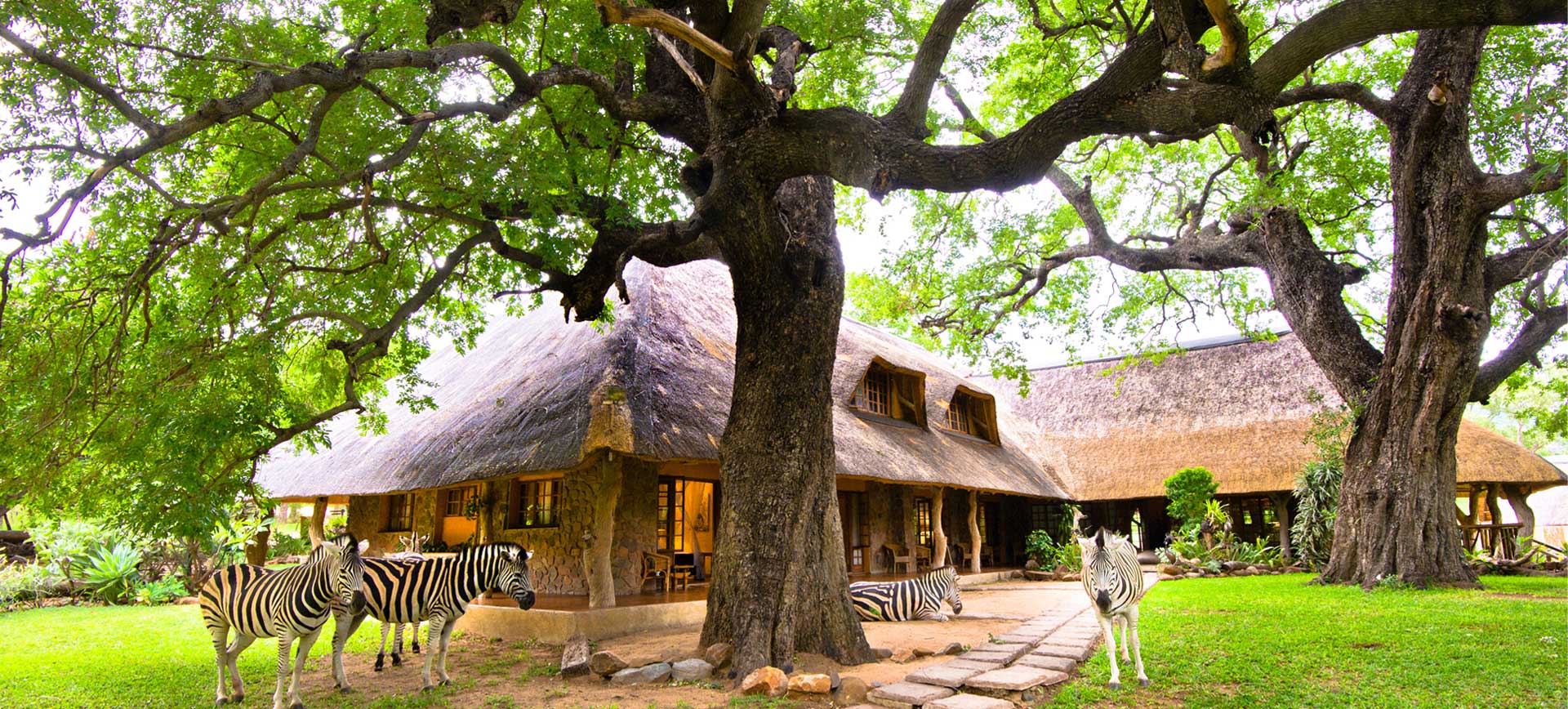
Set within a substantial botanical reserve, Blyde River Canyon Lodge offers a nature-led stay surrounded by mature trees and gardens. Its accommodation options have included en-suite rooms, a honeymoon suite and a cottage, giving the property flexibility for couples and small groups. The appeal lies in the setting and the opportunity to return from a day of scenic exploration to a quieter, garden-centred environment. Check the property’s current room categories and inclusions when planning a stay.
Experiences Worth Making Time For
A Private Scenic Drive
A private drive along the Panorama Route can turn a sequence of viewpoints into a coherent experience. With transport and navigation taken care of, the day can unfold at a comfortable pace, with time for photographs, short walks and the occasional unscheduled stop. A local guide can also explain the landscape beyond what is immediately visible.
Landscape Photography
Light is a defining element of the canyon. Morning can reveal detail in the rock formations, while moving cloud creates dramatic changes across the forested slopes. Rather than trying to photograph every viewpoint, choose a few and allow enough time to observe how the scene evolves. Weather can change quickly, so carry a light waterproof layer and protect camera equipment when conditions are unsettled.
Forest Walks and Birdlife
The region’s wooded areas offer a more intimate experience of the escarpment, with indigenous vegetation and opportunities to observe birdlife. Choose walks according to your fitness, the season and current trail conditions. Comfortable footwear, drinking water and respect for local guidance are essential.
Unhurried Time at the Lodge
A refined itinerary should leave space for doing very little. A leisurely breakfast, an afternoon on a private terrace or time spent enjoying the gardens can be as restorative as another excursion. In a destination defined by vastness, the luxury of not rushing becomes part of the experience.
When to Visit Blyde River Canyon
May to September: Cooler, Generally Drier Conditions
The cooler months are often well suited to scenic drives and panoramic viewpoints. Visibility can be excellent, although early mornings and evenings may feel cold at higher elevations. Bring layers and check local conditions before setting out, particularly if you plan to visit viewpoints early in the day.
October to April: Greener Landscapes and Summer Rain
The warmer months bring lush vegetation and can make waterfalls especially compelling. Rain, cloud and mist may affect visibility or road conditions, so a flexible schedule is valuable. Allowing an additional day gives you more freedom to adjust plans around the weather rather than forcing every excursion into a fixed window.
There is no single perfect season for every traveller. Those prioritising far-reaching views may favour the drier months; visitors drawn to rich greenery and flowing water may prefer the wetter season. In either case, check forecasts and attraction access shortly before travelling.
Planning a Considered Stay
Two to three nights is a useful starting point for exploring the principal viewpoints and selected stops along the Panorama Route without making every day feel hurried. Travellers interested in walking, photography or spending meaningful time at their lodge may wish to stay longer.
The region is frequently combined with Johannesburg and the Greater Kruger area, but road journeys can be substantial. Plan driving times carefully, avoid scheduling distant attractions too tightly, and consider changing accommodation when doing so would reduce backtracking. A private vehicle offers flexibility, while a guided excursion can be valuable for visitors unfamiliar with the roads and local conditions.
Pack comfortable walking shoes, sun protection, drinking water and a light waterproof layer. For exposed viewpoints, follow posted instructions and remain within designated areas. Before booking accommodation, confirm its exact location relative to the attractions that matter most to you; properties described as being in the Blyde River Canyon region may be separated by meaningful driving distances.
Frequently Asked Questions
What is Blyde River Canyon best known for?
Blyde River Canyon is celebrated for its dramatic cliffs, forested ravines and expansive views towards the Lowveld. The Three Rondavels, God’s Window and Bourke’s Luck Potholes are among its best-known landmarks.
How long should you spend in Blyde River Canyon?
Two to three nights generally provide a comfortable starting point for the principal viewpoints and several Panorama Route attractions. Additional time is worthwhile for walking, photography and a slower lodge-based stay.
What is the best viewpoint in Blyde River Canyon?
The Three Rondavels viewpoint is among the most iconic, with its distinctive rock formations and sweeping canyon panorama. God’s Window offers a broader view across the escarpment. Visiting both reveals different aspects of the landscape.
When is the best time to visit Blyde River Canyon?
The drier months, broadly May to September, can be favourable for visibility and scenic drives. The warmer months, from October to April, often bring greener scenery and stronger waterfalls, but rain and mist can affect plans.
Where should you stay when visiting Blyde River Canyon?
The choice depends on your itinerary and preferred atmosphere. Timamoon Lodge offers a distinctive, private retreat; Blyde River Canyon Lodge provides a garden-centred setting; and Blyde River Wilderness Lodge is associated with a riverside environment. Confirm current facilities, exact location and availability directly.
Can Blyde River Canyon be combined with Kruger National Park?
Yes. Combining the canyon with the Greater Kruger region creates a varied journey of scenic exploration and wildlife viewing. Allow enough time for road travel and consider staying in separate locations to avoid unnecessary driving.
Is Blyde River Canyon suitable for a luxury trip?
Yes, particularly for travellers who value privacy, nature and well-paced experiences. The region’s luxury is often expressed through a distinctive lodge, private transport, thoughtful guiding and time to appreciate the landscape rather than through large resort infrastructure.
A Final Reflection: The Luxury of Perspective
Blyde River Canyon leaves its impression through accumulation: the rising escarpment, the sculptural Three Rondavels, the water-worn stone at Bourke’s Luck Potholes and the changing horizon at God’s Window. Each place reveals a different expression of the same immense landscape, and together they reward the traveller who allows the journey to unfold without haste.
Within South Africa, the canyon offers an essential counterpoint to the drama of a safari and the energy of its cities. Here, the memorable moments may be quieter: a sudden clearing of mist, the changing colour of the cliffs, or the stillness of a lodge after a day on the road. The destination’s greatest luxury is perspective—the rare opportunity to stand before a landscape so vast that the ordinary pace of life falls away.
Continue Exploring South Africa
South Africa reveals its extraordinary diversity when its regions are experienced together. The escarpment and waterfalls of Blyde River Canyon contrast with the mountain scenery of the Drakensberg, while Kruger National Park offers a different encounter with the natural world through its wildlife and wilderness. Further south, the Cape Winelands and Garden Route bring vineyard landscapes, coastal roads and distinctive places to stay. Together, these destinations form a journey through a country whose character changes dramatically from one region to the next.