Vienna: An Imperial City, Composed in Music and Memory
Vienna does not need to manufacture an atmosphere of distinction. It inherited one, then spent centuries refining it. Along the Ringstraße, monumental façades preserve the ambitions of an imperial capital; beyond them, courtyards, intimate galleries and historic coffeehouses reveal a more private city, one that has always understood the value of conversation, ritual and time. Its elegance is not a single spectacle. It is a composition of architecture, music, art and daily life, arranged with an instinctive sense of proportion.
The Habsburg legacy remains visible in the palaces and ceremonial avenues, but Vienna is not confined to its own history. Contemporary galleries, ambitious kitchens and discreetly designed hotels inhabit the same city as Baroque churches and concert halls that have carried generations of music. Here, the past is neither museum glass nor theatrical costume. It remains a living presence, continually interpreted by the people who make the city their own.
For travellers drawn to luxury travel in Vienna, the real privilege lies in experiencing these different dimensions without allowing one to overwhelm the others. A morning among imperial collections can give way to an unhurried lunch, an afternoon spent wandering the Innere Stadt and an evening shaped around opera or chamber music. The most rewarding itinerary is not the one that conquers the greatest number of sights. It is the one that allows Vienna’s distinctive rhythm to emerge.
The Imperial City, Beyond the Postcard
Schönbrunn Palace: The Architecture of Imperial Ambition
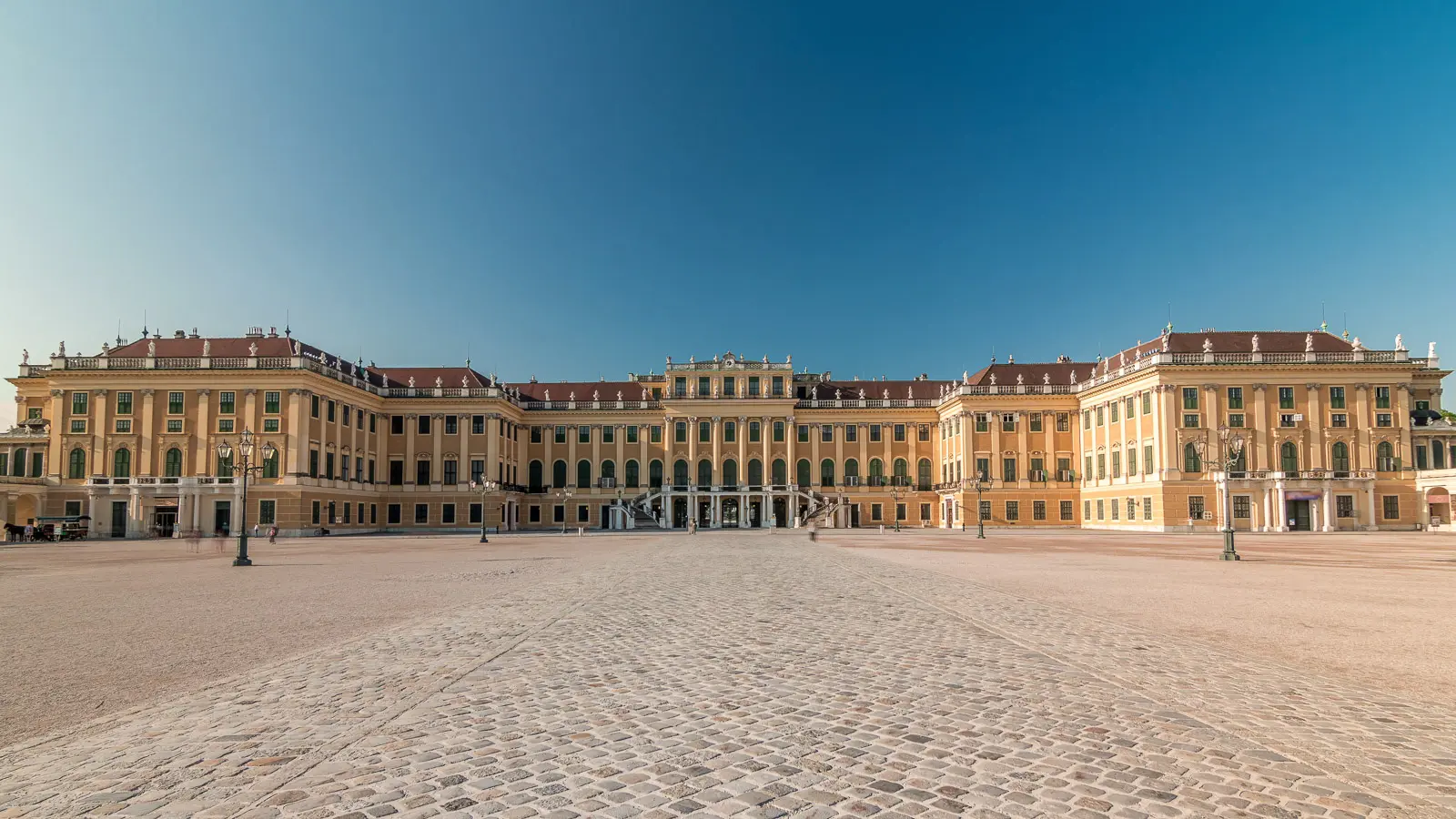
At Schönbrunn, imperial ambition unfolds across architecture and landscape. The palace’s ceremonial rooms speak of court life and dynastic theatre; beyond them, formal gardens draw the eye through carefully composed perspectives towards fountains, sculpture and the Gloriette. The setting is expansive, but its effect is not simply one of scale. It reveals how the Habsburgs understood architecture as a language of authority—one that extended from the interiors of the palace into the land around it.
The experience is richer when the gardens are given as much attention as the palace itself. Their symmetry, long avenues and shifting views transform a visit into an encounter with the imperial imagination, where landscape was designed to communicate power, order and cultivated taste.
For a more considered visit, allow time for both the interiors and the grounds rather than treating Schönbrunn as a brief stop between other attractions. Timed admission and tour availability can change, so confirm current arrangements before travelling.
The Hofburg: An Empire Told Through Its Rooms
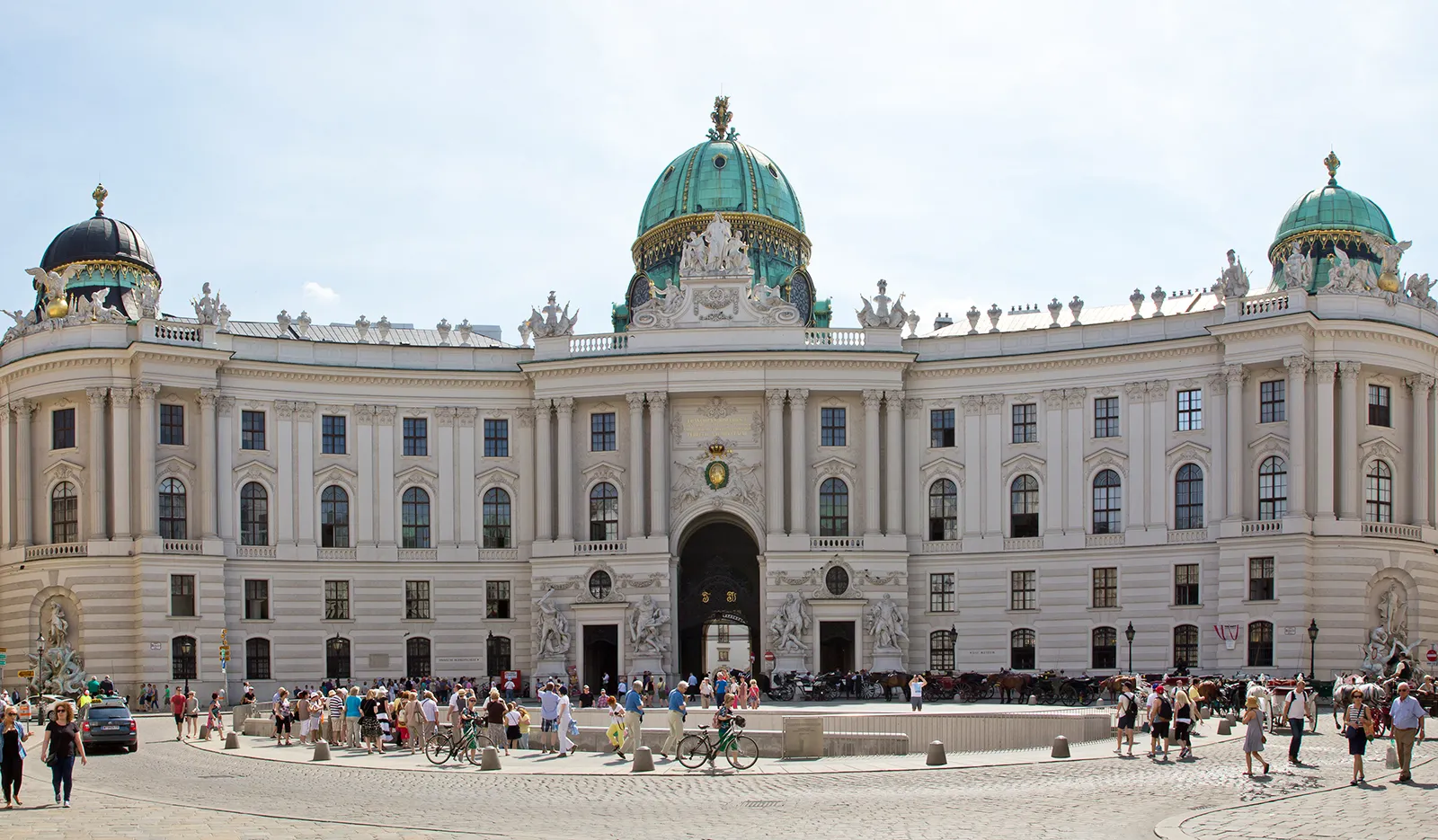
In the heart of Vienna, the Hofburg is less a single palace than an accumulated portrait of power. Its courtyards and wings reflect centuries of adaptation, from medieval stronghold to imperial residence and, eventually, a complex serving modern Austria. The architecture reveals an empire that expanded, changed and repeatedly reshaped the stage on which it presented itself.
The Imperial Apartments and Sisi Museum offer one perspective on court life, while the Imperial Treasury illuminates the symbols and ceremonial objects through which monarchy expressed its authority. Yet the Hofburg becomes most compelling when viewed beyond its grandeur. Behind the formal rooms lies a story of public image, private life, dynastic responsibility and the human cost of maintaining an empire.
A knowledgeable guide can bring these layers into focus, turning ornamental details into clues about the personalities, ambitions and contradictions that shaped the Habsburg world.
Belvedere: Where Art and Architecture Meet
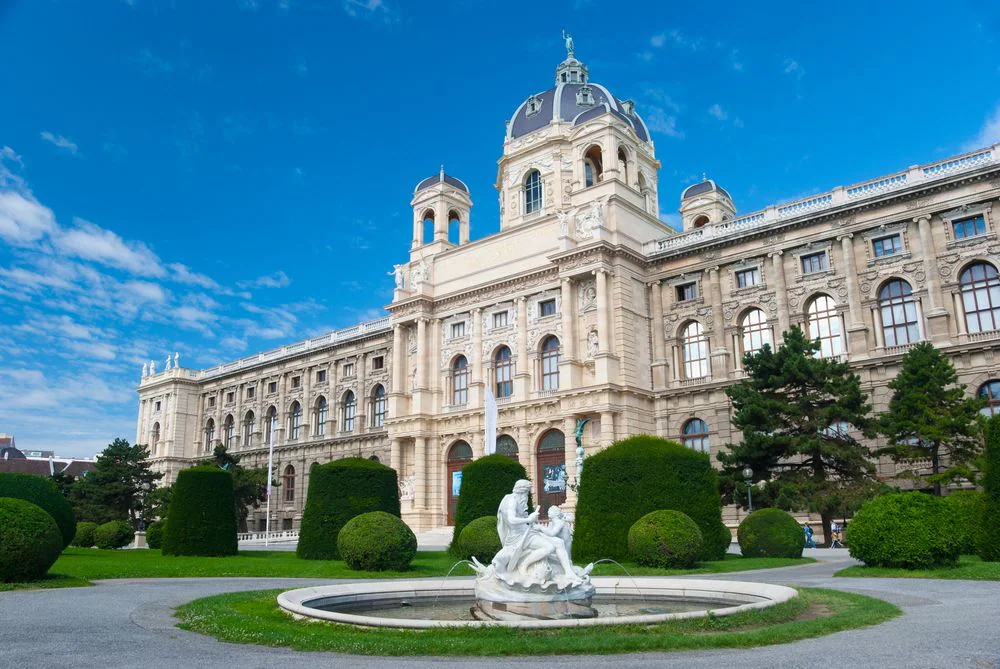
The Belvedere offers a different register of Viennese refinement. Commissioned for Prince Eugene of Savoy, its Baroque palaces and formal gardens create a dialogue between architecture, landscape and art. Terraces, water features and carefully framed views establish a measured sense of movement, drawing the visitor from the open grounds towards the richly decorated interiors.
Inside the Upper Belvedere, Gustav Klimt’s The Kiss commands particular attention, but the collection deserves more than a single celebrated encounter. It offers a wider view of Austrian art and the cultural transformations that helped define Vienna’s place in European artistic life.
Rather than moving hurriedly from one famous work to the next, allow the collection to unfold at its own pace. The pleasure lies in the details: the surface of a painting, the relationship between a work and its surroundings, the contrast between the palace’s ceremonial architecture and the emotional intensity of modern art.
The Innere Stadt: Vienna at Walking Pace
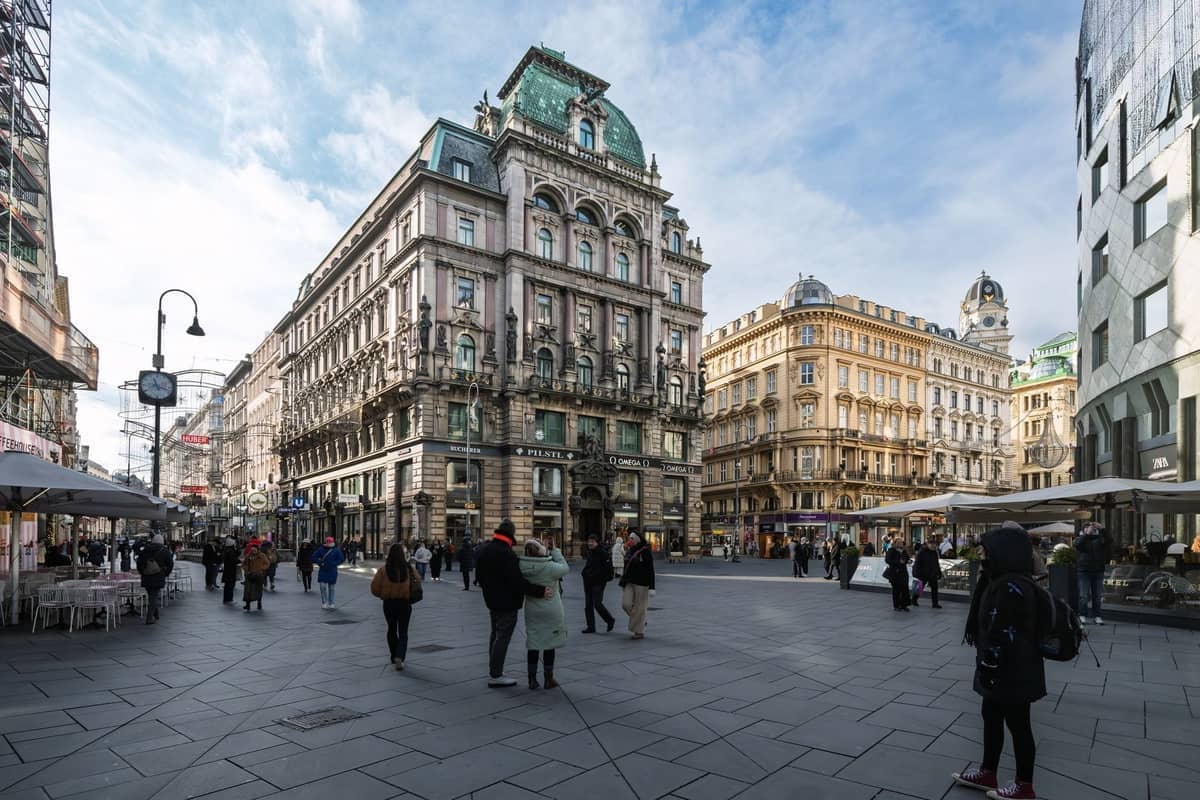
Vienna’s historic centre is best understood on foot. St. Stephen’s Cathedral rises above the surrounding streets, its patterned roof and Gothic verticality inseparable from the city’s silhouette. Beyond the cathedral, lanes open onto elegant squares, church façades, traditional shops and passages that reward a slower pace.
The UNESCO-listed Historic Centre of Vienna brings together medieval origins, Baroque splendour and the monumental urban planning of the nineteenth century. Its character lies in the coexistence of these periods rather than in any single landmark. A grand avenue may lead towards a quieter street; an imposing façade may conceal a courtyard whose intimacy feels entirely removed from the ceremonial city outside.
Leave room to wander without turning every pause into a scheduled stop. Vienna’s sophistication often reveals itself in transitions: a doorway, a small square, the curve of a street or the sudden stillness of a church interior.
A City That Still Belongs to Music
Vienna’s musical inheritance is not merely a roll call of celebrated composers. Mozart, Beethoven, Haydn, Schubert, Brahms and the Strauss family belong to a tradition that helped shape the city’s cultural identity. Their legacy is most immediate, however, when the music is heard in the rooms built to carry it.
The Vienna State Opera, Musikverein and Wiener Konzerthaus offer different relationships between performance, architecture and audience. An opera evening can feel almost ceremonial, with the anticipation beginning long before the first note. A chamber concert, by contrast, may bring the music closer, revealing nuances that disappear within a larger performance.
For a journey shaped around music, begin with the programme rather than leaving tickets until the itinerary is fixed. Choose a performance that genuinely interests you, then allow the rest of the evening to form around it. Verify schedules, ticket arrangements and dress expectations directly with the venue, as these vary by performance.
A carefully chosen concert can become the emotional centre of a Vienna stay—not another item completed on a list, but an experience through which the city becomes more intimate.
The Viennese Coffeehouse: The Luxury of Unhurried Time
In Vienna, coffee is rarely just a transaction. The traditional coffeehouse is a social institution, a place to read, think, meet, linger and observe the city passing through its doors. Marble tables, bentwood chairs, newspapers and the measured arrival of coffee and pastry create an atmosphere whose charm depends on its lack of urgency.
The ritual has been recognised as part of Austria’s intangible cultural heritage. Its significance extends beyond the menu: the coffeehouse represents a particular way of inhabiting a city, allowing time to stretch rather than treating every hour as something to optimise.
Choose a historic café for its atmosphere, but arrive with curiosity rather than the expectation of a staged performance. Order a Melange, consider a pastry and allow the visit to unfold. The Original Sacher-Torte carries its own history at Hotel Sacher, while Vienna’s other coffeehouses each possess their own character and loyal following.
The pleasure is not simply in tasting something associated with Vienna. It is in understanding why the ritual has endured.
A Table That Speaks in an Austrian Accent
Vienna’s culinary identity is more varied than its best-known dishes suggest. Wiener Schnitzel, Tafelspitz and traditional pastries remain part of the city’s vocabulary, yet contemporary restaurants reinterpret Austrian ingredients with a broader international perspective. The most rewarding dining experiences are not necessarily the most theatrical. They are the ones in which technique, produce, hospitality and a clear point of view come together.
For a more complete picture of the city’s food culture, balance a refined restaurant experience with a traditional Austrian meal and a visit to a neighbourhood wine bar. Each offers a different understanding of Vienna: one through culinary innovation, another through inherited recipes, and another through the social life that gathers around food and wine.
Beyond the dense historic centre, Vienna’s vineyards and traditional Heuriger wine taverns reveal a less formal side of the capital. Here, the atmosphere shifts from imperial ceremony to convivial ease. The vineyards are a reminder that Vienna’s identity is not only urban; wine-growing landscapes remain part of the city’s wider character.
Luxury dining in Vienna is most satisfying when it is varied. One carefully composed tasting menu, one classic Austrian meal and an unhurried afternoon with local wine can tell a richer story than a succession of expensive reservations.
Where to Stay: Three Expressions of Viennese Luxury
Hotel Sacher Wien — Heritage with a Human Story
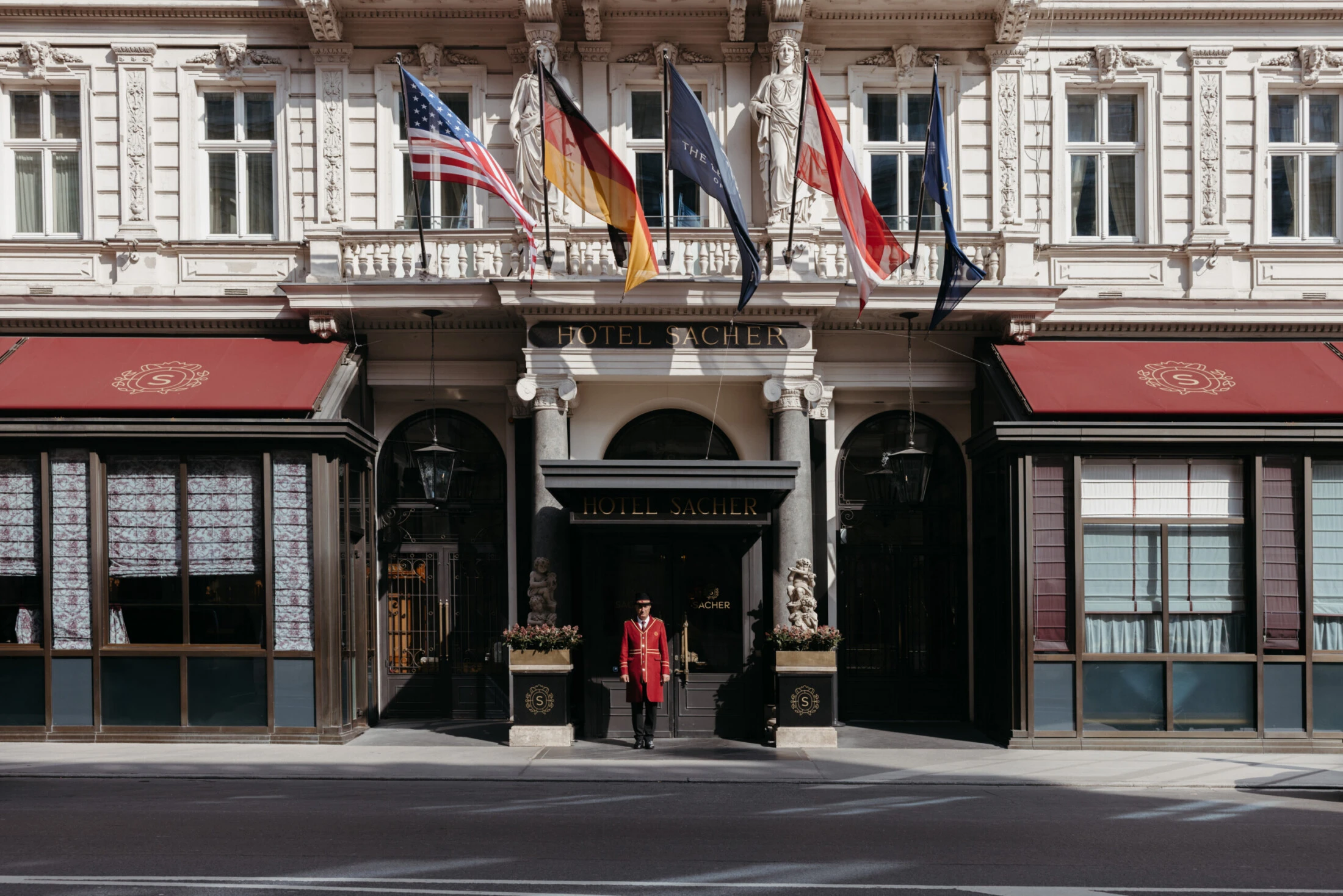
Opposite the Vienna State Opera, Hotel Sacher Wien has been part of the city’s social and cultural life since Eduard Sacher opened it in 1876. Its history is inseparable from the Original Sacher-Torte, but its identity extends beyond a celebrated dessert. It is a family-run institution associated with Viennese tradition, formal hospitality and a location at the heart of the city’s cultural life.
For travellers who want their hotel to feel connected to Vienna’s history, Sacher offers a particularly resonant address. The Opera, Albertina and historic centre are close at hand, making it possible to move between art, performance and the city’s streets without overcomplicating the day.
Its appeal lies in continuity: a sense that the hotel belongs to the city rather than simply occupying space within it. Confirm room categories, dining availability and current services directly with the property before booking.
Rosewood Vienna — Contemporary Refinement in the First District
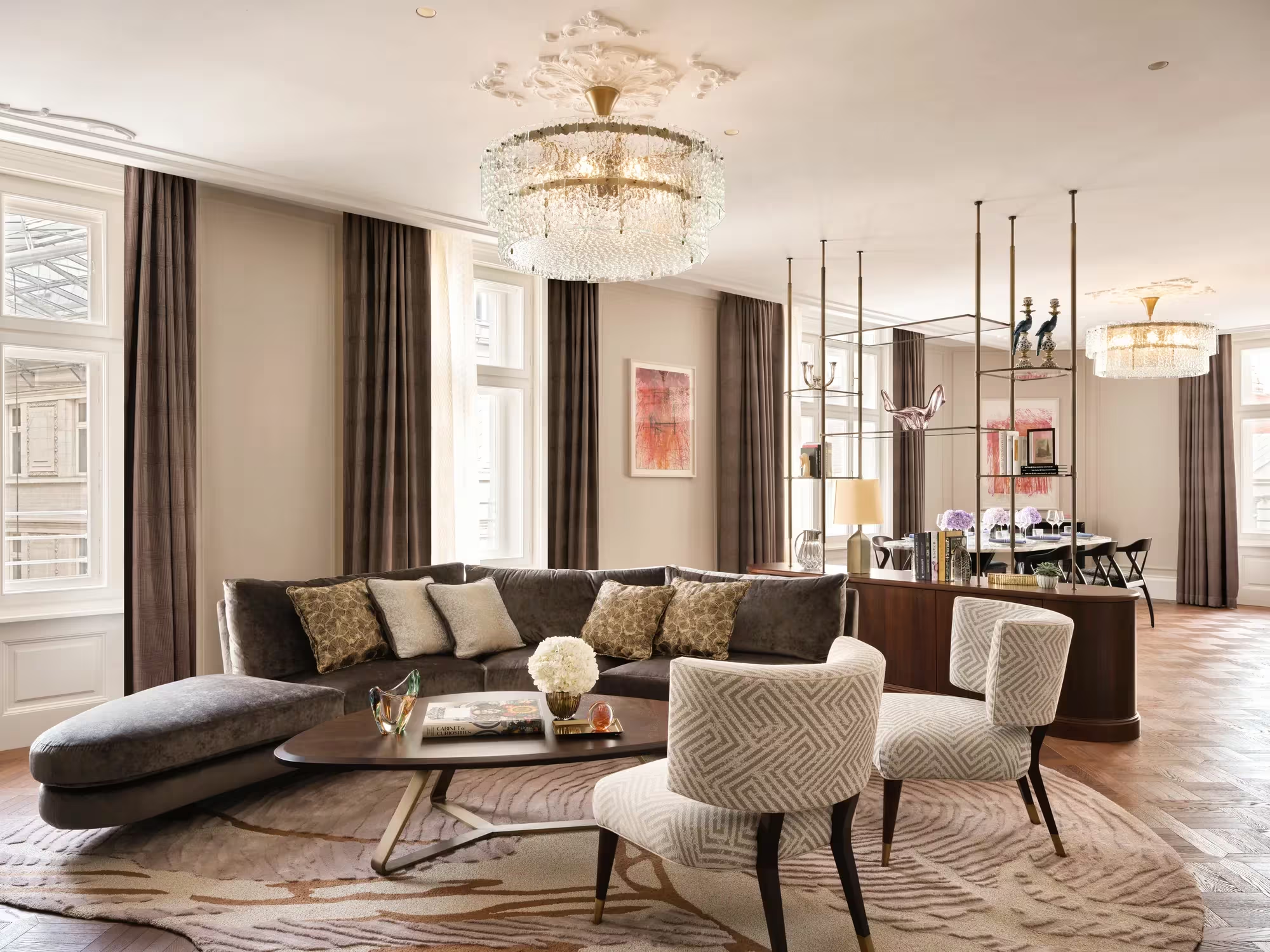
Rosewood Vienna brings a contemporary luxury sensibility to a historic setting in the First District. Its appeal lies in the meeting of modern design, a central location and a more contemporary interpretation of hospitality—an alternative for travellers who prefer understated interiors and a polished atmosphere after a day among the city’s grand public spaces.
The First District makes an appealing base for guests who want to explore Vienna on foot, moving between historic streets, cultural institutions and carefully chosen dining addresses. The hotel’s modern character offers a counterpoint to the imperial architecture outside, allowing the experience of Vienna to shift between historical depth and contemporary comfort.
For travellers who value design and a discreetly modern atmosphere, Rosewood offers a different expression of luxury from the city’s traditional grand hotels. Confirm current room categories, dining, wellness and concierge services directly with the hotel.
Hotel Imperial — The Ceremony of Grand-Hotel Living
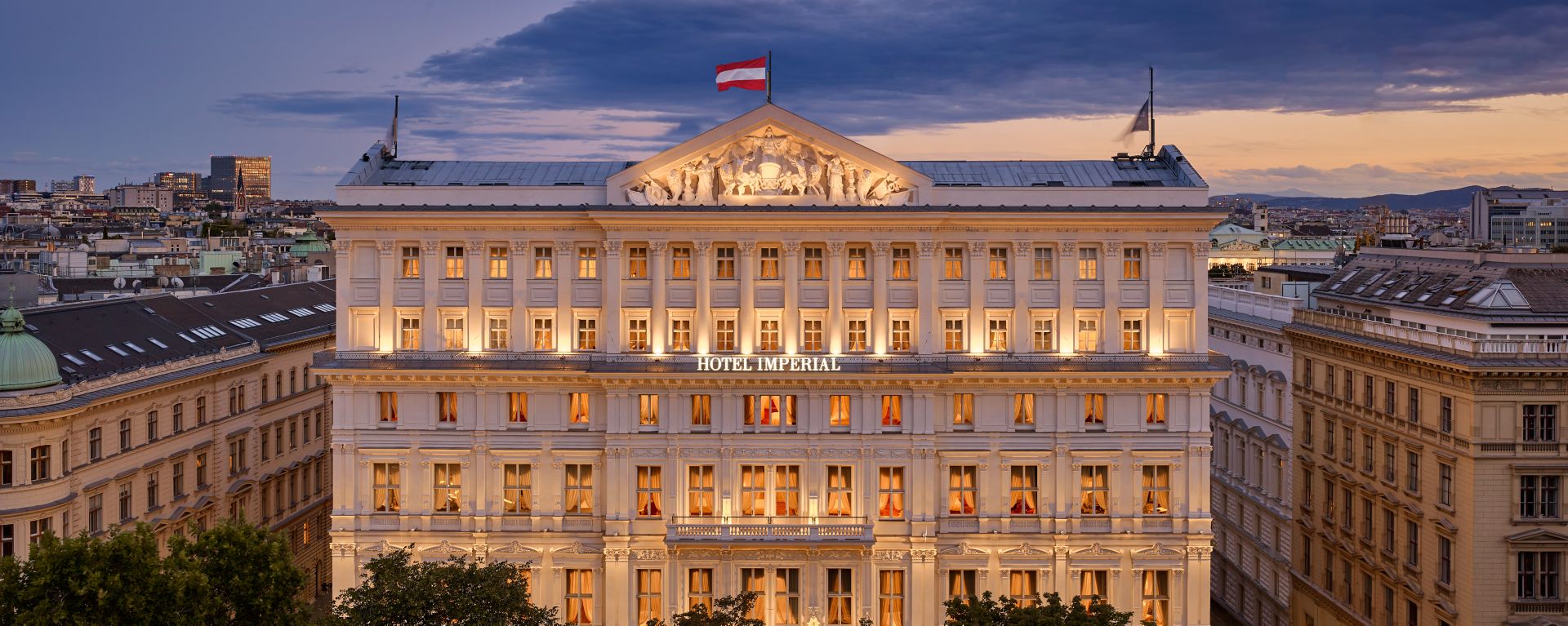
Hotel Imperial occupies a nineteenth-century palace on the Ringstraße. Its architecture and interiors speak to the ceremonial scale of imperial Vienna, making the building itself part of the experience.
For travellers drawn to formal elegance and historic atmosphere, Hotel Imperial offers a stay closely connected to the city’s grand architectural narrative. Its setting is particularly well suited to an itinerary built around concerts, opera and explorations of the Ringstraße, where the city’s monumental buildings reveal the ambitions of the era that shaped them.
The distinction between a historic grand hotel and a contemporary luxury property is not simply visual. It is a difference in mood, ritual and the kind of experience a traveller wishes to inhabit. Hotel Imperial belongs to the more ceremonial end of that spectrum. Verify current suite details, dining options and services directly with the property.
When to Visit Vienna
Vienna changes character with the seasons, and the best time to visit depends on the experiences you want to shape your journey around.
Spring brings gardens and parks back to life, with milder temperatures and a renewed sense of the city’s outdoor spaces. It is an appealing season for combining palace visits with long walks through the historic centre.
Summer offers longer evenings and opportunities to enjoy outdoor life, although popular attractions can be busy. It can be especially rewarding for travellers who want to balance museums and cultural visits with time spent in the city’s gardens and neighbourhoods.
Autumn brings a more contemplative atmosphere. The historic streets, museums and vineyards lend themselves to slower exploration, while seasonal dining and local wine provide another dimension to the experience.
Winter is well suited to opera, concerts, museums and coffeehouse culture. Seasonal markets add atmosphere to the streets, although daylight is shorter and temperatures can be cold.
There is no single season that defines Vienna. Choose spring or autumn for a balance of walking and cultural exploration, summer for longer days, or winter for performances and seasonal atmosphere. Check event dates, public holidays and seasonal opening arrangements before fixing your itinerary.
A Four-Day Vienna Itinerary, Considered Rather Than Crowded
DAY ONE — THE HISTORIC CENTRE
Begin with St. Stephen’s Cathedral and the lanes of the Innere Stadt, allowing time to notice the architectural transitions that give the historic centre its character. Pause at a traditional coffeehouse before exploring the Hofburg according to your interests. As evening approaches, choose an elegant dinner and, if the programme suits, a performance at the Vienna State Opera or another concert venue.
DAY TWO — ART AND IMPERIAL LANDSCAPES
Spend the morning at the Belvedere, allowing enough time for both the collection and gardens. Continue to Schönbrunn for its palace interiors and landscape, approaching the grounds as an experience in their own right rather than an afterthought. Keep the evening relaxed; a day of visual grandeur deserves a quieter conclusion.
DAY THREE — MUSIC AND MODERN VIENNA
Choose a museum or gallery that speaks to your interests, then explore beyond the city’s most familiar monuments. Keep the evening for a concert or opera selected in advance. Rather than fitting a performance into whatever time remains, let it shape the rhythm of the day.
DAY FOUR — WINE, NEIGHBOURHOODS AND UNHURRIED TIME
Explore a neighbourhood at a gentler pace, visit independent shops or return to a favourite collection. If conditions and opening arrangements suit, spend part of the day among Vienna’s vineyards and a traditional Heuriger. Leave room for one final coffeehouse visit before departure.
The purpose of this itinerary is not to fill every available hour. It is to give Vienna enough space to reveal itself.
Practical Notes for a More Seamless Stay
- Plan cultural visits thoughtfully. Book major museum visits and popular performances in advance, and verify current opening hours, ticket rules and temporary closures through official channels.
- Choose your hotel by location as well as style. A central base can make a short stay feel considerably more spacious, particularly when you plan to explore on foot.
- Use public transport strategically. It is an efficient way to move across the city, while walking remains one of the best ways to experience the historic centre.
- Reserve sought-after restaurants ahead of time. Weekends, holidays and major performance dates can affect availability.
- Build breathing room into the itinerary. Vienna rewards travellers who leave space for a long lunch, a second coffee or an unexpected turn down a historic street.
Frequently Asked Questions
Is Vienna a good destination for luxury travel?
Vienna combines landmark hotels, major art collections, exceptional music venues, a distinguished dining scene and an unusually rich architectural heritage. Its luxury is as much cultural and atmospheric as it is material, making it appealing to travellers who value depth of experience alongside comfort.
How many days should I spend in Vienna?
Four days allows a first-time visitor to explore the historic centre, major imperial sites, art collections, music and food without rushing. A longer stay is worthwhile for deeper cultural exploration, additional performances or excursions beyond the centre.
Which luxury hotels are worth considering in Vienna?
Hotel Sacher Wien, Rosewood Vienna and Hotel Imperial offer distinct experiences: historic hospitality, contemporary refinement and ceremonial grandeur. The best choice depends on your preferred atmosphere, location and travel priorities.
What is the best time to visit Vienna?
Spring and autumn often provide a pleasing balance for walking and cultural visits. Summer offers longer days and outdoor life, while winter is appealing for concerts, museums and seasonal atmosphere. Match your dates to the experiences you value most.
What should I prioritise on a first visit to Vienna?
Begin with the historic centre, experience at least one imperial palace and one major art collection, and make time for a concert or opera if the programme interests you. An unhurried coffeehouse visit is equally worthwhile: together, these experiences reveal Vienna’s architectural, artistic and everyday character.
The Luminara Perspective
Vienna is a city of ceremony, but its lasting impression is often made in the moments that escape ceremony altogether: the final hush before an orchestra begins, the quiet confidence of a beautifully prepared table, the pale geometry of a palace garden in the morning light, the warmth of a coffeehouse where nobody appears to be in a hurry to leave.
Its grandeur may draw you here. Its humanity is what stays.
At Luminara Voyages, we believe luxury is not measured by how much can be arranged around a traveller. It is revealed by how thoughtfully each experience belongs to the whole. A hotel should feel connected to the city beyond its doors. An evening of music should be more than a reservation; it should become part of the memory of being in Vienna. A day should have room for discovery, not simply a succession of appointments.
That is why we favour considered choices overcrowded itineraries: a guide who can bring the human stories of the Habsburg world into focus, time enough to experience an art collection without rushing, a table chosen for its character as much as its reputation, and an unplanned hour in which the city can reveal itself.
The distinction is subtle, but it changes the entire journey. Vienna becomes not a list of celebrated addresses, but a place understood through its contrasts—imperial yet intimate, disciplined yet sensuous, steeped in tradition yet unmistakably alive.
We don’t simply book. We remain.
We remain attentive to the details that turn a well-organised stay into a personal one: the pace, the setting, the transitions, the experiences that matter to you and the space between them. In Vienna, refinement is not about seeing everything. It is about giving the right things the time they deserve.
Come for the palaces, the paintings and the music that helped shape Europe’s cultural imagination. Stay for the quieter discoveries: a street encountered without a plan, a conversation that lengthens over coffee, the evening light settling over old stone.
When a journey is composed with care, Vienna does not end at departure.
It travels home with you.