Before the first café opens in Cortina d’Ampezzo, the Dolomites are already awake. Light begins somewhere beyond the ridgeline, slips over the forest and touches the limestone walls with a colour that changes by the minute. Grey becomes silver. Silver warms into amber. And, for a brief interval, the mountains seem less like geology than sculpture.
This is the first secret of the Dolomites: they are never quite the same landscape twice.
The peaks alter with weather, season and hour. A pass that looked severe beneath an afternoon sky can appear almost delicate at sunrise. A meadow that seemed ordinary on arrival can become luminous when the evening light reaches it. Even the most photographed places reward those who arrive early, stay late and resist the instinct to move on too quickly.
In northern Italy, the Dolomites unfold across South Tyrol, Trentino and Veneto, creating a world where monumental mountains exist alongside cultivated valleys, Ladin traditions, elegant villages and a distinctly Italian appreciation for food, beauty and the pleasure of lingering.
For the luxury traveller, that combination is what makes the region so compelling. The Dolomites are not simply an outdoor destination. They are an invitation to experience the Alps with greater intimacy—through private drives, beautifully considered hotels, mountain gastronomy, cultural encounters and the simple privilege of having time.
The Architecture of the Mountains
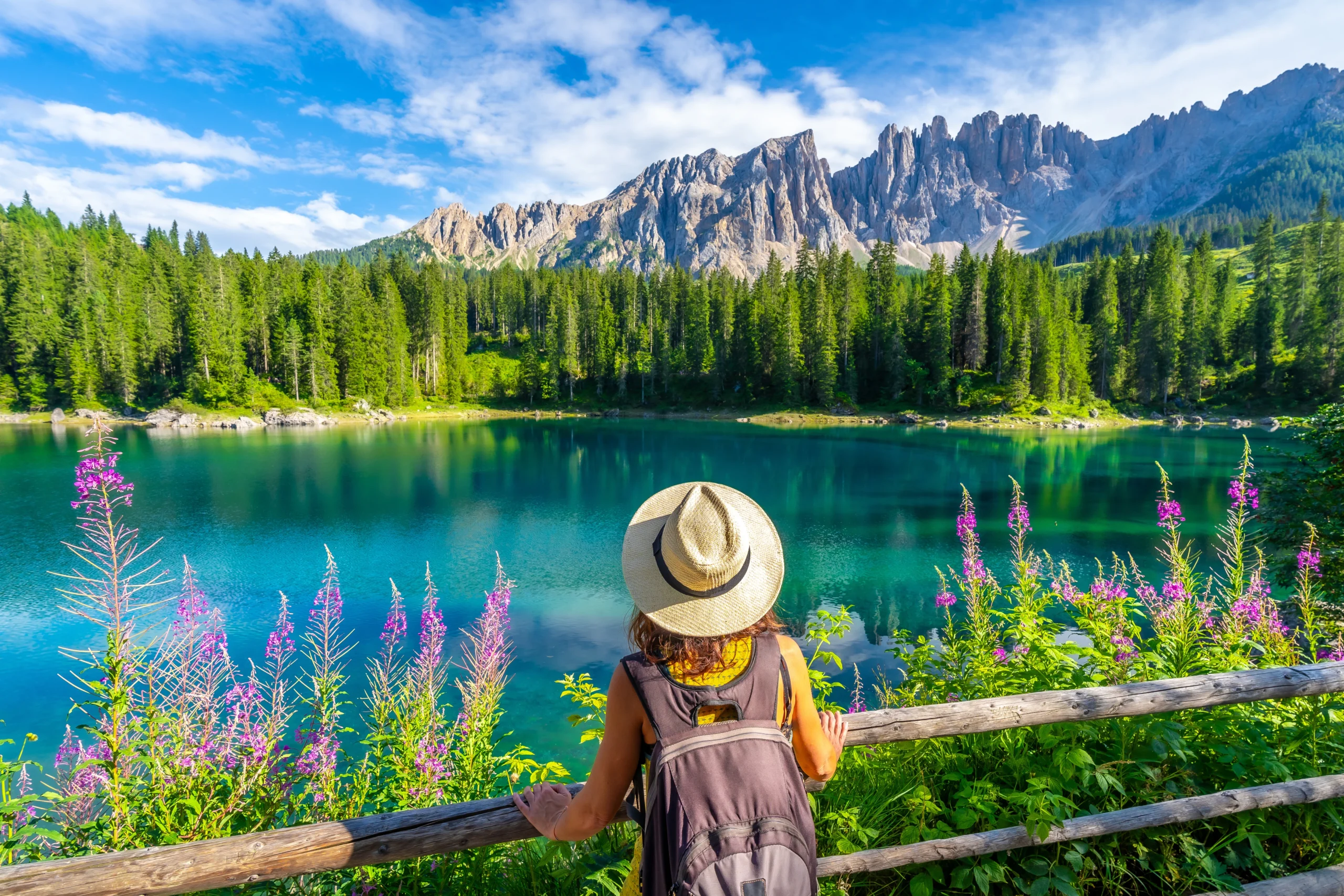
The Dolomites possess a visual vocabulary of their own. Their pale limestone towers rise with an almost architectural precision, interrupted by dark forests and open alpine pastures. The contrast is dramatic without becoming theatrical. Nature has already done the work.
At sunset, the famous alpenglow transforms the rock once again. The phenomenon, known locally as enrosadira, can tint the peaks with rose, copper and violet. It is one of those moments that photographs rarely capture with the same emotional force as the real thing.
Below the peaks, the character becomes softer. Wooden farmhouses stand among meadows. Small churches rise above villages. Barns and mountain lodges sit naturally within the landscape rather than attempting to dominate it. In the Ladin valleys, language, food, architecture and craft preserve a cultural identity that gives the mountains a human dimension.
This is why a journey through the Dolomites should never be reduced to viewpoints. The landscape is only the beginning. The deeper experience lies in understanding how people have lived beneath these mountains—and how contemporary luxury can exist without disturbing that relationship.
Cortina d’Ampezzo — The Dolomites with a More Polished Accent
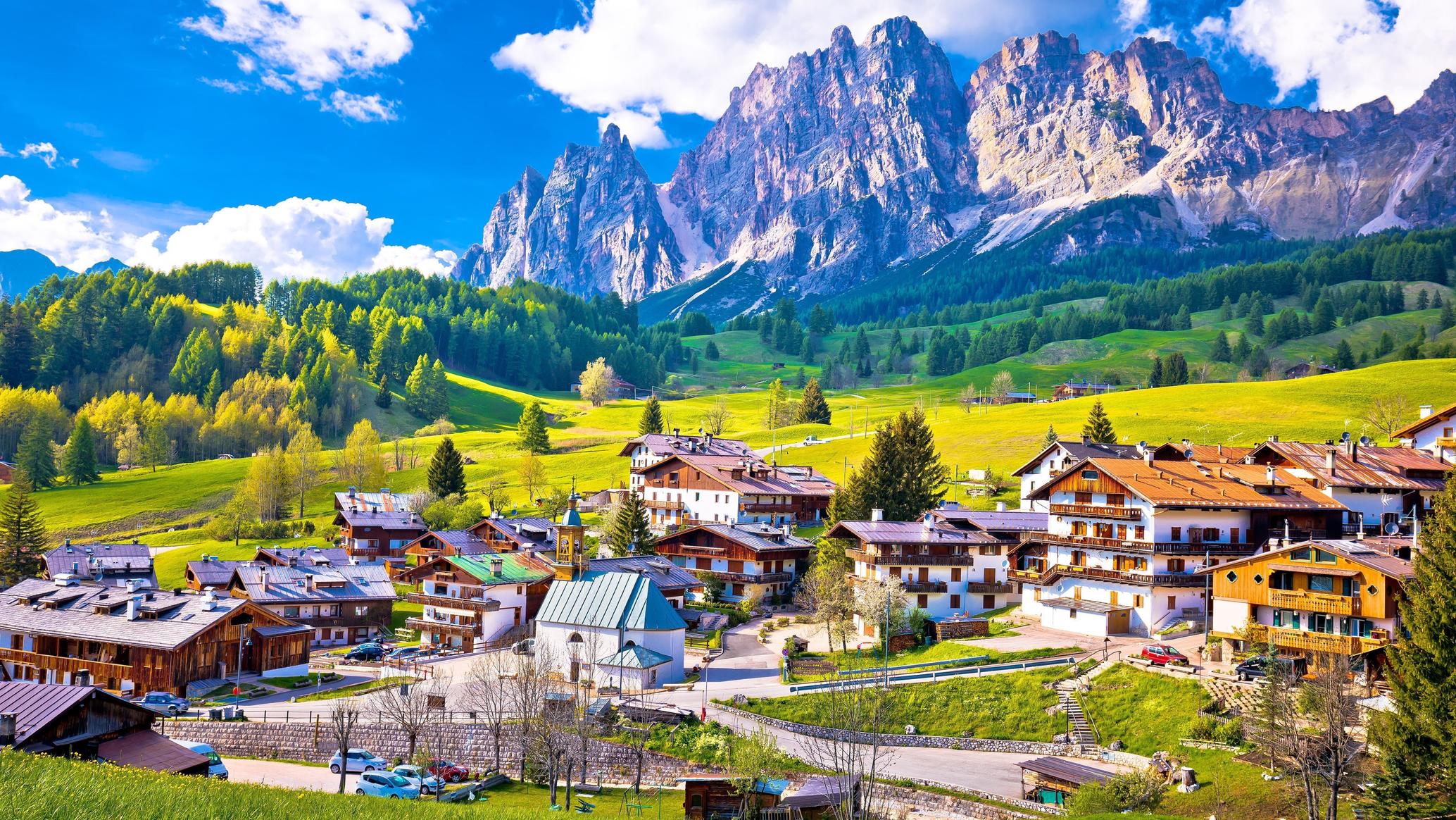
Cortina does not need an introduction. Long associated with alpine glamour, the town has cultivated a particular elegance: refined, social and unmistakably Italian.
Its appeal lies partly in contrast. One moment you are walking through a sophisticated centre of boutiques, cafés and polished façades; the next, the valley opens toward the enormous walls of the surrounding Dolomites. The mountains never disappear completely from the conversation.
For a discerning traveller, Cortina works beautifully as the opening chapter of a longer Dolomites journey. A private transfer can bring you into the valley, followed by a slow afternoon devoted to the town itself. The next morning can belong to the mountains: an early departure, a scenic drive, a private hiking guide or a carefully chosen trail before returning for lunch.
The town is at its most seductive when the day becomes less structured. Aperitivo arrives naturally. Dinner stretches. The mountains outside begin to darken. The Dolomites have already done enough for the day.
Val Gardena — Craft, Culture and the High Country
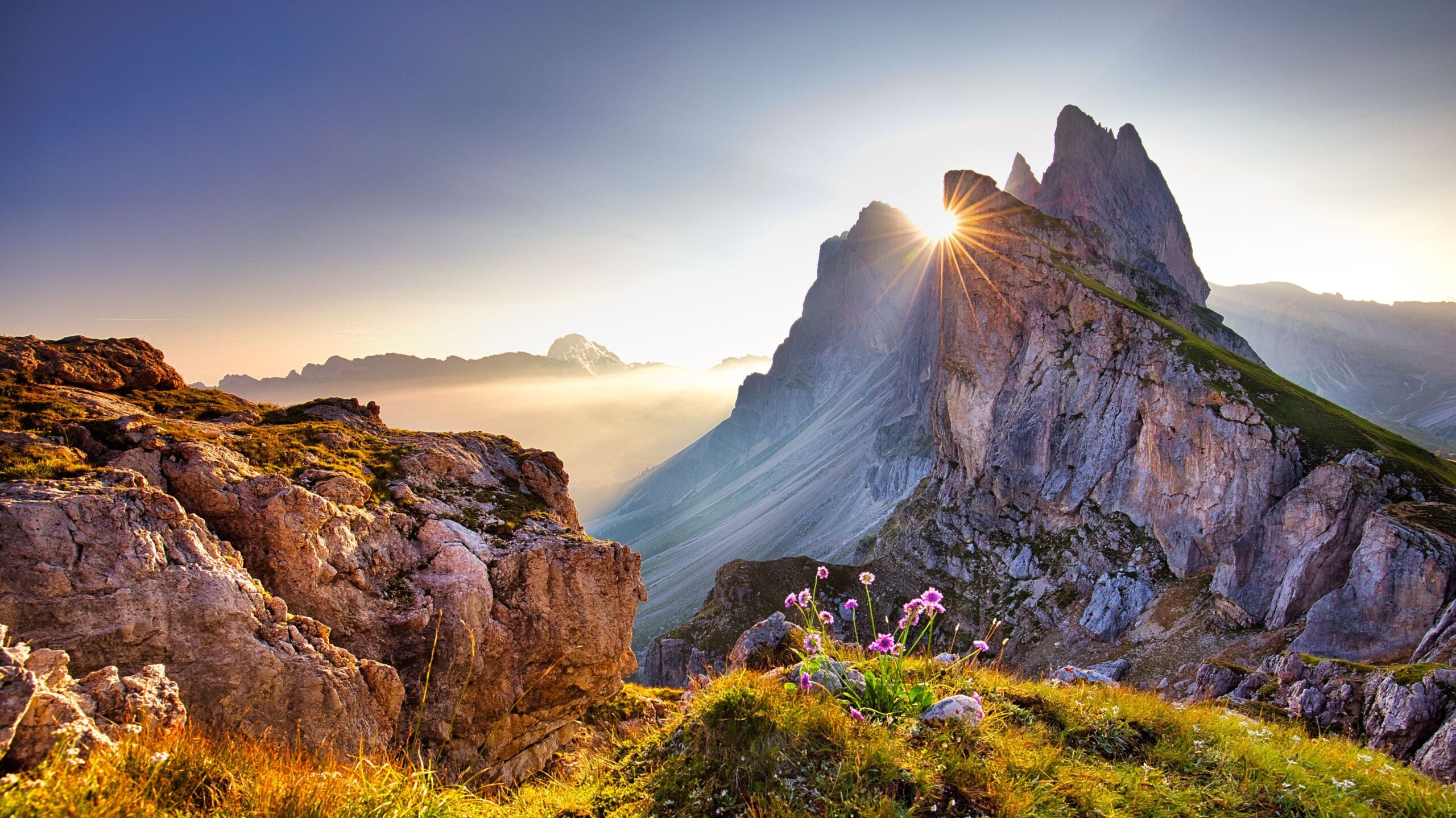
Val Gardena feels different. Here, the mountains remain spectacular, but the valley’s artistic heritage adds another layer to the experience. Ortisei, Santa Cristina and Selva di Val Gardena sit beneath some of the region’s most dramatic peaks, while woodcarving traditions continue to form part of local identity.
The valley is particularly rewarding for travellers who enjoy movement without making movement the entire purpose of a journey. A morning hike can become an afternoon of craftsmanship and conversation. A cable-car ascent can lead to a long lunch rather than a race toward the next viewpoint. A scenic road can be taken simply because the light looks beautiful.
This is the Dolomites at a more human scale: still immense, but never impersonal.
Alta Badia — The Quiet Luxury of Ladin Country
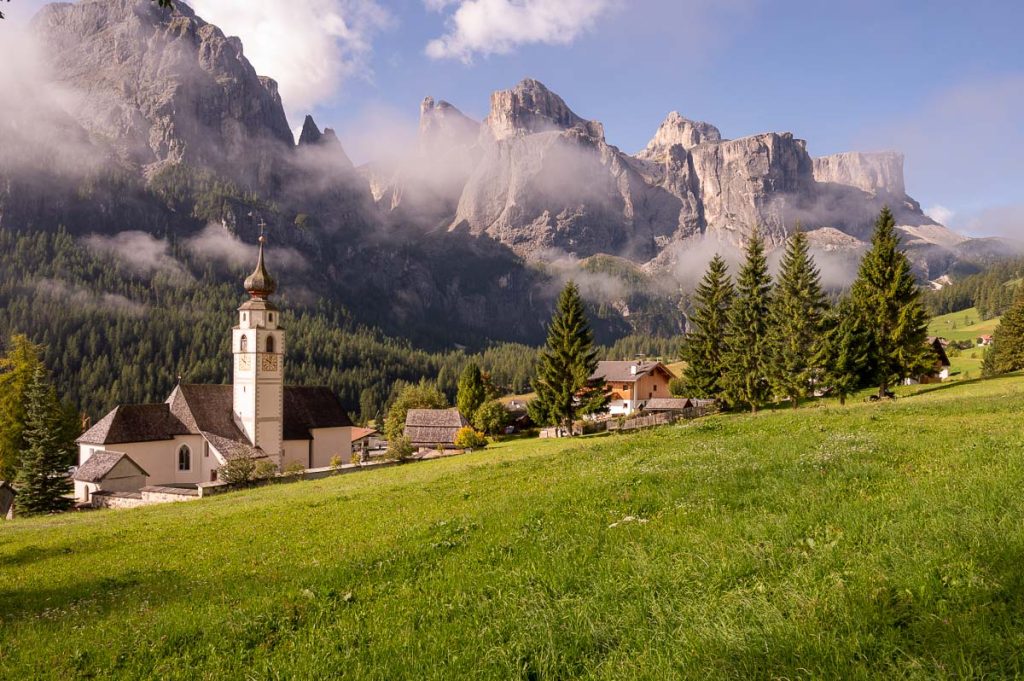
If Cortina carries a certain glamour, Alta Badia answers with discretion.
The valley around Corvara, La Villa and San Cassiano feels intimate beneath the great limestone massifs. Its villages are elegant without becoming theatrical, and the landscape seems designed for slow travel: meadows, forests, mountain farms and roads that curve naturally through the valley.
There is also a distinct culinary identity here. Ladin traditions meet contemporary South Tyrolean cooking, producing a cuisine that feels deeply regional rather than simply Italian. Long lunches become part of the itinerary. So do evenings when the dining room is warm, the wine has been poured and the mountains have disappeared into darkness outside.
For travellers who value privacy, serenity and a strong sense of place, Alta Badia offers one of the most nuanced expressions of luxury in the Dolomites.
Alpe di Siusi — The Grande Landscape
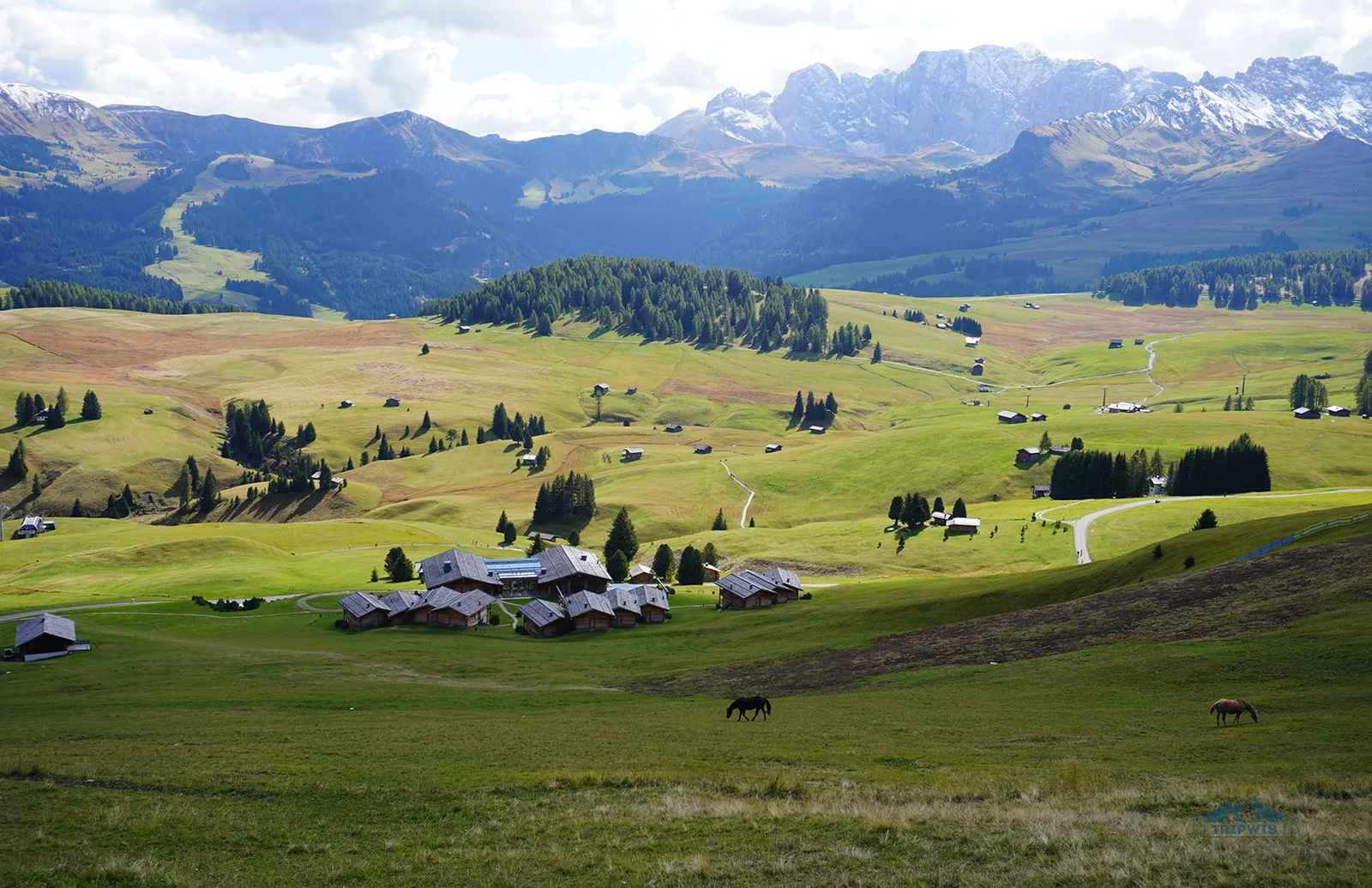
Then the mountains open.
Alpe di Siusi, or Seiser Alm, feels almost impossibly expansive after the narrower valleys. Alpine grasslands stretch toward the horizon while Sassolungo, Sassopiatto and the Schlern form an extraordinary backdrop.
The beauty here is not concentrated in one monument. It is atmospheric. The eye moves across meadows, isolated farmhouses, distant peaks and shifting weather. In summer, the plateau becomes a tapestry of alpine colour. In winter, snow strips the landscape down to its essential geometry.
A private day here should not be overfilled. The plateau deserves time—to walk, to stop, to photograph, to eat, and simply to watch the weather move across the mountains.
Lago di Braies — The Stillness of Water
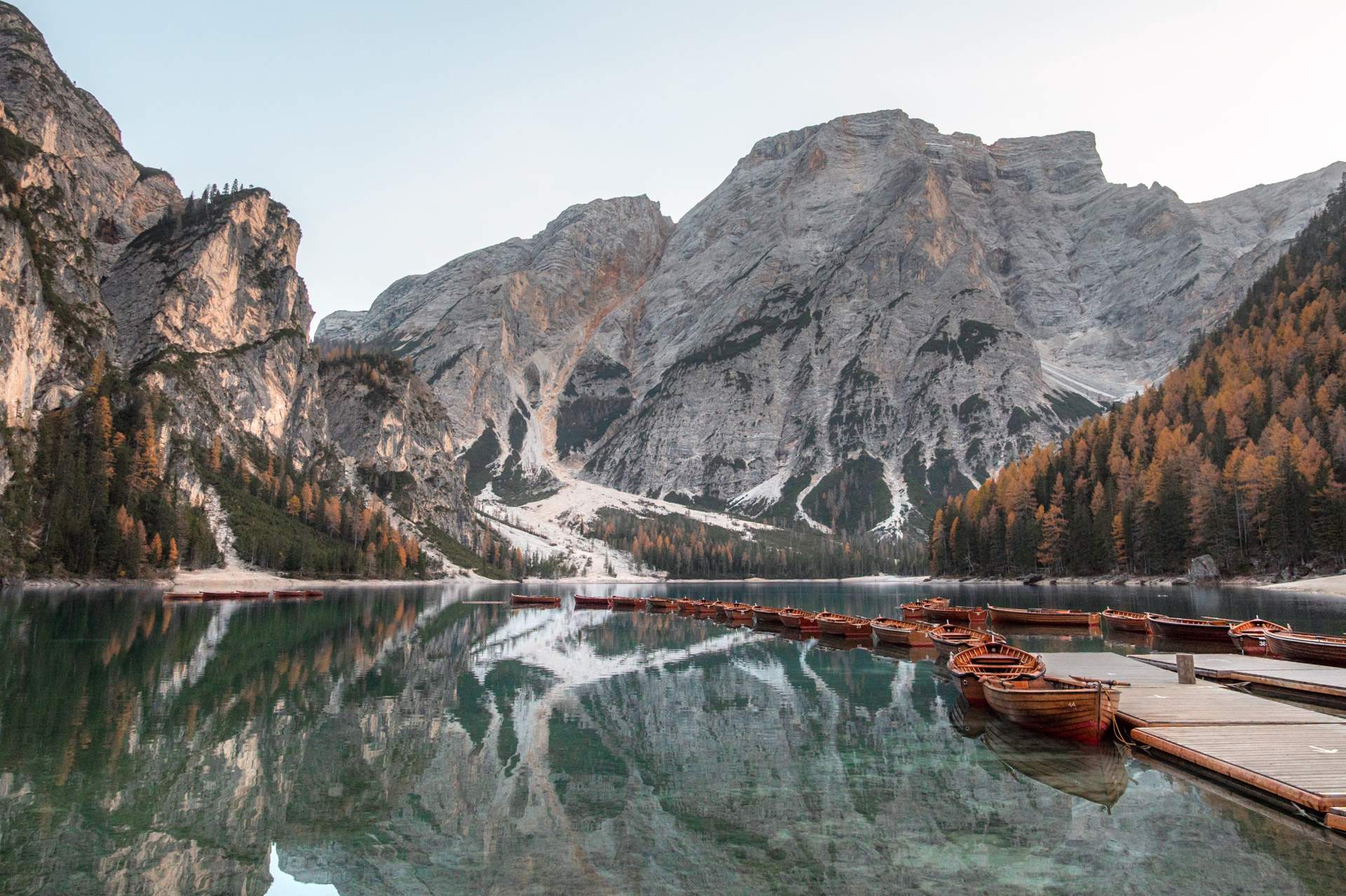
Lago di Braies is famous for its emerald water and dramatic setting, but its real character emerges when the surface becomes still.
Arrive early and the lake can feel almost ceremonial. The surrounding peaks descend toward the water, reflections soften the boundaries between sky and stone, and the wooden boats appear almost suspended in the morning air.
Rather than treating the lake as a photograph on an itinerary, allow it to become a pause. Walk beside the water. Sit for a while. Let the landscape establish its own pace.
The finest luxury journeys understand this distinction. Not every moment needs to be upgraded, scheduled or consumed. Some simply need to be given enough time.
The Great Passes — When the Road Becomes the Experience
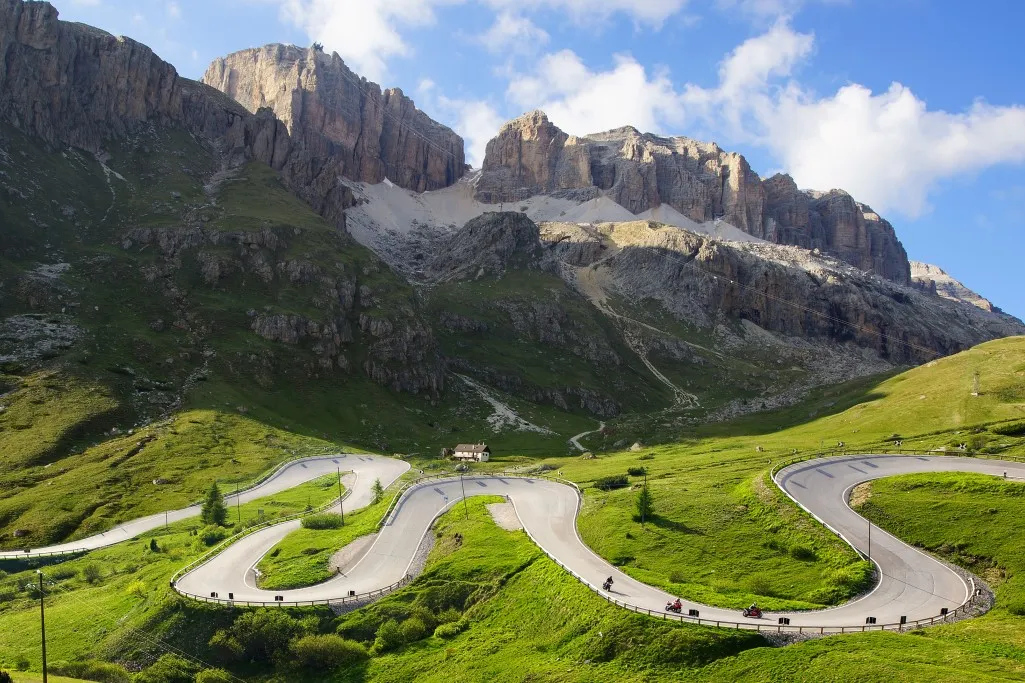
The Dolomites are among those rare destinations where driving can itself become a signature experience. The high passes rise and fall through forests, open suddenly toward enormous walls of rock and then disappear around bends that seem to lead into another landscape.
Passo Gardena, Passo Sella, Passo Pordoi and Passo Falzarego are among the great names of the region. Each has its own character, but the real pleasure comes from connecting them rather than treating them as isolated stops.
For Luminara, the ideal approach is deliberately unhurried: a premium vehicle, a private driver where appropriate, carefully chosen pauses and enough flexibility to stop whenever the landscape demands it. A mountain pass should never feel like a box being ticked.
It should feel like a scene unfolding.
A Different Definition of Adventure
Adventure in the Dolomites can be exhilarating without becoming exhausting.
A private mountain guide can shape a day around the traveller’s pace, whether that means a gentle alpine walk, a more demanding route or a sunrise departure when the valleys are still silent. In winter, the same landscape changes completely, opening into one of Europe’s most celebrated ski regions.
Yet luxury changes the rhythm. The day can begin outdoors and end somewhere deeply restorative. Boots come off. A fireplace takes over. A spa ritual replaces the rush of the trail. Dinner arrives when the appetite is earned.
That contrast—wild landscape outside, refined comfort within—is one of the most beautiful tensions in luxury Dolomites travel.
South Tyrol at the Table
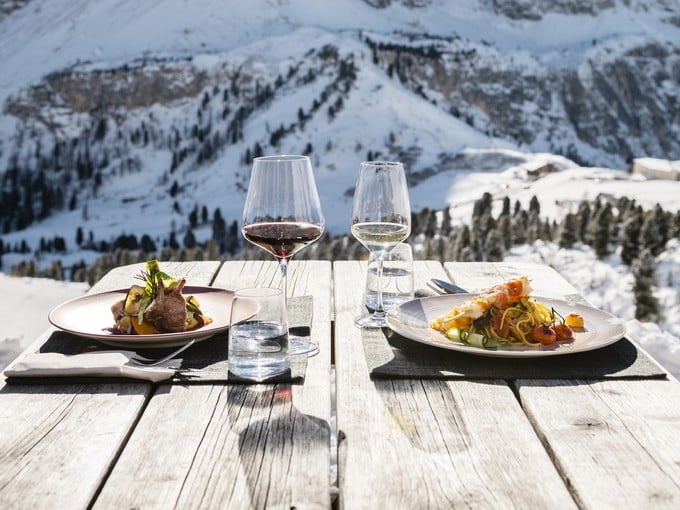
Food here carries geography in every course.
South Tyrolean cooking reflects the meeting of Alpine and Italian traditions. Speck, mountain cheeses, apples, mushrooms, herbs, bread, potatoes and game appear in different forms, while Ladin recipes preserve another layer of regional history.
The most memorable meals are often those that understand their setting. A long lunch after a mountain morning. Handmade pasta in a refined dining room. A tasting menu built around ingredients from the surrounding valleys. A glass of local wine while the last light catches the peaks.
Gastronomy is not an interruption to the Dolomites. It is one of the ways the mountains become understandable.
The Art of Alpine Hospitality
The right hotel does more than provide comfort between excursions. In the Dolomites, it becomes a continuation of the landscape—a place where architecture, silence, wellness and hospitality can deepen the feeling of being in the mountains.
For Luminara Voyages, these are not simply names to place on a shortlist. Each property tells a different version of the Dolomites.
Aman Rosa Alpina — San Cassiano
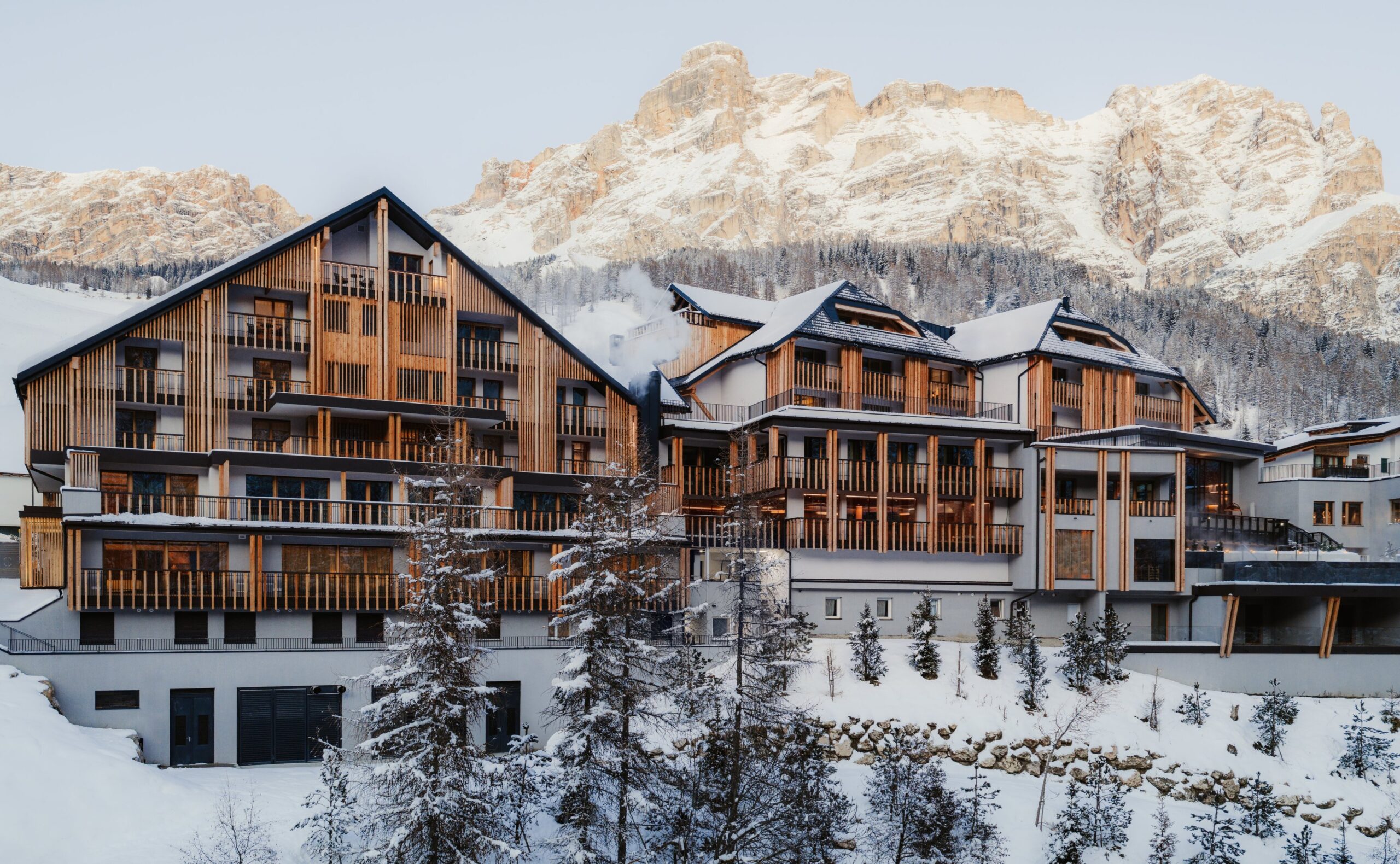
In San Cassiano, Aman Rosa Alpina brings Aman’s restrained philosophy into a distinctly Alpine setting. The property combines its heritage with contemporary design, and its rooms and suites were designed by Jean-Michel Gathy around natural materials, mountain views and a sense of quiet privacy.
The resort has 51 rooms and suites and an extensive Aman Spa, with three pools and seven treatment rooms. Its position beneath the Dolomite peaks makes it particularly well suited to travellers who want the day to move seamlessly between exploration and restoration.
There is an elegance to the experience that feels appropriate to the setting: wood, stone, expansive views and interiors that never compete with the mountains outside. In winter, San Cassiano provides access to Dolomiti Superski; in warmer months, the landscape opens to hiking and cycling.
For a journey built around understated sophistication, Aman Rosa Alpina can serve as a deeply polished alpine base. cite note omitted in artifact; verify current details on official Aman site before publication.
FORESTIS — Above Bressanone
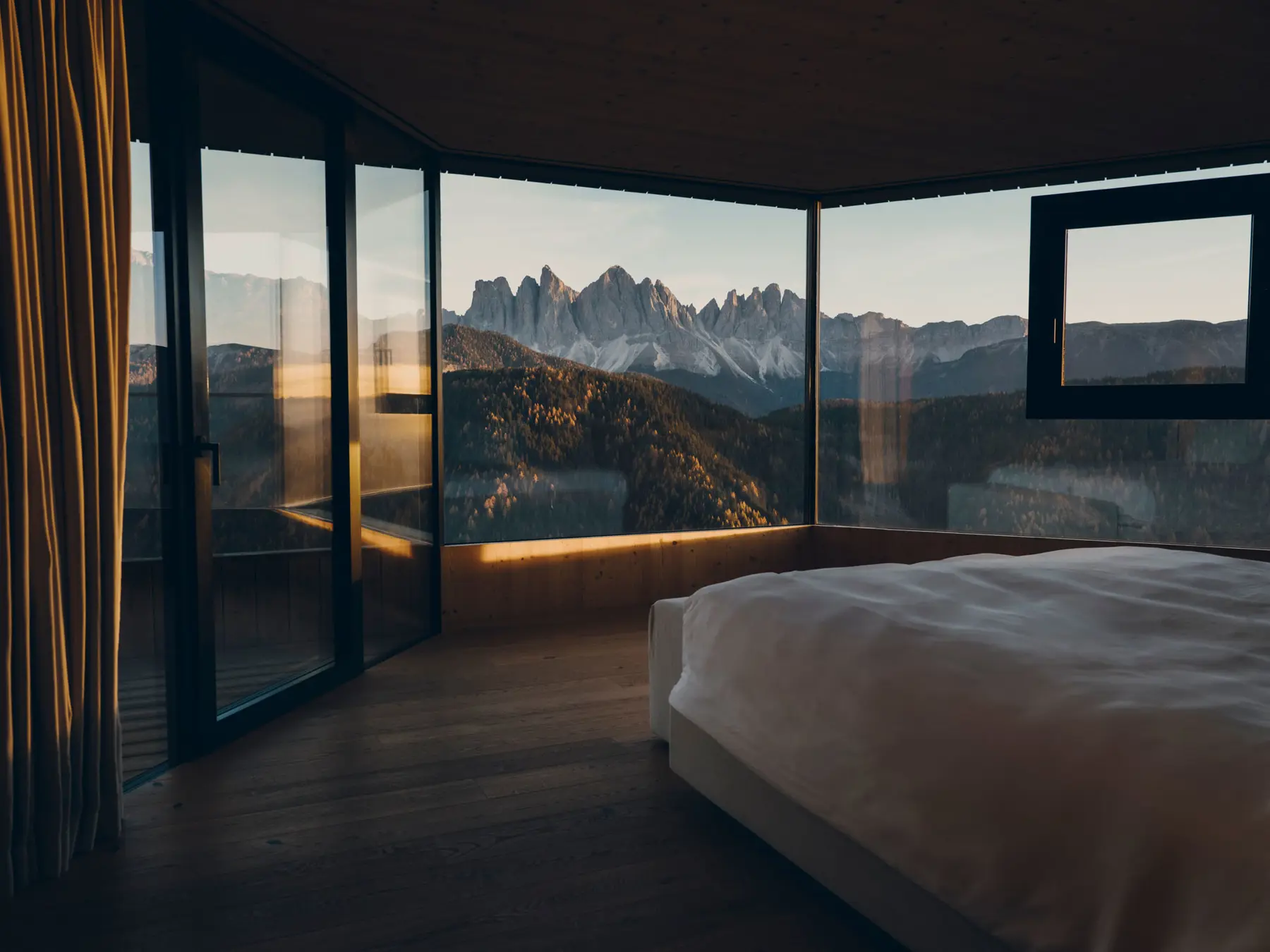
At around 1,800 metres on the Plose, FORESTIS approaches luxury from an entirely different direction. The design is deliberately elemental, drawing on wood, stone, light and the surrounding forest rather than conventional hotel ornament.
Its Tower Suites are designed around direct views of the Dolomites, while the property’s wellness philosophy is closely connected to the natural environment. The experience is less about being entertained and more about being restored.
The private FORESTIS Villa takes that idea even further: a historic Alpine villa restored as an exclusive retreat, with private garden and pool, spa facilities, concierge and butler service, and the possibility of a private chef. For families or groups seeking exceptional privacy, it represents a very different interpretation of mountain luxury.
FORESTIS is particularly compelling for travellers who believe that the most sophisticated form of luxury can be silence.
A Curated Stay in Alpe di Siusi
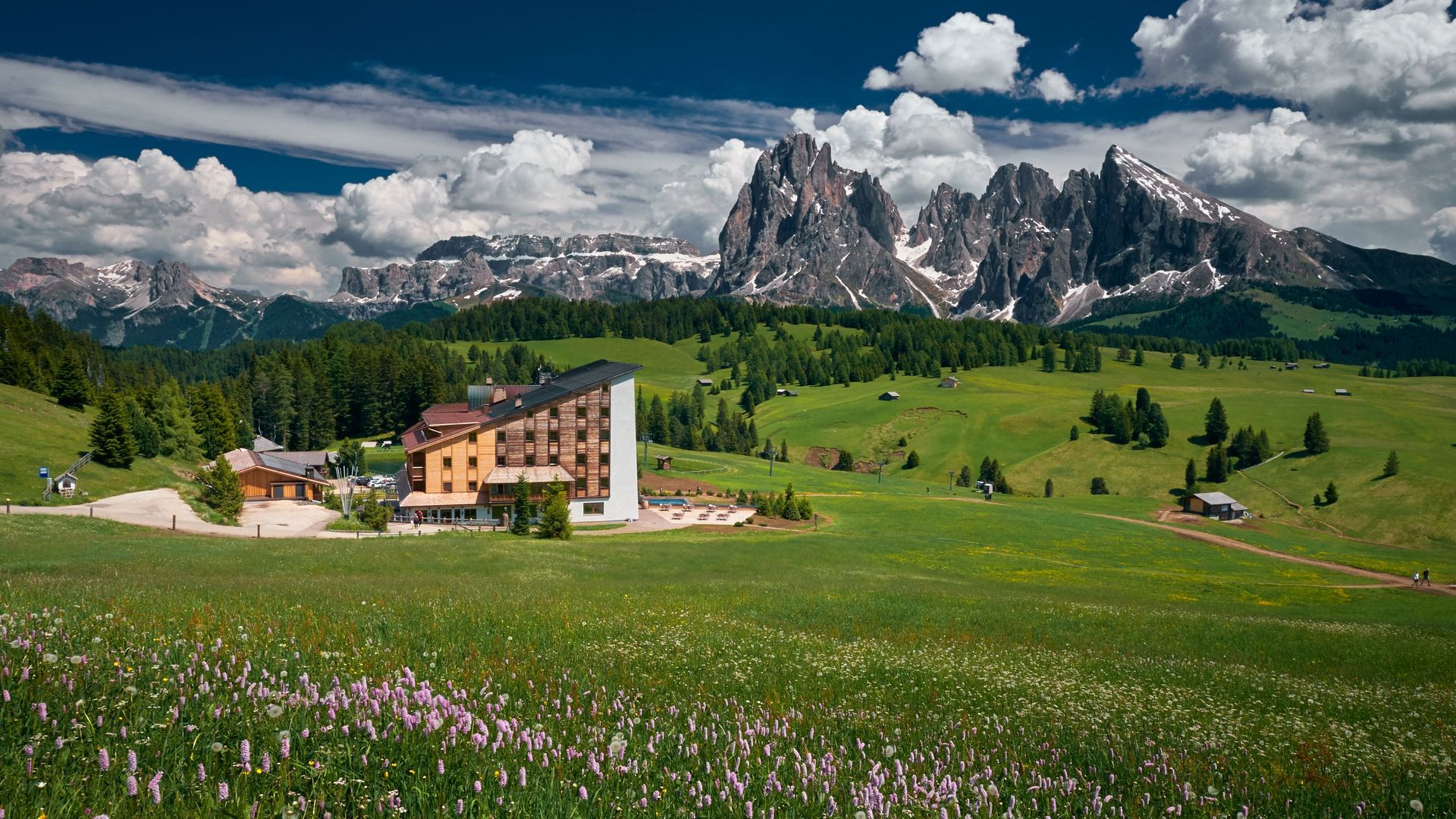
The Alpe di Siusi calls for another kind of retreat: one that makes the openness of the plateau part of everyday life.
Smaller luxury properties in the area place guests directly within the landscape, where mornings begin with mountain light and evenings return to fireplaces, wellness spaces and regional cuisine. The appeal is not urban sophistication transplanted into the Alps; it is a more organic form of refinement, shaped by timber, stone, craftsmanship and the view beyond the window.
For travellers choosing the Dolomites specifically for space and serenity, staying on or near the plateau can transform the experience from sightseeing into immersion.
The Luxury of Moving Slowly
There is a temptation in a destination as visually rich as the Dolomites to collect landscapes. One pass, one lake, one village, one viewpoint.
But the region becomes more beautiful when the itinerary becomes less ambitious.
Take the scenic road because the weather is perfect. Stay for lunch because the terrace is too beautiful to leave. Return to the same viewpoint at sunset because the morning showed you only half of it. Give a village an afternoon instead of an hour.
The Dolomites reward repetition. Their light changes. Their moods change. And eventually the traveller begins to notice details that were invisible on the first day.
The Dolomites in Winter
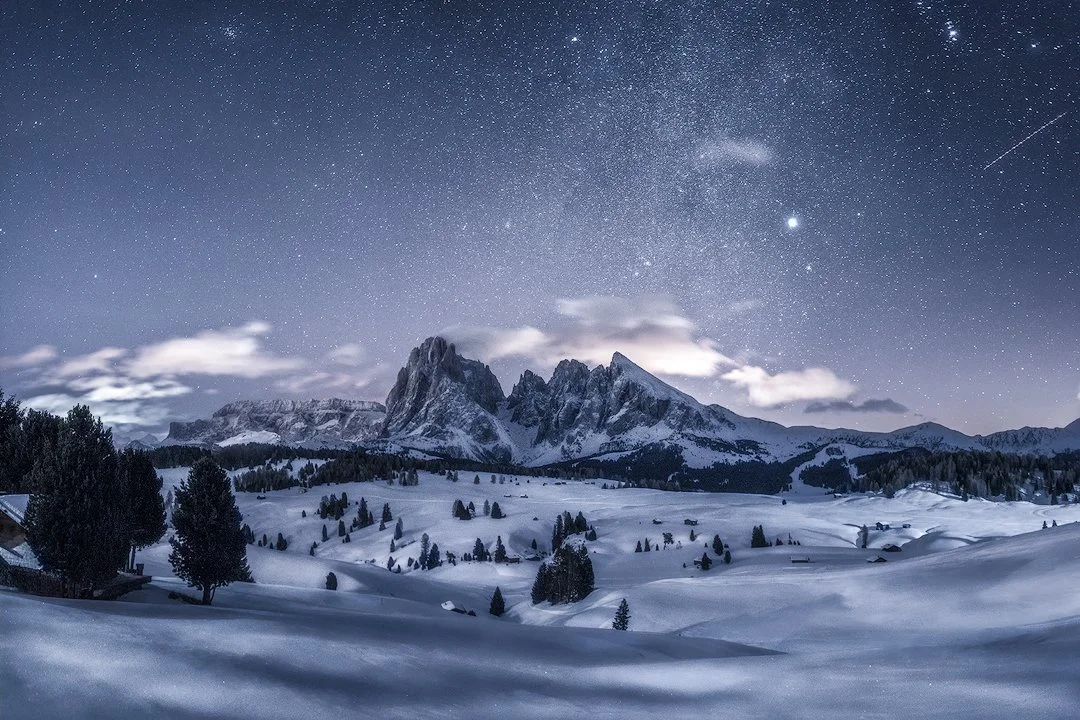
Winter changes the emotional temperature of the region.
The limestone becomes stark against snow. Forests absorb sound. Mountain villages glow after dark, and the contrast between the cold landscape outside and the warmth of a refined alpine interior becomes part of the experience.
For skiers, the region offers access to the extensive Dolomiti Superski network. For those who prefer not to ski, the winter Dolomites can be experienced through snowshoeing, scenic drives where conditions permit, spa days, fireside dining and private mountain experiences.
The season is less about filling the day and more about creating a beautiful rhythm: snow, warmth, food, sleep, silence.
Summer, Autumn and the Changing Face of the Mountains
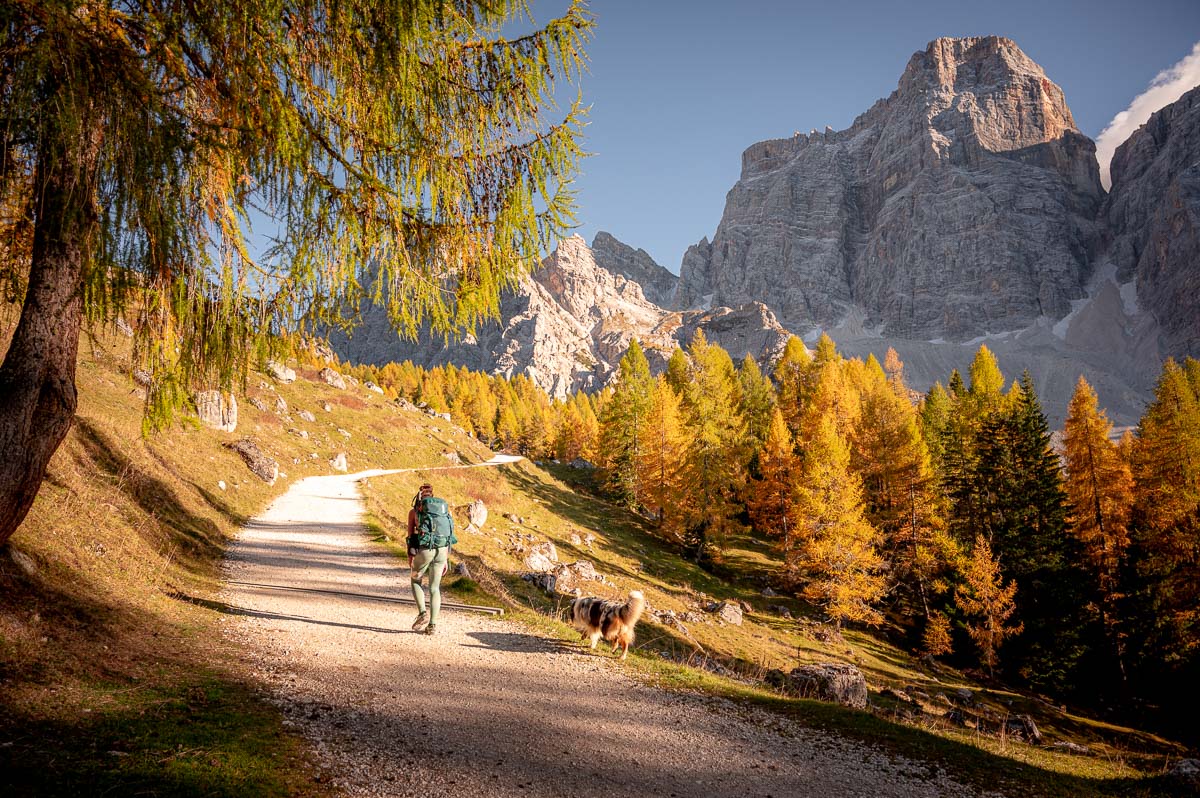
Summer brings long days and open trails, with meadows at their richest and the high country alive with walkers, cyclists and mountain guides. It is the season for extended days outdoors and long evenings beneath the peaks.
Autumn is quieter and more atmospheric. Forests take on gold and amber tones, the air becomes sharper and the mountains appear more monumental against clearer skies.
Spring is a transitional season in the higher elevations, while lower valleys begin to awaken earlier. For travellers who value flexibility and fewer crowds, it can reveal a softer side of the region.
There is no single season that defines the Dolomites. The destination changes enough that returning can feel less like revisiting and more like meeting the same place in another mood.
The Dolomites as Part of a Greater Italian Journey
Italy reveals a different kind of beauty with every change of landscape. From the languid elegance of Lake Como to the sun-drenched drama of the Amalfi Coast, the country moves effortlessly between refinement and nature.
The Dolomites continue that story at a higher altitude—where limestone cathedrals replace coastal cliffs, alpine silence replaces the rhythm of the sea, and luxury takes on a quieter, more intimate character. It is still unmistakably Italy, simply seen from a more elemental perspective.
A Luminara Way to Experience the Dolomites
A Luminara journey through the Dolomites would begin with the traveller rather than the checklist.
Perhaps the journey opens in Venice, allowing a few days among palazzos, canals and Renaissance interiors before a private transfer carries the story north. Perhaps it begins in Milan and continues toward Cortina. Perhaps the traveller wants the intimacy of Alta Badia, the wellness philosophy of FORESTIS or the refined atmosphere of Aman Rosa Alpina.
The itinerary should then be shaped around rhythm.
A sunrise in the mountains. A private drive across the passes. Lunch somewhere with a view worth lingering over. An afternoon without an appointment. A spa ritual before dinner. A final evening when the mountains turn rose beneath the setting sun.
This is how the Dolomites should be experienced: not as a sequence of attractions, but as a composition.
When the Mountains Become Memory
Eventually, every Dolomites journey reaches the same moment.
The road begins to descend.
The peaks recede behind the glass. Forests give way to wider valleys. The light changes. The landscape becomes less dramatic, yet something has already shifted.
Perhaps it is the memory of standing beneath the limestone walls at first light. Perhaps it is a table in Alta Badia, a quiet lake at dawn, the sound of snow beneath boots, or the final glow of enrosadira across the peaks.
The Dolomites stay with you because they are not merely beautiful. They have scale, silence and personality.
They remind you that luxury can be found in access, but also in absence—in the hour with nowhere to be, the road with no reason to hurry, the view that belongs only to the moment.
And perhaps that is why the Dolomites deserve more than a place on an itinerary.
They deserve time.