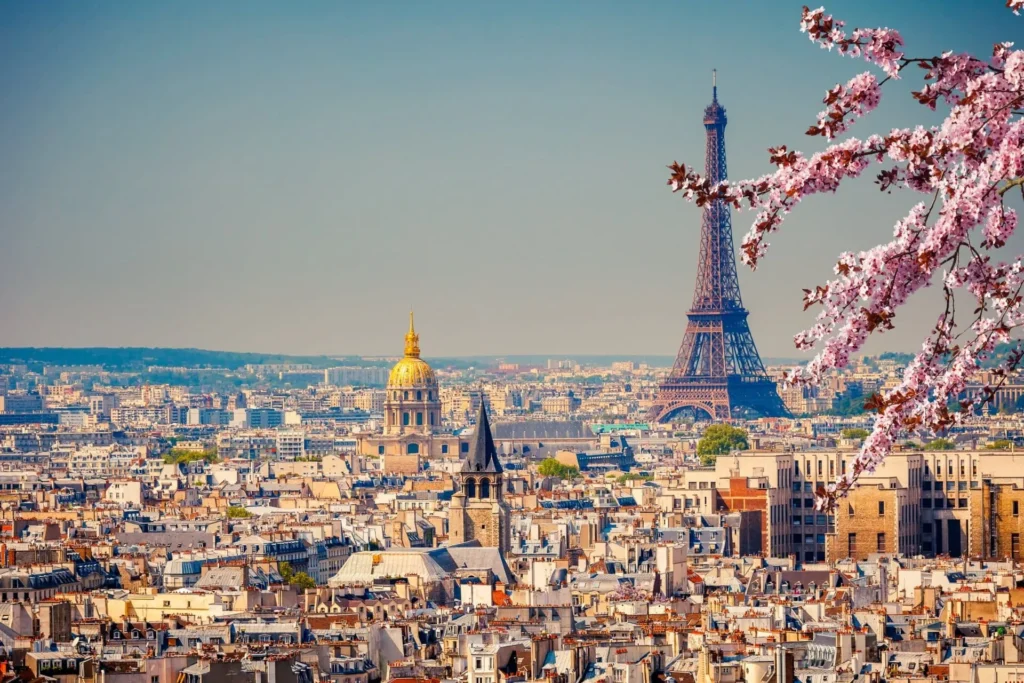
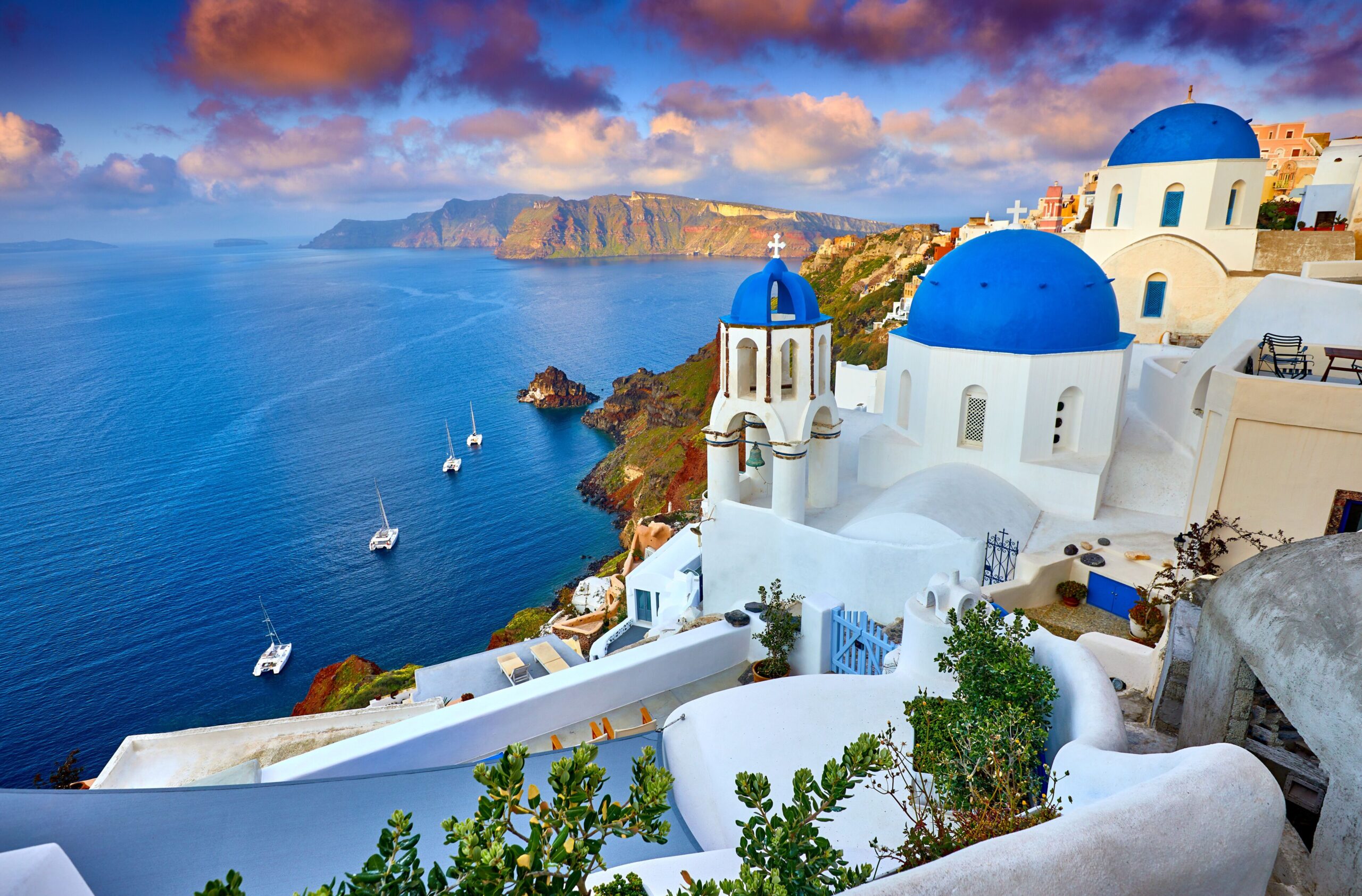
There is a particular hour in Santorini when the island seems to pause. The white façades soften to the colour of warm ivory, the volcanic cliffs turn copper beneath the lowering sun, and the Aegean gathers every shade of blue into a single, shifting horizon. Far below the caldera villages, boats cross the water that once filled the heart of a volcano. Above it, terraces cling to the rock as if they had been shaped by the landscape rather than built upon it. Santorini is instantly recognisable, yet its most compelling moments are often the ones that cannot be captured in a photograph: the hush of a lane before breakfast, the mineral freshness of a local white wine, or the stillness of a private terrace after the last light has left the sea.
For all its fame, Santorini is not simply an island of sunsets. It is a place of extraordinary geological drama, ancient settlements, wind-shaped vineyards and villages that reveal different versions of Cycladic life. Its luxury is most rewarding when it is approached with discernment. Choose a setting that suits the way you want to feel, give the island room to unfold beyond its celebrated viewpoints, and allow the day to move at a pace that belongs to the Aegean.
A Landscape Forged by Fire
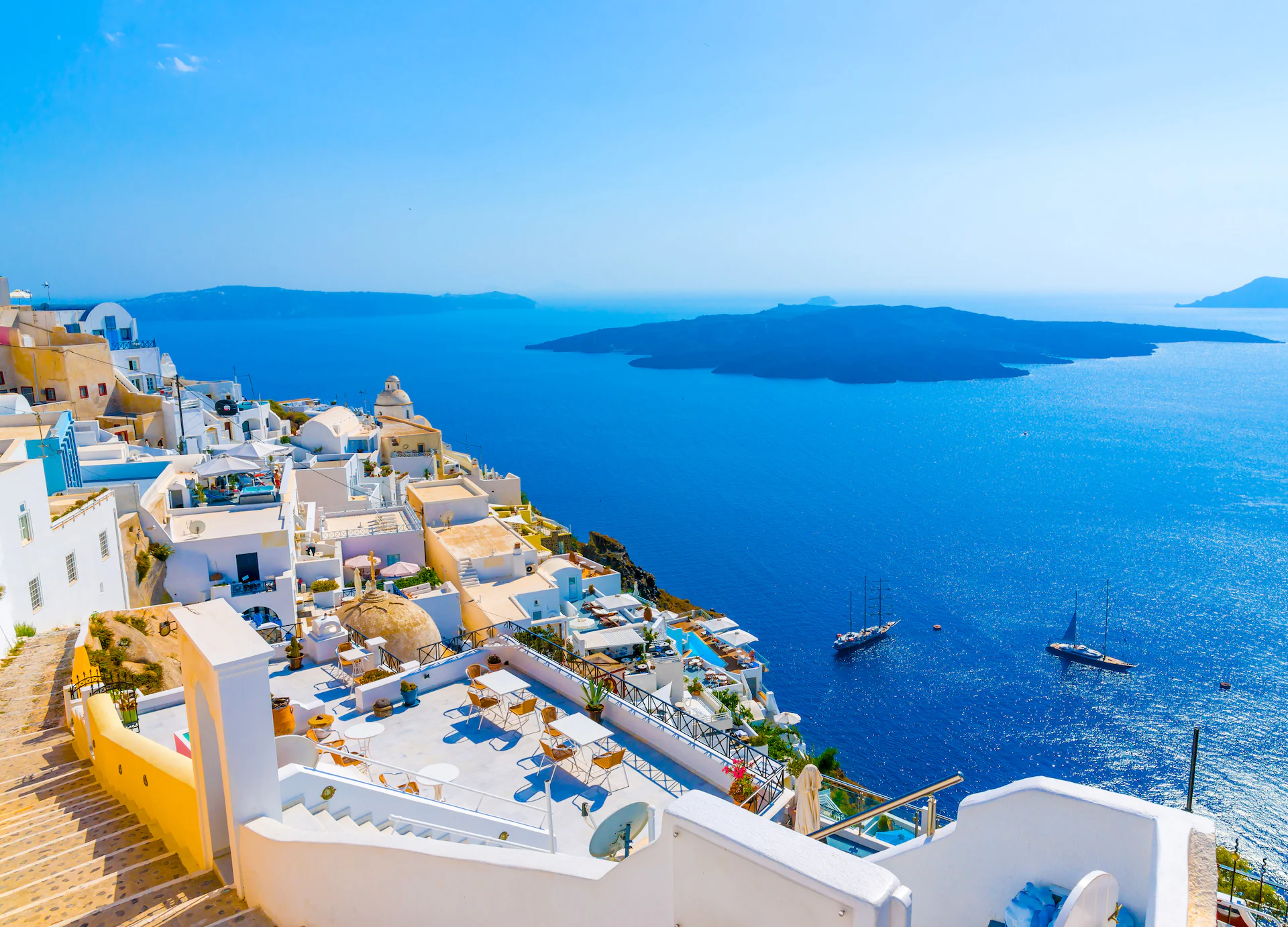
Known in antiquity as Thera, Santorini lies at the southern end of the Cyclades. Its distinctive crescent shape and steep caldera walls are the result of powerful volcanic activity across millennia. The islands of the caldera, the dark cliffs and the villages perched along the rim make the island feel almost architectural on a monumental scale: a landscape of immense geological forces, softened by the white geometry of Cycladic buildings.
That contrast is central to Santorini’s character. Whitewashed houses and blue-painted details are not merely a visual signature; they belong to a wider architectural tradition shaped by intense light, wind and the practical demands of island life. In older settlements, cave houses and vaulted spaces were adapted to the terrain. Contemporary hospitality has often reinterpreted these forms through restrained materials, sculptural interiors and outdoor spaces that frame the caldera rather than compete with it.
The island’s beauty also extends beyond the rim. Volcanic beaches shift from black sand to red rock; inland, stone-built villages sit among vineyards and low walls; and the southern peninsula carries a quieter rhythm than the most photographed stretches of the north. To understand Santorini, it helps to experience both its dramatic edge and its everyday interior.
The Villages: Different Ways to Experience Santorini
Oia — The Iconic Edge of the Aegean
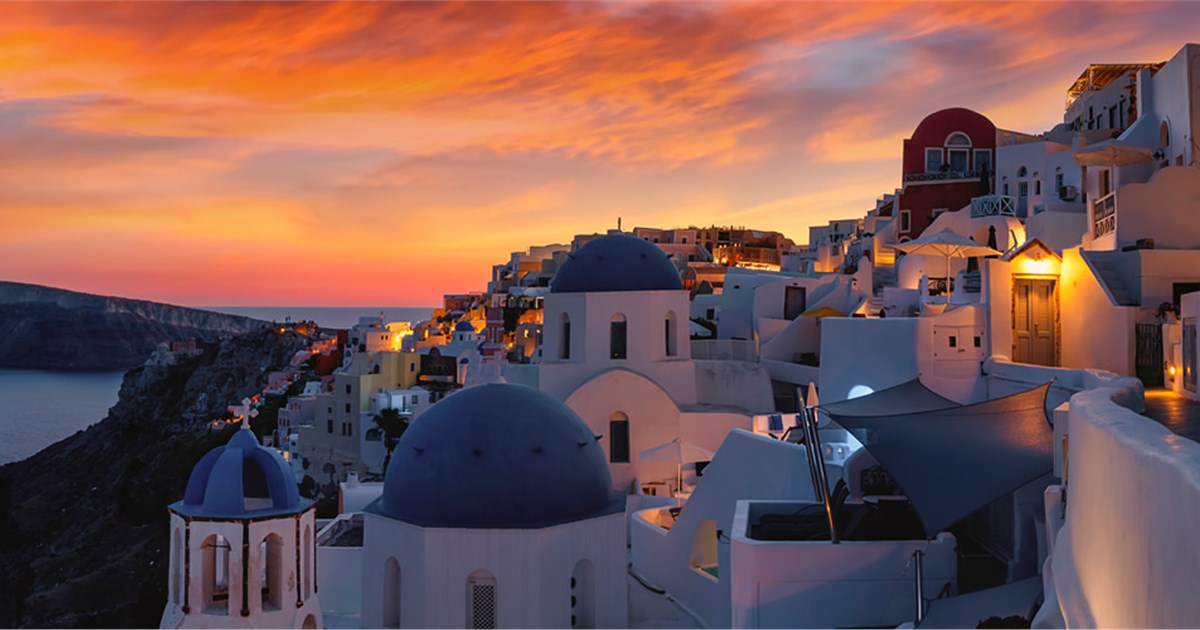
At the island’s northern tip, Oia is the Santorini of familiar images: domed churches, narrow passages, stepped terraces and houses that appear to descend towards the sea. Its beauty is undeniable, but the village rewards a more considered approach than simply arriving for sunset. Come early, when shopfronts are still quiet and the stone lanes hold the coolness of the night. Notice the transitions between public paths and private courtyards, the small galleries, and the way the architecture follows the curve of the cliff.
Oia is best suited to travellers who want the island’s signature panorama close at hand and appreciate a lively mix of design boutiques, galleries and destination dining. Privacy is worth prioritising when choosing a stay: a terrace set away from the busiest footpaths can transform the same famous view into a deeply personal experience.
Imerovigli — Space, Silence and the Caldera
Set high along the caldera rim, Imerovigli offers a more measured perspective. The views are expansive, but the atmosphere can feel less hurried than Oia’s central lanes. The path towards Skaros Rock gives the landscape a physical dimension: the caldera is not simply a backdrop, but a vast geological bowl shaped by water, wind and time. Walk in the cooler hours and wear suitable footwear, as the route includes uneven ground.
For couples and travellers seeking a quieter retreat, Imerovigli is one of the island’s most compelling bases. Its appeal lies in the balance between proximity to the caldera’s drama and the ability to return to a more private, unhurried setting.
Fira and Firostefani — The Island in Motion
Fira, Santorini’s principal town, brings together museums, restaurants, shops and transport connections. It is busier and more urban in feel than the smaller villages, making it useful for travellers who value choice and convenience. Firostefani, just along the rim, offers a gentler pace while keeping the capital within walking distance. The footpath linking these settlements is especially atmospheric when the light is low and the sea begins to darken.
Pyrgos and Megalochori — The Island Beyond the Postcard
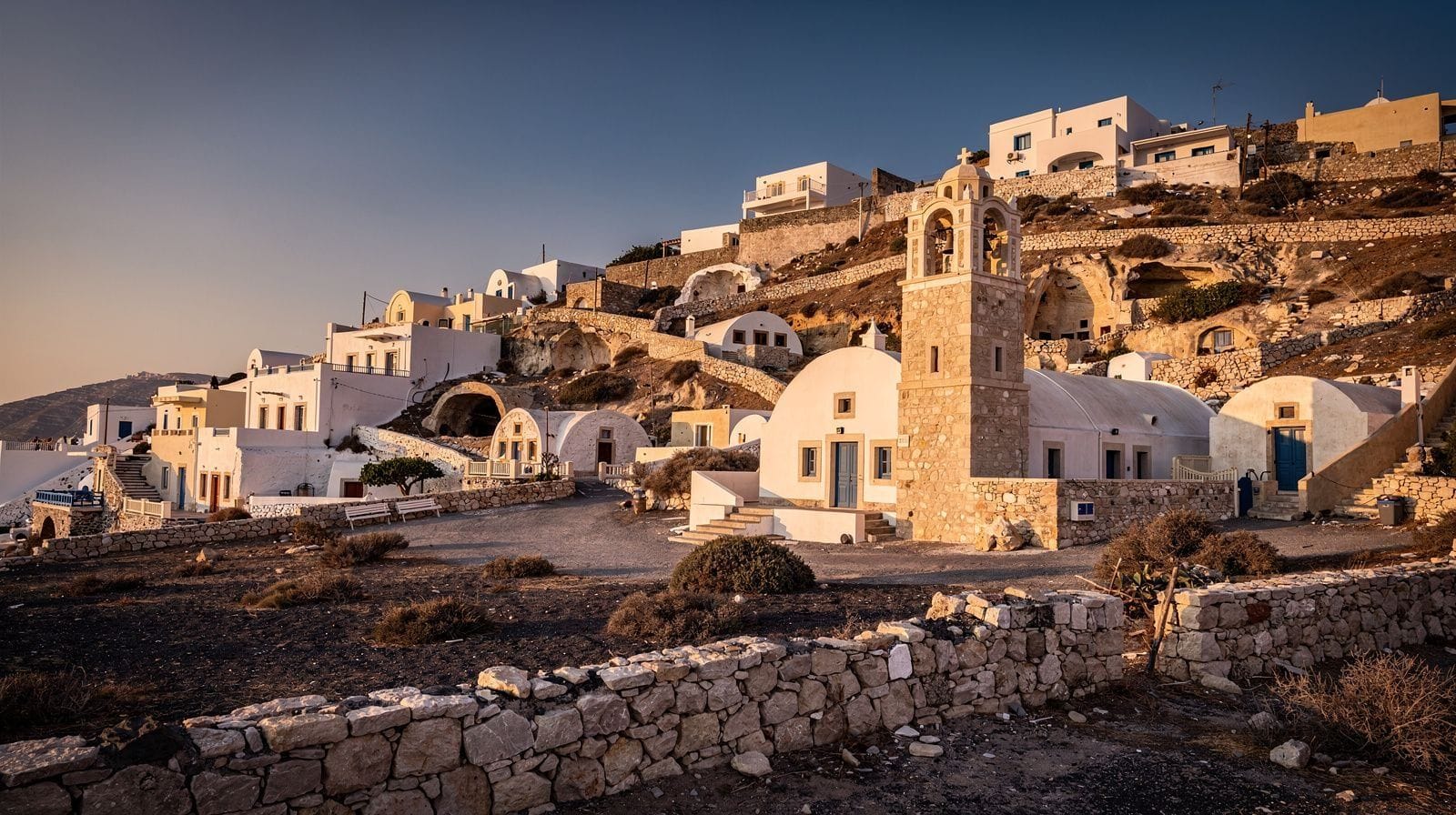
Inland, the character changes. Pyrgos rises around a hilltop settlement of winding lanes, churches and remnants of its fortified past. Its elevated position opens broad views across the island, but the pleasure is in the details: a shaded passage, a small square, stonework warmed by the sun. Megalochori feels more village-centred, with traditional houses, courtyards and a close relationship to Santorini’s wine culture. These are places to visit without a checklist, leaving time for a long lunch or a tasting that turns into an afternoon.
The Southern Coast — Volcanic Colour and Open Space
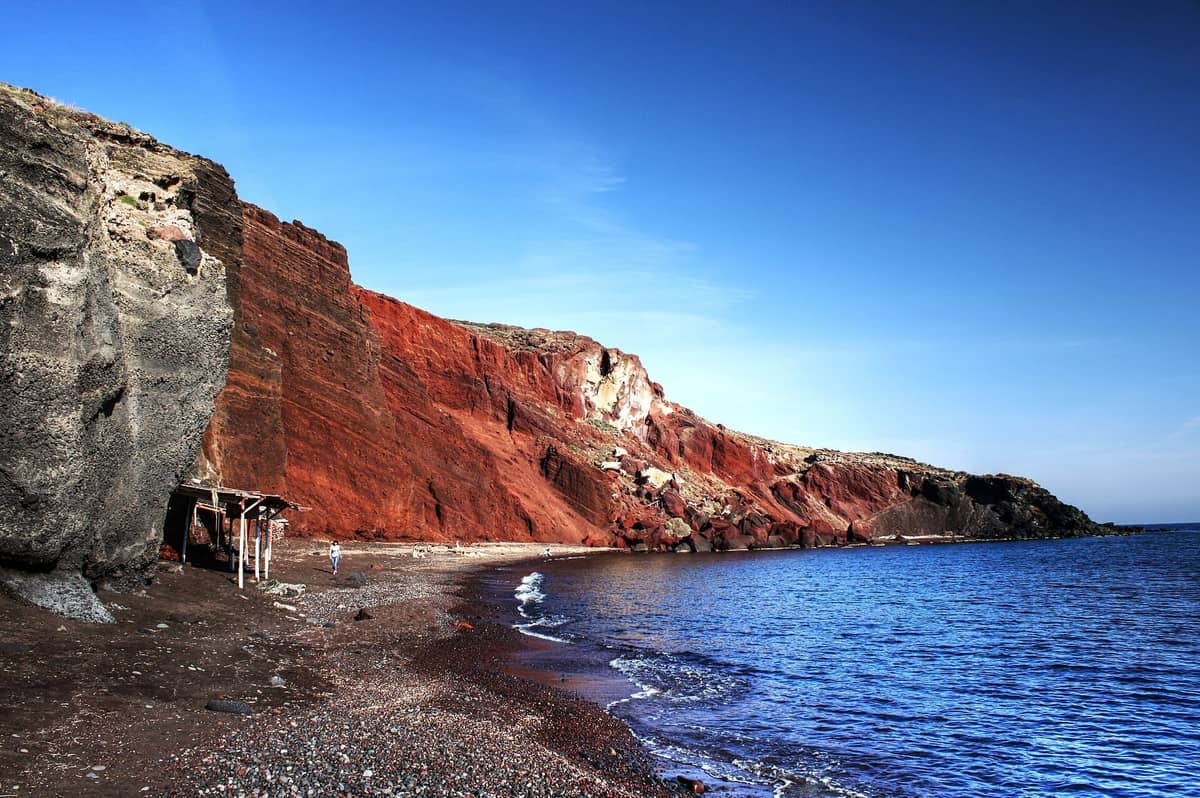
The south reveals another face of Santorini. The archaeological landscape around Akrotiri, the dramatic red cliffs near Red Beach and the dark sands of Perissa and Perivolos offer a contrast to the white villages above the caldera. Conditions at beaches and viewpoints can change, so follow local guidance and respect any access restrictions. The reward is a wider understanding of the island’s geology and the extraordinary range of its terrain.
Landmarks That Give the Island Its Depth
Akrotiri: A Bronze Age World
The prehistoric settlement of Akrotiri offers one of the most significant encounters with Santorini’s past. Preserved beneath volcanic material after a major eruption in the second millennium BCE, the site reveals streets, multi-storey buildings and evidence of a sophisticated Aegean community. Walking through the protected remains adds historical depth to the island’s scenery: the same volcanic forces that created Santorini’s extraordinary landscape also shaped the fate of the settlement. Check current opening arrangements before visiting, as access and hours can vary by season.
Skaros Rock: A View Earned on Foot
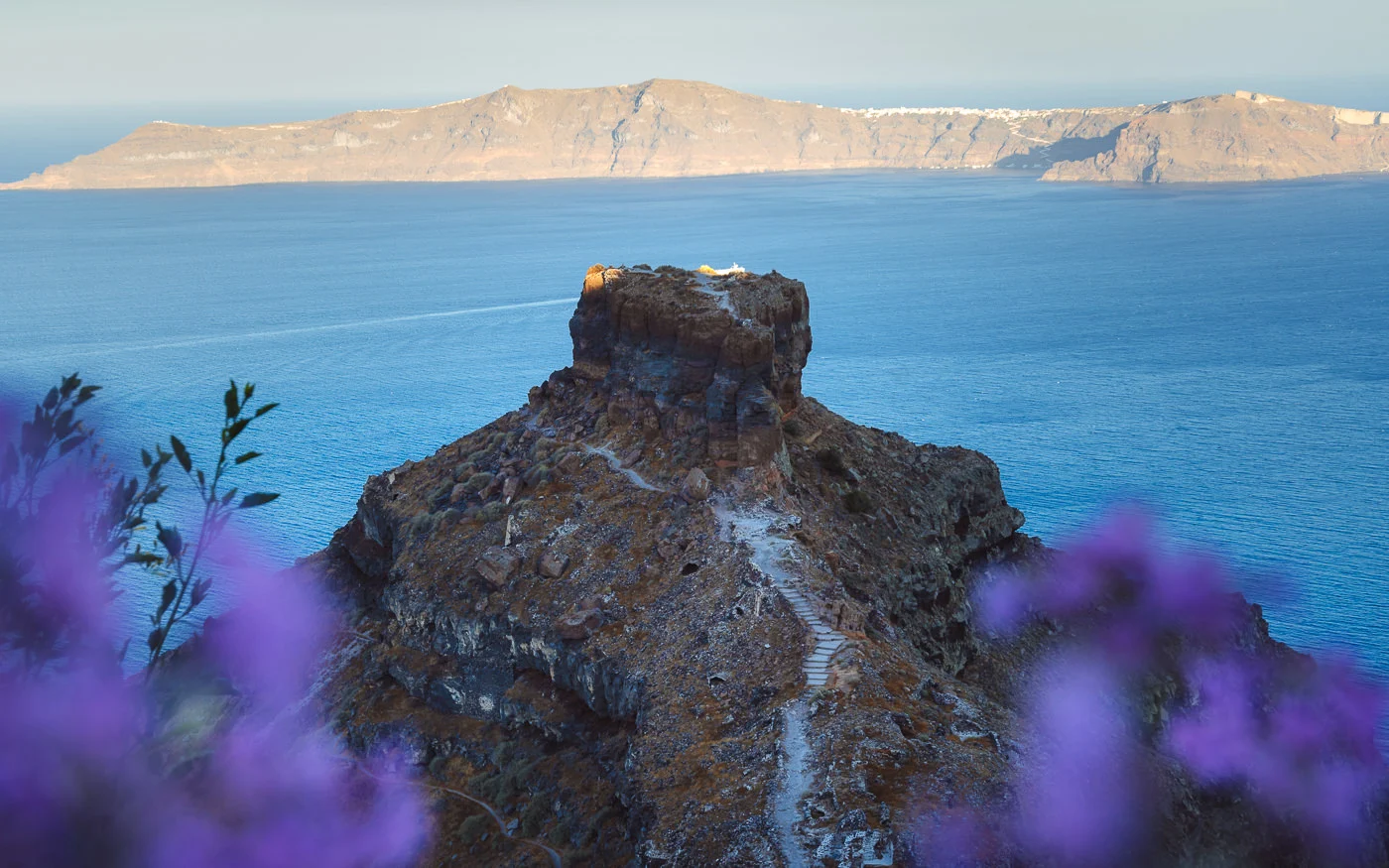
The walk towards Skaros Rock near Imerovigli offers a different kind of encounter with the caldera. Rather than looking at the landscape from a hotel terrace, you move through it, following a path that reveals shifting angles of cliff, sea and village. It is best attempted in cooler weather or early in the day, with water and appropriate footwear. The experience is less about reaching a viewpoint than appreciating the scale of the terrain.
The Volcanic Islets
Seen from the water, the caldera becomes easier to comprehend. Boat excursions around Nea Kameni and the surrounding volcanic islets reveal dark rock, steep shorelines and the immense shape of the basin. Routes and stops depend on sea conditions and the operator, so choose an excursion with clear safety practices and realistic timing rather than treating the day as a fixed sequence of photo stops.
A Considered Approach to Luxury Stays
In Santorini, the address is part of the experience. A caldera-facing suite offers the theatre of the cliffs and changing light; an inland retreat may offer more space, a village setting and easier access to vineyards. The right choice is not automatically the most photographed one. It is the property that fits the traveller’s preferred rhythm, privacy needs and plans for exploring the island.
Canaves Oia Suites — Cliffside Sophistication
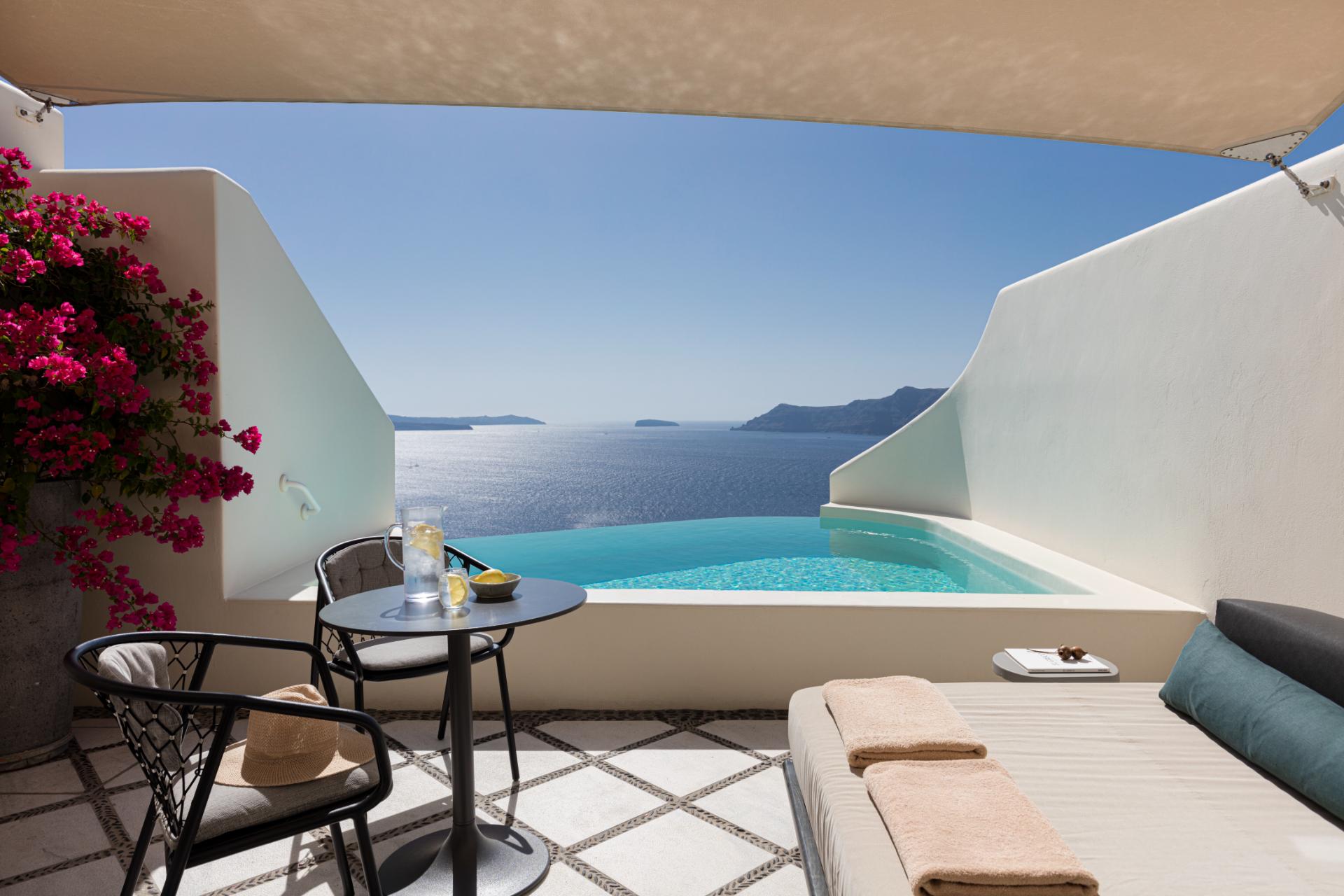
Set in Oia, Canaves Oia Suites is known for its suites overlooking the caldera and Aegean, with private outdoor spaces and a contemporary interpretation of Cycladic design. It suits travellers who want to remain close to Oia’s lanes while making the view an integral part of their stay. When comparing room categories, confirm the precise outlook and outdoor facilities attached to the selected suite rather than assuming every room offers the same experience.
Grace Hotel, Auberge Resorts Collection — A High-Caldera Retreat
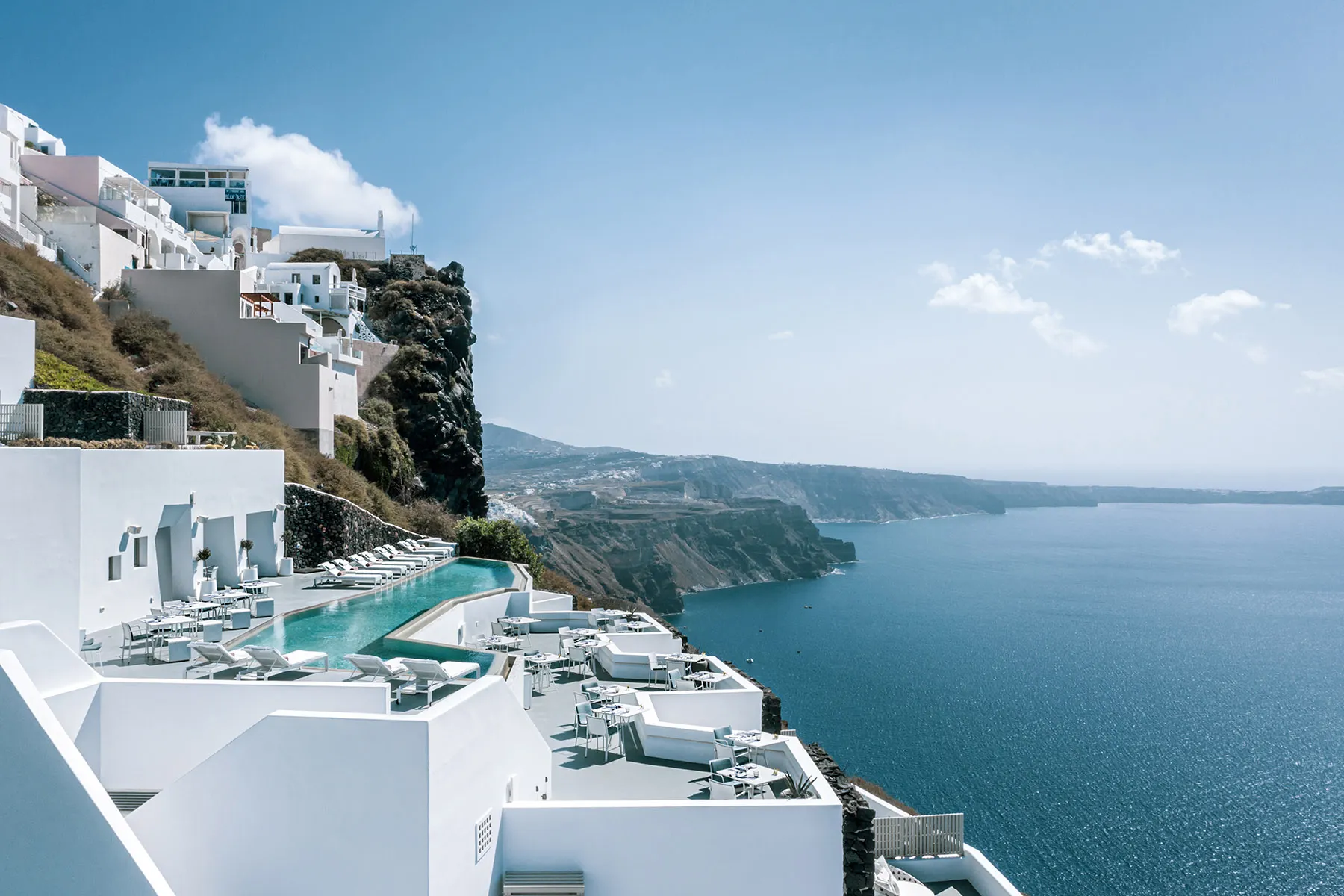
Grace Hotel in Imerovigli offers a more secluded setting along the caldera rim. Its appeal is the combination of elevated views and a calmer village atmosphere, making it worth considering for travellers who want the landscape to set the pace. As with any cliffside property, room position, steps and access routes are useful details to confirm before arrival.
Vedema, a Luxury Collection Resort, Santorini — Village-Led Elegance
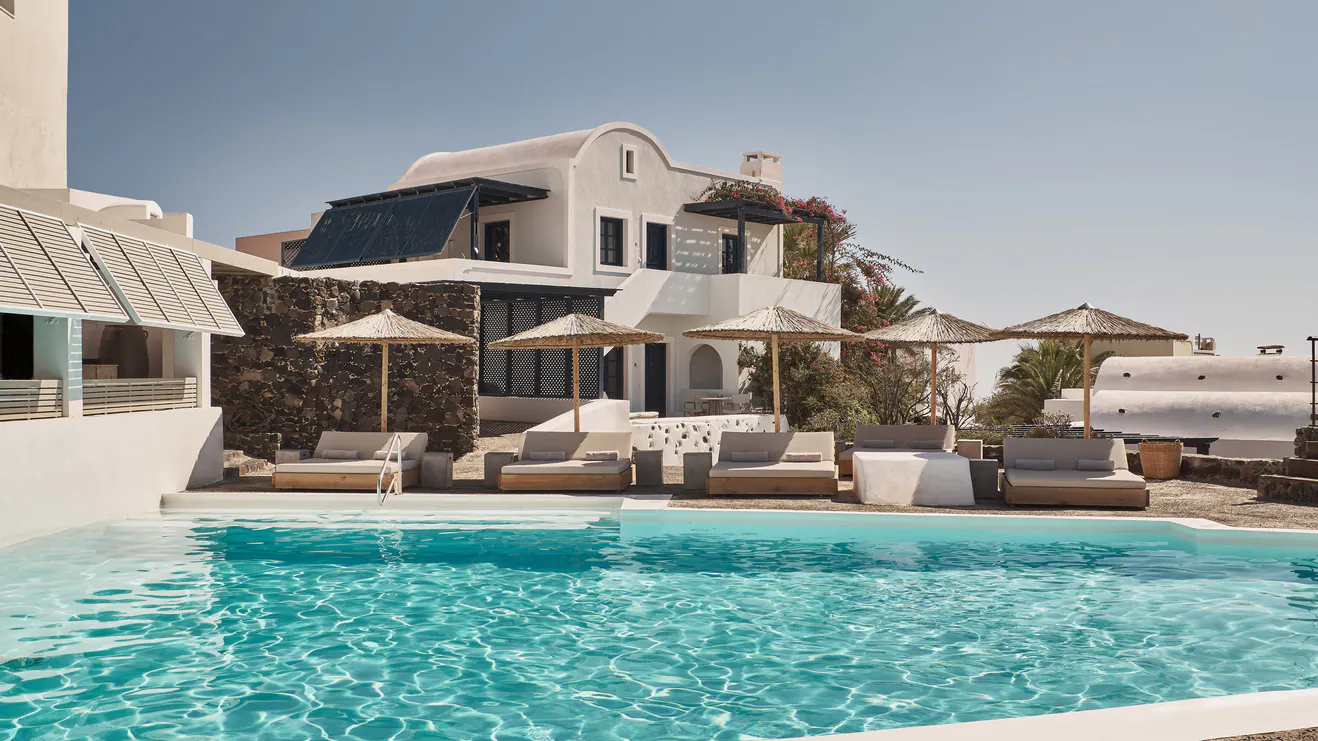
In Megalochori, Vedema provides a different expression of island luxury from the cliffside suite. Its setting connects the stay with the character of an inland village and Santorini’s wine-growing traditions. It is a thoughtful option for travellers who value a sense of place, a more grounded atmosphere and excursions that reach beyond the caldera villages.
These properties represent distinct ways to experience the island rather than a universal ranking. Availability, room features and seasonal services can change; verify details directly with each property before making a reservation.
The Island at the Table: Vineyards and Cycladic Flavours
Santorini’s cuisine reflects the demands and gifts of a dry volcanic environment. Fava, made from local yellow split peas, has a silky simplicity; tomatokeftedes bring the island’s small, intensely flavoured tomatoes to the table; capers, aubergine and freshly caught seafood appear in dishes that are shaped by season and locality. A memorable itinerary should include both a carefully chosen destination restaurant and a meal in a traditional village taverna, where the pace is less choreographed.
Wine offers another way to read the island. Assyrtiko is celebrated for its crisp acidity and mineral character, while Nykteri and Vinsanto reflect other parts of Santorini’s winemaking heritage. The vines are often trained low in basket shapes, known as kouloura, to protect them from strong winds. A tasting with a knowledgeable host can explain how soil, climate and technique converge in the glass. Pyrgos and Megalochori are natural starting points for a day built around vineyards, village walks and an unhurried lunch.
Experiences Worth Making Time For
Sailing the Caldera
A sailing excursion reframes Santorini. From the water, the caldera cliffs form a continuous wall, and the settlements appear suspended above the sea. A private charter can offer flexibility and privacy, while a small-group trip may provide a more accessible way to explore. Confirm the route, inclusions, safety arrangements and weather policy in advance; the best plan leaves room for conditions at sea to shape the day.
A Slow Afternoon in the Villages
Rather than crossing the island in pursuit of every landmark, choose one or two villages and allow them to reveal themselves. Walk the lanes of Pyrgos, pause in Megalochori, or follow the caldera path between Fira and Firostefani. The luxury lies in having enough time to notice the details that a hurried itinerary tends to erase.
Beaches of Volcanic Contrast
Santorini’s beaches are shaped by its geology rather than by the pale sand associated with other Mediterranean islands. Perissa and Perivolos are known for dark volcanic sand, while the Red Beach area is striking for its rust-coloured cliffs. Heat, surf and local access restrictions matter, particularly in summer, so check conditions and follow safety advice rather than approaching unstable cliff areas.
When Santorini Reveals Its Best Side
Late April through May and September through October are often attractive for travellers seeking a balance of comfortable temperatures, softer light and a less intense pace than peak summer. Spring brings a sense of renewal to the villages and countryside; early autumn can combine warm seas with a more measured atmosphere. Conditions vary from year to year, and some services remain seasonal.
June through August is the island’s busiest period. The days are long and the social energy is high, but sought-after suites, restaurants and sailing excursions can book well in advance. Travellers who prefer quieter lanes and more flexibility may find the shoulder seasons better suited to their style. Winter can be atmospheric, though many hotels and restaurants reduce their operations or close, so check availability carefully.
A Three-Day Itinerary, Designed to Breathe
Day One — Arrive, Settle, Observe
Keep the first day deliberately open. Settle into the hotel, take in the view and explore the nearest lanes without trying to see the whole island. As the light softens, walk a short stretch of the caldera path and choose dinner close to your base. If sunset matters to you, a private terrace can be more rewarding than joining the densest public viewpoint.
Day Two — From the Water to the Vineyard
Spend the morning sailing, with the final route determined by sea conditions. Leave the afternoon unhurried: return to the hotel, then visit a winery for a guided tasting. Dinner can be the evening’s main event, ideally centred on local ingredients rather than simply the most dramatic view.
Day Three — Ancient History and Inland Villages
Visit Akrotiri earlier in the day, then continue towards Pyrgos or Megalochori for a village walk and a relaxed meal. If the weather and access conditions allow, add a stop on the southern coast. Resist the urge to fit every famous location into the afternoon; the island is best remembered when the itinerary has room to breathe.
Planning a Seamless Stay
Santorini’s beauty comes with practical considerations. Many caldera hotels are reached by steps and narrow paths, and vehicles may not be able to stop at the entrance. Confirm luggage handling, transfer points, accessibility and the exact location of your room before arrival. If a private pool, heated plunge pool or unobstructed caldera view is essential, verify that feature for the specific room category.
Travel times can be longer than distances suggest during busy periods. A private driver can be useful for a day of wineries and inland villages, while local buses and taxis may suit simpler journeys. Check ferry and flight schedules close to travel and avoid tight onward connections. Book high-demand accommodation, dining and excursions in advance, especially for summer and early autumn.
Santorini is a living destination, not a stage set. Respect residents’ privacy, remain on marked paths, avoid entering private terraces for photographs, and leave fragile coastal areas undisturbed. Thoughtful travel protects the character that makes the island worth visiting.
Frequently Asked Questions
How many days should you spend in Santorini?
Three to four days is a comfortable starting point for the caldera villages, a sailing trip, a winery visit and the archaeological and southern parts of the island. A longer stay allows a slower pace.
Which area is best for a luxury stay in Santorini?
Oia suits travellers drawn to the iconic village scenery; Imerovigli offers an elevated and often quieter caldera perspective; Fira and Firostefani provide convenience; Megalochori offers a more village-led experience.
Is Santorini only for honeymoons?
No. It is well suited to couples, friends and solo travellers who value landscape, food, history and design. The experience depends more on choosing the right base and pace than on travelling for a particular occasion.
What is the best time to visit Santorini?
Late spring and early autumn are often appealing for comfortable weather and a less intense pace. Summer offers long, lively days but brings higher demand. Always check seasonal opening dates and current conditions.
What should visitors know about Akrotiri?
Akrotiri is a major prehistoric settlement preserved beneath volcanic material. Opening times and access arrangements can vary, so check official visitor information before setting out.
Can Santorini be combined with Athens?
Yes. Athens provides archaeological depth, urban culture and dining, while Santorini offers volcanic landscapes and island life. Compare flight and ferry options and allow a sensible buffer for delays.
Santorini, Beyond the Familiar View
Santorini’s most famous image is only the beginning. The island becomes richer when the view is joined by context: the volcanic history beneath the cliffs, the Bronze Age world of Akrotiri, the basket-trained vines, the inland villages and the food that belongs to this particular landscape. These are the details that turn a beautiful stop into a considered journey.
At Luminara Voyages, we believe luxury is not defined by excess or by how many places can be fitted into a day. It is the freedom to travel with intention, to notice a destination properly, and to choose experiences that feel connected to where you are. Santorini rewards precisely that approach: less rushing, more looking; fewer checklists, more moments that stay with you.