An encounter with South Africa’s ancient escarpment, hidden valleys and extraordinary stillness
The Opening Scene: A World Beyond the Clouds
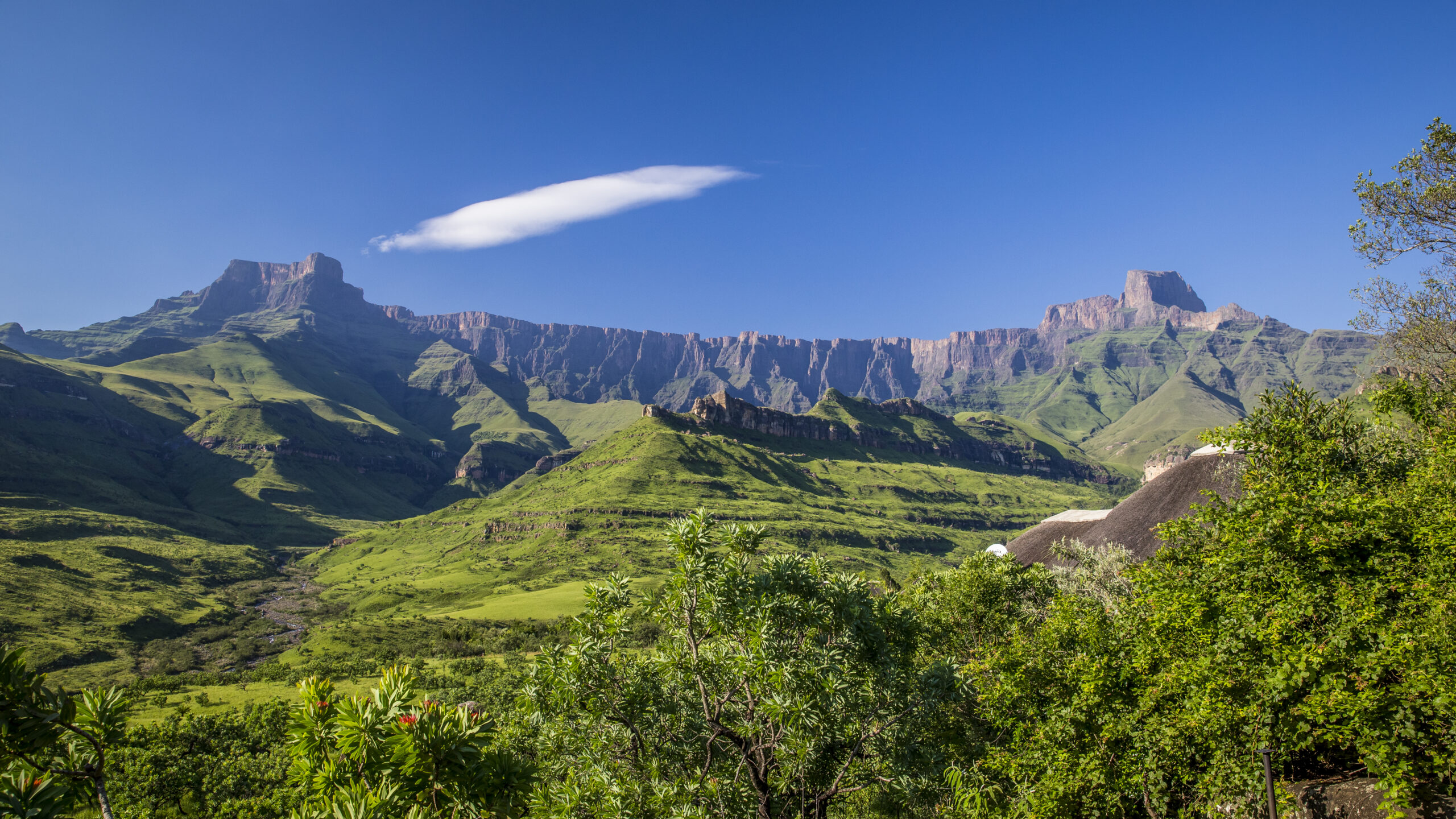
There is a moment in the Drakensberg when the scale of the world seems to change. The road narrows between folds of green land. A river flashes briefly through the grass before disappearing into a gorge. Then the mountains rise—not as a distant outline, but as a vast wall of stone, its upper edges cut into the sky with a precision that feels almost unreal. Clouds move across the escarpment, concealing entire faces of rock before revealing them again. The landscape does not ask for attention. It makes everything else fall quiet.
At dawn, the high ridges hold the last blue of night while the valleys remain in shadow. Slowly, the first light reaches the sandstone cliffs, turning them the colour of old gold. Below, mist gathers above the grasslands and drifts through the folds of the terrain. Somewhere in that immense stillness, water is moving downhill, birds are beginning their day, and the wind is travelling across a landscape shaped over geological time. Its power lies in its scale, its silence and the feeling of standing before something that has existed long before you arrived and will remain long after you leave.
The Drakensberg—often called the Berg in South Africa—is not one single viewpoint or resort region. It is a great mountain range with different personalities: the monumental Amphitheatre in the north, the cathedral-like peaks and valleys of the central range, the sandstone formations and rolling highlands farther north, and quieter routes towards the southern escarpment and Lesotho. The UNESCO-listed Maloti-Drakensberg landscape is celebrated for its natural beauty, biodiversity and exceptional concentration of San rock art, a cultural record reaching back thousands of years. [Internal link: Explore our South Africa destination collection.]
To travel here well is to accept that the mountains set the pace. A hike may end at a waterfall, but the memory might be the sound of water long before it appears. A lodge may offer extraordinary views, yet the moment that stays with you could be the first cold breath of morning on a terrace. The Drakensberg rewards those who leave room for unplanned encounters.
The Amphitheatre: A Wall at the Edge of Imagination
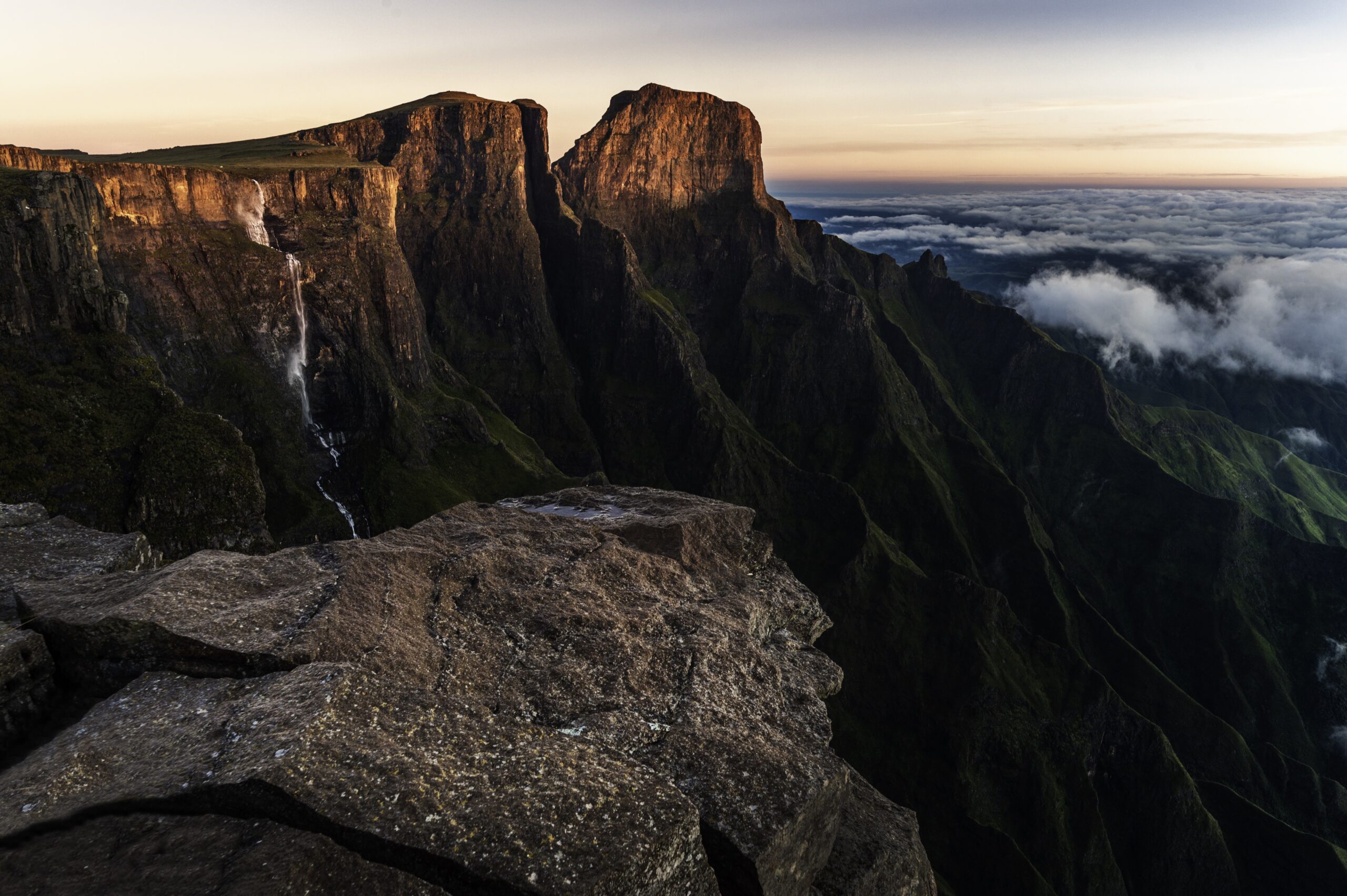
In the Northern Drakensberg, the Amphitheatre stretches across the horizon like the rampart of a vanished world. Its immense basalt face forms one of the range’s most recognisable silhouettes, rising above the valleys of Royal Natal National Park. Seen from below, the cliff wall feels almost architectural: a monumental curve of dark rock, cut by gullies and ledges, with changing weather writing new patterns across its surface.
The Amphitheatre changes character with the light. On clear mornings, its edges appear sharply drawn against the sky. When clouds gather, sections of the wall vanish into shadow and the scale becomes difficult to judge. After rain, waterfalls and temporary streams animate the slopes; in colder weather, the high country can feel austere and elemental. Give yourself time to watch the mountain rather than immediately moving on.
Royal Natal National Park provides access to memorable walking country. The Tugela Gorge route approaches the escarpment from below, following the river through rock, vegetation and increasingly dramatic views. More demanding routes towards the upper escarpment require careful preparation, appropriate fitness and close attention to weather. Conditions can change quickly; never assume a route is safe simply because it looks manageable in a photograph.
The celebrated Tugela Falls descends from the escarpment in a series of cascades. The view depends on season, rainfall, cloud and the chosen approach. It is the journey as much as the waterfall that defines the experience: the gradual widening of the valley, the sound of moving water, and the moment the scale of the cliffs becomes clear.
Cathedral Peak and the Central Berg: Stone, Shadow and Green Valleys
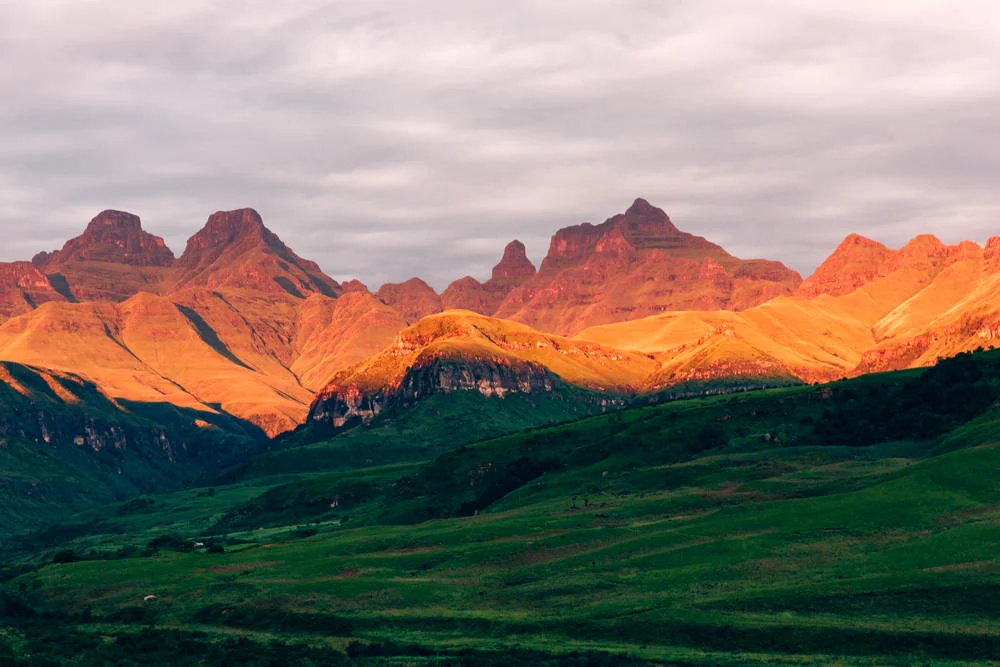
The Central Drakensberg has a different rhythm. Around Cathedral Peak and the Champagne Valley, mountains rise in distinct formations, their profiles changing as the road turns through the foothills. Grasslands open towards dark ridges; streams cut across meadows; isolated peaks stand against the sky like the remains of a vast stone city. Here, the drama is not confined to one celebrated viewpoint. It surrounds the traveller throughout the day.
Cathedral Peak is especially compelling in the changing light of early morning and late afternoon. From a distance, its profile appears clean and monumental. Closer to the foothills, details emerge: gullies, rock faces, patches of vegetation and the shifting shadow of clouds. A guided walk can deepen the experience by helping visitors read the landscape—its weather, ecology and the routes that connect valley to mountain.
The Champagne Valley makes a rewarding base for travellers who want to combine gentle walks with more demanding hikes, scenic drives and time at a country lodge. Choose trails according to ability and conditions rather than ambition alone. The most satisfying day may be a morning on a mountain path, a long lunch, and an afternoon spent watching clouds move through the peaks from a comfortable terrace.
Golden Gate Highlands: Sandstone, Grassland and Open Sky
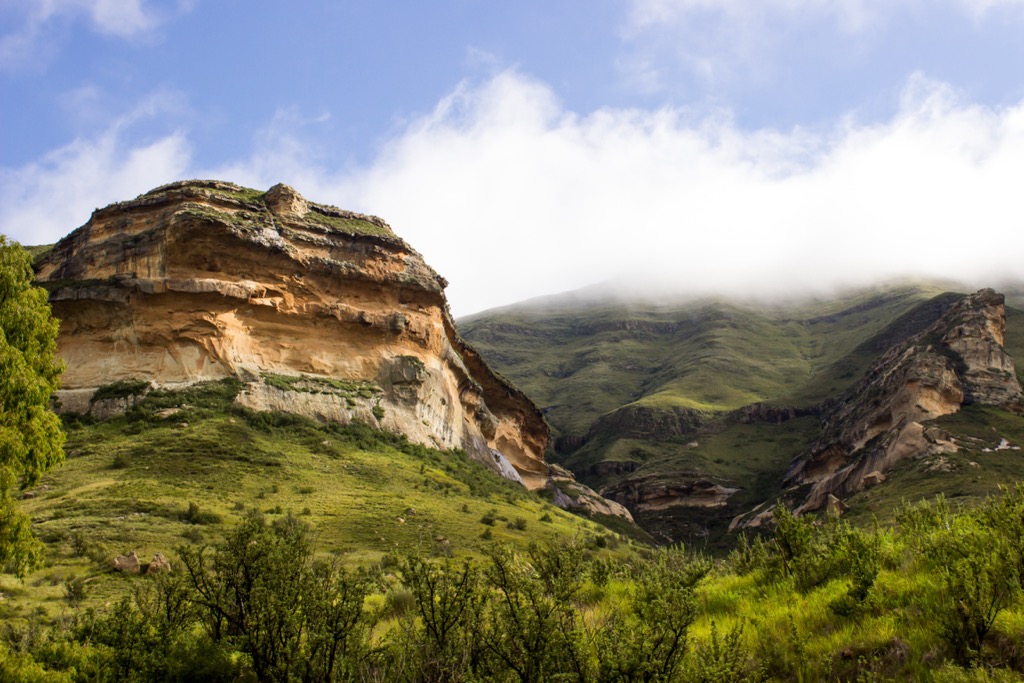
Farther north, Golden Gate Highlands National Park introduces a striking change of colour. Mountains here are sculpted from sandstone, with cliffs and formations that glow amber and rose when the sun is low. Rolling grasslands spread beneath them, opening the view and giving the landscape a breadth that contrasts with the enclosed valleys of the central range.
The park is rewarding for scenic drives, short walks and photography. In late afternoon, sandstone seems to hold the day’s warmth; at sunrise, ridges emerge gradually from blue shadow. Wildlife may be seen across the grasslands, but the experience is not about ticking off sightings. It is about watching the open country reveal itself at a slower pace.
Golden Gate also provides a natural link to Clarens, a small town known for art, cafés and a relaxed country atmosphere. It can be a pleasant pause on a longer mountain journey, particularly for travellers who appreciate galleries, local craft and a village setting between days outdoors.
Giants Castle: The Quiet Interior
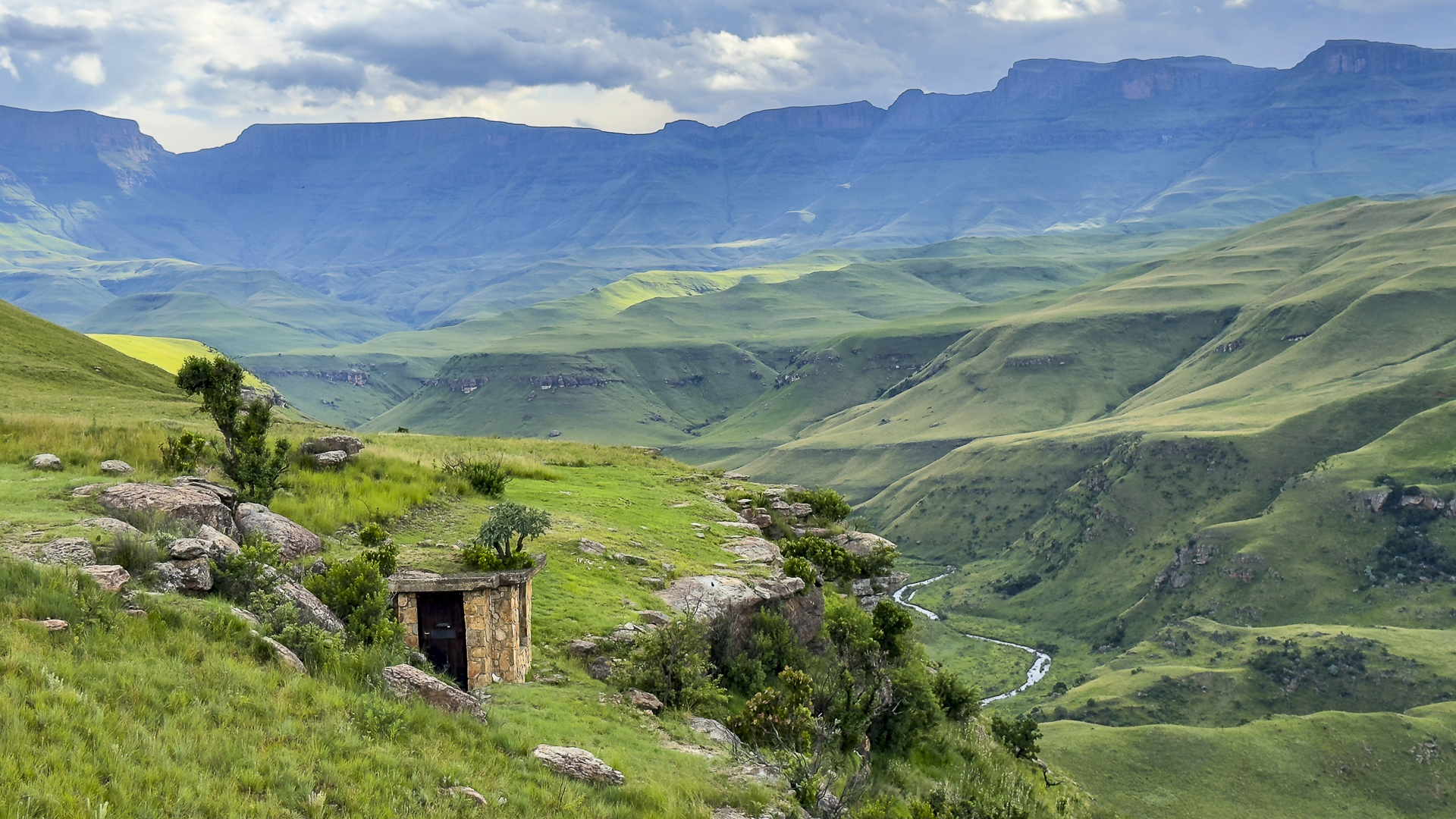
Giants Castle offers a more secluded perspective on the range. Mountain scenery, open grasslands and protected habitats invite a quieter kind of exploration, where the absence of a crowded itinerary becomes part of the appeal. Walks can lead to broad views across the valleys, while changing weather gives familiar slopes a different expression from one hour to the next.
The area is also associated with San rock art, a reminder that the Drakensberg is not only a natural spectacle but a cultural landscape. Paintings preserved in rock shelters record aspects of San spiritual life, belief and relationship with the natural world. Visit rock-art sites with authorised guides and follow conservation rules: these are fragile records, not simply backdrops. Their meaning deserves care, context and respect.
For travellers seeking the feeling of being away from the usual routes, this part of the Drakensberg can provide a deeper sense of stillness. Let the day remain lightly structured. A guided cultural visit, a walk suited to the weather and an unhurried evening can offer more than a packed schedule.
Experiences That Stay With You
Walking into the scale of the mountains
A hike here is not simply exercise with a view at the end. The route itself changes how the landscape is understood: the valley gradually falls away, the wind grows stronger, and distant cliffs reveal their depth. Choose a route that matches your fitness, carry water and weather protection, and check trail conditions before departure.
Watching first light reach the escarpment
Set an early alarm if the forecast is favourable. From a safe viewpoint or a mountain-facing lodge terrace, watch the high ridges catch the light while the lower valleys remain in shadow. No two mornings are identical; cloud can obscure the view, and that uncertainty is part of the mountain’s character.
Finding a waterfall beyond the path
Water gives the Drakensberg much of its voice. Depending on route and season, a walk may lead to cascades, pools or a river gorge. Avoid entering fast-flowing water, especially after rain, and never approach a waterfall edge for a photograph.
Encountering ancient rock art
A guided visit to a San rock-art site adds a human dimension to the mountains. The paintings are part of a cultural inheritance and should be approached with humility. Use authorised guides, respect barriers and never touch or mark the rock surfaces.
Taking the scenic road slowly
Mountain roads are part of the experience, but they demand attention. Plan stops at recognised viewpoints, allow extra time for changing conditions and avoid rushing through the landscape to meet a tight schedule. A private driver can be worthwhile for travellers who prefer to concentrate on the scenery.
Making room for stillness
The most personal moment may not involve a trail or excursion. It may be a book beside a window, a fire after a cold walk, or the sound of rain moving across the roof while the mountains disappear behind cloud. A luxury itinerary should make space for these moments, too.
Exceptional Stays in the Drakensberg
Accommodation here is inseparable from the landscape. A property may be defined by its proximity to a famous peak, the warmth of its hospitality, the character of its dining or the privacy of its setting. Choose according to whether you want a full-service mountain hotel, a restorative country retreat or a smaller lodge that places quiet and scenery at the centre. Confirm current room categories, inclusions and availability directly.
Cathedral Peak Hotel — A Classic Mountain Retreat
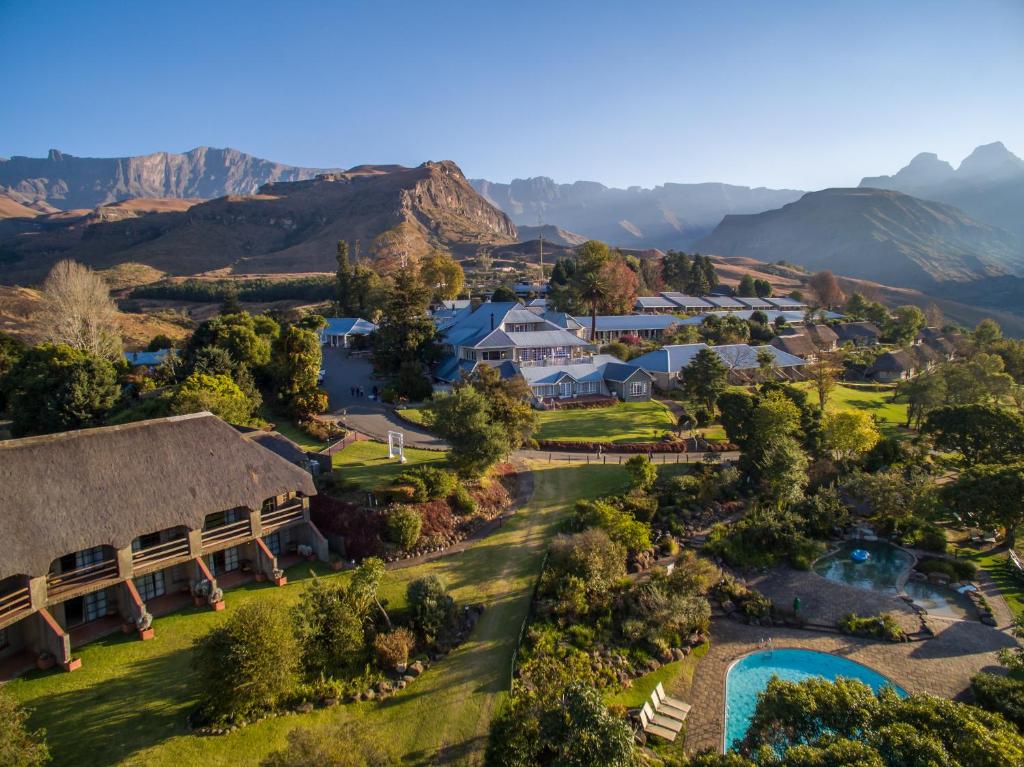
Set in the heart of the Central Drakensberg, Cathedral Peak Hotel has a long-established presence in the valley and is surrounded by some of the range’s most recognisable peaks. Its appeal is the direct relationship between hotel and outdoors: walking routes, mountain views and a setting where weather becomes part of the day’s story. The property offers a broad range of rooms and suites, making it suitable for couples, families and travellers who want activities close at hand without giving up the comfort of a full-service hotel.
Cleopatra Mountain Farmhouse — A Culinary Hideaway
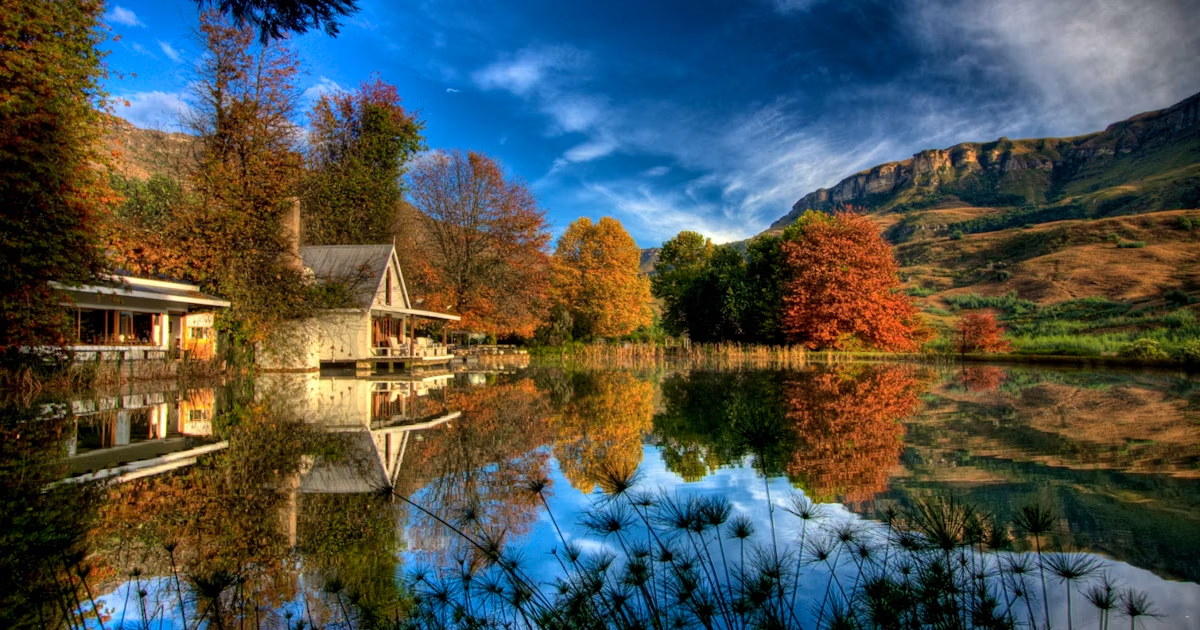
In the Kamberg area, Cleopatra Mountain Farmhouse offers an intimate, food-led country escape. Individually styled rooms and suites, fireplaces and views of the surrounding landscape create a sense of retreat, while considered dining makes the table central to the experience. This is a stay for travellers who appreciate an evening that unfolds over a thoughtfully prepared meal, followed by the quiet of the countryside. It suits a slower itinerary built around food, landscape and time together rather than a succession of attractions.
The Cavern Drakensberg Resort & Spa — A Valley Sanctuary
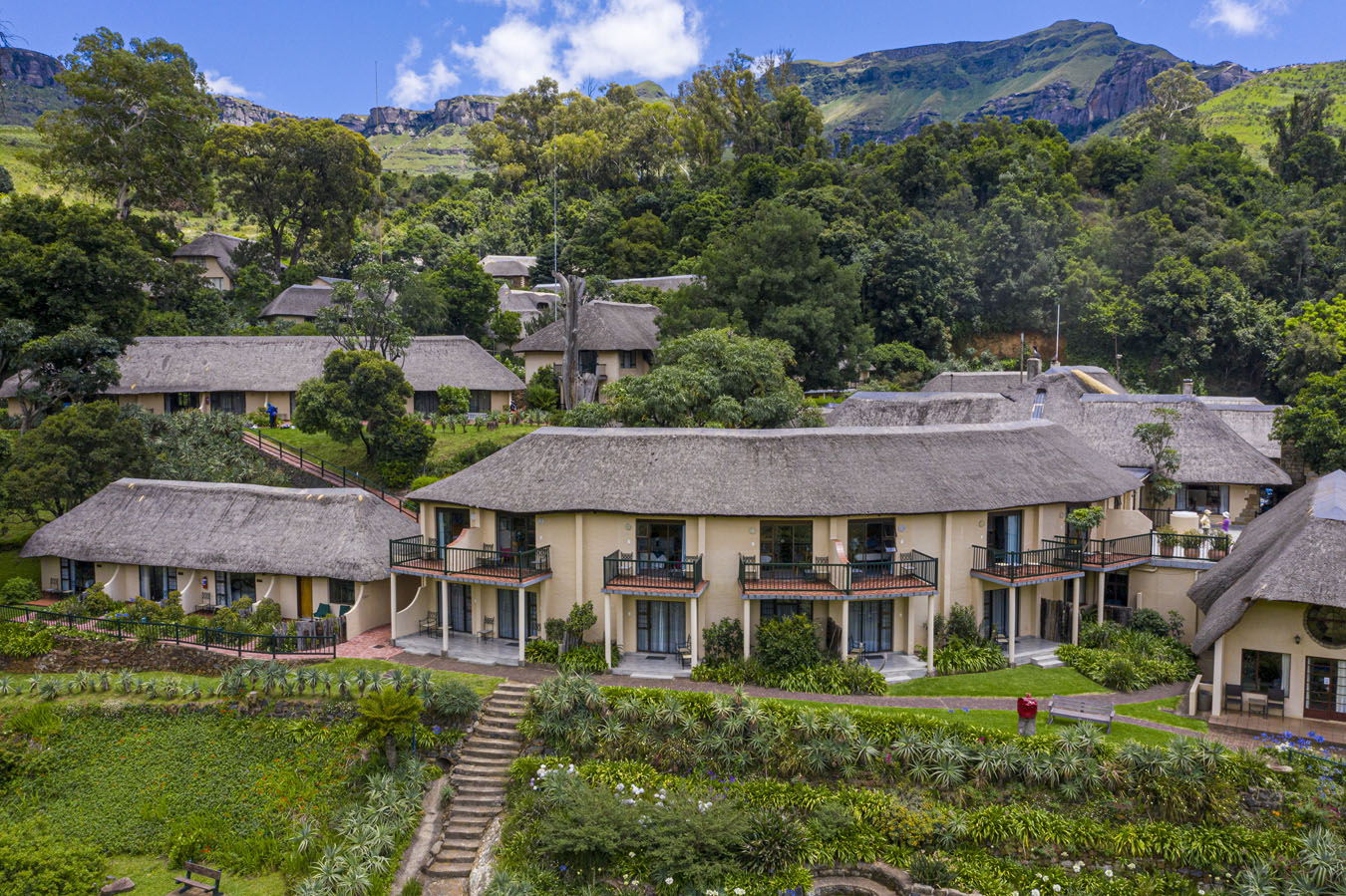
The Cavern sits within a sheltered valley in the Northern Drakensberg, surrounded by mountain scenery and walking country. Its appeal lies in the balance between outdoor activity and restorative comfort: guests can spend the day on guided walks or exploring the area, then return to the gardens, spa facilities and relaxed rhythm of the property. It suits travellers who want a nature-focused stay with experiences available on site, including families and couples who prefer a welcoming resort atmosphere.
aha Alpine Heath Resort — Space for a Longer Mountain Stay
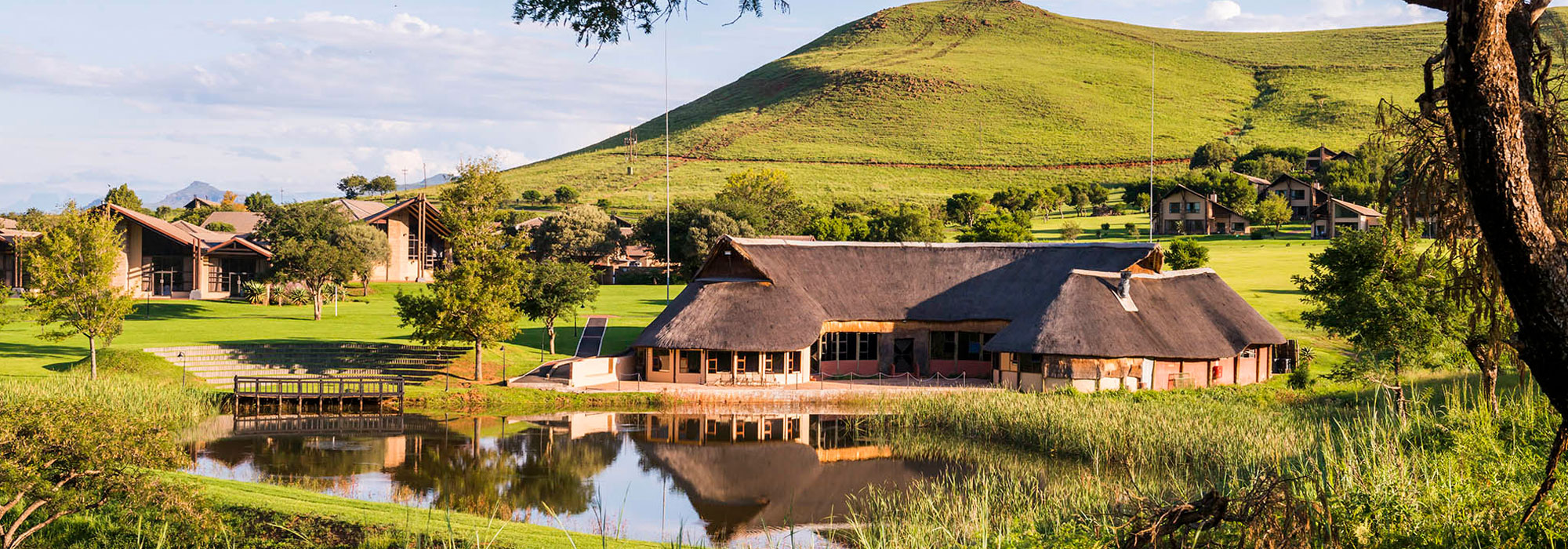
Located in the Northern Drakensberg, aha Alpine Heath Resort offers chalet-style accommodation in a village-like setting, with mountains forming the backdrop. It can work well for families or groups who value separate living areas and the freedom to shape their own days, while still having resort facilities available. Its character differs from a small boutique lodge: the emphasis is on practical comfort, room to spread out and access to the wider region.
When to Visit: Four Different Mountain Moods
Spring, from September to November, brings fresh growth and renewed colour to the grasslands. It can be rewarding for scenic drives, photography and walking, although afternoon storms may develop as the season advances. Plan hikes early and keep enough flexibility to change course if the weather turns.
Summer, from December to February, often brings greener valleys, flowing rivers and impressive waterfalls. It is also when afternoon thunderstorms can arrive quickly, particularly at higher elevations. Begin hikes early, avoid exposed ridges when lightning threatens and never underestimate how quickly mountain weather changes.
Autumn, from March to May, can offer clear air, comfortable daytime conditions and excellent opportunities for hiking and landscape photography. It is often compelling for travellers who prefer a quieter atmosphere, though rainfall and temperatures remain variable. Layered clothing is useful, especially for early starts and evenings.
Winter, from June to August, can bring crisp mornings, dry grasslands and exceptionally clear views. Higher elevations may experience freezing conditions or snow, and some routes can become hazardous. Winter is beautiful for lodge-based escapes and scenic viewing, but check road and trail conditions before travelling and pack for cold nights.
There is no single season that suits every traveller. Choose summer for greener scenery and water, autumn for balanced outdoor days, winter for sharp mountain visibility and spring for fresh colour. Whatever the month, check the local forecast close to departure and follow advice from park staff or experienced guides.
Planning a Journey That Feels Effortless
The Drakensberg covers a large area, so the most important planning decision is where to base yourself. Three nights can work for a focused stay in one region. Five to seven nights allow time to combine the Northern and Central Drakensberg without spending the entire trip in the car. If you want to include Golden Gate Highlands or the southern range, build extra driving time into the plan rather than treating each region as a quick detour.
Road access and journey times depend on the exact base, weather and road conditions. A rental car offers flexibility, while a private driver can make the journey more relaxed, particularly if you want to stop for photography or prefer not to navigate unfamiliar mountain roads. Avoid planning long drives after dark where possible, and leave a margin for slower travel in rural areas.
Reserve accommodation first during school holidays and popular travel periods, then arrange guided hikes, cultural visits and dining. Ask your lodge which walks are appropriate for your ability and whether a guide is recommended. Pack layers, a waterproof jacket, sturdy footwear, sun protection, water and a small daypack. For longer hikes, carry suitable navigation and emergency supplies; do not rely on mobile signal being available throughout the mountains.
The Drakensberg can form the mountain chapter of a wider South African journey. Begin with Cape Town and the Cape Winelands, continue along the Garden Route, then turn inland for a very different landscape of high escarpments and deep valleys. For travellers continuing towards safari country, plan the transition carefully and verify flight and road connections before confirming the sequence.
Frequently Asked Questions
What is the Drakensberg known for?
The Drakensberg is known for immense escarpments, basalt cliffs, sandstone formations, high grasslands, river gorges, waterfalls, biodiversity and San rock art. Its different regions offer distinct scenery and experiences.
How many days should I spend in the Drakensberg?
Three nights can suit a focused visit to one area. Five to seven nights provide time to explore two regions, enjoy guided experiences and avoid rushing between distant bases.
What is the best area to stay in?
The Northern Drakensberg is a strong choice for the Amphitheatre and Royal Natal National Park. The Central Drakensberg suits travellers drawn to Cathedral Peak, Champagne Valley and a broad choice of walks and mountain hotels. Golden Gate offers sandstone scenery and open grasslands.
When is the best time to visit?
Autumn often offers comfortable outdoor conditions, winter can bring clear views, spring brings fresh growth, and summer is greener with stronger waterfalls but a greater likelihood of afternoon storms. Conditions vary, so check forecasts before hiking.
Is the Drakensberg suitable for luxury travel?
Yes. The region offers full-service mountain hotels, intimate culinary retreats, spa facilities and chalet-style resorts. The experience combines distinctive accommodation, attentive hospitality and direct access to the landscape.
Do I need a guide for hiking?
Not every walk requires a guide, but route difficulty, weather, navigation and local conditions matter. A guide is advisable for unfamiliar, remote or demanding routes, and park guidance should always be followed.
Can I see Tugela Falls on a day trip?
A visit may be possible from a nearby base, but the time required depends on the chosen route, conditions and fitness. Check current trail information and never assume a route is accessible in all weather.
Is the Drakensberg suitable for families?
Many properties and areas offer family-friendly accommodation and shorter walks. Choose activities based on children’s ages and abilities, confirm facilities directly with the property and avoid exposed or strenuous routes without suitable preparation.
What should I pack?
Pack layers, sturdy walking shoes, a waterproof jacket, sun protection, water and a small daypack. Conditions can shift rapidly, and cold mornings are possible even when afternoons are mild.
Can the Drakensberg be combined with the Garden Route?
Yes, but the regions are geographically distinct. Allow sufficient nights and confirm road or flight connections rather than attempting to cover too much in a short trip.
Why is the Drakensberg culturally significant?
The wider Maloti-Drakensberg landscape preserves a remarkable body of San rock art and is recognised for its cultural as well as natural value. Visit sites respectfully, ideally with authorised guides, and follow conservation rules.
The Last Light: Leaving the Mountains Behind
Eventually, the road begins to descend. The great wall of rock recedes into the distance, its edges softened by weather and afternoon light. The valleys widen; the river becomes a thin silver line; the familiar scale of roads and buildings slowly returns. Yet the Drakensberg has a way of remaining with you—not as a checklist of places visited, but as a sensation: the cold clarity of morning air, the sudden silence beneath a vast escarpment, the sound of water moving through stone, and the feeling that for a brief time the world had become larger than your own concerns.
That is the quiet force of this landscape. It does not need to entertain every minute or reveal everything at once. It asks you to look longer, walk more slowly and accept that some places cannot be reduced to a photograph. You leave with the sense that the mountains have not offered you a performance. They have simply allowed you, for a little while, to stand in their presence.