Some cities announce their beauty. Salzburg allows it to gather around you gradually: the curve of a wrought-iron sign above a narrow lane, the pale façade of a church catching the first light, the Salzach moving quietly between the Old Town and the newer city, and the fortress holding its watch above the rooftops. Beyond it all, the Alps rise like a second horizon. For travellers drawn to culture, architecture and a more considered pace, luxury travel in Salzburg is less about spectacle than atmosphere.
Set in western Austria near the German border, Salzburg is shaped by a rare meeting of ecclesiastical grandeur and mountain scenery. Its historic centre, recognised as a UNESCO World Heritage Site, preserves the distinctive urban fabric of a former prince-archbishopric: monumental churches and palaces set against intimate lanes, courtyards and merchant houses. The result feels composed rather than staged, with centuries of artistic ambition still visible in the city’s everyday rhythm.
Salzburg is also a place where culture is not confined to museums. Music travels through its identity, from Wolfgang Amadeus Mozart’s early life here to the internationally celebrated Salzburg Festival. Yet its most memorable moments may be quieter: a long lunch after a morning among galleries, a walk across a bridge as evening light settles on the fortress, or church bells carrying across the river.
The Old Town: An Architecture of Intimacy and Grandeur
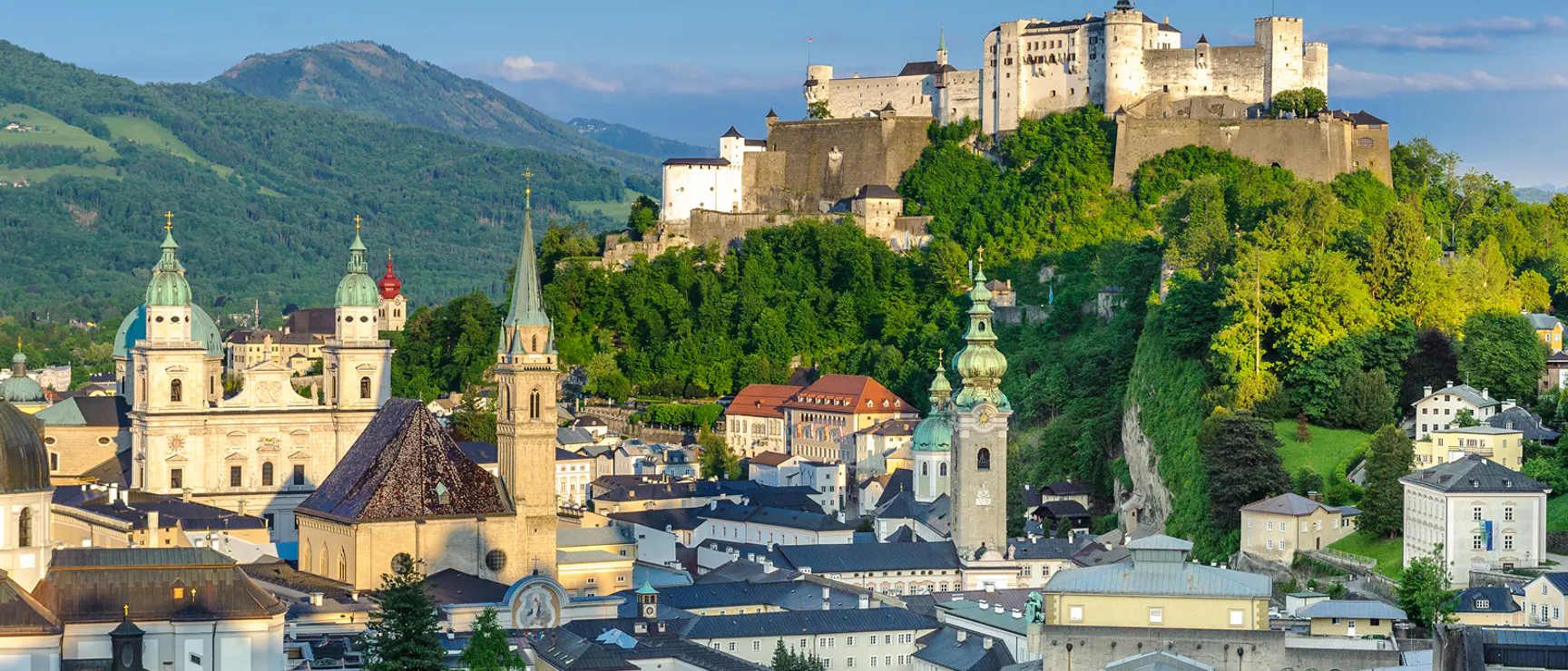
Begin in the Altstadt, where the scale changes from one street to the next. Getreidegasse is famed for its ornate wrought-iron guild signs and historic shopfronts, but its appeal lies in looking beyond the busiest stretch: through passageways, into courtyards and upward to details that have survived successive centuries. This is a city best experienced on foot, with time left unclaimed between appointments.
Salzburg Cathedral anchors the historic centre with a monumental dome and a luminous interior. Nearby, Residenzplatz and the former princely residences speak to the authority once held by the prince-archbishops. At DomQuartier Salzburg, connected historic rooms and collections offer a deeper understanding of the city’s ecclesiastical and artistic power. Treat these landmarks as chapters in one continuous story, rather than stops on a checklist.
Above the rooftops, Hohensalzburg Fortress has watched over Salzburg since the medieval period. Its long history is legible in the scale of its walls and the views that unfold from its heights. Take the funicular for a comfortable ascent, then allow time for the princely rooms, museums and panoramic terraces. In clear weather, the view reaches beyond the city towards the landscape that makes Salzburg’s Alpine setting unmistakable.
Mirabell, Mönchsberg and the City’s Green Edges
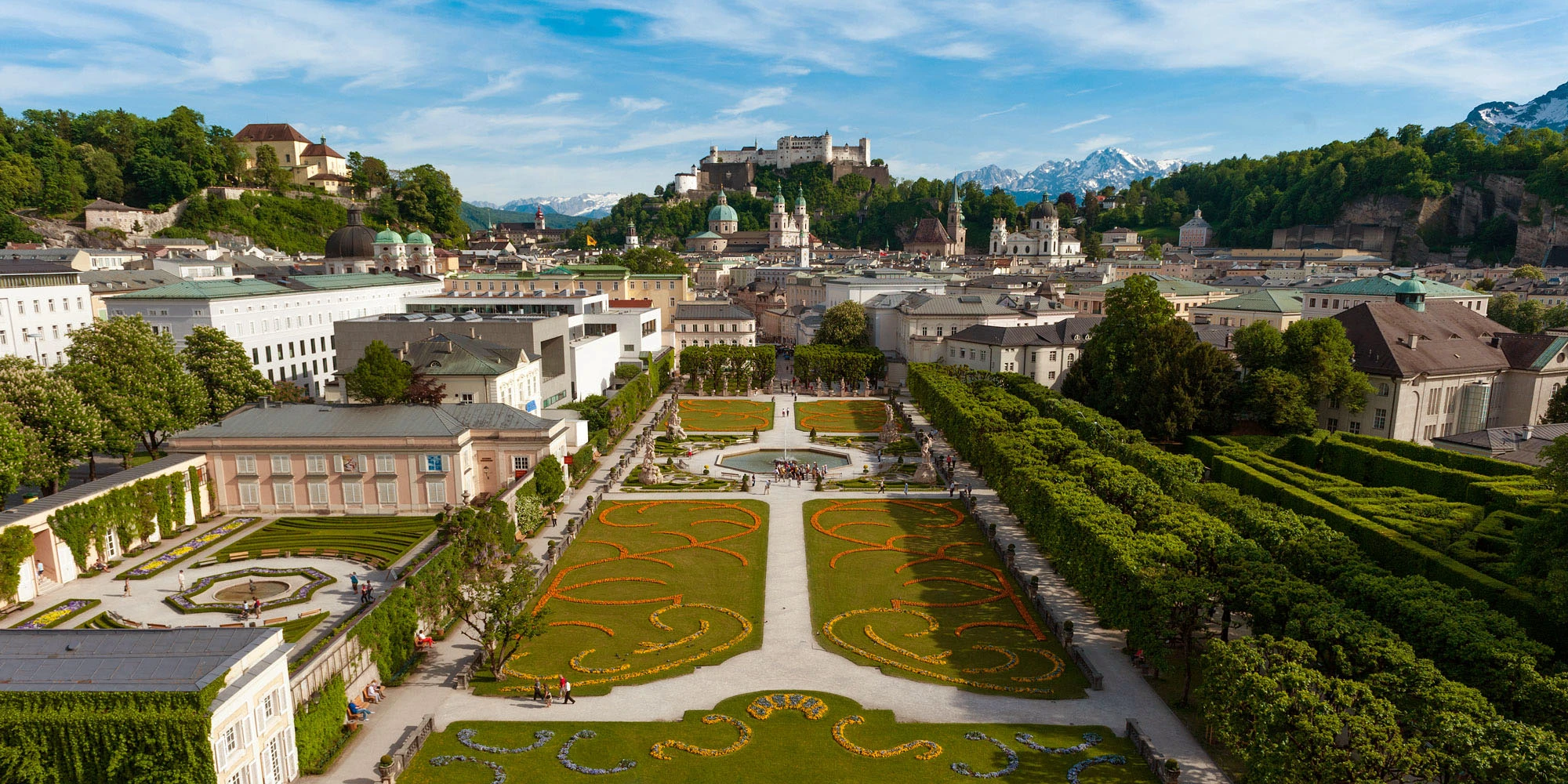
Mirabell Palace and Gardens offer a different register of beauty: measured geometry, clipped hedges, fountains and carefully framed views towards the fortress. The gardens are especially rewarding in the morning, before the day’s movement gathers. The palace’s Marble Hall is renowned as a concert setting; check current access and performance schedules before planning around it.
For a more expansive perspective, follow the paths on Mönchsberg, the wooded ridge beside the Old Town. The walk offers changing views of church towers, rooftops and surrounding hills without requiring a full mountain excursion. Salzburg’s relationship with nature is not an add-on to its cultural life; it is part of the city’s composition.
Further from the centre, Hellbrunn Palace is known for its playful trick fountains and landscaped grounds. The experience is lighter in spirit than the solemnity of the cathedral district, making it a rewarding contrast for a longer stay. Seasonal opening arrangements apply, so verify dates before travelling.
Mozart, the Stage and Salzburg’s Living Cultural Life
Mozart’s presence is inseparable from Salzburg, but the city’s musical story is more than biography. Visit Mozart’s Birthplace on Getreidegasse and the Mozart Residence across the river to understand the family, the early years and the context in which his talent developed. For music lovers, a carefully chosen chamber concert or orchestral performance can make the connection feel immediate rather than purely historical.
The Salzburg Festival brings opera, theatre and classical music to the city each summer, placing performance at the centre of its cultural calendar. The Easter and Whitsun festivals add further musical depth. Programme, venue and ticket availability vary by year; book sought-after performances well ahead and plan accommodation early during major festival periods.
Cinema has also shaped Salzburg’s international imagination through The Sound of Music. The most satisfying itinerary balances familiar references with the city’s own history, art and contemporary cultural life. In 2026, Salzburg is marking the 270th anniversary of Mozart’s birth, with commemorative cultural programming; confirm individual event dates and tickets through official organisers.
A Table That Belongs to the Landscape
Salzburg’s food culture rewards appetite and curiosity rather than formality alone. Traditional inns serve dishes rooted in the region: dumplings, seasonal game, river fish where available, and comforting preparations that make sense in an Alpine climate. Look for menus that reflect the season, and give yourself time for a proper lunch instead of treating food as a pause between sights.
Coffeehouse culture is part of the city’s daily ritual. Order coffee and something sweet, and let the table become an interval in the day. The famous Salzburger Nockerl, a delicate soufflé-like dessert associated with Salzburg, is best enjoyed freshly prepared; it is often made for sharing and may take time to arrive. The experience is as much about slowing down as it is about pastry.
For an elevated evening, choose a restaurant based on the mood you want: contemporary Austrian cooking, a polished hotel dining room, or a traditional setting with a strong regional identity. Menus and opening schedules change, so reserve ahead for special occasions and check current details directly with the restaurant.
Luxury Stays: Three Distinct Ways to Experience Salzburg
Hotel Sacher Salzburg — Grand-Hotel Tradition by the River.
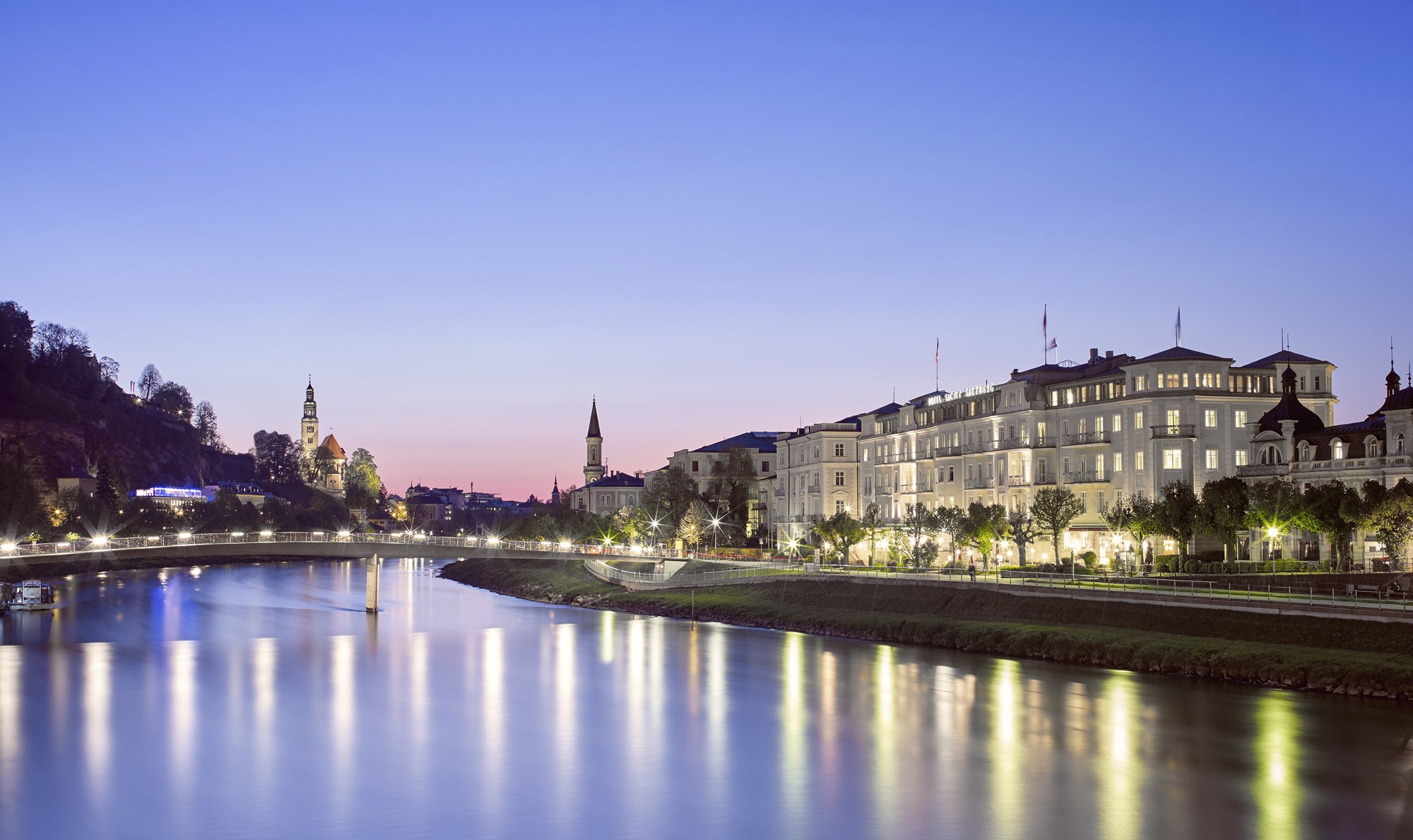
Set on the Salzach, Hotel Sacher Salzburg combines historic grand-hotel character with views towards the Old Town and Hohensalzburg Fortress. Its heritage reaches back to 1866, and its rooms and suites pair classic Austrian elegance with contemporary comfort. It suits travellers who want cultural landmarks close at hand, with the rituals of a distinguished hotel and an unhurried pause at Café Sacher.
Hotel Goldener Hirsch — Historic Character on Getreidegasse.
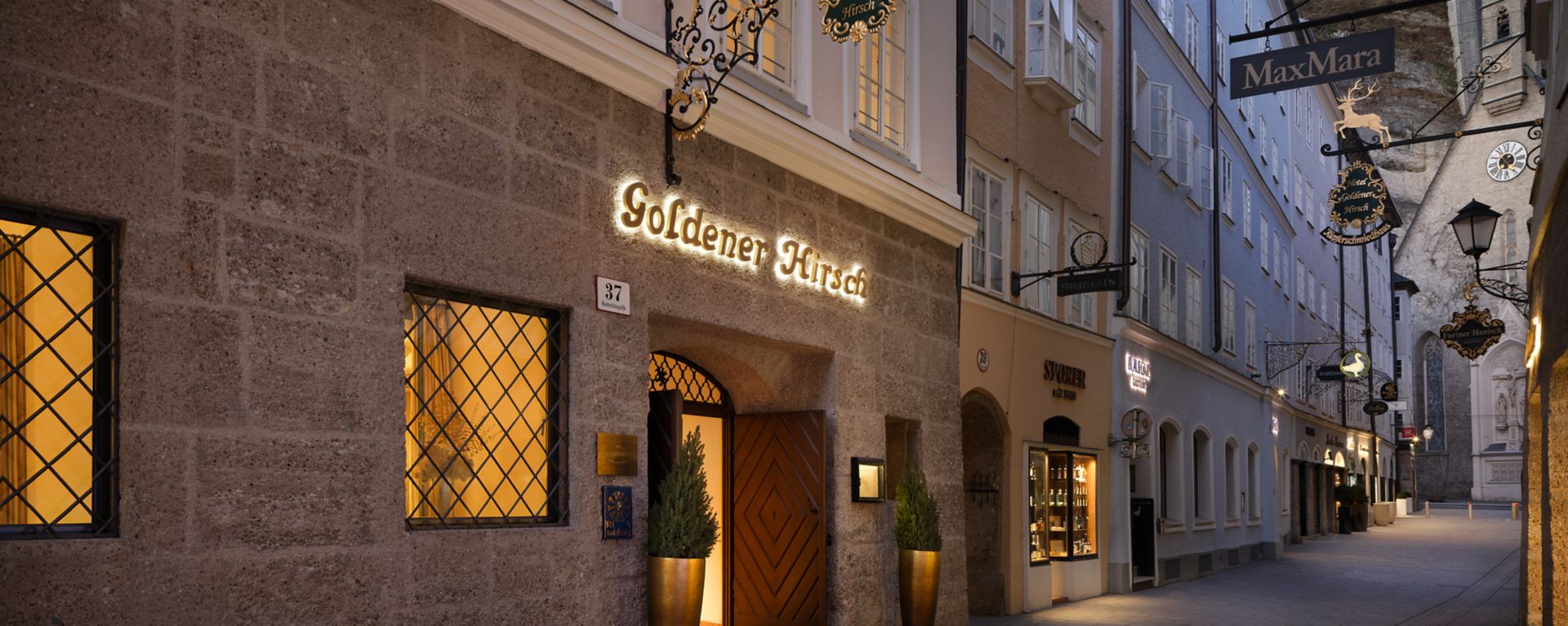
On the celebrated Getreidegasse, Hotel Goldener Hirsch places guests within the texture of the Old Town. Its traditional Salzburg identity and intimate historic setting make it a natural choice for travellers who value atmosphere and walkable access to central sights. It is less about retreating from Salzburg than inhabiting its historic heart.
Hotel Schloss Mönchstein — A Secluded Address Above the City.
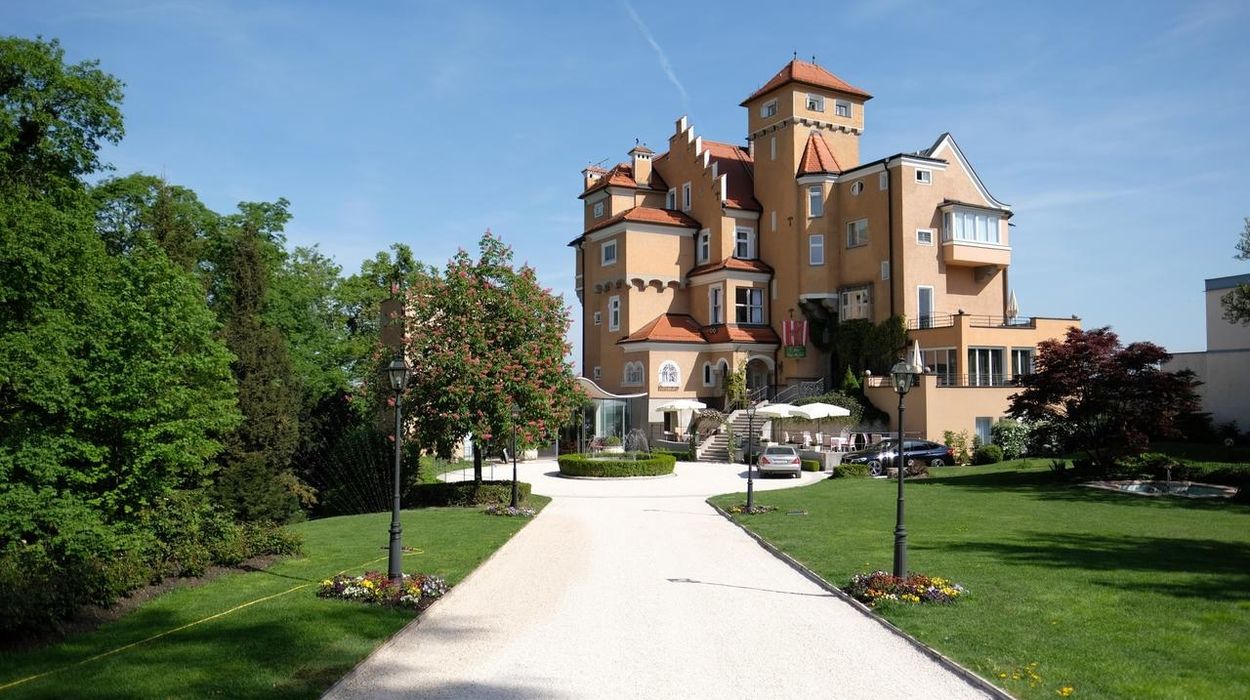
Set on Mönchsberg above the historic centre, Hotel Schloss Mönchstein offers a more secluded perspective, with a castle-like setting and views across Salzburg. Its elevated position suits guests who want the city within reach but prefer to return to a quieter enclave. It is especially appealing for a celebratory stay where privacy and a sense of occasion matter.
Beyond the city, Rosewood Schloss Fuschl sits beside Lake Fuschl in the Salzkammergut, outside central Salzburg. Its lakeside castle setting is better understood as a countryside extension than a city-centre hotel. Consider combining it with a central stay when the itinerary allows both cultural immersion and a slower retreat by the water.
When Salzburg Reveals Its Best Side
Spring brings fresh colour to the gardens and a gentler pace before the busiest summer period. It is rewarding for walking, museums and the Easter Festival, though weather can shift quickly; a light waterproof layer is sensible.
Summer is the principal season for major cultural life, especially during the Salzburg Festival. Long evenings, outdoor cafés and access to nearby lakes and mountain landscapes make it attractive for longer stays. Demand rises around major performances, so reserve accommodation and tickets early.
Autumn softens the city with warmer tones and cooler air. The Old Town, museums and hillside paths are especially appealing, and the pace can feel more measured after the summer rush. Pack layers for changeable conditions.
Winter lends Salzburg a candlelit atmosphere, with Advent traditions and Christmas markets bringing seasonal warmth to historic squares. Snow is not guaranteed in the city itself, so treat it as a possibility rather than a promise. Check market dates and holiday opening hours before finalising plans.
A Considered Three-Day Salzburg Itinerary
Day One — The Historic Heart. Arrive and settle in before walking through Getreidegasse, Salzburg Cathedral and the squares around the former Residenz. Visit Mozart’s Birthplace if time allows, then cross the river for an evening view back towards the Old Town. Keep dinner close to the hotel and resist over-planning the first day.
Day Two — Fortress, Gardens and Music. Take the funicular to Hohensalzburg Fortress in the morning, allowing time for its interiors and panoramic views. After lunch, wander through Mirabell Gardens and consider the Mozart Residence. In the evening, attend a concert or performance if the calendar offers something that suits your taste.
Day Three — Palace Gardens or an Alpine Pause. Spend the morning at Hellbrunn Palace during its seasonal opening period, or choose a slower walk along Mönchsberg. If you prefer to extend beyond the city, plan a separate excursion into the Salzkammergut, leaving enough time to enjoy the landscape rather than rushing between stops.
Practical Details Worth Knowing
Salzburg’s historic centre is compact and best explored on foot, although cobbled streets and uneven surfaces call for comfortable shoes. Public transport helps with longer connections, and the Salzburg Card may offer value depending on the museums, attractions and transport you plan to use; compare its current inclusions and price with your itinerary.
Reserve major festival performances and high-demand restaurants in advance, particularly in summer. For fortress visits, concerts and palace attractions, check official opening times and seasonal closures shortly before travel. If arriving by air or rail, allow time for your transfer and avoid scheduling a major performance too close to arrival.
Salzburg works beautifully as a two- or three-night cultural stay, but four nights or more create room for day trips and a slower rhythm. For a journey combining city culture and countryside, pair central Salzburg with a stay around Lake Fuschl or elsewhere in the Salzkammergut.
Frequently Asked Questions
How many days should you spend in Salzburg? Two full days cover the historic centre and principal cultural landmarks at a measured pace. Three days allow time for a performance, gardens and a more relaxed meal; longer stays work well when paired with nearby lakes or Alpine scenery.
Is Salzburg worth visiting outside summer? Yes. Spring and autumn suit cultural exploration and walking, while winter brings Advent traditions and seasonal markets. Each season offers a different mood; check event calendars and opening schedules before booking.
Where should you stay for a luxury visit? Hotel Sacher Salzburg suits guests seeking grand-hotel tradition by the river; Hotel Goldener Hirsch offers historic atmosphere in the Old Town; Hotel Schloss Mönchstein provides a more secluded elevated setting. Rosewood Schloss Fuschl is an option for a separate lakeside retreat outside the city.
Do you need a car in Salzburg? Not for the central sights. Walking and public transport are practical for most city visits. A car may be useful for a countryside itinerary, but transfers or organised excursions are alternatives.
What is Salzburg best known for? Salzburg is celebrated for its UNESCO-listed historic centre, baroque architecture, Mozart heritage, the Salzburg Festival and its setting between the Salzach River and the Alps.
Continue Your Journey
Salzburg is one expression of Austria’s cultural richness; the wider journey unfolds through imperial capitals, Alpine villages and landscapes shaped by water and mountain light. Continue into Vienna, where palaces, concert halls and grand cafés reveal a different face of Austrian refinement. For a broader Alpine perspective, explore Switzerland through Zermatt, Interlaken, Lucerne, St. Moritz and Grindelwald, each offering its own relationship with the mountains. Travellers drawn to European art, architecture and long-table dining may also continue towards Italy and France, where historic cities and regional traditions create an entirely different rhythm of luxury.
The Luminara Perspective
Salzburg stays with you through contrasts: the solemn hush of a cathedral, the bright intimacy of a coffeehouse, the disciplined beauty of a garden and the sudden breadth of the Alps beyond the city’s rooftops. Its luxury is not measured only in the refinement of a room or the precision of a performance. It is found in the space to notice—to linger over a view, to hear music in the city that shaped it, and to let a place reveal itself without being hurried.
Come for the architecture and the music, certainly. But leave room for the unplanned hour, the quiet lane, the long meal and the changing light over the fortress. In Salzburg, the most enduring experiences are often the ones that ask the least of you except your attention.
At Luminara Voyages, we believe the finest journeys do more than introduce us to a destination. They create a connection that continues after departure. Salzburg offers that kind of lasting impression: cultured, composed and quietly expansive. We don’t simply book. We remain.