
There are corners of Greece where the past does not feel distant. It lingers in the worn threshold of a stone house, in the columns of a sanctuary standing beneath an immense blue sky, and in the silence that settles over a harbour when the last boats return for the evening. In the Peloponnese, history is not confined to museums or separated from the present by glass. It remains woven into the landscape, the architecture, the food and the measured rhythm of everyday life.
Across this great southern peninsula, mountain roads descend towards secluded bays, olive groves stretch across fertile plains, and fortified towns preserve the memory of empires that once fought to possess them. Here, the grandeur of ancient Greece exists alongside Byzantine churches, Venetian fortifications and contemporary retreats shaped around the natural world.
Yet the Peloponnese reveals its greatest distinction through contrast. One day may begin among the ruins of an ancient civilisation; another may unfold along a rugged coastline where stone villages face the open sea. A leisurely afternoon in a historic town can give way to a private villa overlooking the Ionian coast, while a dinner inspired by the region’s produce brings the day’s discoveries back to the table.
For the discerning traveller, the appeal is not simply the number of places to see. It is the extraordinary variety of experiences that can be brought together without losing the feeling of having discovered somewhere authentic.
The Peloponnese invites you to travel differently: with curiosity, with time, and with an appreciation for the details that make a journey unforgettable.
A Southern Greek World of Its Own
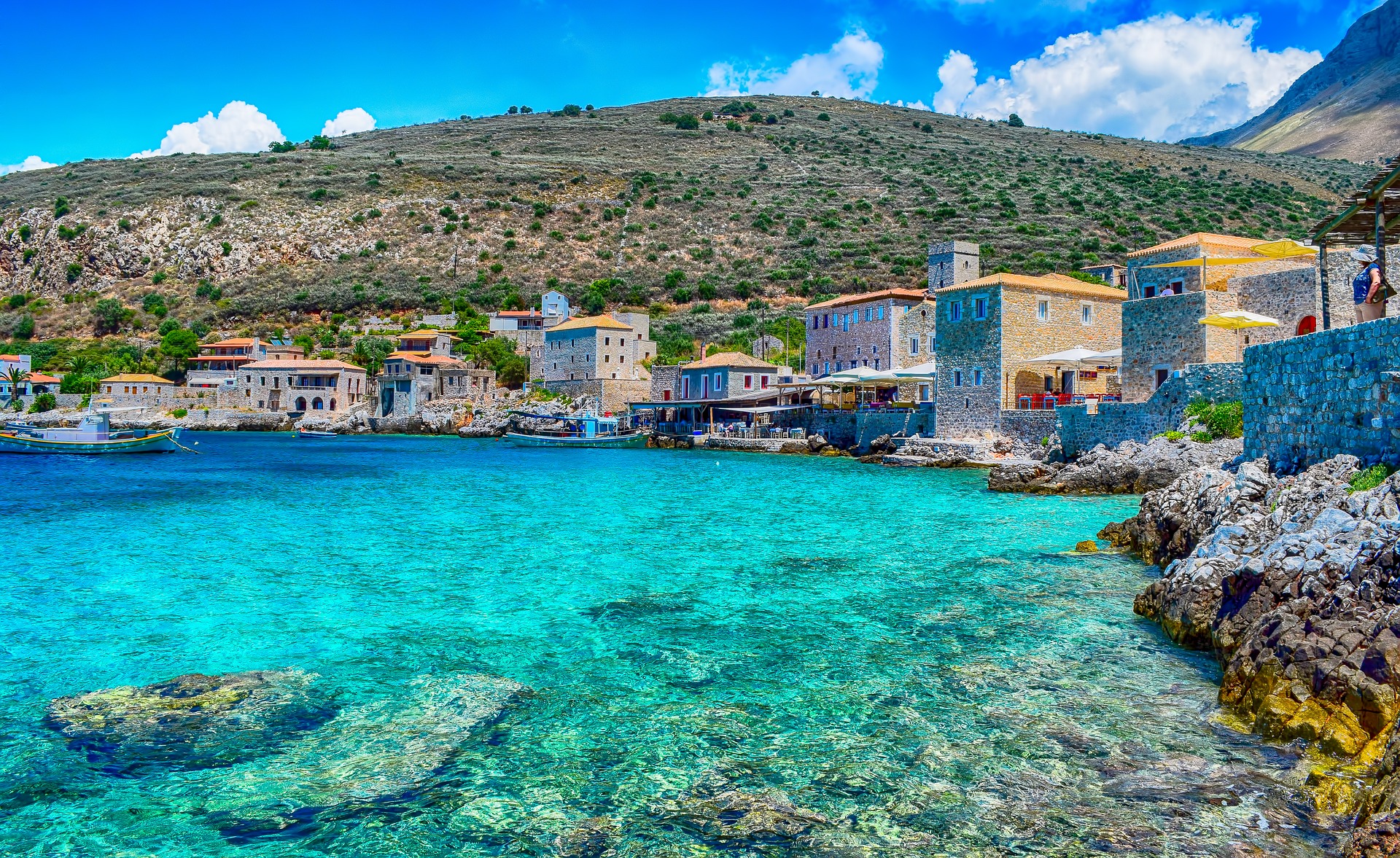
Separated from mainland Greece by the narrow Isthmus of Corinth, the Peloponnese feels almost like a country within a country. Its geography has shaped its character for centuries. Mountain ranges divide communities, deep bays shelter coastal settlements, and fertile valleys have supported agriculture since antiquity.
The result is a region of remarkable diversity. The Argolic Gulf lends Nafplio its graceful maritime character. The southeastern coast conceals the extraordinary medieval settlement of Monemvasia. Farther south, the Mani Peninsula becomes more austere, its rugged terrain marked by fortified stone towers and villages that appear to rise directly from the rock. In western Messinia, olive-covered hills descend towards the Ionian Sea, where contemporary luxury has found a setting of unusual natural beauty.
This is a Greece that rewards movement between landscapes rather than remaining in a single resort. The journey itself becomes part of the experience: winding roads, unexpected viewpoints, villages where lunch extends into the afternoon, and stretches of coastline that seem to invite a spontaneous pause.
Unlike an itinerary built around hurried encounters, a journey through the Peloponnese is best approached as a sequence of distinct moods. Each region offers a different understanding of southern Greece, and together they create a richer portrait than any single destination could provide.
Nafplio: An Elegance Shaped by History
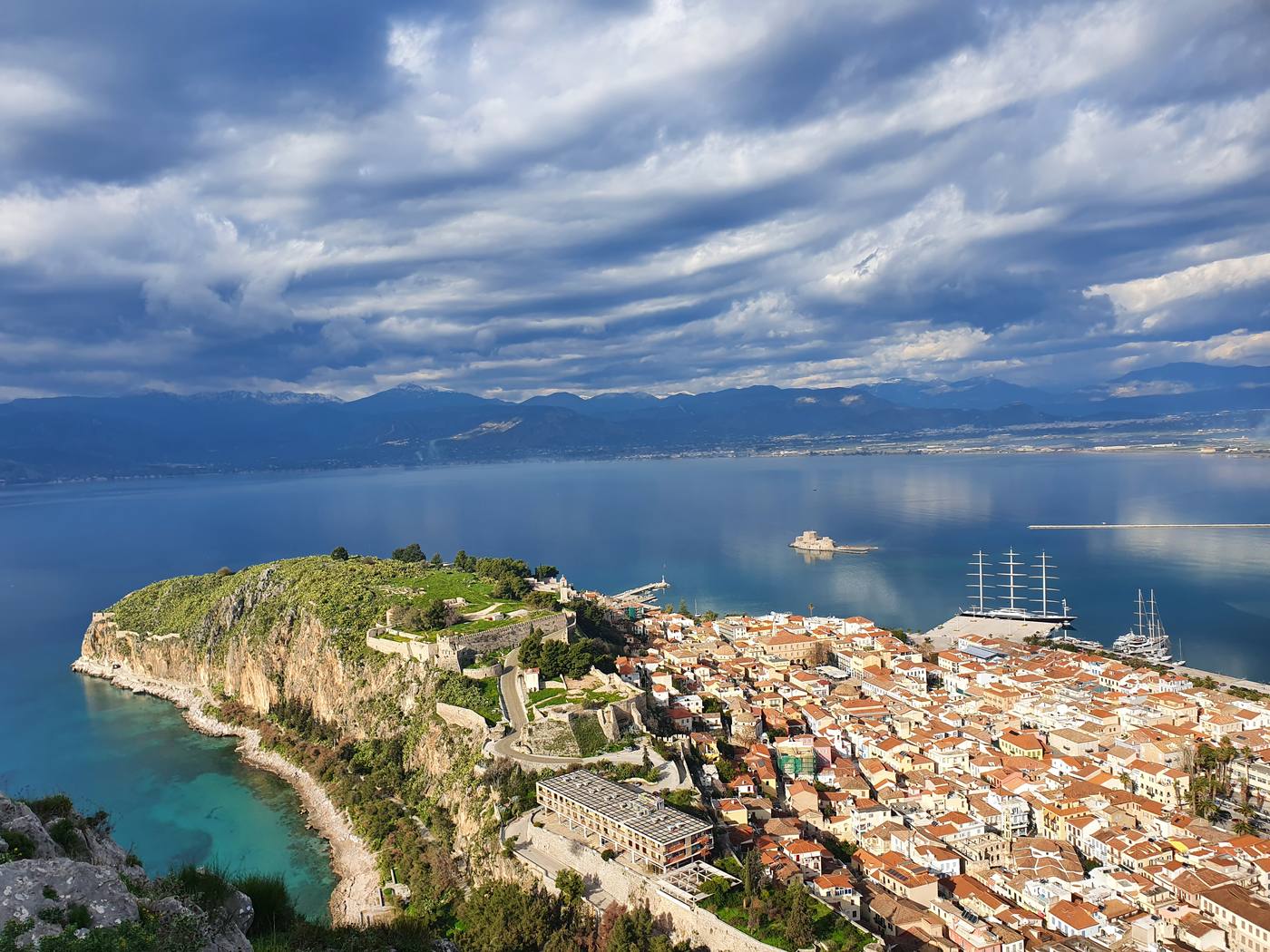
There is an effortless grace to Nafplio, the kind that emerges when centuries of history settle comfortably into the present. Pastel façades frame narrow streets, balconies spill over with flowering plants, and small squares invite lingering over coffee as the harbour changes colour in the afternoon light.
The town’s beauty is inseparable from its history. Nafplio served as the first capital of the modern Greek state from 1827 to 1834, and its architectural character reflects successive periods of influence. Venetian fortifications, Ottoman-era traces and neoclassical buildings contribute to a townscape that feels layered rather than preserved in a single historical moment.
Above the rooftops, Palamidi Fortress commands the hillside, its formidable stone walls offering expansive views across the town and the Argolic Gulf. Offshore, the small fortress of Bourtzi occupies its own position in the harbour, a reminder of the strategic importance once attached to this coastline.
The pleasure of Nafplio, however, lies as much in what happens between its landmarks. An unhurried walk through the old town reveals handsome doorways, shaded courtyards and intimate restaurants tucked into historic buildings. The evening belongs to the waterfront, where the light softens and the town’s architectural details become more pronounced.
For travellers who appreciate history without wanting to sacrifice comfort, Nafplio makes a compelling beginning. Its intimate scale, cultural depth and romantic atmosphere lend themselves to a stay that is as much about inhabiting the town as discovering it.
Monemvasia: A Medieval World Beyond the Mainland
Approaching Monemvasia, the first impression is almost geological: an enormous rock rising from the sea, its steep flanks concealing a settlement that appears to belong to another age. A narrow causeway connects it to the mainland, but crossing it feels like entering a different world.
Within the fortified Lower Town, stone lanes wind between restored houses, vaulted passages and small courtyards. The sea appears unexpectedly at the end of an alley or beyond an archway, while the old walls lend the settlement an extraordinary sense of enclosure. Above it, the largely uninhabited Upper Town preserves the remains of an older Byzantine landscape, with ruined structures and churches overlooking the water.
Monemvasia is at its most compelling when approached slowly. Rather than treating its lanes as a route between landmarks, allow them to determine the pace of the day. Pause in a shaded courtyard. Follow a narrow passage without knowing precisely where it leads. Find a terrace from which the coastline appears to dissolve into the horizon.
As evening approaches, the stone façades acquire a warmer tone, and the settlement’s enclosed streets feel increasingly removed from the modern world beyond the rock. Staying within the historic town, where suitable accommodation is available, allows travellers to experience this transition after day visitors have departed.
For couples and culturally minded travellers, Monemvasia offers something rarer than conventional spectacle: a powerful sense of place. Its romance comes not from elaborate staging, but from the intimacy of its architecture, the sound of the sea and the feeling of inhabiting a landscape shaped by centuries.
Mani: The Beauty of a Wilder Greece
South of the mountains, the Mani Peninsula reveals a more austere expression of Greece. The landscape grows rugged, the settlements more compact, and the architecture more defensive in appearance. Traditional tower houses rise above rocky terrain, reflecting a history shaped by strong local identities and the need to protect communities in an exposed landscape.
Mani does not depend on polished perfection. Its appeal lies in the interplay between rough-hewn stone, pale hillsides and the deep blue of the sea. Roads trace the contours of the coast, revealing small coves and settlements that seem to have developed in conversation with the land rather than in opposition to it.
Areopoli offers a compelling introduction to the region’s stone-built character, while the coastal settlement of Limeni brings the landscape into closer contact with the water. Here, traditional buildings gather around a small harbour, creating an atmosphere that feels intimate even against the dramatic scale of the surrounding terrain. The wider area also provides access to the Diros Caves, an underground landscape that offers a striking contrast to Mani’s sunlit coastline.
The finest experience here may be the simplest: a slow drive through the peninsula, a pause at a village café, a swim when conditions permit, and a long meal built around the catch of the day and regional ingredients.
Mani is particularly rewarding for travellers who prefer character to spectacle and who find luxury in space, privacy and a strong connection to place. A carefully chosen stone guesthouse or intimate coastal retreat can feel more appropriate here than an oversized resort. The architecture, landscape and local atmosphere should remain the centre of the experience.
Ancient Olympia: Where an Ideal Became a Tradition
In western Peloponnese, the significance of Ancient Olympia extends beyond the remains of temples and athletic grounds. This was a sanctuary dedicated to Zeus and the setting of the ancient Olympic Games, an institution that connected Greek communities through ritual, competition and shared cultural meaning.
The archaeological landscape asks for a different kind of attention. Stone foundations and surviving columns may initially appear quiet, even understated, against the surrounding greenery. Yet understanding the purpose of the sanctuary changes the experience. This was a place where athletic achievement carried religious and civic significance, and where the idea of competition transcended the individual city-state.
The ancient stadium brings that history into sharper focus. Standing within the space, it becomes easier to imagine the movement of athletes and spectators, and to consider how a tradition established in antiquity continues to shape international sporting culture today. The nearby archaeological museum adds context to the site and its surviving works.
A thoughtful visit should allow time for both the archaeological grounds and the museum, ideally with a knowledgeable guide who can distinguish historical evidence from later legend. The experience is less about collecting photographs than understanding the place’s enduring cultural importance.
Ancient Olympia also introduces a quieter dimension of luxury travel: the privilege of time and attention. A journey need not be defined exclusively by beautiful accommodation or dramatic scenery. Sometimes its most lasting moments emerge from standing in a place where human ambition, ritual and history have intersected for more than two millennia.
Messinia: The Ionian Coast at Its Most Refined
Western Messinia offers a different register of experience. The landscape opens towards the Ionian Sea, olive groves soften the hillsides, and broad coastal horizons lend the region a sense of space that is particularly appealing after days spent exploring fortified towns and archaeological sites.
Near Pylos, the historic Bay of Navarino and the surrounding coastline combine natural beauty with a rich cultural setting. The crescent-shaped curve of Voidokilia Beach, the region’s olive-growing traditions and the wider landscape of Messinia offer a compelling reminder that the Peloponnese is not defined by antiquity alone. Its identity is also rooted in agriculture, coastal life and the rhythms of the Mediterranean.
For a more contemporary expression of Greek hospitality, Costa Navarino has established a collection of high-end resorts within this landscape. Its portfolio includes Mandarin Oriental, Costa Navarino; The Romanos, a Luxury Collection Resort; W Costa Navarino; and The Westin Resort Costa Navarino. Together, they offer different interpretations of coastal hospitality, from understated retreats and wellness-oriented stays to more contemporary, socially vibrant resort experiences.
The distinction matters when choosing where to stay. Mandarin Oriental, Costa Navarino is worth considering for travellers drawn to refined suites and villas, a wellness-led approach and a setting overlooking the historic bay. The Romanos, a Luxury Collection Resort offers another expression of polished beachfront living. W Costa Navarino, which welcomes adults and young adults aged 12 and above, has a more contemporary atmosphere shaped by design, gastronomy and cultural programming. The Westin Resort Costa Navarino provides an alternative for travellers seeking a resort experience with a broad range of activities. Current facilities, opening dates and guest policies should always be confirmed directly before booking.
The appeal of Messinia lies in the balance between exploration and retreat. Mornings can be devoted to the coast or nearby heritage, while afternoons unfold around the pool, in the spa or over a leisurely meal. The best stays do not detach the traveller from the destination; they provide a considered way to experience it.
Mystras: The Lasting Imprint of Byzantium
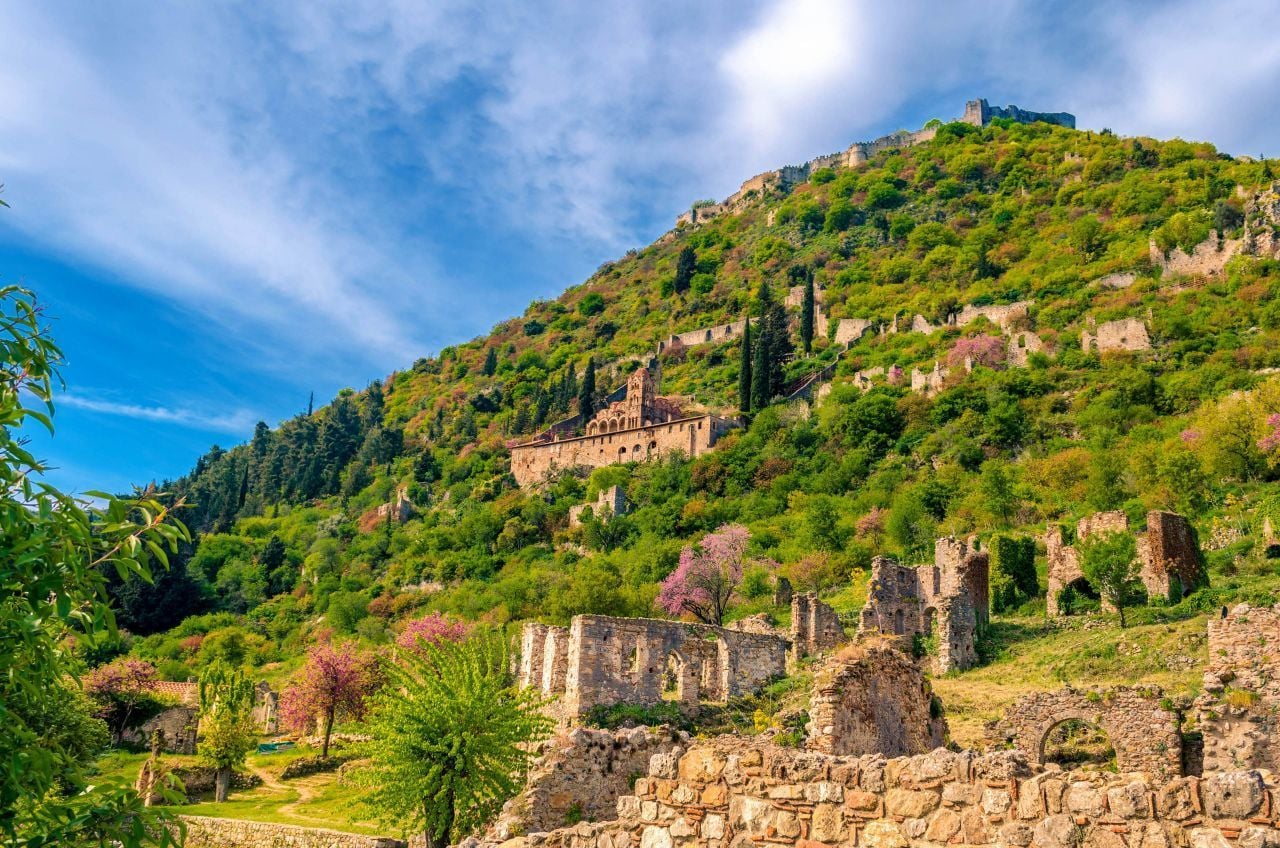
On the slopes of Mount Taygetus, near modern Sparta, Mystras preserves a chapter of Greek history that deserves a place alongside the better-known stories of classical antiquity. This was a major Byzantine centre, its churches, palaces and fortified remains revealing the cultural and political importance of the late Byzantine world.
The experience is unlike that of Ancient Olympia. Here, the landscape rises around the remains of a medieval city, with stone pathways leading between churches, monasteries and buildings that once formed part of a sophisticated urban community. The surviving architecture offers glimpses of Byzantine artistic traditions, while the surrounding hills lend the site a contemplative atmosphere.
Mystras rewards visitors who resist the temptation to rush. Its terrain can be steep, and exploring the archaeological complex involves walking on uneven surfaces. Comfortable footwear, water and a realistic allocation of time are essential. For travellers interested in the relationship between landscape, architecture and history, a visit provides a valuable counterpoint to the Peloponnese’s ancient Greek heritage.
It also reveals an important dimension of the region: the Peloponnese is not a single historical story. Classical sanctuaries, Byzantine centres and Venetian fortifications coexist across the peninsula, each reflecting a different era and cultural influence. Together, they create a destination whose depth becomes more apparent with every journey.
At the Table: The Flavours of the Peloponnese
To understand the Peloponnese, it helps to spend time at its tables. The region’s culinary identity emerges from its agricultural landscapes, local traditions and proximity to the sea. Olive oil, olives, seasonal vegetables, regional cheeses, fresh seafood and locally produced wine are integral to the experience, although individual dishes and ingredients vary from one area to another.
In Messinia, olive-growing heritage is especially prominent. The area’s celebrated Kalamata olives and olive oils provide a connection between the landscape and the food served in local kitchens. In coastal settlements, seafood offers another expression of place, often prepared simply enough for the quality of the ingredients to remain central.
Further inland, the pleasures of dining become more closely connected to village life. A meal might centre on seasonal produce, slow-cooked dishes or recipes passed through generations. In the wine-producing area around Nemea, the Agiorgitiko grape provides an opportunity to explore one of the Peloponnese’s best-known wine traditions.
For the luxury traveller, the most memorable dining experiences are not necessarily the most elaborate. A thoughtfully prepared meal overlooking the water, a guided olive-oil tasting with a knowledgeable local producer, or a wine experience that explains the character of the region can offer a more meaningful connection than a menu detached from its surroundings.
At Costa Navarino, the dining programme also includes contemporary interpretations of Greek cuisine and experiences centred on regional ingredients. The ideal approach is to balance carefully chosen fine dining with smaller local establishments, allowing the destination’s culinary character to emerge through variety rather than formality.
The Art of Choosing Where to Stay
Luxury in the Peloponnese is not expressed through a single style of accommodation. It changes with the landscape, the architecture and the purpose of the journey.
In Nafplio, a beautifully restored historic property places the old town at the centre of the experience. In Monemvasia, a thoughtfully chosen stone residence within the medieval settlement offers an atmosphere that a contemporary resort could not replicate. Across Mani, intimate guesthouses and traditional stone properties complement the rugged surroundings. In Messinia, larger luxury resorts provide a different proposition, with expansive facilities, curated experiences and a more comprehensive approach to hospitality.
The right choice depends on what you want the journey to feel like. Travellers drawn to history and architectural character may prefer smaller properties with a strong sense of place. Those prioritising wellness, beach access and resort dining may find Costa Navarino more suitable. A longer itinerary can combine both, creating a journey that alternates between cultural immersion and restorative comfort.
Rather than selecting accommodation by star rating alone, consider the setting, the quality of the experience, the time needed to reach the places you wish to explore, and whether the property’s character complements the destination. In a region as varied as the Peloponnese, this approach often produces a more rewarding stay.
Exceptional Addresses Across the Peloponnese
The region’s finest stays are not interchangeable. Some place you inside historic towns; others frame the coast as a private retreat, or offer a restorative counterpoint in the mountains. These properties provide a more considered shortlist, selected for their distinct settings and the kind of journey they make possible. Property details, opening dates and facilities can change, so verify them directly before publication or booking.
Kinsterna Hotel — Monemvasia
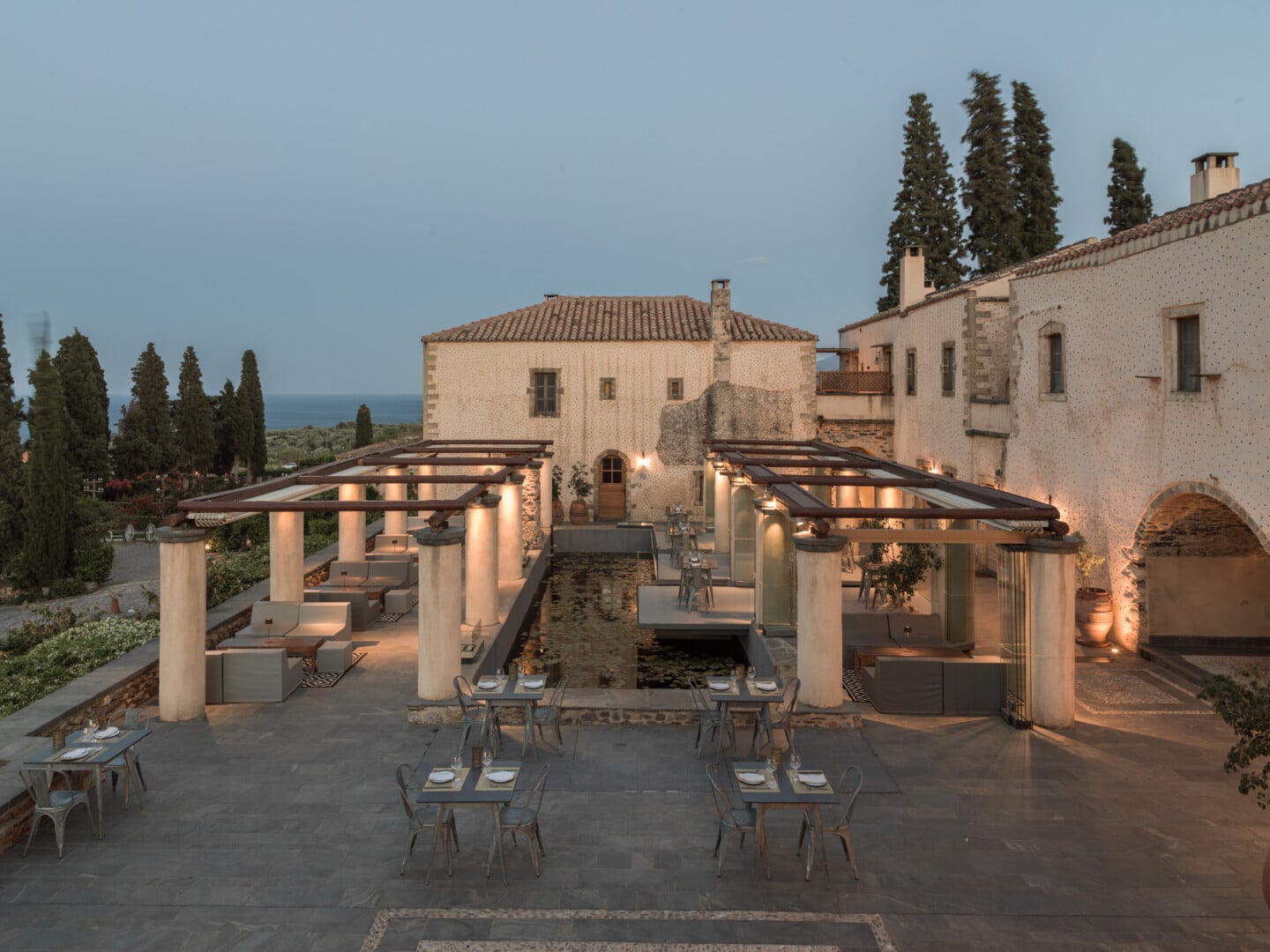
Set within a restored historic estate in the countryside near Monemvasia, Kinsterna offers a different way to experience this corner of the Peloponnese: not only the drama of the medieval rock town, but also the quieter agricultural landscape around it. Its historic architecture and estate setting make it a strong choice for travellers who value a sense of place as much as polished hospitality. It works particularly well for a stay built around Monemvasia, regional food and a slower exploration of the southeastern coast.
Moni Emvasis Luxury Suites — Monemvasia Castle
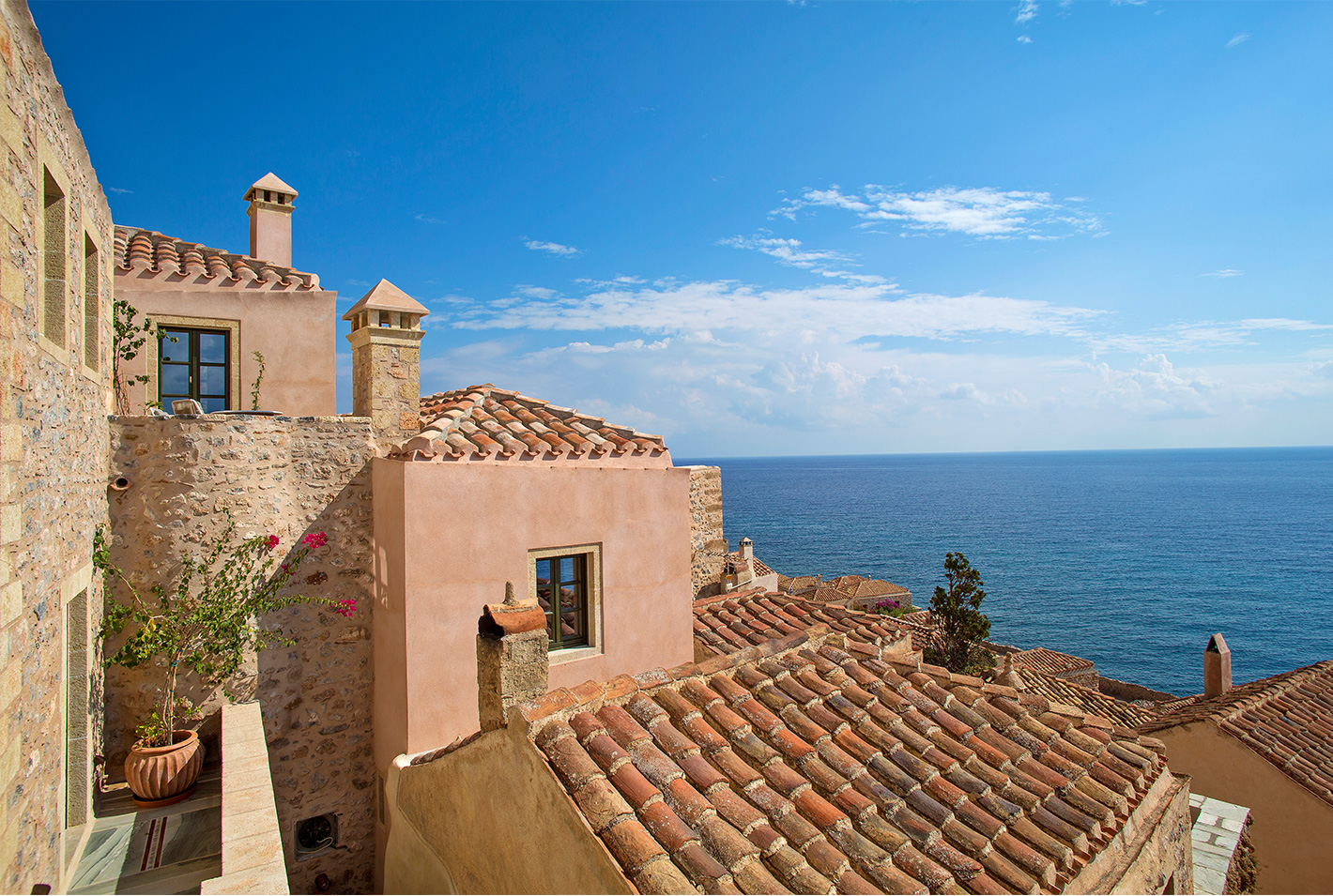
For travellers who want to inhabit the historic settlement itself, Moni Emvasis Luxury Suites offers an intimate option within the Castle of Monemvasia. The appeal is proximity to the medieval lanes, stone architecture and sea-facing atmosphere that define the old town. This is a choice for guests who prefer heritage, intimacy and walking straight into the destination over the breadth of facilities associated with a large resort.
Petra & Fos Boutique Hotel & Spa — Mani
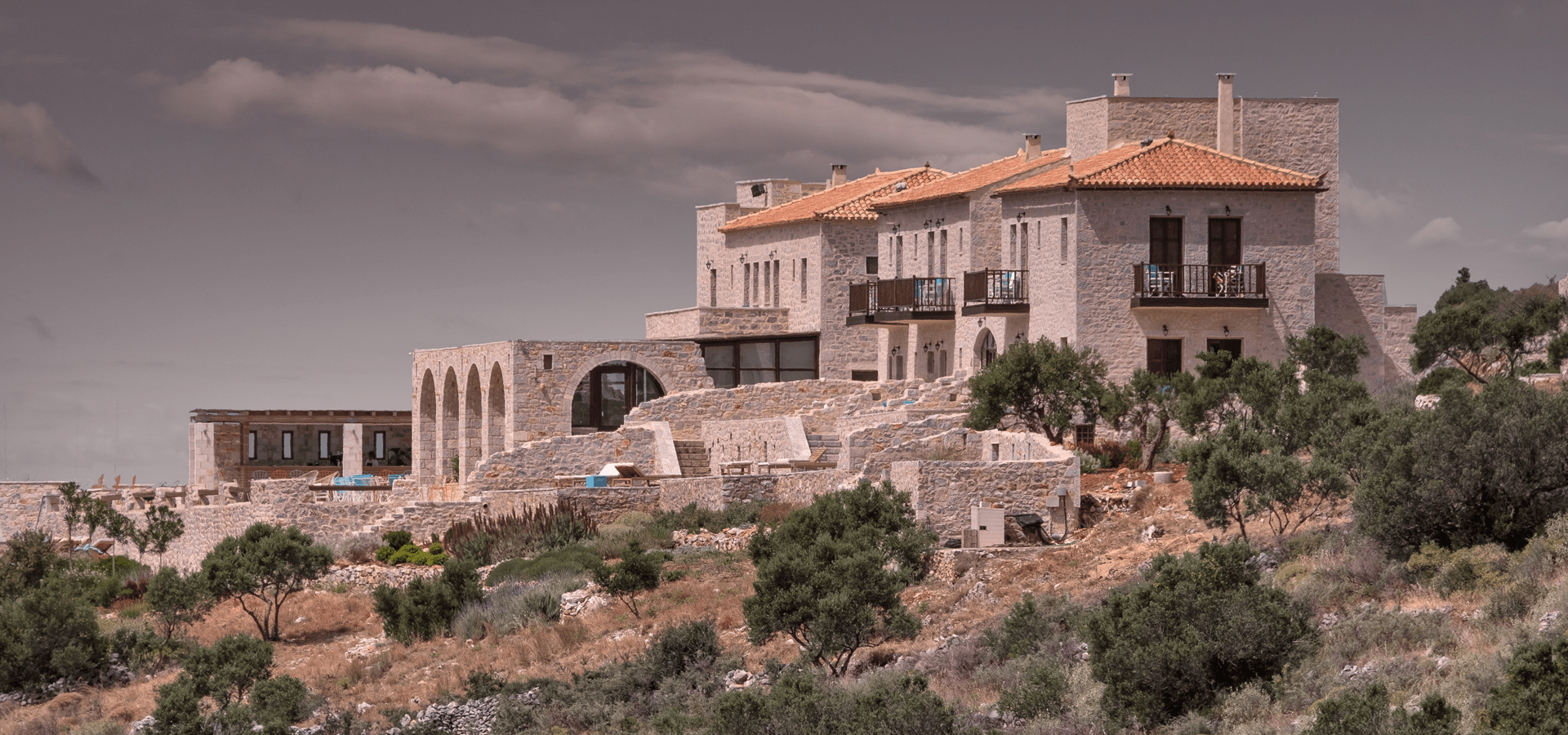
In the wider Itilo area of Mani, Petra & Fos brings together stone architecture, expansive views and a boutique-hotel atmosphere that feels aligned with the region’s rugged character. It is worth considering for travellers who want to explore Mani’s traditional settlements and coastline while returning to a comfortable retreat. Its location is better suited to a road-based itinerary than to travellers relying entirely on public transport.
Mandarin Oriental, Costa Navarino — Messinia
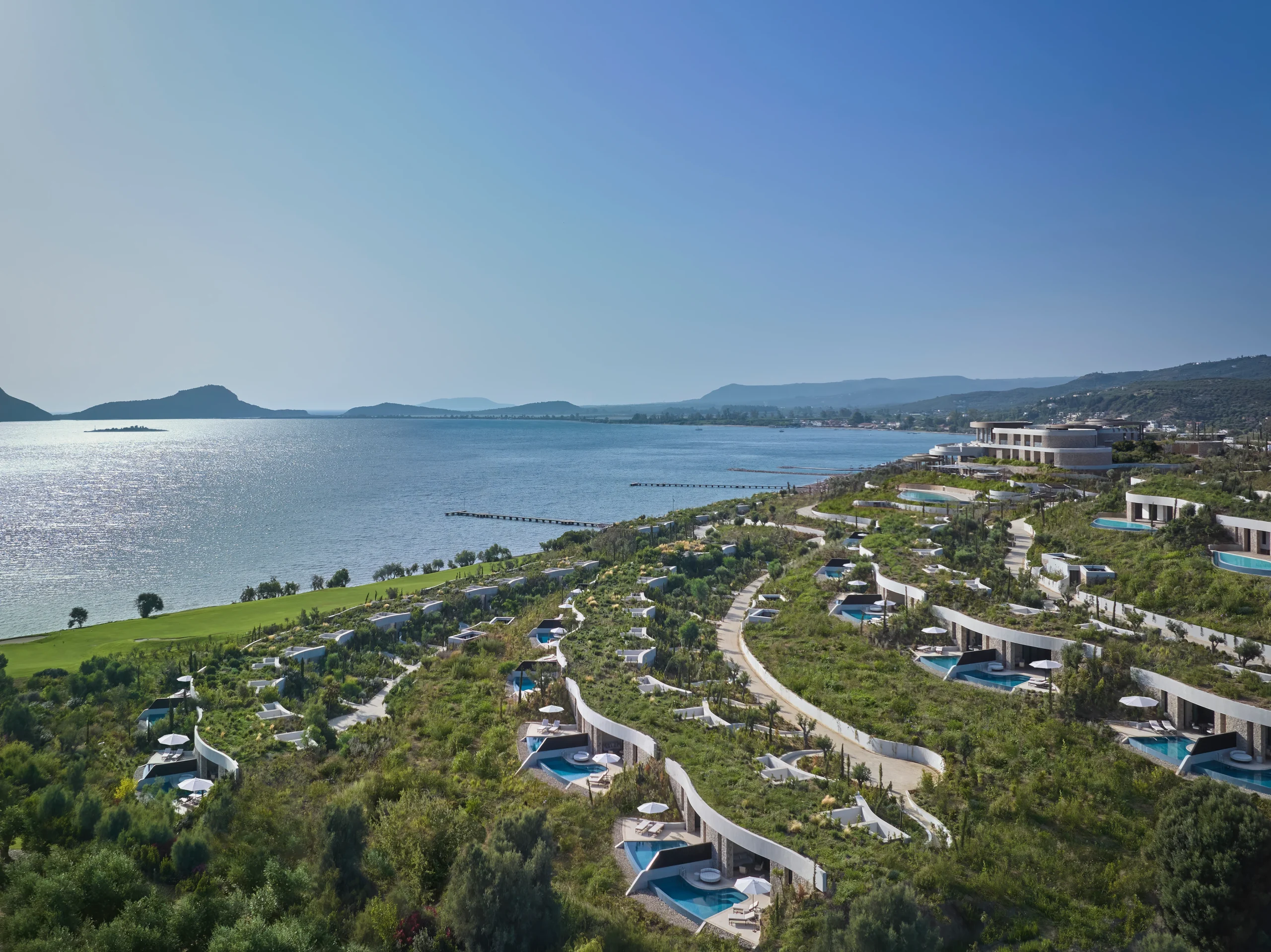
Set within the Costa Navarino destination overlooking Navarino Bay, Mandarin Oriental offers a contemporary expression of luxury shaped around coastal scenery, suites and villas, dining and wellness. It suits travellers who want a high-service resort base while retaining access to Messinia’s cultural sites, olive-growing landscapes and coastline. Confirm the precise inclusions and facilities for the selected room or villa category.
The Romanos, a Luxury Collection Resort — Costa Navarino, Messinia
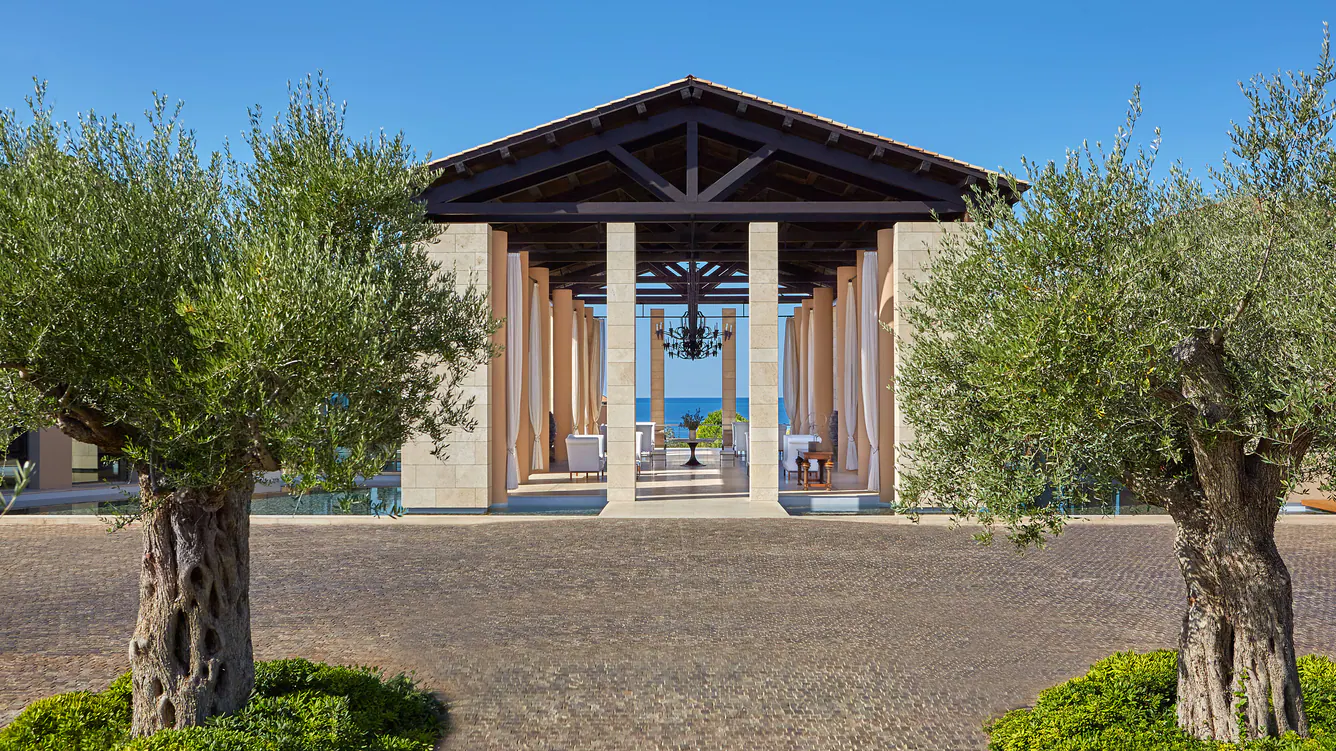
Located in the Navarino Dunes area of Costa Navarino, The Romanos combines upscale resort accommodation with access to the wider destination’s leisure and dining offerings. It can suit couples and families seeking a full-service coastal stay, particularly when the intention is to balance time at the resort with excursions through western Messinia.
The Westin Resort Costa Navarino — Messinia
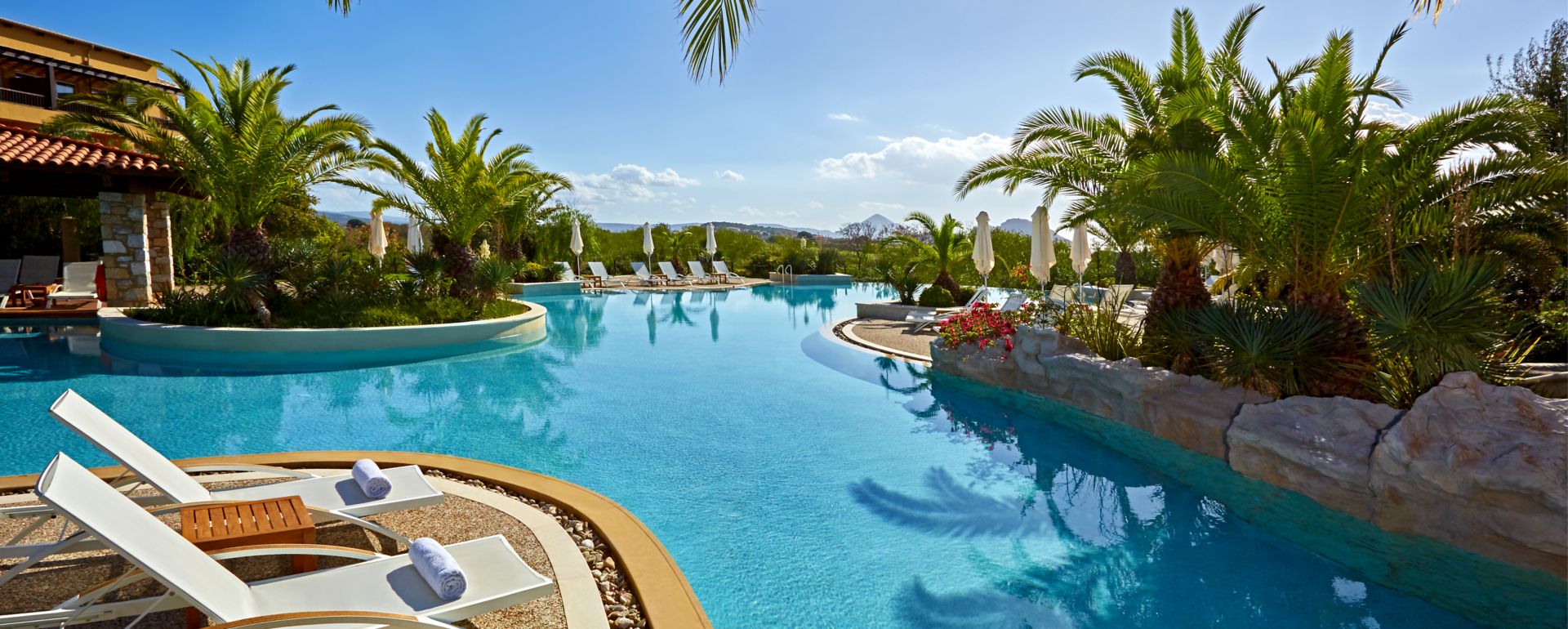
Also situated within Costa Navarino’s Navarino Dunes area, The Westin offers a full-service resort option with a broad leisure proposition. It is worth considering for families and travellers who value on-site activities alongside access to beaches and regional excursions. Check which facilities and experiences operate during the intended travel dates.
When the Peloponnese Reveals Its Finest Character
The Peloponnese can be rewarding across much of the year, but the experience changes considerably with the seasons.
Spring, from April to June, is particularly appealing for archaeological exploration, countryside drives and walking through historic settlements. The landscape is often greener than in the height of summer, and the milder conditions can make extended sightseeing more comfortable.
Summer, from July to August, brings the strongest appeal for beach-focused holidays and coastal resort stays. Days can be very hot, particularly inland and around archaeological sites, so early starts, shaded breaks and a relaxed pace become important. This is also a period when advance planning is prudent for sought-after accommodation.
Autumn, especially September and October, offers an appealing balance between coastal relaxation and cultural discovery. Sea temperatures may remain pleasant in early autumn, while the intensity of the summer heat begins to ease. Exact conditions vary each year, so travellers should check local forecasts before departure.
Winter, from November through March, offers a quieter perspective on towns and historical sites, but it requires more careful planning. Mountain areas can be cold, opening schedules may be reduced, and some seasonal resorts close for part of the winter. Confirm accommodation availability and local transport arrangements before building an itinerary around specific properties.
For a first journey that combines history, coastal scenery and luxury accommodation, late spring and early autumn are strong starting points. The best timing ultimately depends on whether the priority is swimming, cultural exploration, hiking or a resort-led escape.
A Journey Measured in Moments, Not Miles
The Peloponnese is best experienced without attempting to conquer its entire geography in a few days. Distances can look manageable on a map, yet mountain roads, historic detours and the temptation to stop along the coast all add to the journey.
For a first visit, a stay of seven to ten days provides a useful framework for combining several distinct regions without making every day a transfer day. A possible route might begin in Nafplio, continue towards Monemvasia, explore part of Mani, and finish in Messinia for a slower coastal stay. Ancient Olympia or Mystras can be incorporated according to the route and the traveller’s interests. This is a suggested framework rather than a fixed itinerary; driving times and overnight stops should be planned around the chosen accommodation.
A more leisurely journey might spend two nights in Nafplio, two in Monemvasia or the surrounding area, two exploring Mani, and three in Messinia. Travellers especially interested in archaeology could extend the route to include Ancient Olympia or Mystras, while those seeking greater privacy and relaxation might devote additional nights to one coastal retreat.
The key is to avoid treating every stop as an obligation. Leave room for an unexpected village, a longer lunch, a change in the weather or an afternoon when the only worthwhile plan is to remain by the sea.
Arriving in the Peloponnese
Athens is a practical gateway for many international travellers, with onward journeys by road into the peninsula. Nafplio is a useful starting point for the northeastern Peloponnese, while western Messinia can be reached by road from Athens or through Kalamata Airport when suitable services operate.
A rental car is often the most flexible way to explore several regions, particularly for travellers planning to visit smaller settlements, archaeological sites and remote coastal areas. Private transfers can be a more comfortable alternative for selected legs, especially when arriving with luggage or combining a city stay with a luxury resort.
Allow realistic time between overnight stops, verify transport options for your dates, and avoid scheduling long drives immediately after a full day of sightseeing. The Peloponnese rewards an itinerary that leaves room for the journey itself.
The Peloponnese, Long After the Journey Ends
Some destinations are remembered through a single image. The Peloponnese stays with you through a collection of impressions: the first view of Monemvasia rising from the sea, the quiet authority of an ancient sanctuary, the austere beauty of Mani’s stone villages, and the last light settling over the Ionian coast.
Its appeal lies in the way these experiences belong together without becoming interchangeable. History does not compete with nature; it deepens it. Luxury does not need to overwhelm the landscape; at its best, it offers the space and comfort to appreciate it. And the journey does not need to be filled with activity to feel complete.
For travellers who value cultural depth, distinctive accommodation and the freedom to explore at their own pace, the Peloponnese offers a compelling alternative to a more familiar Greek itinerary. It is a region to approach with curiosity, to experience with patience, and to leave with the sense that much remains undiscovered.
Perhaps that is its most enduring luxury: not the promise of seeing everything, but the privilege of finding a place that makes you want to stay a little longer.
Continue Your Journey with Luminara Voyages
The Peloponnese offers one perspective on Greece’s many layers of history, landscape and hospitality. Continue exploring the country through our curated destination features on Santorini, Crete, Corfu and Mykonos—each revealing a different character of the Greek experience.
For travellers drawn to stays where architecture, landscape and considered service come together, explore the Luminara Voyages collection on exceptional luxury accommodation and restorative escapes.
Luminara Voyages — a more considered way to see the world.