
Introduction: An Island in Many Shades of Green
In Corfu, the Ionian Sea arrives in shades of jade, turquoise and deep blue, while olive groves climb the hillsides and Venetian façades lend the old town an almost theatrical elegance. The island feels distinctly different from the sun-bleached Cyclades: greener, more layered, and shaped by centuries of encounters between East and West.
Its character reveals itself slowly. In the narrow kantounia of Corfu Town, laundry hangs between weathered buildings and church bells echo above small squares. Along the coast, cypress trees lean over coves and boats slip into water so clear that pale stone seems suspended beneath the surface. Inland, villages preserve a quieter rhythm, with stone houses, shaded terraces and views across olive-covered hills.
Corfu is not simply a beach destination. It is an island of architecture and landscape, of long lunches and unhurried coastal drives, of historic fortifications and secluded bays. For travellers who appreciate a sense of place as much as a beautiful setting, it offers a compelling blend of culture, nature and understated Mediterranean pleasure.
Corfu Town: Venetian Grandeur and Everyday Life
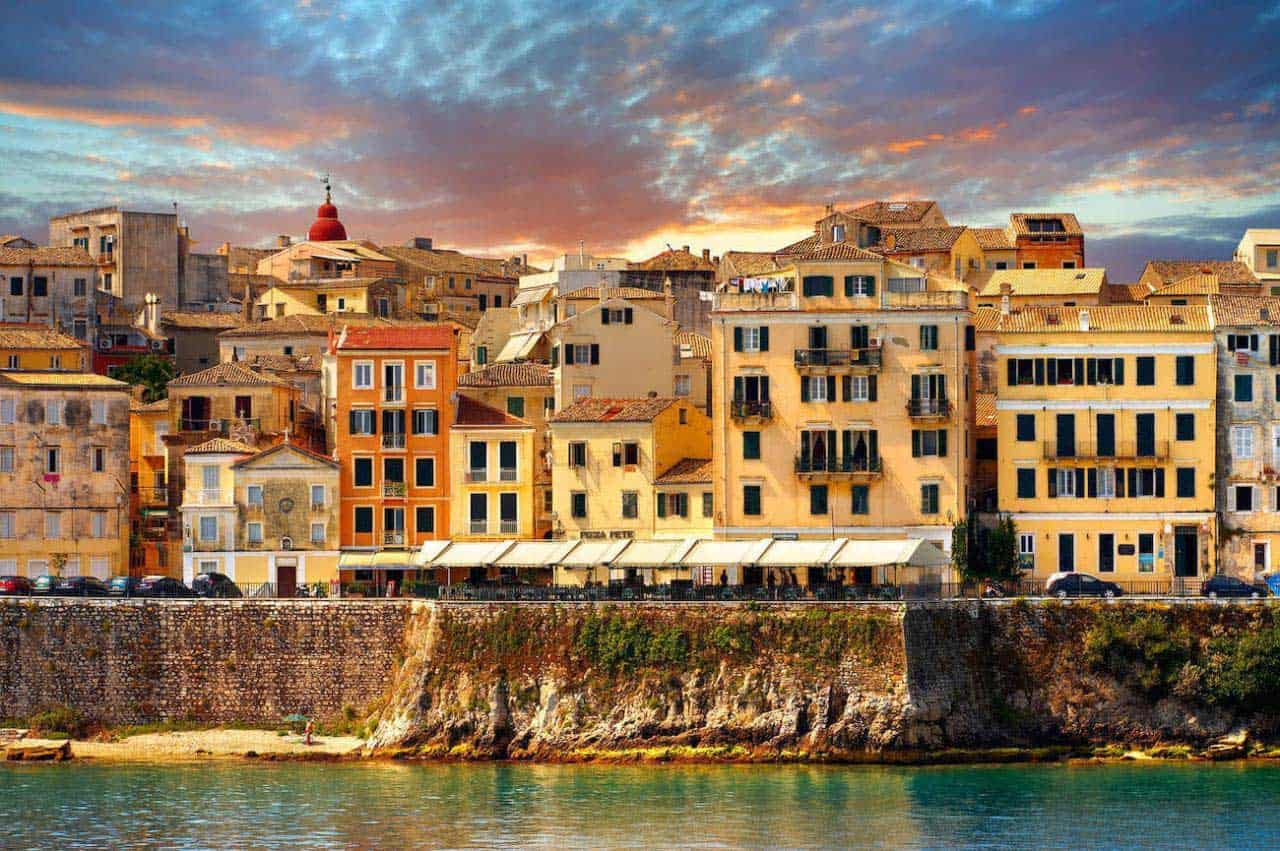
The island’s historic heart is Corfu Town, a UNESCO World Heritage Site whose fortified urban fabric reflects Venetian, French and British influences. Its character is not confined to monuments; it lives in the details—shuttered windows, worn stone thresholds, small workshops and the rhythm of people moving through streets that were never designed for hurried passage.
Begin around the Spianada, the broad open square at the edge of the old town, then follow the arcades and cafés of Liston. The latter recalls the elegance of a European boulevard, while the nearby lanes narrow into the intimate quarter known as Campiello. Here, tall buildings, balconies, carved details and small squares create a richly textured urban landscape.
The Old Fortress rises beside the sea, offering a perspective on the town’s strategic maritime position. Across the historic centre, the New Fortress adds another layer to Corfu’s defensive history. The Palace of St Michael and St George, once associated with British administration of the Ionian Islands, now houses the Museum of Asian Art. The Church of Saint Spyridon, with its distinctive bell tower, remains an important spiritual landmark.
Allow time to wander without a rigid route. Corfu Town rewards observation: a shaded courtyard, a tiny chapel, an elegant doorway or a café table set beneath the arcades may become more memorable than a checklist of sights. Visit the principal monuments during cooler hours, then return to the lanes in the late afternoon when the light softens across the façades.
Paleokastritsa: Coves Beneath the Cliffs
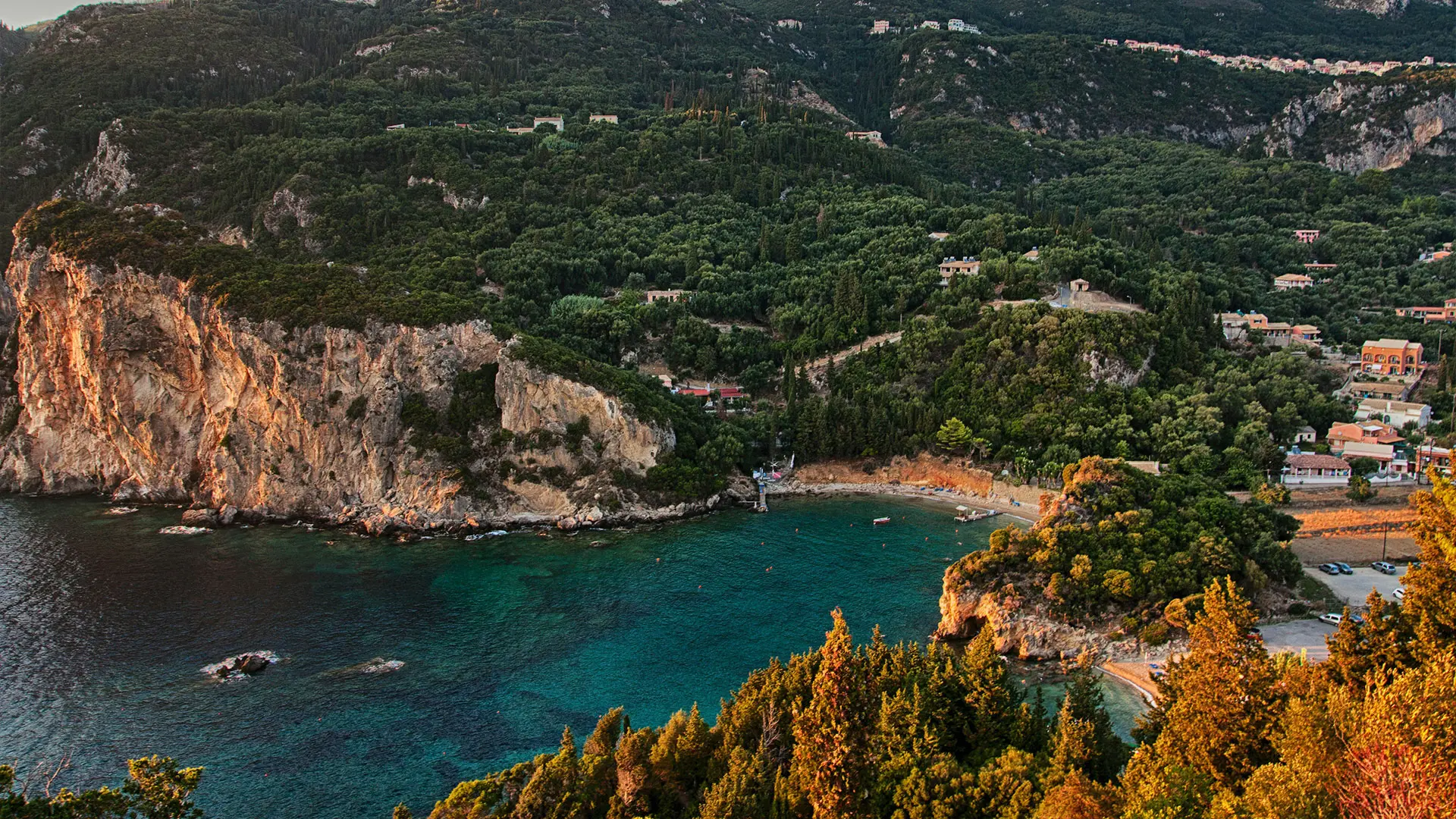
On Corfu’s western coast, Paleokastritsa gathers several coves beneath steep, green headlands. The sea shifts between emerald and blue, while rocky formations and small grottoes give the coastline a dramatic, almost sculptural quality. It is one of the island’s most recognisable landscapes, but its appeal is best experienced from the water as well as from the shore.
Small boats can explore nearby inlets and secluded stretches of coast, including coves that are difficult or impossible to reach by road. Conditions vary with weather and sea state, so choose a reputable local operator and confirm the route before setting out. On land, the Monastery of the Virgin Mary occupies a headland above the bay; visitors should dress respectfully and check local visiting guidance.
For a wider view, continue to Lakones, a hillside village known for its expansive outlook over the coastline. Nearby Angelokastro, a Byzantine-era fortress perched high above the sea, adds a historical counterpoint to the landscape. The climb and access conditions can vary, so check current opening information before visiting.
The Northern Coast: Villages, Harbours and Open Horizons
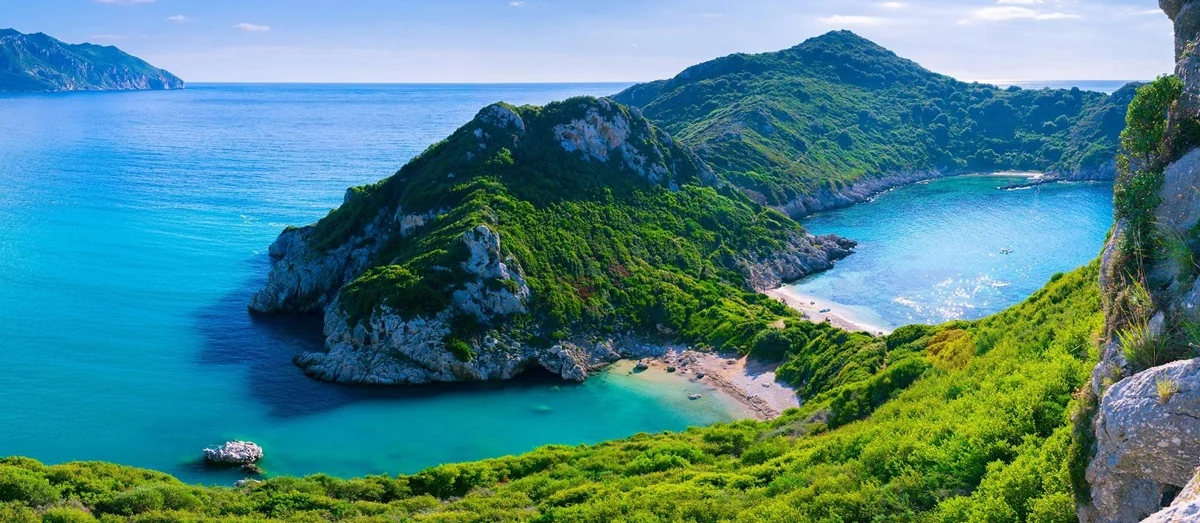
North of Corfu Town, the coastline becomes a sequence of small harbours, wooded slopes and villages with a more relaxed pace. Kassiopi, set around a working harbour and the remains of a castle, makes a rewarding base for exploring the northeast. Cafés and tavernas look towards the water, while nearby coves offer opportunities for swimming when conditions are suitable.
Further west, the northern coastline opens into broad beaches and dramatic rock formations. Sidari is known for its sculpted sandstone coast, including the area often called the Canal d’Amour. The formations are sensitive to erosion and sea conditions; admire them carefully and follow local safety advice rather than climbing unstable rock.
The northeast is particularly appealing for scenic drives and boat outings, with views across the Ionian Sea towards the Albanian coast. Instead of rushing between beaches, choose a few stops and leave room for a long lunch, an unplanned swim or a quiet hour overlooking the water.
The Interior: Olive Groves and Traditional Corfu
Corfu’s interior offers a different kind of discovery. Ancient olive trees, cypress-lined roads and villages set among green hills give the island much of its distinctive character. The landscape invites slower exploration, especially in spring and early autumn when the countryside is comfortable for walking and driving.
Old Perithia, a historic mountain village beneath Mount Pantokrator, offers stone architecture and a glimpse of a different Corfu, away from the busiest coastal resorts. Its atmosphere changes with the season and the number of visitors, so approach it as a living place rather than a set piece. Nearby mountain roads can be narrow and winding; allow extra time and avoid rushing after dark.
For panoramic views, the routes towards Mount Pantokrator reveal the island’s patchwork of olive groves, villages and coastline. On clear days, the outlook stretches far across the Ionian Sea. The most rewarding approach is to travel slowly, pause at viewpoints where it is safe to stop, and make time for local food in a village setting.
Experiences That Make Corfu Feel Personal
Explore the coastline by boat
A private or small-group boat outing can reveal sea caves, sheltered coves and stretches of shoreline that are less accessible from land. Choose the scale of the experience to suit the day: a leisurely coastal circuit, a swim-focused outing or a longer excursion with time for lunch ashore. Confirm what is included, the expected duration, weather cancellation terms and whether the vessel has appropriate safety equipment.
Walk the old town with an eye for detail
Rather than treating Corfu Town as a brief stop, explore it on foot with time for its museums, fortifications, churches and side streets. A knowledgeable local guide can add context to the island’s Venetian, French and British layers, while independent wandering leaves space for spontaneous discoveries.
Make time for the island’s flavours
Corfiot cooking reflects the island’s history and local produce. Look for pastitsada, a slow-cooked meat dish commonly served with pasta; sofrito, traditionally prepared with veal in a white-wine and garlic sauce; and bourdeto, a fish preparation known for its peppery sauce. Menus and recipes vary between kitchens, and seafood availability depends on season and supply.
Corfu is also associated with kumquat, introduced to the island in the nineteenth century and now used in liqueurs, preserves and sweets. Visit a local producer or specialist shop to understand how the fruit has become part of the island’s culinary identity. For a more memorable meal, seek out places that explain their ingredients and traditions rather than choosing solely by a sea view.
Find a quieter beach hour
Not every coastal moment needs an itinerary. A late-afternoon swim, a shaded table above a small bay or an early walk before the beach fills can offer a more personal sense of Corfu. Beach facilities, access and sea conditions differ considerably, so check locally—especially when travelling with children or planning to visit less developed coves.
The Island’s Finest Addresses
Corfu’s accommodation landscape ranges from grand seafront resorts to intimate suites and restored properties surrounded by olive groves. The right choice depends on the kind of island experience you want: proximity to historic Corfu Town, a private-feeling coastal setting, or a resort stay where dining and wellness can be part of the day.
Domes Miramare, a Luxury Collection Resort
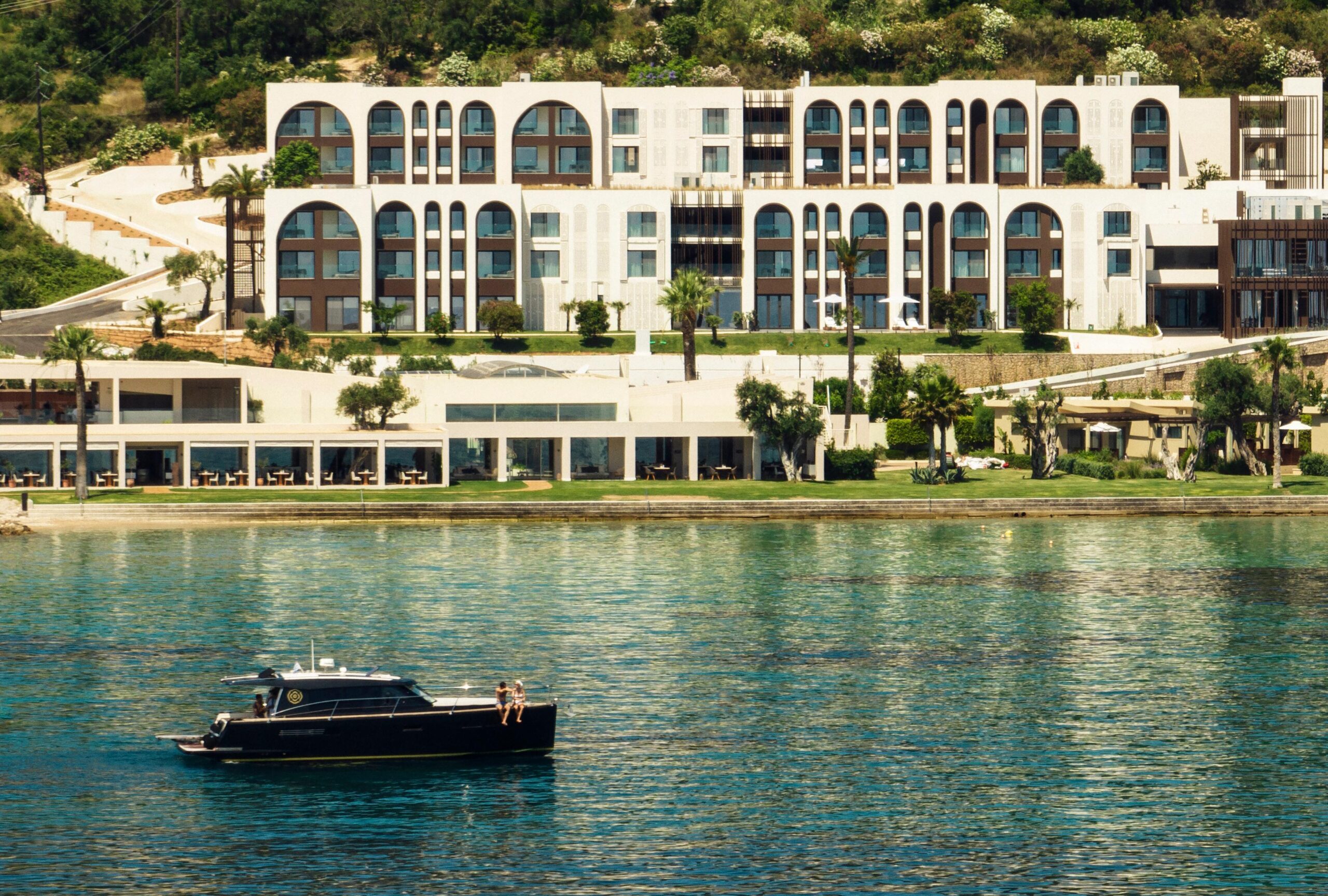
Set on the eastern coast among mature olive trees, Domes Miramare is an adults-only seafront resort associated with a distinctive mid-century heritage. Its atmosphere pairs contemporary comfort with a sense of aristocratic island history. It may suit couples seeking a calm resort base with dining, spa experiences and access to the sea. Check the property’s current seasonal opening dates and available facilities before planning a stay.
Corfu Imperial, a Grecotel Resort to Live
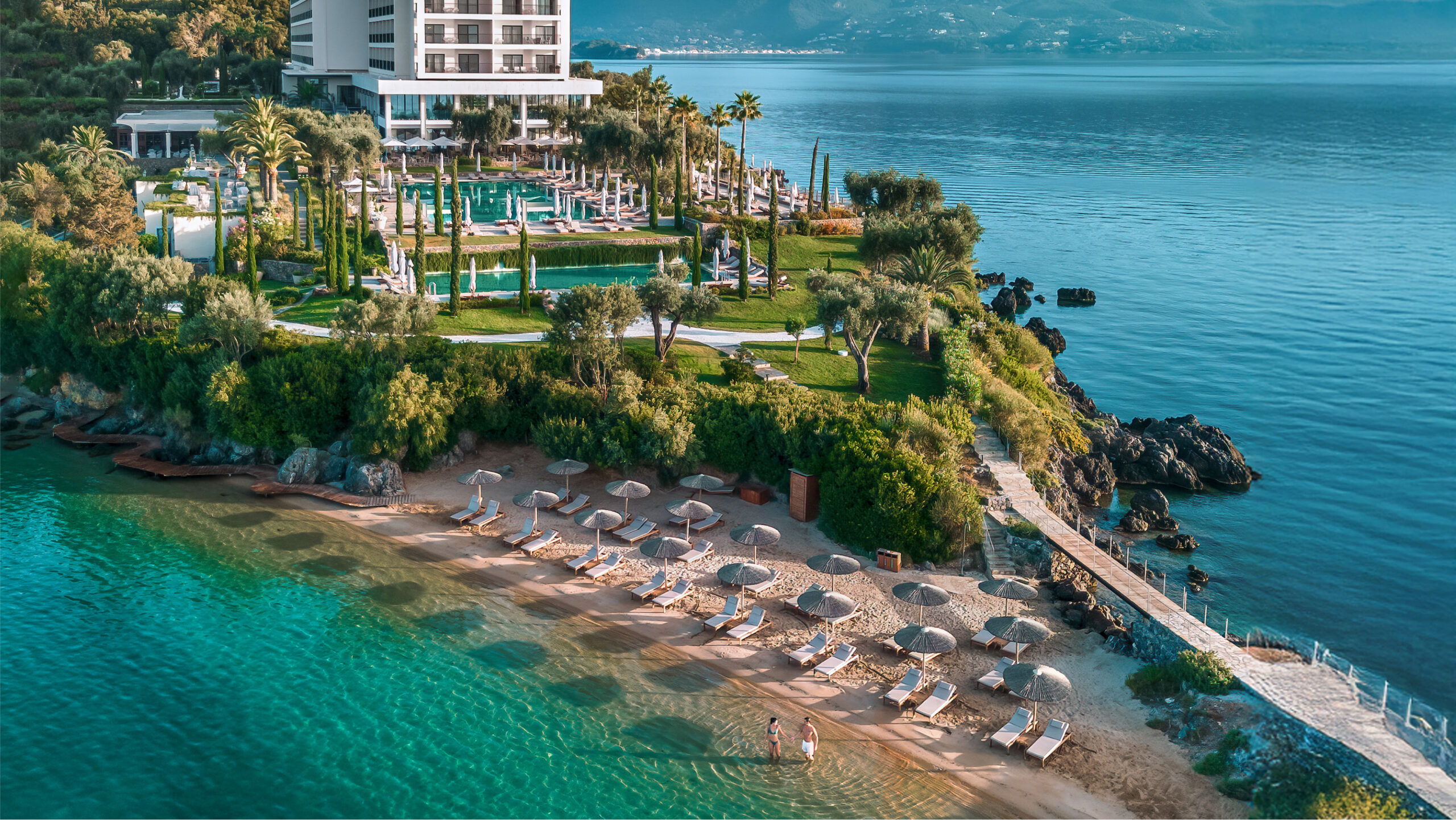
Located on the Kommeno Peninsula, Corfu Imperial occupies a scenic coastal setting with gardens, coves and views across the Ionian Sea. Its range of accommodation and resort facilities makes it a consideration for travellers who want a self-contained luxury stay while remaining within reach of Corfu Town and nearby coastal villages. Confirm room categories, dining arrangements and any seasonal services directly with the property.
Angsana Corfu Resort & Spa
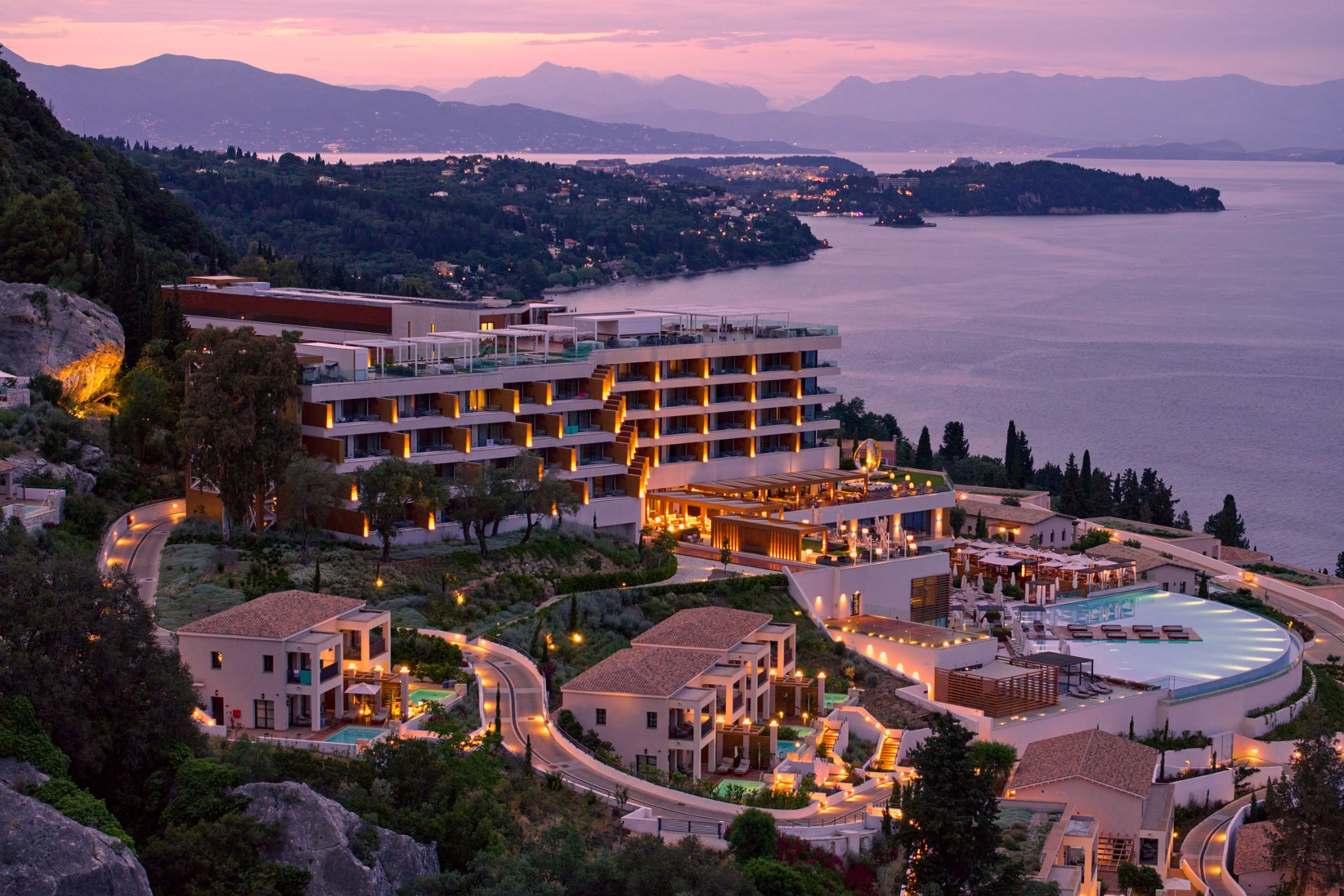
Angsana Corfu combines a hillside setting with views across the Ionian coastline and a resort experience centred on rooms, suites, villas, dining and wellness. Its elevated position can appeal to travellers who value expansive sea views and a spa-led stay. As with any resort, verify current restaurant schedules, transfer options and included services for the intended dates.
The Olivar Suites
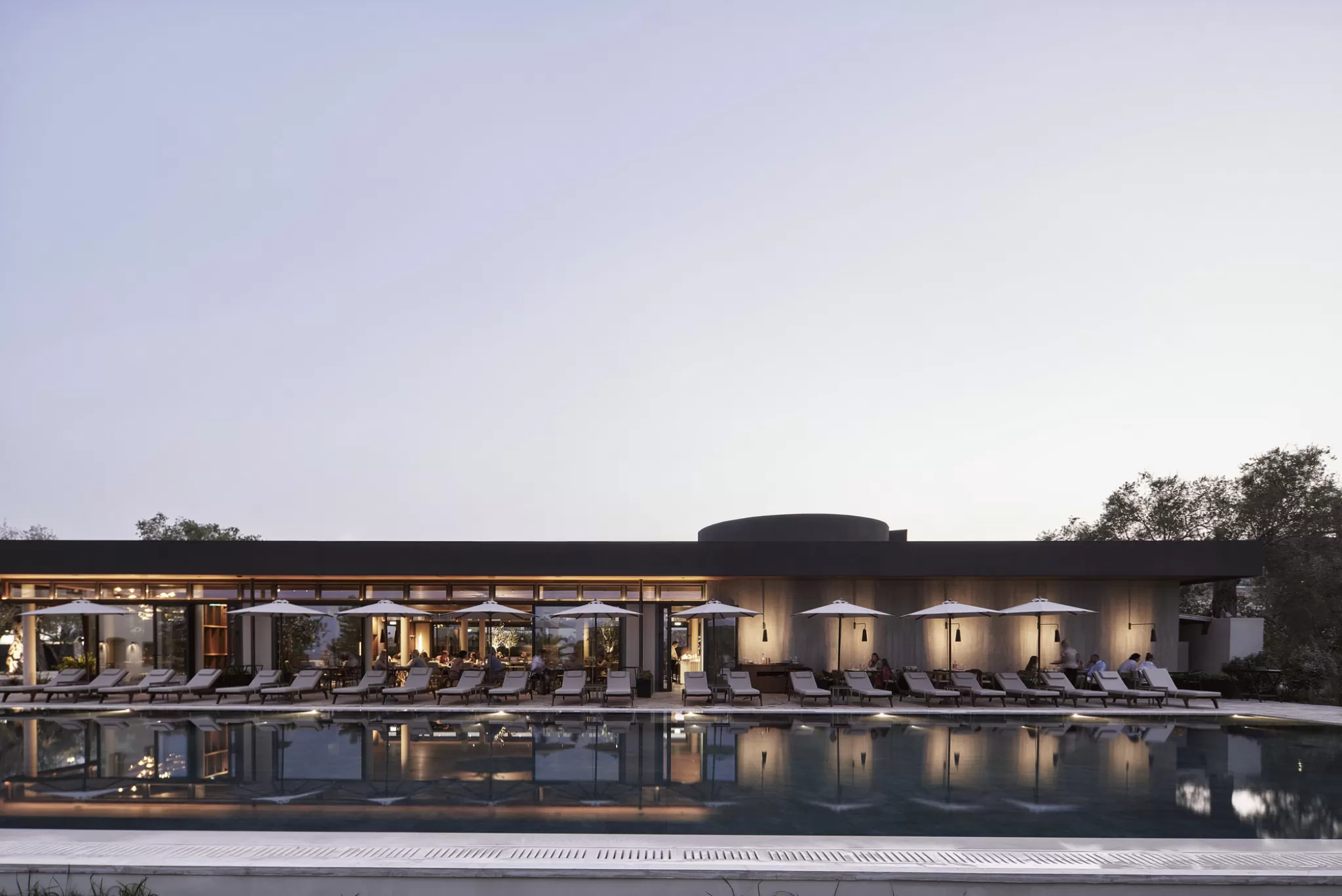
In the southeast of the island, The Olivar Suites offers a more intimate design-led atmosphere within a historic olive-grove setting. The property’s architecture and landscape-led character may appeal to travellers who prefer a quieter base and a sense of privacy over a large resort environment. Check the current room configuration, services and seasonal availability before booking.
These properties are editorial suggestions, not paid endorsements. Facilities, opening dates, access, room categories and rate inclusions can change; confirm all details directly with the hotel before publication or travel.
Choosing the Right Base
Corfu Town works well for travellers who prioritise architecture, museums, restaurants and evening walks. It is also a practical base for visitors who want to explore the island in sections, though beaches and western-coast landscapes require travel time.
The northeast suits scenic coastal exploration, small harbours and boat trips, while Paleokastritsa is a natural choice for dramatic coves and western-coast views. The southeast and Kommeno area offer resort-focused stays, and the island’s interior is best explored with a car or carefully planned local transport.
A rental car provides flexibility for villages and viewpoints, but driving times can be longer than distances suggest because roads are winding and narrow in places. In peak summer, parking near popular coastal sites can be limited. For boat days, check departure points and weather conditions in advance.
When to Visit Corfu
Late spring, especially May and June, brings lush landscapes, generally warm days and a lively but often less intense atmosphere than the height of summer. It is a particularly appealing period for walking, village visits and exploring the old town before midday heat builds.
July and August are the busiest months, with hotter weather, fuller beaches and greater demand for accommodation and boat excursions. This period can suit travellers who want a classic summer-island rhythm, provided they reserve key experiences and stays early.
September and early October can offer warm sea temperatures and a gentler pace, although services may begin to reduce later in the season and weather becomes less predictable. Winter is quieter and can be atmospheric for history and local life, but many seasonal hotels, boat services and beach businesses close. Confirm opening schedules for the exact dates of travel.
A Four-Day Corfu Itinerary
Day One — The Historic Heart
Spend the day in Corfu Town. Explore the Spianada, Liston, Campiello and one of the fortresses, then visit the Museum of Asian Art or another museum that matches your interests. Reserve the evening for a leisurely meal and a second walk through the old town after the light softens.
Day Two — Paleokastritsa and the Western Coast
Head west to Paleokastritsa for a coastal boat outing or time by the coves. Visit the monastery respectfully, then continue to Lakones for the views if road and weather conditions allow. Return without rushing; the coastline is best enjoyed with breathing room.
Day Three — Northern Harbours and Villages
Explore Kassiopi and the northeast coast, stopping at viewpoints and smaller bays along the way. Alternatively, dedicate the day to the northern coast and its distinctive rock formations. Choose fewer stops if you want time for swimming and a long lunch.
Day Four — Inland Corfu and a Slow Farewell
Travel inland through olive groves and traditional villages, with Old Perithia or a route towards Mount Pantokrator as the focus. Return to the coast for a final swim or enjoy a relaxed dinner featuring Corfiot specialities. Adjust the route to your accommodation and driving comfort.
Before You Go
Getting there: Corfu has an international airport with routes that vary by season, as well as ferry connections. Check current flight and ferry schedules for your dates, and allow time for onward transfers.
Getting around: A car is useful for remote villages and beaches, while buses and taxis can cover some popular routes. Verify timetables and service frequency locally, particularly outside the main summer season.
What to pack: Comfortable walking shoes for cobbled streets and historic sites, sun protection, a light layer for breezy evenings, and suitable footwear for rocky coves. For monastery visits, dress respectfully.
Reservations: Book sought-after hotels, restaurants and private boat outings ahead during peak summer. Always confirm cancellation terms and weather contingencies for sea-based activities.
Responsible travel: Respect protected landscapes and historic sites, avoid climbing unstable coastal rock, take waste with you from less-developed beaches, and support local businesses that preserve the island’s character.
Frequently Asked Questions
Is Corfu a good choice for a luxury holiday?
Yes. Corfu offers historic townhouses, design-led suites, seafront resorts, private-villa options and distinctive dining, alongside a rich cultural landscape. The best fit depends on whether you prefer a town-based stay, a quiet coastal retreat or a full-service resort.
How many days should you spend in Corfu?
Four to six days allows time for Corfu Town, at least one major coastal area, an inland excursion and relaxed meals. A longer stay is worthwhile if you want to explore several coasts without moving too quickly.
Do you need a car in Corfu?
Not necessarily if you stay mainly in Corfu Town or a resort with organised transfers. A car offers greater flexibility for villages, viewpoints and beaches, but narrow roads and seasonal parking should be factored into plans.
What is Corfu known for?
Corfu is known for its UNESCO-listed Old Town, Venetian-influenced architecture, green landscapes, olive groves, beaches and coves, and distinctive Corfiot cuisine. Its cultural history gives it a different character from many other Greek islands.
Is Corfu suitable beyond summer?
Spring and early autumn are attractive for walking, sightseeing and a quieter pace. However, many beach services and seasonal hotels operate on limited schedules outside the main season, so check availability before travelling.
Continue Your Journey Through Greece
Discover more of Greece through our Travel Journals on Athens, Santorini, Crete and Rhodes. From ancient streets and volcanic horizons to rugged coastlines and island traditions, each destination reveals a different expression of the Greek world.
Internal linking note: Add contextual links to the published Athens, Santorini, Crete and Rhodes Travel Journals. Where relevant, link to the Greece destination collection and future luxury-stay features. Keep this section immediately before “The Luminara Perspective.”
The Luminara Perspective
Corfu’s appeal lies in the way its many influences settle into a singular atmosphere: Venetian façades beside lively cafés, olive groves behind the coast, and small coves where the sea seems to hold the day still. It invites a style of travel that leaves room for both discovery and pause.
Come for the emerald water and historic streets; stay for the details that reveal themselves only when you slow down. In Corfu, the most memorable luxury may be a beautiful room, a long table, a quiet boat ride—or simply the feeling of having found an island with a character entirely its own.

