A city of timbered houses, cathedral shadows and the quiet poetry of the canals
A City Written in Two Cultural Hands
Morning arrives softly in Strasbourg. Along the Ill, the first light settles on water-darkened timber, pale façades and the steep roofs of houses that seem to lean towards the canals to exchange a confidence. A bridge opens onto a narrow lane; a bakery releases the warm scent of butter and pastry; beyond the rooftops, the cathedral rises with the improbable delicacy of stone lace. The city is awake, yet it has not surrendered its intimacy.
Strasbourg is not simply a picturesque corner of eastern France. Its character has been shaped by the meeting of French and German histories, by centuries of trade along the Rhine and by an Alsatian culture still legible in its architecture, food and rituals of hospitality. The result is a place with a personality all its own: French in its pleasure in the table and the art of the city, Germanic in the sturdy geometry of its old houses, and unmistakably Alsatian in the way these influences have become inseparable.
For the traveller, its luxury is rarely loud. It lies in crossing a quiet canal at dusk, discovering a courtyard behind an unassuming doorway, lingering over a seasonal meal or returning to a beautifully considered hotel after an afternoon spent on foot. Strasbourg rewards attention rather than haste. Its beauty is immediate; its deeper character is revealed one street, one flavour and one conversation at a time.
Grande Île: The Historic Heart
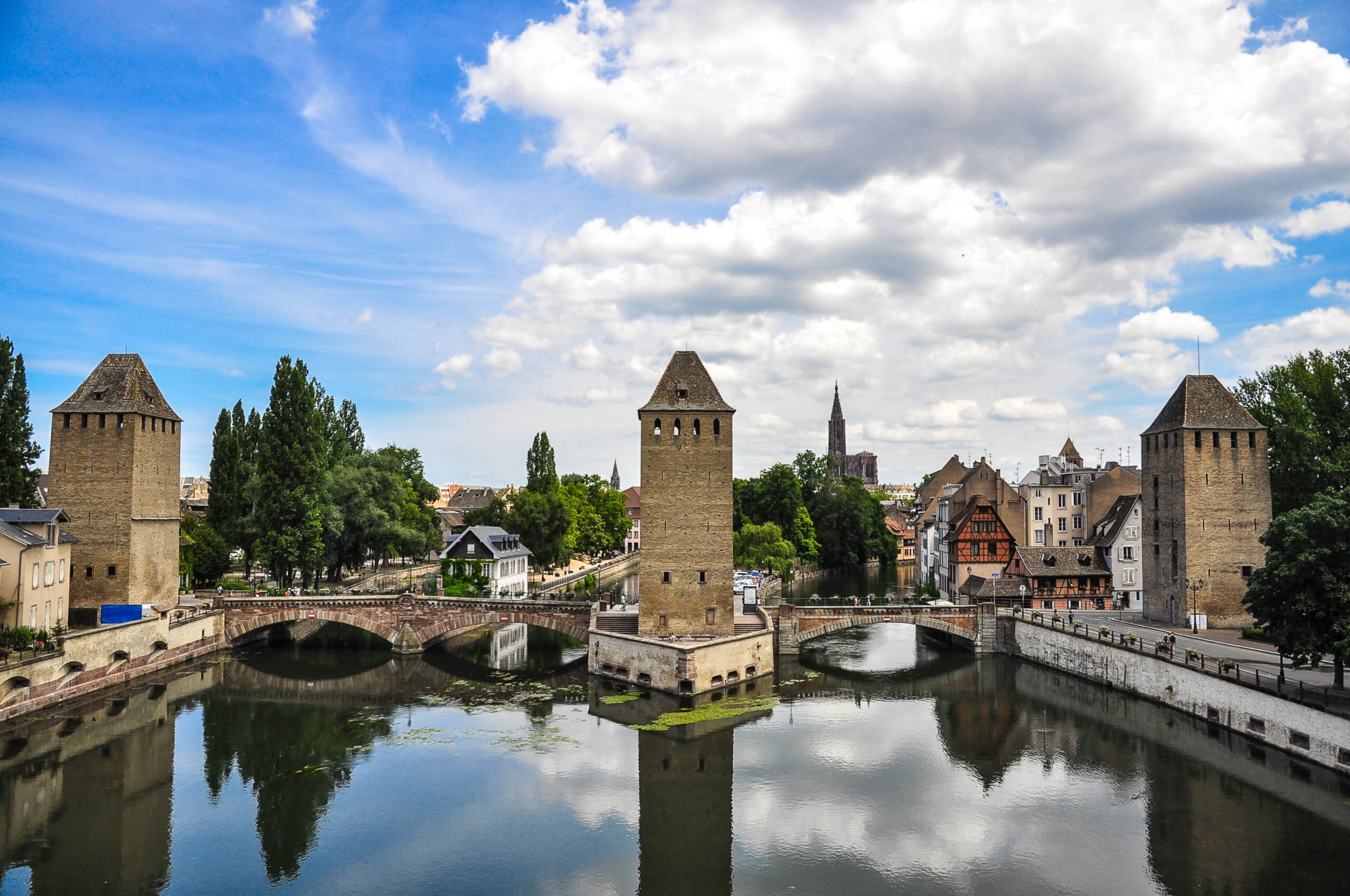
Strasbourg’s historic centre, Grande Île, is an island embraced by the branches of the Ill and recognised for its exceptional architectural heritage. The best way to encounter it is to walk without trying to conquer every landmark in a single circuit. Streets change scale from broad civic avenues to intimate lanes; ornate façades give way to modest shopfronts; small squares appear just when the city seems to be drawing you onwards.
Place Kléber provides a natural point of orientation, while nearby streets lead towards elegant shops, patisseries and cafés. Look upward as often as you look ahead: carved details, painted façades and steep rooflines lend the centre a layered visual rhythm. In the early morning, before the busiest hours, the historic streets feel almost privately held. Later, terraces and shop windows add a lively contemporary pulse to the medieval framework.
Grande Île is not a museum set apart from daily life. It is where Strasbourg works, shops, meets and eats. That continuity is part of its appeal: the heritage is not merely preserved for visitors, but remains woven into the ordinary patterns of the city.
Petite France: Canals, Timber and Reflections
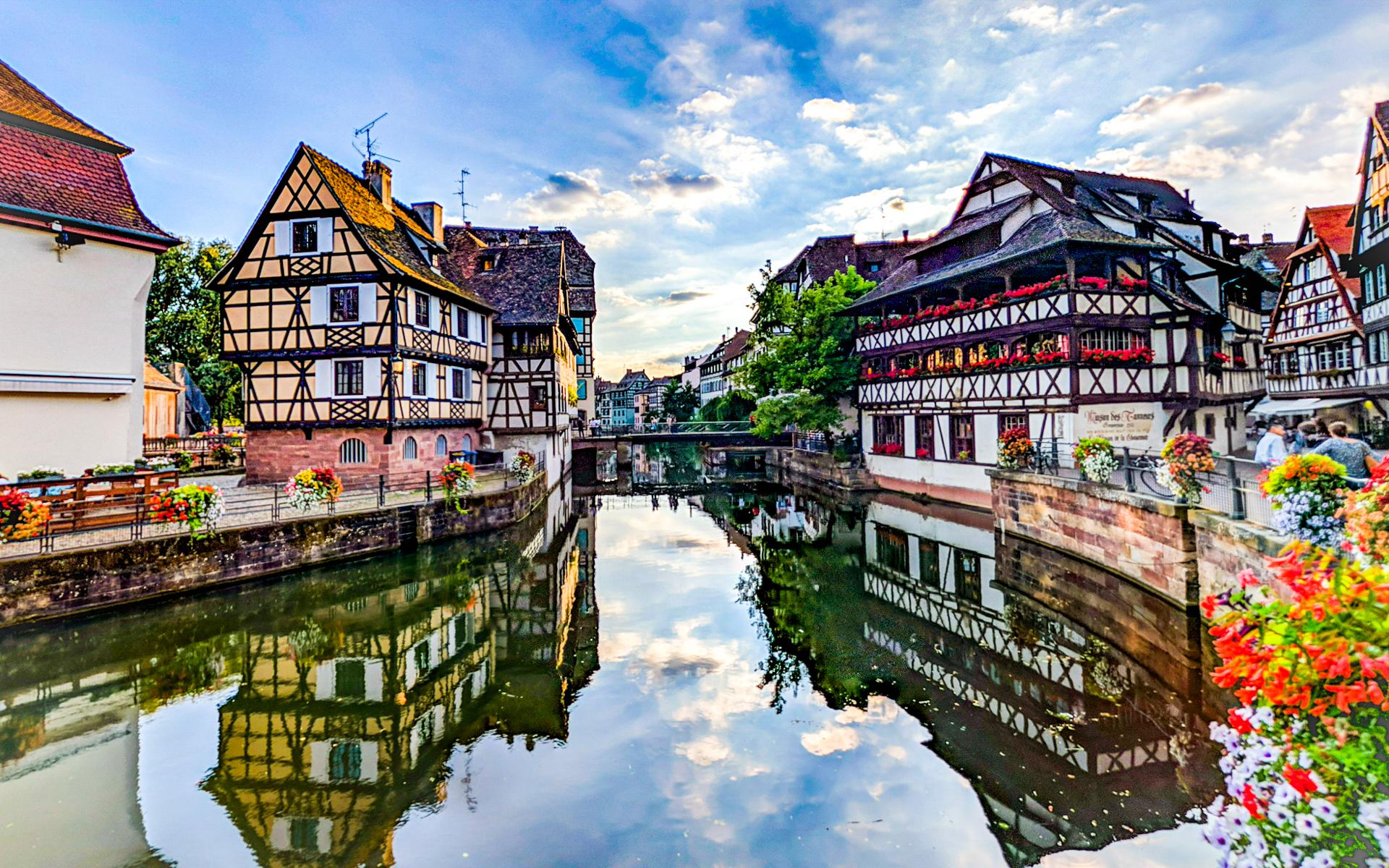
Petite France is the Strasbourg of the imagination, though its charm is more substantial than a postcard. Once associated with millers, tanners and river trades, the quarter preserves a remarkable ensemble of half-timbered houses, narrow streets and waterways. Their dark beams and pale plaster seem especially vivid beside the water, where every bend offers a new arrangement of roof, bridge and reflection.
Come early, when the lanes are quieter and the canal mirrors the façades without interruption. Return near sunset, when warm light catches the timber and windows begin to glow. The covered bridges and Vauban Dam offer different perspectives on the old city: from one, rooftops and waterways unfold in a close architectural tapestry; from the other, the view opens towards the towers and historic skyline.
Petite France can be busy at the height of the day, but a little patience changes the experience. Step away from the most photographed bridges, follow smaller lanes and notice the details: a carved sign, a flower-filled window, the sound of water beneath a footbridge. The quarter becomes most memorable when experienced as a living neighbourhood rather than a sequence of viewpoints.
Strasbourg Cathedral: A Monument of Light and Stone
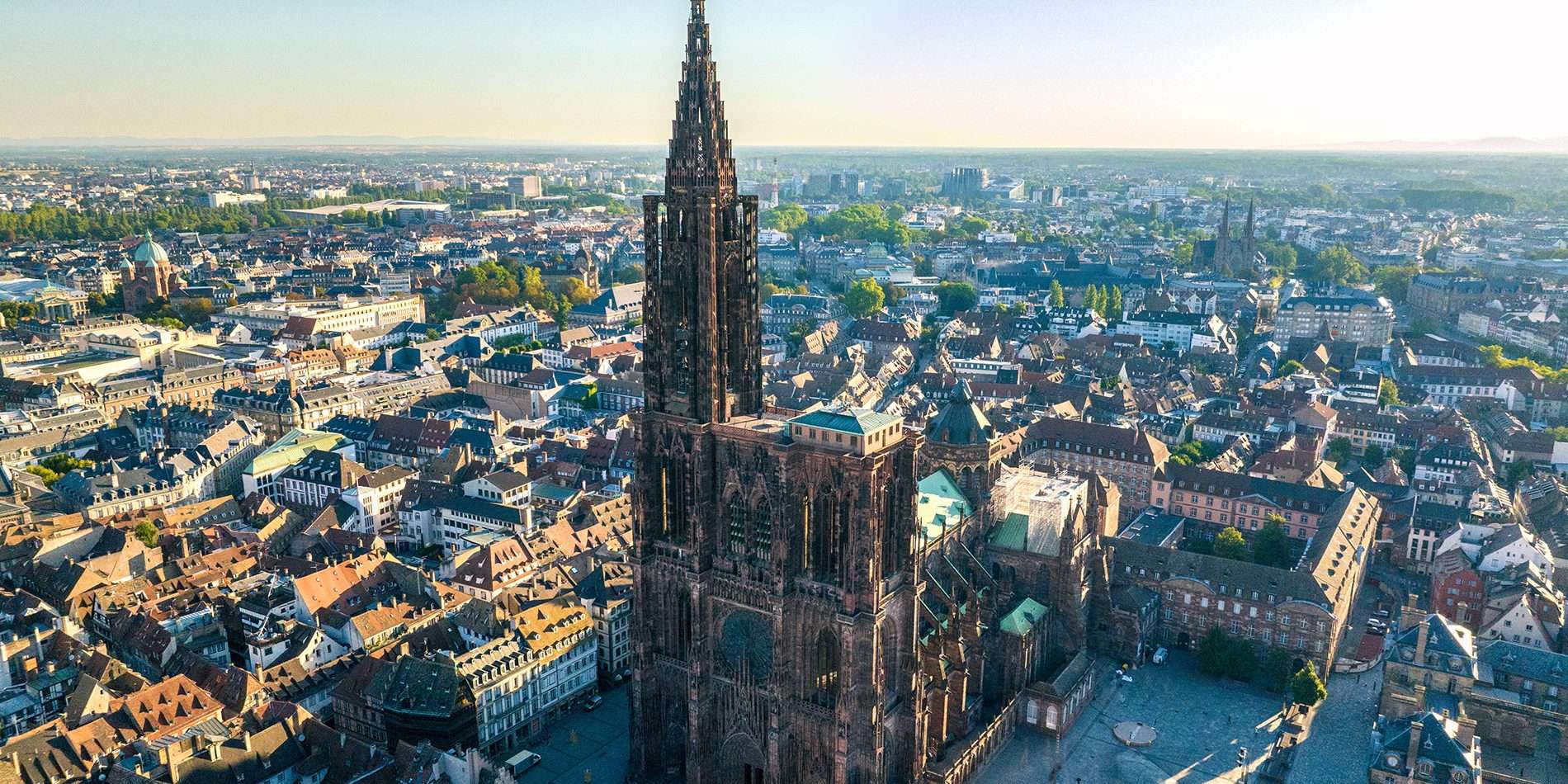
The Cathédrale Notre-Dame de Strasbourg dominates the city with a presence that is both monumental and astonishingly intricate. Its pinkish sandstone shifts in colour with the weather and the hour, while the single spire gives the skyline a distinctive asymmetry. From close range, the western façade is a field of portals, sculpted figures and fine tracery; from a distance, it rises above the surrounding roofs like a landmark carefully drawn against the sky.
Allow time to experience the cathedral slowly. The interior offers a different register of atmosphere, with the scale of the nave, stained glass and celebrated astronomical clock inviting a quieter kind of attention. If access and conditions permit, climbing to the viewing platform rewards the effort with a broad panorama across the rooftops and, on clear days, towards the surrounding Alsatian landscape.
The square outside is worth revisiting at different times. In the morning, the stone can appear cool and rose-grey; later, the façade warms under the sun; after dark, illumination gives the sculptural details a more theatrical presence. Strasbourg’s great monument is not a single moment to tick off, but a changing companion to the day.
The Neustadt: Imperial Grandeur and Broad Boulevards
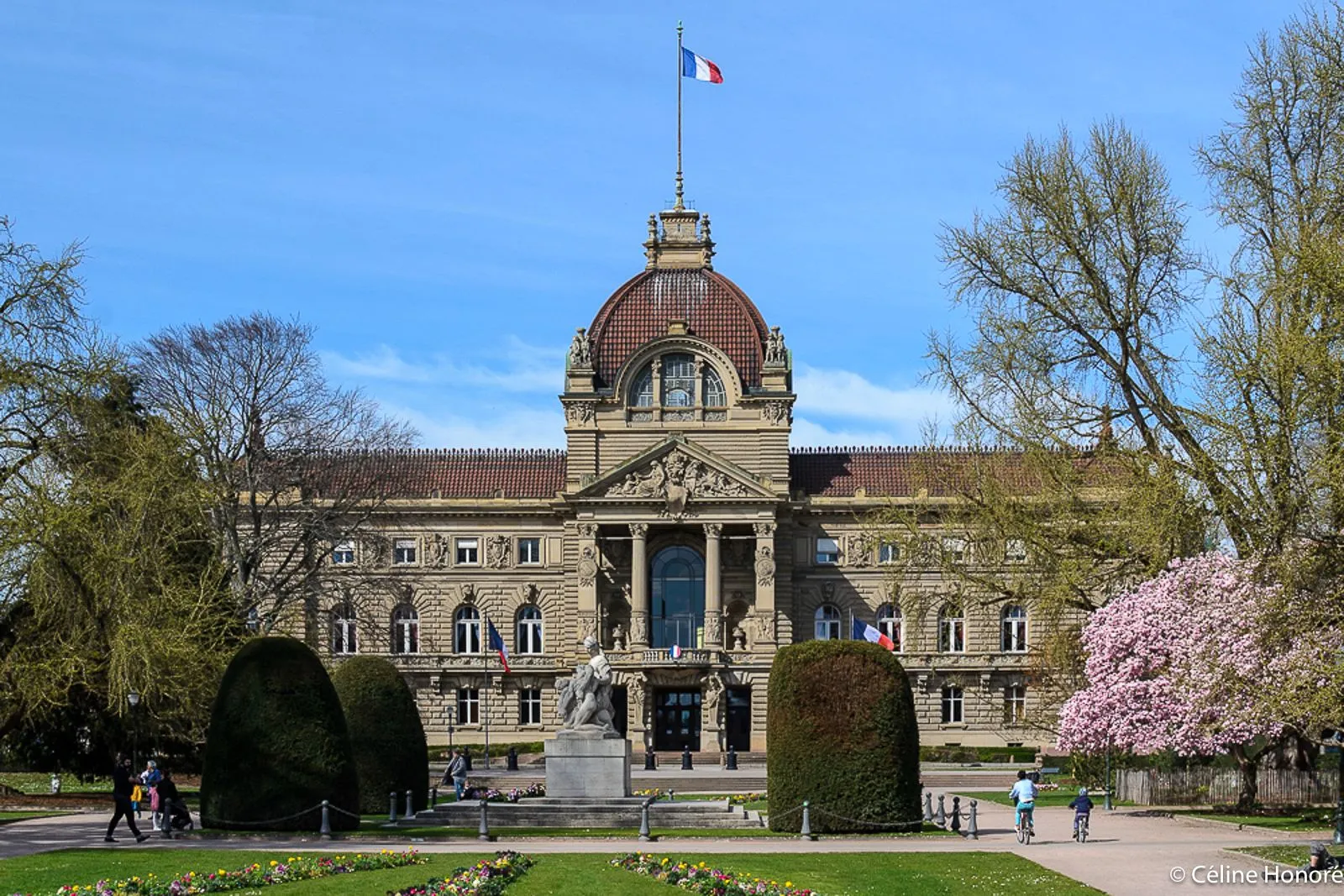
Beyond the medieval centre, the Neustadt reveals another chapter in Strasbourg’s history. Developed during the period of German administration in the late nineteenth and early twentieth centuries, this district is defined by wider avenues, monumental public buildings, formal squares and grand residential architecture. Its scale differs markedly from Petite France, yet the contrast deepens the understanding of the city.
Walk around Place de la République and the surrounding avenues to see how urban planning became an expression of political ambition. The buildings are imposing without being uniform: stone façades, domes, balconies and carefully composed street lines lend the district a stately rhythm. The Neustadt is particularly rewarding for architecture-minded travellers who want to understand Strasbourg beyond its familiar medieval images.
Museums, Design and the European Quarter
The Palais Rohan, close to the cathedral, houses major museums in an elegant former residence, offering a chance to move from the city’s public grandeur into collections of art and history. Smaller galleries and cultural venues add a contemporary layer, while craft shops and independent boutiques reward travellers who enjoy design, ceramics, textiles and considered objects.
Further north-east, the European Quarter introduces a modern institutional landscape associated with Strasbourg’s role in European politics and cooperation. The architecture is more contemporary and the atmosphere more civic than romantic, but it offers useful context for understanding the city’s present-day identity. Pair a visit with a walk along the river or through nearby green spaces rather than treating it as a standalone excursion.
The Alsatian Table: A Cuisine of Comfort and Precision
Alsatian cuisine reflects the region’s layered identity. It is generous without being careless, rooted in seasonal produce and shaped by French culinary technique and Central European traditions. On local menus, travellers may encounter choucroute garnie, sauerkraut accompanied by meats; baeckeoffe, a slow-cooked casserole; and tarte flambée, a thin, crisp base traditionally topped with crème fraîche, onions and lardons. These are dishes with a strong sense of place, best enjoyed without turning every meal into a grand occasion.
The region’s wines deserve attention of their own. Alsace is particularly known for aromatic white varieties such as Riesling, Gewürztraminer, Pinot Gris and Muscat, each offering a different relationship between freshness, texture and fragrance. Ask for guidance based on the food you have ordered, and allow local pairings to shape the experience.
For something sweet, seek out kougelhopf, the distinctive ring-shaped cake associated with Alsace, or stop at a pâtisserie for seasonal tarts and delicate pastries. Strasbourg’s markets and bakeries are part of its culinary identity: they offer a direct view of the region’s produce and the quiet rituals through which food remains part of daily life.
Seasonal Strasbourg: When the City Changes Character
Spring brings softer light, fresh greenery and comfortable conditions for exploring the old centre on foot. Canal-side walks become especially appealing, and outdoor cafés gradually return to the city’s rhythm. It is a good season for travellers who want to focus on architecture, museums and neighbourhood discovery without the busiest summer atmosphere.
Summer lends Strasbourg a lively, open-air mood. Terraces fill, riverbanks invite long walks and extended daylight makes it easier to explore several districts at an unhurried pace. Midday can be warm, so early starts and late-afternoon visits are often more comfortable for the cathedral and the narrow lanes of Petite France.
Autumn brings changing foliage and a natural invitation to explore the wider Alsatian region. It is a rewarding time to pair Strasbourg with nearby villages, vineyards and countryside routes. In winter, the city’s celebrated Christmas market tradition transforms the historic centre with illuminated streets, decorated façades and seasonal stalls. This is also the busiest period, so accommodation and dining reservations should be made well in advance.
Luxury Stays: Five Distinct Addresses in Strasbourg
In Strasbourg, the right hotel can become part of the experience rather than simply a place to return to at night. Some addresses place you directly beside the canals and timbered houses; others offer a polished base close to the city’s grand squares or a more contemporary interpretation of Alsatian hospitality. Confirm current room categories, facilities and services directly before booking.
Hôtel & Spa Régent Petite France
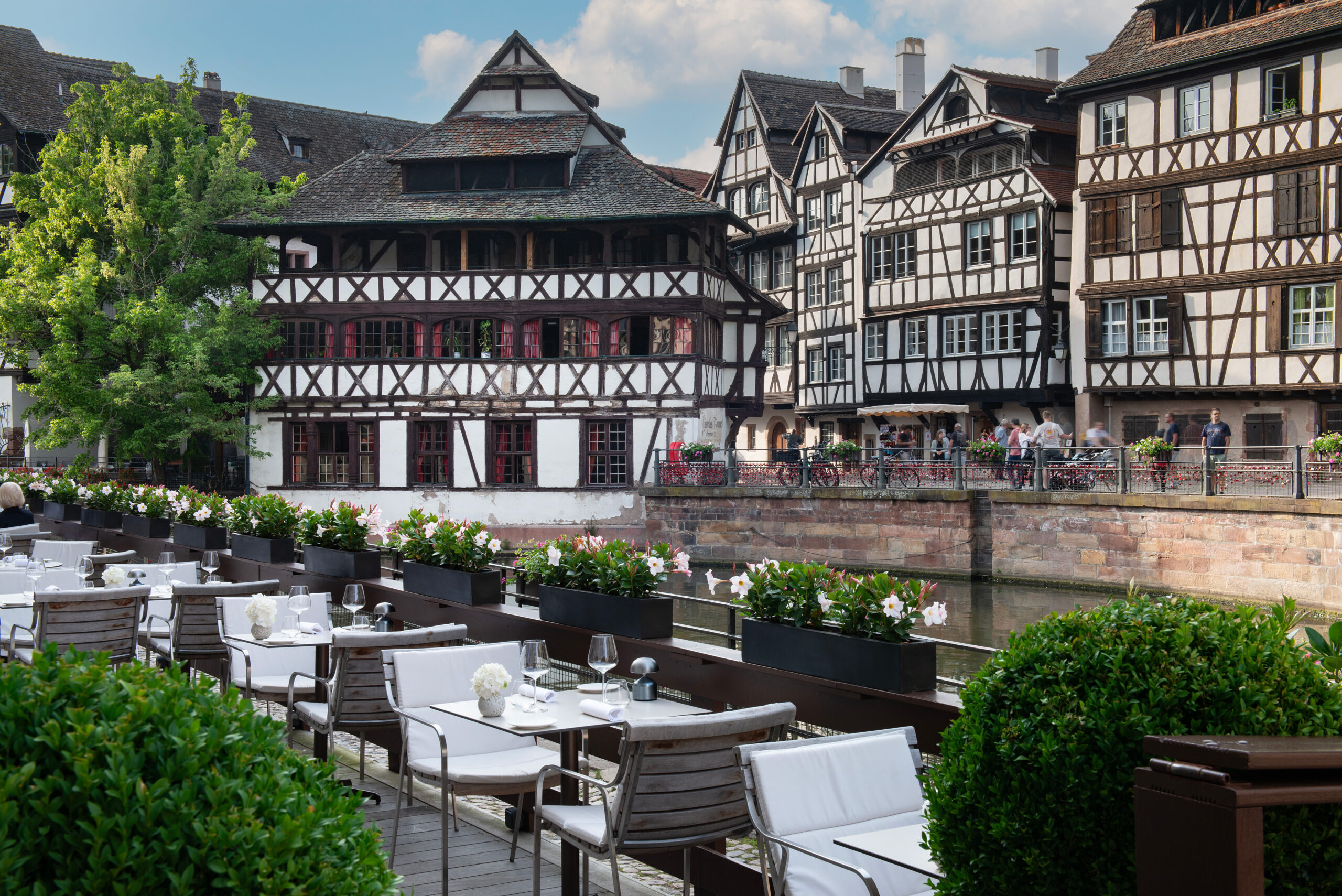
Set within the historic Petite France quarter, this hotel makes the waterways and old architecture part of the stay. Its location is the defining luxury: step outside and the canals, bridges and half-timbered houses are immediately present. Spa facilities offer a restorative counterpoint to long days of walking, while room categories vary in outlook and character, making it worth choosing carefully. It is particularly suited to travellers who want Strasbourg’s most atmospheric scenery to feel like an extension of their own address.
Maison Rouge Strasbourg Hotel & Spa, Autograph Collection
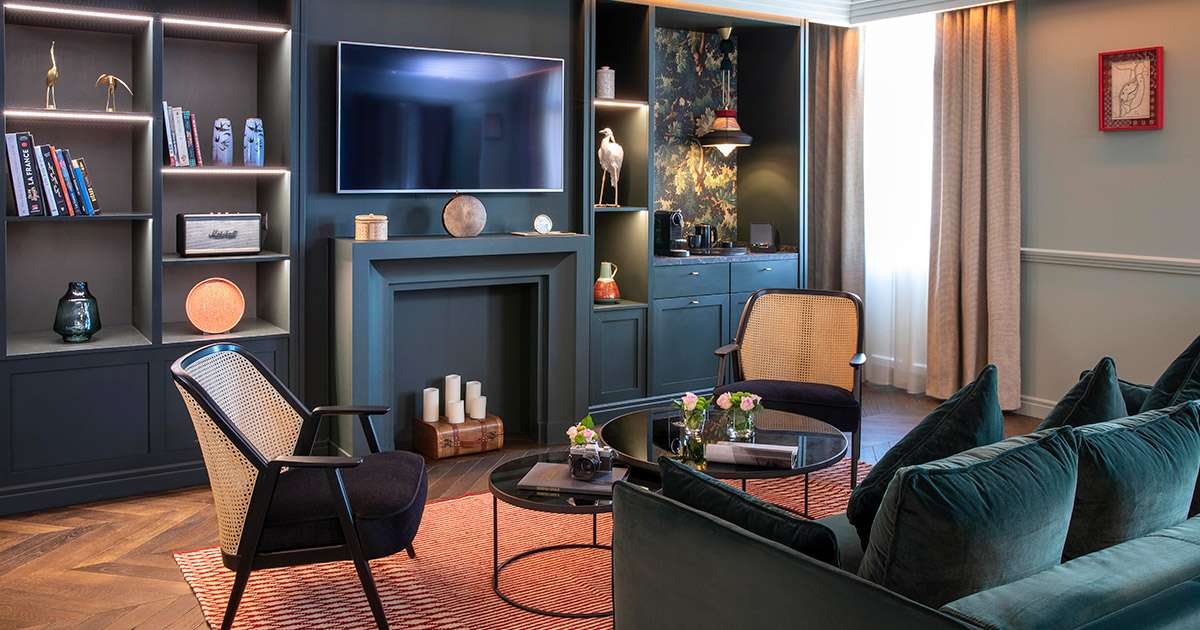
Maison Rouge brings a polished city-centre sensibility to the historic core. Its interiors combine contemporary comfort with decorative references that give the property a sense of occasion, while its central position makes shopping streets, cafés and major sights easy to reach on foot. The spa adds a welcome pause between cultural visits and dinner. Choose it for a stay that balances convenience with distinctive interior character.
Sofitel Strasbourg Grande Île
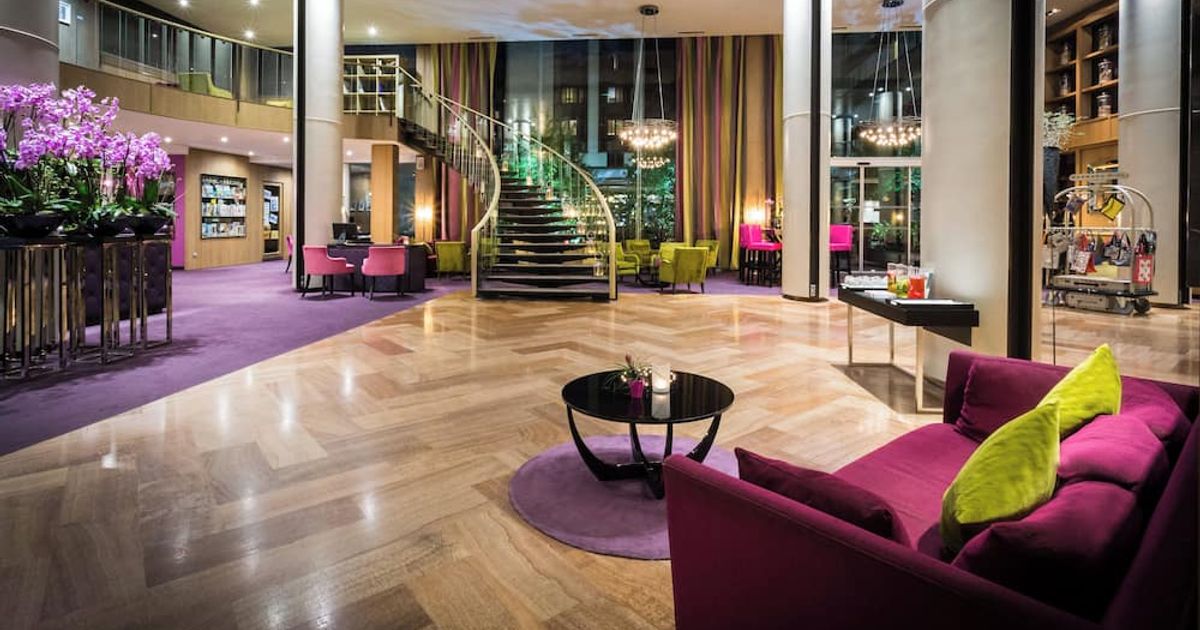
Sofitel Strasbourg Grande Île offers an established international-hotel experience within reach of the historic centre. Its appeal lies in service, comfortable rooms and a location that works well for travellers moving between sightseeing, dining and institutional appointments. It provides a contemporary counterpoint to the intimate hotels of Petite France, while keeping the city’s principal experiences close at hand.
Hôtel Cour du Corbeau Strasbourg – MGallery
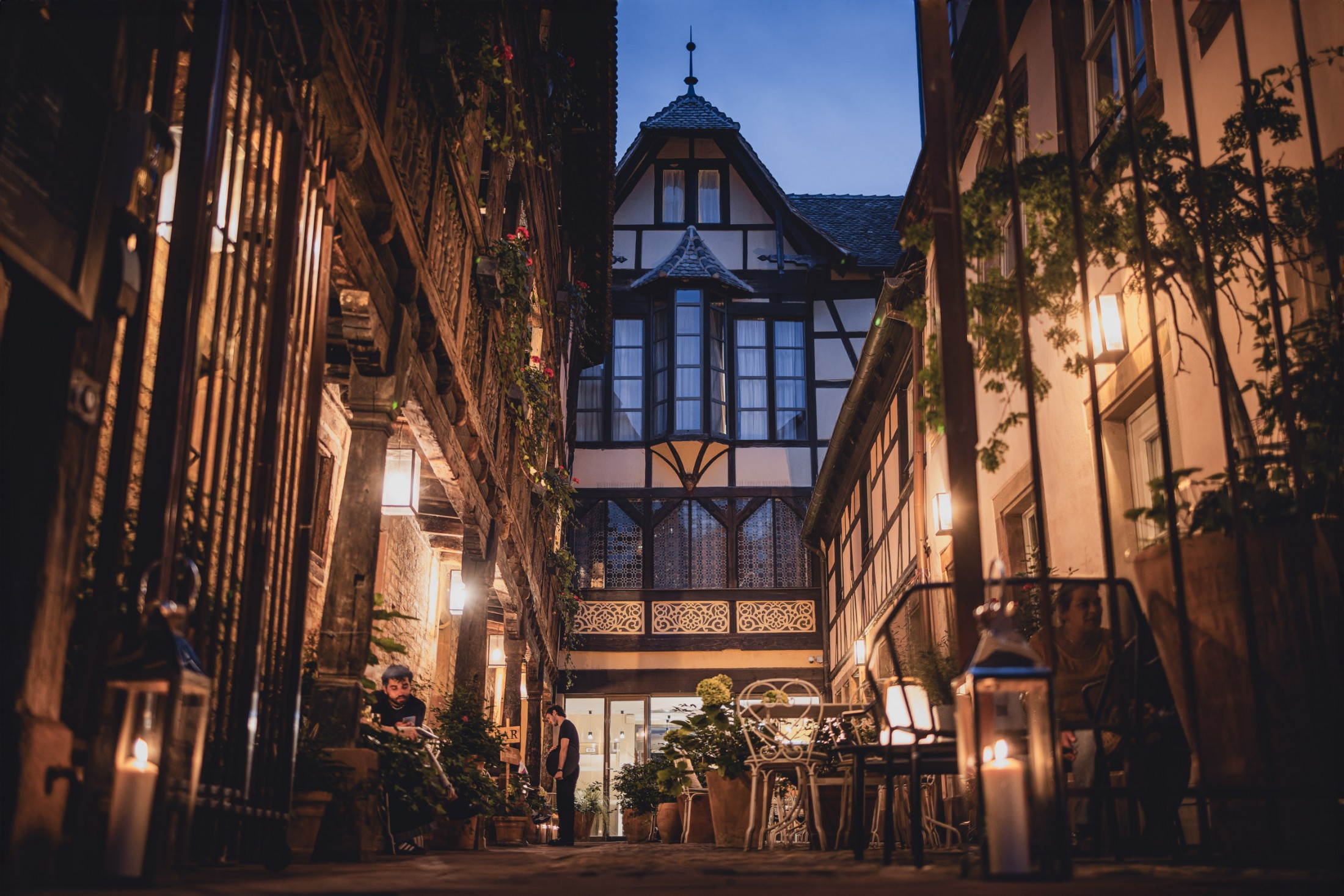
Housed in a historic building with a courtyard setting, Hôtel Cour du Corbeau offers a stay shaped by architectural detail and a sense of retreat. Its old-world character suits travellers who appreciate timber, stone and the quiet drama of a heritage property, while its location makes the cathedral and Grande Île accessible on foot. The courtyard atmosphere creates an appealing return after an evening in the city.
Beyond the Centre: Day Trips into Alsace
Strasbourg is an excellent base for exploring the wider Alsatian region, where vineyards, hilltop villages and colourful market towns offer a different scale of experience. Colmar is known for its historic centre and canal-side lanes, while villages along the Alsace Wine Route offer timbered houses, local cellars and views across vine-covered slopes. Depending on the season, a day beyond the city can introduce a more rural side of the region without requiring a change of hotel.
For wine-focused travellers, plan visits in advance and check whether estates welcome visitors by appointment. A driver or organised excursion can be useful when tastings are involved, while rail connections make some larger towns straightforward to reach. Avoid overloading the day with stops: one village explored slowly, a considered lunch and a winery visit can be more memorable than a hurried circuit.
The Vosges foothills add another dimension, with forested landscapes and walking routes that feel far removed from Strasbourg’s urban elegance. If your stay allows, combine the city with a night or two in the countryside for a fuller sense of Alsace’s contrasting moods.
Planning a Refined Strasbourg Escape
Two full days allow time for Grande Île, the cathedral, Petite France and a museum or two. Three nights make the experience more generous, leaving room for the Neustadt, an unhurried meal and a day trip into Alsace. During the Christmas market season, allow extra time for crowds and reserve accommodation early.
Strasbourg is highly walkable in the centre, and its tram network is useful for reaching districts beyond the historic core. Comfortable shoes are essential on cobbled streets, while a light layer is useful near the canals even when the city centre feels warm. If you plan to visit museums, check opening days and ticket arrangements; for popular restaurants and special hotel stays, advance reservations are prudent.
The city works well as part of a wider French journey. Its location in eastern France makes it a natural contrast to the capital, the Mediterranean coast and the culinary traditions of Lyon. Rather than compressing every experience into one stay, leave space for the city’s quieter pleasures: a second walk through Petite France, a longer lunch or an evening when the cathedral becomes the only landmark on the itinerary.
Beyond Strasbourg: Discover More of France
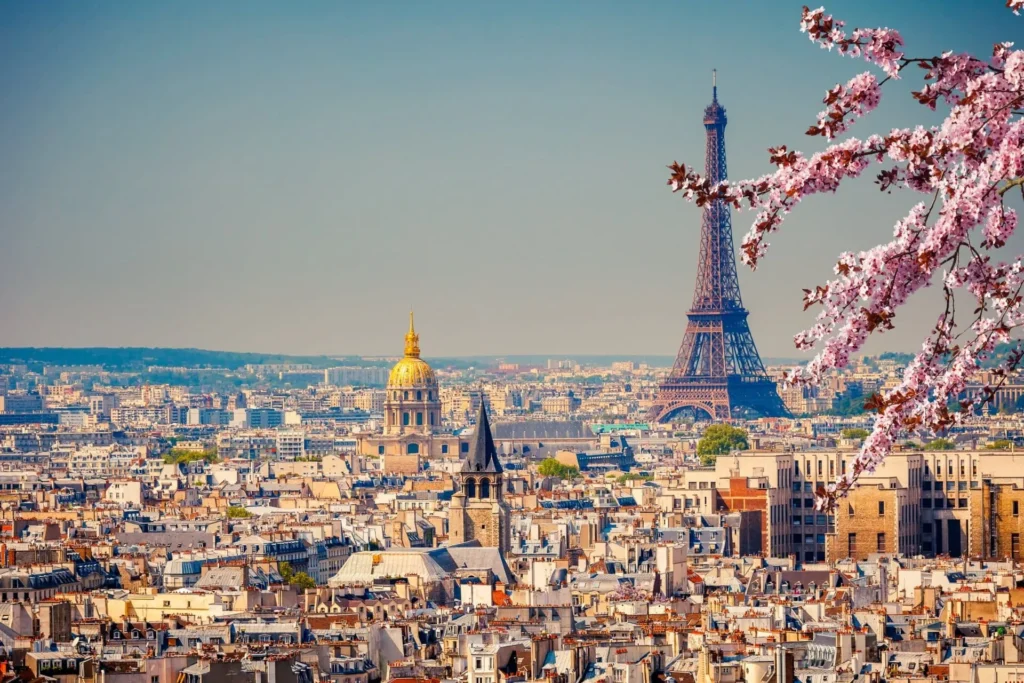
France reveals a different character with every change of landscape. In Paris, grand boulevards, celebrated galleries and café terraces create a portrait of metropolitan elegance. Along the Mediterranean, Nice offers pastel façades, sea-facing promenades and the unhurried pleasures of the Riviera, while Cannes brings a more glamorous note through the Croisette, private beach clubs and its cinematic heritage. Lyon introduces another rhythm, shaped by Renaissance passageways, elegant squares and a culinary culture deeply rooted in everyday life. Bordeaux adds golden-stone architecture and the vineyards that stretch beyond the city. Strasbourg completes the picture with its Alsatian identity, canal-side quarters and the meeting of French and German cultural influences. Together, these destinations reveal a country whose character changes beautifully from one region to the next.
Frequently Asked Questions
How many days should you spend in Strasbourg?
Two full days are enough to explore the historic centre, cathedral and Petite France at a comfortable pace. Three nights are preferable if you want to include museums, the Neustadt or a day trip into Alsace.
What is Strasbourg best known for?
Strasbourg is known for its Gothic cathedral, half-timbered houses, canals in Petite France, Alsatian cuisine and its role in European institutions. Its cultural identity reflects a long history shaped by both French and German influences.
When is the best time to visit Strasbourg?
Spring and early autumn are excellent for walking and exploring the region. December is especially atmospheric during the Christmas market season, but it is also exceptionally busy, so book accommodation and restaurants well ahead.
Is Strasbourg a good base for exploring Alsace?
Yes. Strasbourg offers transport connections, restaurants and a broad choice of hotels, making it a practical base for day trips to Colmar, villages along the Alsace Wine Route and nearby vineyard areas.
Which luxury hotels are worth considering in Strasbourg?
Hôtel & Spa Régent Petite France is appealing for its canal-side setting; Maison Rouge offers a polished city-centre stay; Sofitel Strasbourg Grande Île provides an international-hotel experience; Hôtel Cour du Corbeau is notable for its historic courtyard atmosphere; and Pavillon Régent Petite France suits travellers seeking a more intimate address. Verify current facilities and room options directly before booking.
The Luminara Perspective
Strasbourg’s beauty is not confined to the famous curve of a canal or the soaring silhouette of its cathedral. It lives in the way the city holds its contrasts: French and German, monumental and intimate, ceremonial and quietly domestic. The old houses are more than picturesque façades; they are expressions of a region that has spent centuries making a culture from its meeting points.
Come for the architecture, certainly, and leave time for the details that cannot be scheduled: a reflection caught beneath a bridge, the fragrance of a bakery on a cold morning, a glass of Alsatian wine beside a meal that lasts longer than expected. Strasbourg rewards travellers who understand that a destination is not defined only by what it displays, but by the way it invites you to live within it, even briefly.