
The Essence of Okinawa
There are places in Japan where the landscape seems to ask you to slow down. Okinawa is one of them.
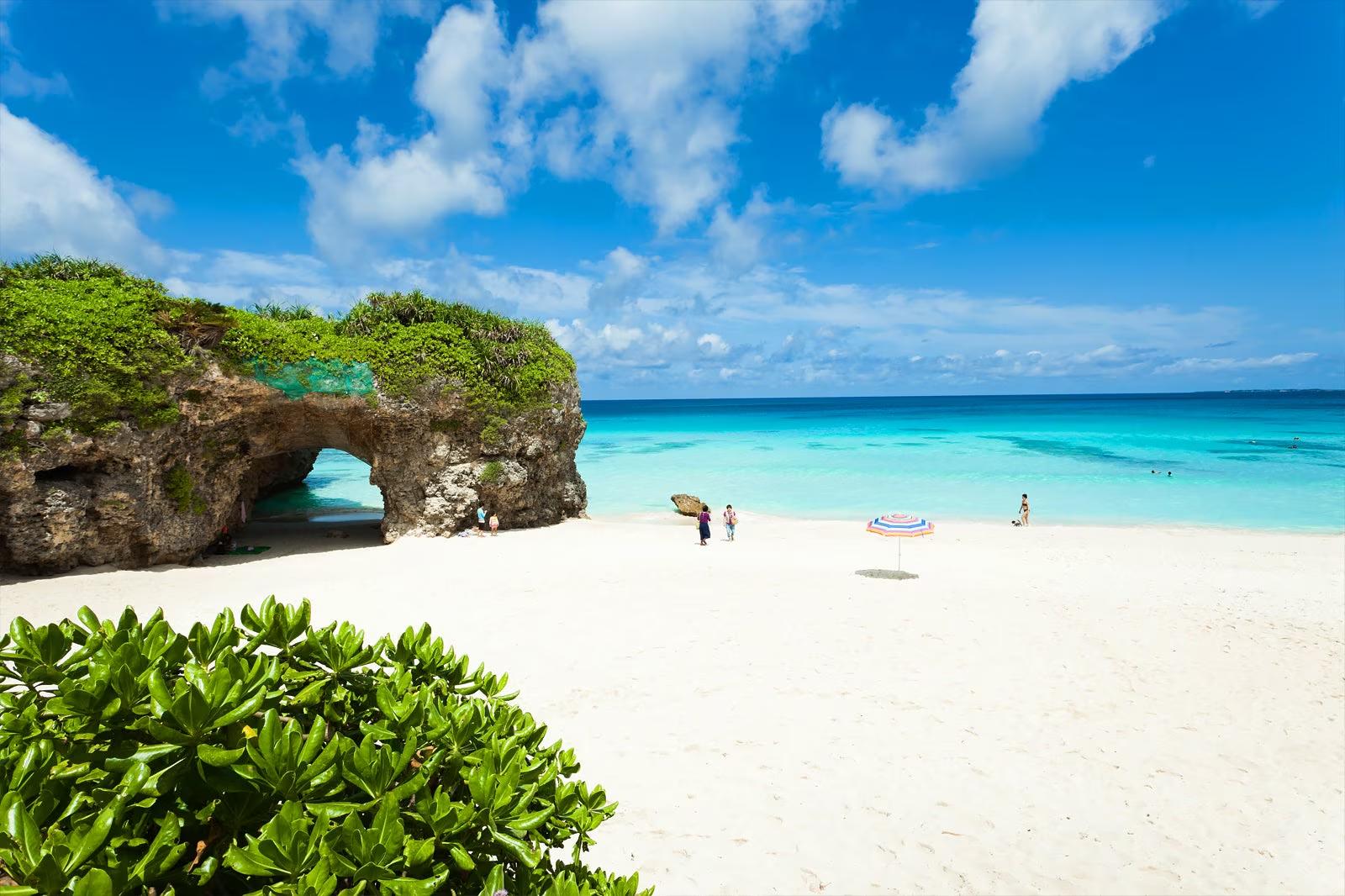
Here, Japan arrives in another language: turquoise water instead of mountain snow, coral limestone instead of cedar forests, red-tiled roofs instead of dark timber, and a warm island rhythm that seems to follow the movement of the sun. Yet Okinawa is not simply Japan in the tropics. It is the former Ryukyu Kingdom, a maritime culture shaped for centuries by connections with Japan, China and Southeast Asia, and an archipelago whose traditions remain visible in music, food, architecture, craft and ritual.
The finest Okinawa travel experiences begin when the beach stops being the destination and becomes the setting. You wake to the sound of cicadas and distant surf. You drive north beneath subtropical forest. You step into a quiet courtyard in Naha where the past feels close. You cross to an island where coral walls frame white-sand lanes. You spend an afternoon beneath the water, where the reef is more colourful than anything above it.
This is Okinawa at its most compelling: not Japan in the tropics, but a distinct island culture that completes a Japanese journey in an unexpected way.
Okinawa at a Glance
Location: Japan’s southernmost prefecture, extending across a large island chain
Character: subtropical, maritime and culturally distinct
Best known for: coral reefs, island landscapes, Ryukyuan heritage, beaches, diving and Okinawan cuisine
Cultural heart: Naha and the historic world of the Ryukyu Kingdom
Wild side: Yanbaru on northern Okinawa and Iriomote Island
Island escapes: Kerama, Miyako, Ishigaki, Taketomi and the wider Yaeyama Islands
Signature flavours: Okinawa soba, goya, sea grapes, purple sweet potato, island pork and awamori
Ideal approach: combine cultural discovery on Okinawa Island with several nights on one or two outlying islands
Travel character: slow, sensory and deeply connected to sea and place
Okinawa, Region by Region
Okinawa travel is too diverse to experience as a single resort coastline. Its personality changes from Naha’s urban energy to the forests of Yanbaru, from the clear waters of Kerama to the coral landscapes of the Yaeyama Islands.
Naha & Shuri — The Cultural Beginning
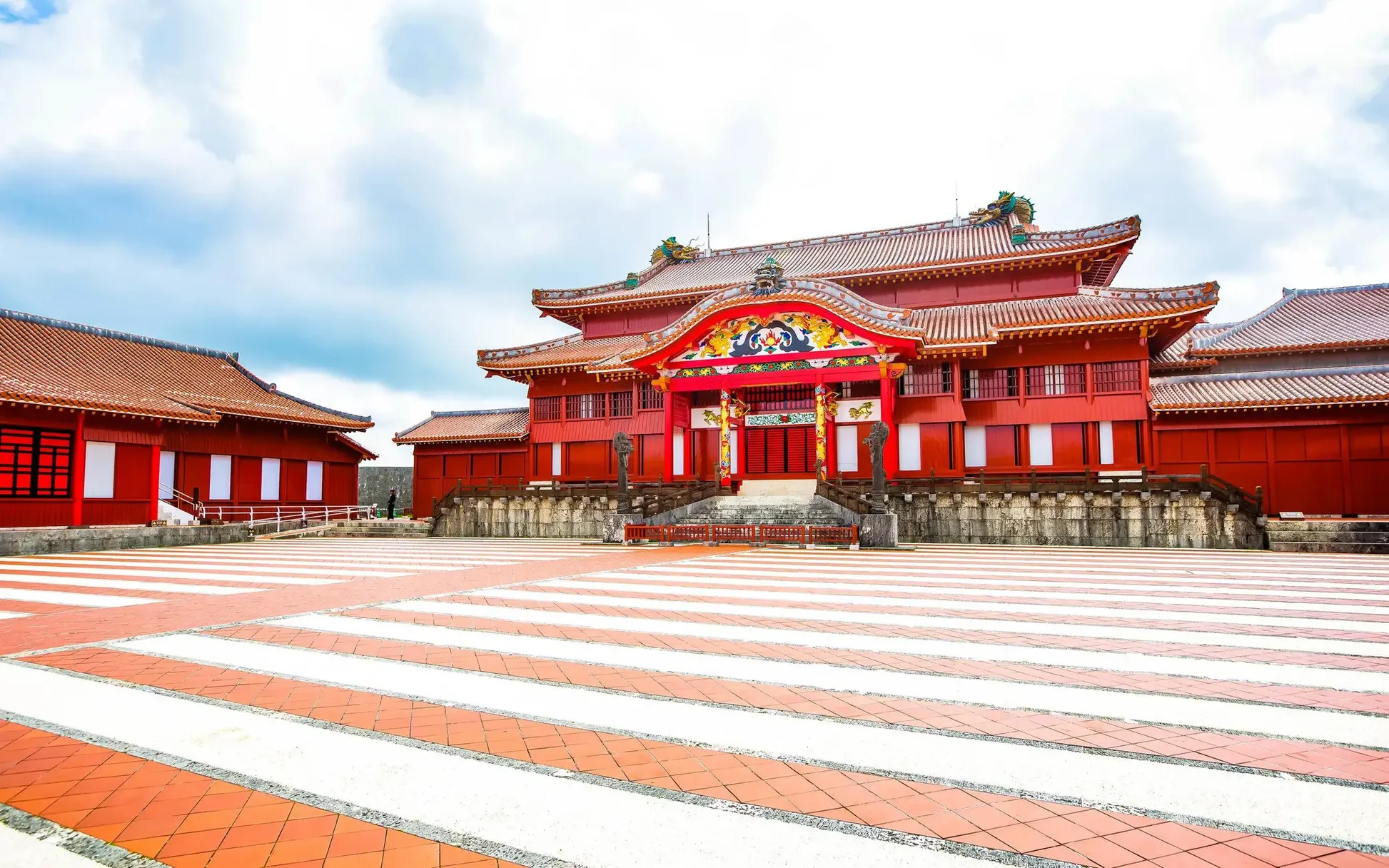
Begin in Naha, where Okinawa travel finds its historical centre. The city is the gateway to the prefecture, but its real importance is cultural. Shuri, once the royal heart of the Ryukyu Kingdom, offers a glimpse into a sophisticated maritime society whose influence extended far beyond the islands.
Walk through the grounds and historic landscape around Shuri, then slow down in the lanes nearby. Seek out traditional crafts, Ryukyuan textiles, lacquerware and music. In the evening, let the city become more intimate: a small restaurant, a sanshin melody, the scent of Okinawan broth and the easy pace of island conversation.
Naha is not merely an arrival point. It is the doorway into understanding Okinawa.
Northern Okinawa & Yanbaru — The Wild North
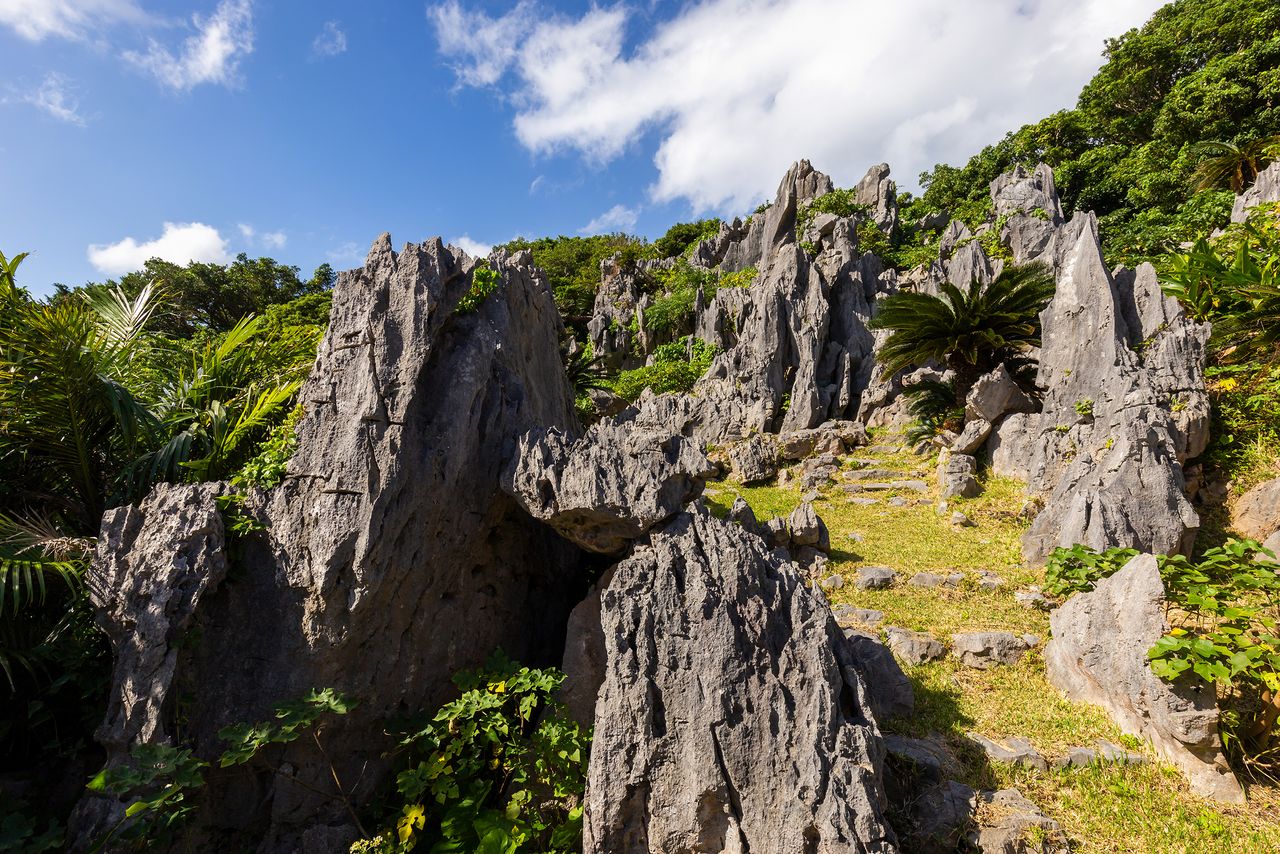
Travel north and the mood changes. Urban Okinawa gives way to forest, limestone, coastal cliffs and a landscape of extraordinary biodiversity.
Yanbaru, in northern Okinawa Island, is one of the prefecture’s great natural treasures and forms part of the UNESCO-listed natural heritage of the northern Okinawa and Iriomote region. The experience here is less about collecting viewpoints and more about entering a living landscape: forest trails, mangroves, birds, subtropical plants and quiet coastal roads.
This is where Okinawa travel becomes exploratory. Take time. Use local guides when entering sensitive natural areas. Let the forest become the destination.
Onna & the Resort Coast — Sea in Every Direction
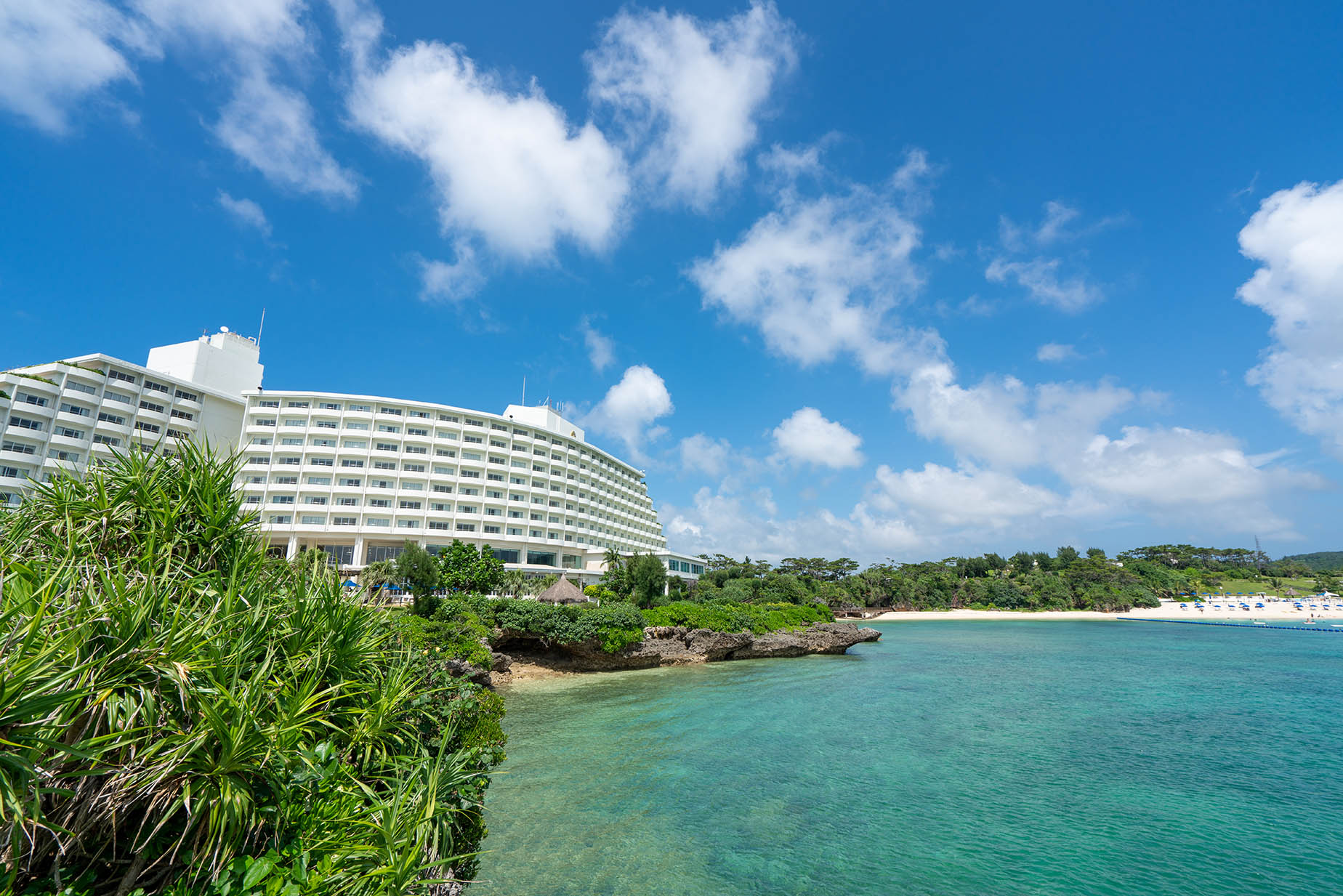
Along the central-western coast, the island opens toward long stretches of blue water. Onna is known for beaches, marine activities and resort life, but the best experiences are found away from the busiest hours.
A private boat, a late-afternoon swim, a quiet coastal dinner or a morning snorkel can transform a conventional beach stay into something more personal. The Blue Cave and surrounding waters are popular for good reason, but the wider coastline rewards those willing to look beyond the headline attraction.
Kerama Islands — The Colour of the Sea
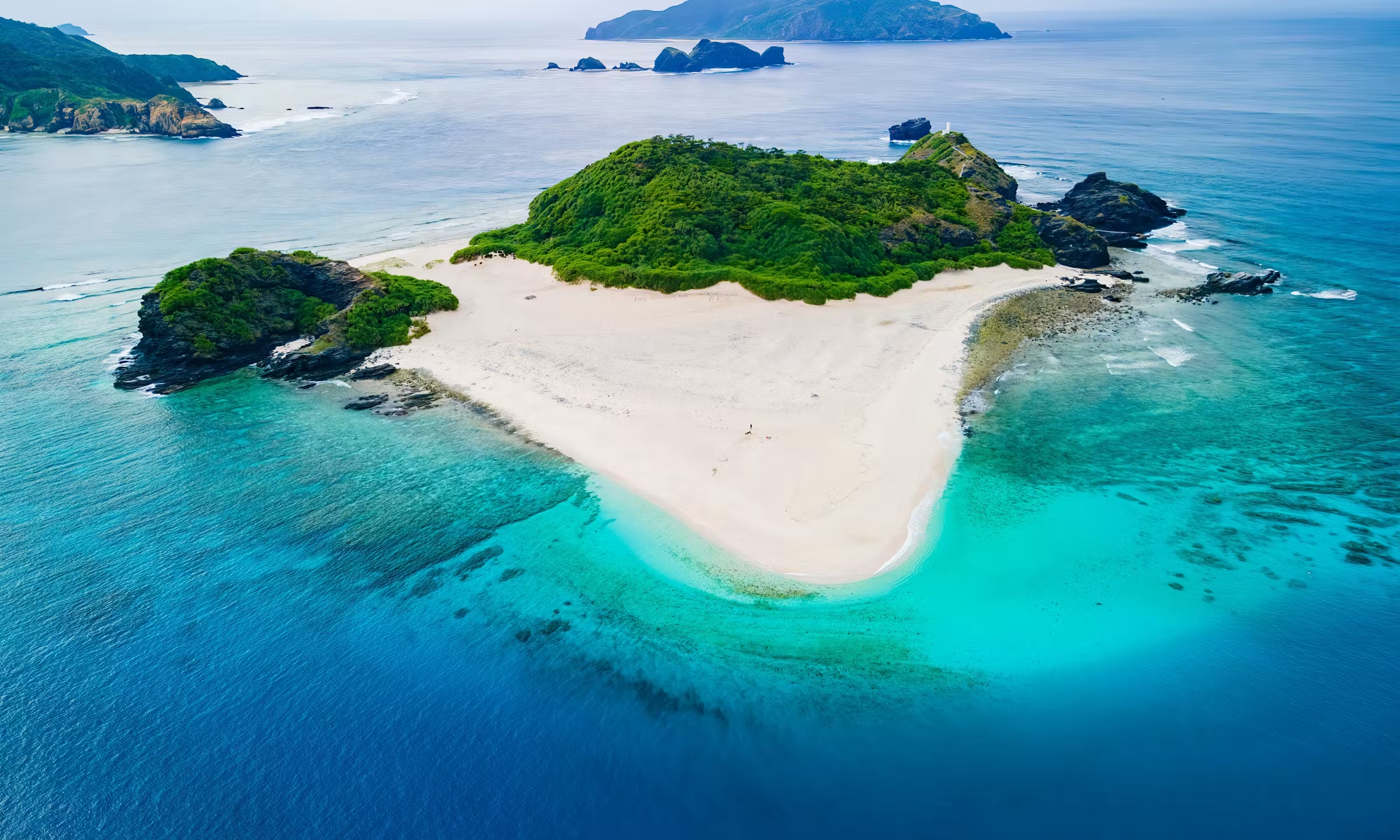
From Okinawa’s main island, the Kerama Islands feel like another world. Tokashiki, Zamami and Aka are among the best-known islands in an archipelago famous for exceptionally clear water, beaches, coral reefs, hiking and winter whale watching.
The colour is so distinctive that “Kerama blue” has become part of the vocabulary of the islands. Spend a day in the water and you understand why. Snorkelling here can feel less like an excursion and more like entering another landscape.
For a slower Okinawa travel itinerary, Zamami is particularly rewarding: small enough to explore at an unhurried pace, yet rich in beaches, trails and marine experiences.
Miyako Islands — The Quiet Horizon
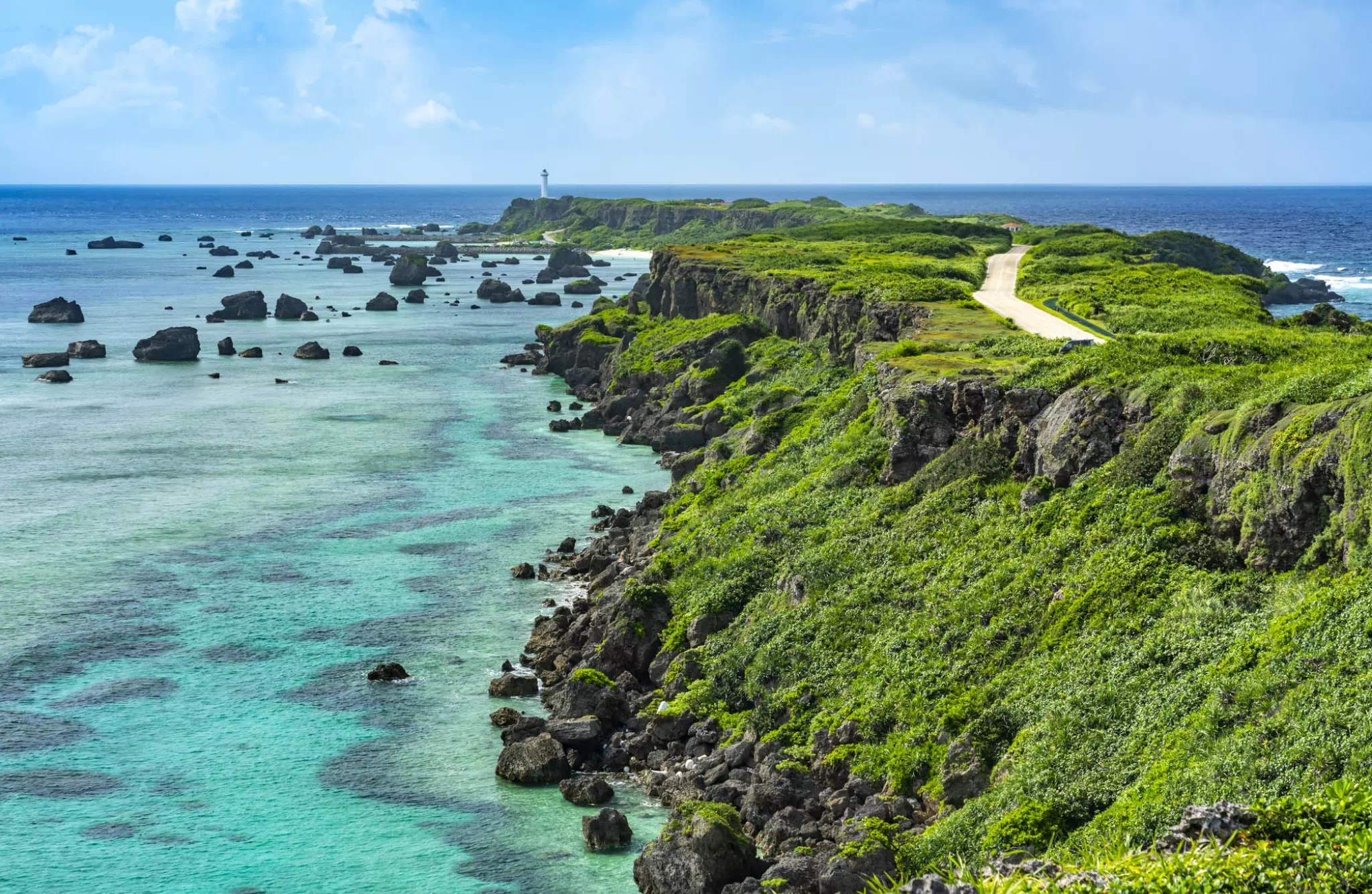
Miyakojima is an island for travellers who enjoy space. There is less urban intensity, more open road and a coastline that seems to keep unfolding.
Drive toward Cape Higashi-Hennazaki, cycle quiet stretches of road, swim from pale beaches and pause at viewpoints without needing to turn every moment into an activity. The surrounding islands add another layer, linked by bridges and shaped by a sea that seems almost impossibly clear.
Miyako is Okinawa travel stripped back to its simplest form: sunlight, salt air, a long road and nowhere urgent to be.
Ishigaki — The Gateway to Yaeyama
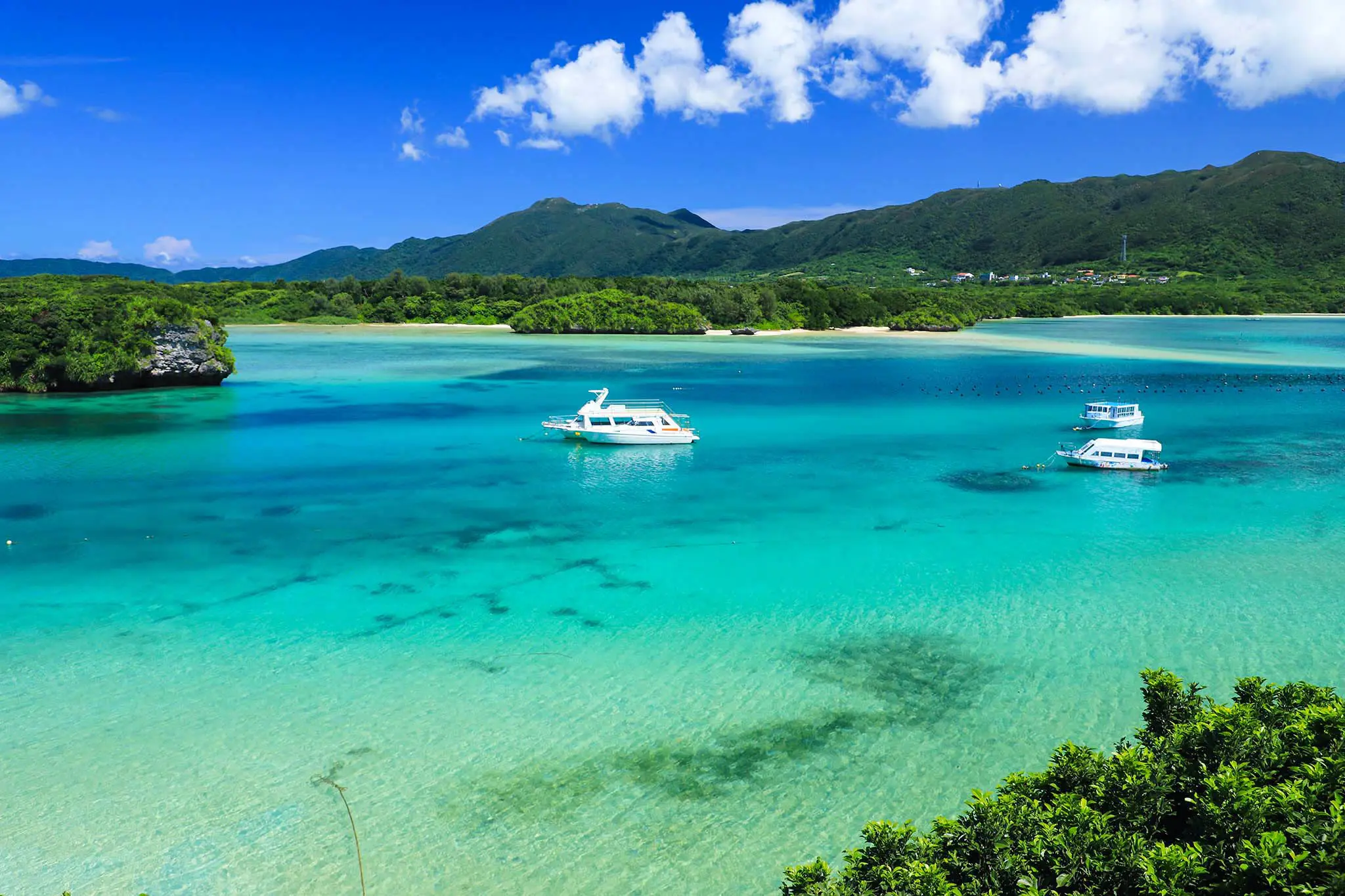
Ishigaki is the practical and emotional gateway to the Yaeyama Islands. It has beautiful beaches, mountain landscapes, coral reefs and access to some of Okinawa’s most memorable island experiences.
Kabira Bay is one of the island’s signature landscapes, while the wider coast opens into opportunities for snorkelling, diving and boat journeys. Inland, forested hills and agricultural landscapes offer a quieter counterpoint.
Spend a few nights here before moving onward to Taketomi or Iriomote, and Ishigaki becomes more than a stopover. It becomes the beginning of an island chain.
Taketomi — A Village Preserved
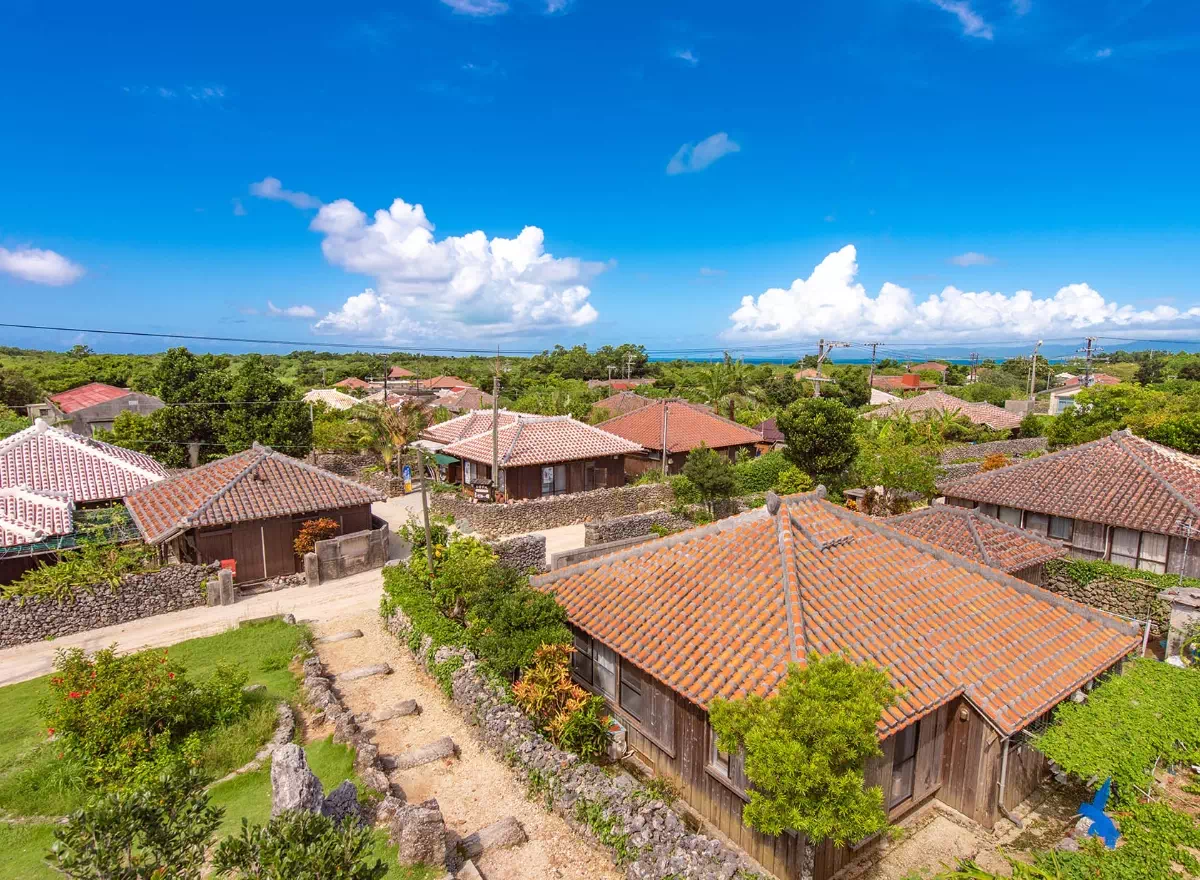
Taketomi is one of the most atmospheric islands in Okinawa. Its traditional village is defined by white coral-sand lanes, stone walls, red-tiled houses and vividly painted shisa guardians.
The island is small enough to explore slowly. Walk without a schedule. Watch the light change across the village. Visit Kondoi Beach. Return toward evening, when day-trippers leave and the island begins to feel wonderfully still.
This is where Okinawa travel becomes less about seeing and more about inhabiting a rhythm.
Iriomote — Into the Green
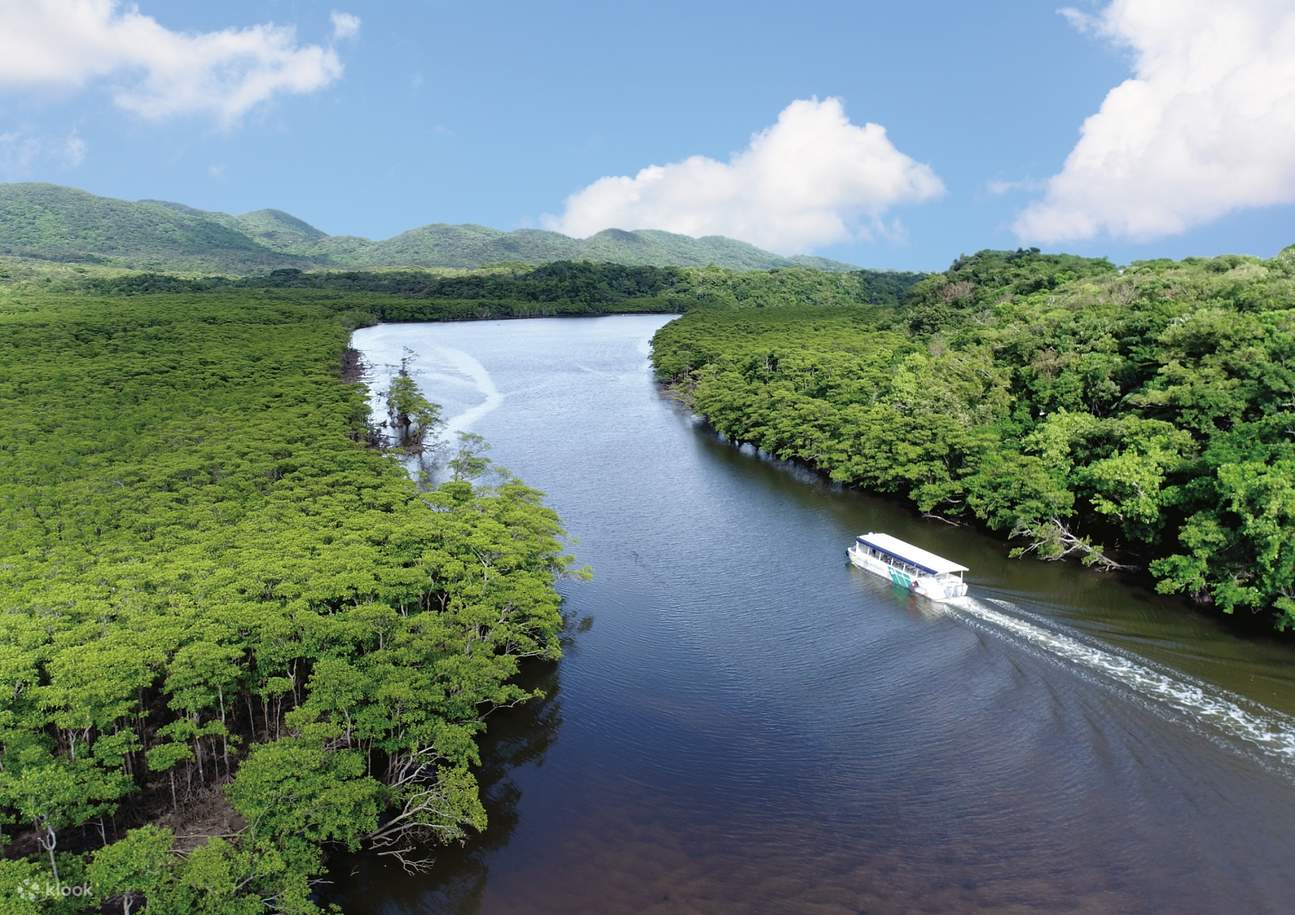
Iriomote is Okinawa’s wild frontier. Dense subtropical forest, mangroves, rivers and a remarkably rich ecosystem create an experience that feels far removed from the resort coast.
Explore by kayak, boat or guided forest walk. The aim is not to conquer the island but to understand its scale and sensitivity. Iriomote is a place for travellers who want the landscape to lead the itinerary.
The Ryukyu Kingdom
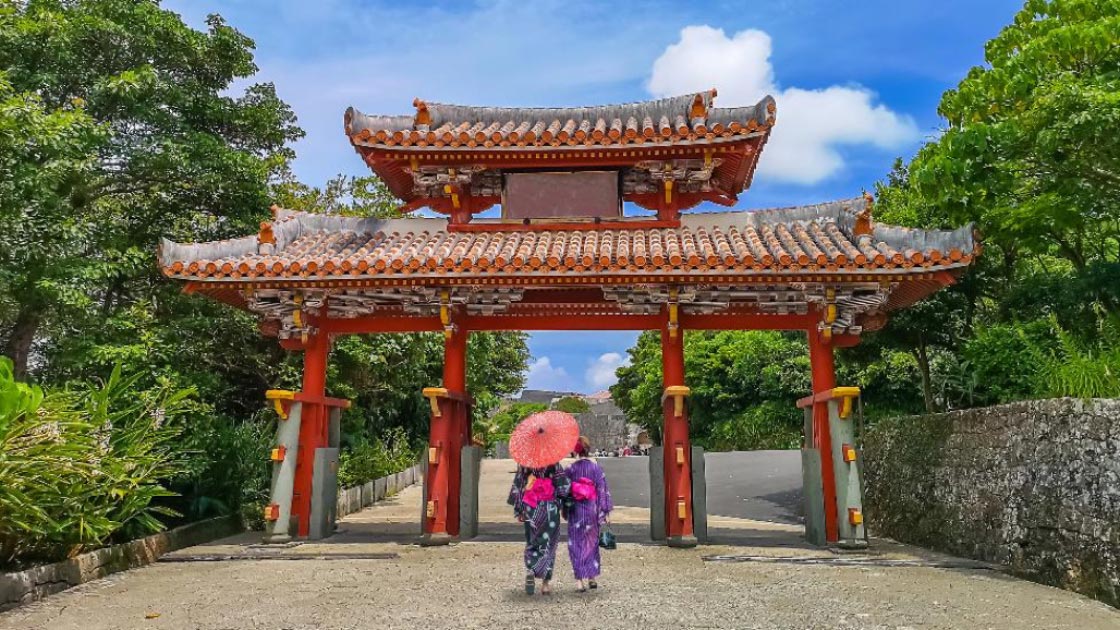
To understand Okinawa is to understand that it once belonged to a kingdom of its own.
The Ryukyu Kingdom flourished for centuries as a maritime trading power, developing cultural and economic connections with China, Korea, Southeast Asia and Japan. That history remains visible in the architecture, religious traditions, performing arts, textiles, cuisine and ceremonial spaces of the islands.
The UNESCO World Heritage property known as the Gusuku Sites and Related Properties of the Kingdom of Ryukyu brings this history into physical form. Its nine component sites include castle ruins, sacred places and cultural landscapes associated with five centuries of Ryukyuan history.
Shuri is the natural starting point, but the story extends across the island: Nakijin, Zakimi, Katsuren and Nakagusuku reveal different expressions of the gusuku landscape, while sacred sites offer another way into the spiritual geography of the Ryukyu world.
For a traveller, the most rewarding approach is not to treat these as ruins to be ticked off. Read the landscape. Notice the elevated stone walls, the relationship between castle and sea, and the presence of sacred spaces within nature. Okinawa travel becomes richer when its history is allowed to remain part of the journey.
The Okinawa You Came to See
The image of Okinawa is usually painted in turquoise.
And yes, the sea deserves the reputation. Coral reefs, pale sand, limestone coastlines and sheltered bays create some of Japan’s most beautiful marine landscapes.
But the deeper pleasure comes from how the sea changes the pace of a day.
Morning begins with a swim before breakfast. A boat leaves the harbour after the heat softens. Lunch arrives with sea grapes, island vegetables and freshly prepared fish. By late afternoon, the horizon becomes the main event. At sunset, the water turns silver, then rose, then disappears into darkness.
The best Okinawa travel is not a list of beaches. It is a sequence of moments shaped by the sea.
Choose one day for diving. Another for a private boat. Another for a completely empty afternoon. Leave room for weather, for a village road, for a café, for the possibility that the most memorable hour of the trip was the one you never planned.
Coral Reefs, Beaches & the Blue Ocean
Okinawa travel is defined in part by a remarkable marine world. Around the islands, coral reefs create habitats for an extraordinary range of marine life, while clear waters make the coastline unusually accessible.
Snorkelling is often enough. You do not need an ambitious dive itinerary to appreciate the underwater landscape. On a calm day, a reef excursion can become one of the most beautiful hours of an Okinawa travel journey.
For diving, Ishigaki is especially compelling, with access to waters known for manta rays, while the Kerama Islands offer excellent opportunities for both snorkelling and diving. Miyako is equally attractive for travellers who prefer beaches, cycling and long stretches of open coastline.
The important principle is to experience the sea responsibly. Coral environments are fragile. Choose reputable operators, avoid touching marine life or coral, and follow local guidance on currents, weather and protected areas.
Island Culture & Traditional Craft
The visual language of Okinawa travel is unmistakable.
Red roof tiles. Shisa figures. Bashofu and other textiles. Ryukyu glass. Lacquerware. Sanshin music. Traditional dance. The colours of the islands appear everywhere, but their meaning runs deeper than decoration.
Ryukyu glass developed through the reuse of discarded glass from foreign ships and bottles, producing a craft associated with the sea and the trading history of the islands. Sanshin music carries another dimension of Okinawan identity, its three-stringed sound instantly evoking the islands.
Seek out crafts through workshops and small studios rather than treating them as souvenirs alone. Meet makers. Learn how a textile is woven, how glass is shaped, how music is taught. These encounters make Okinawa travel more intimate and preserve the connection between object and place.
Okinawa at the Table
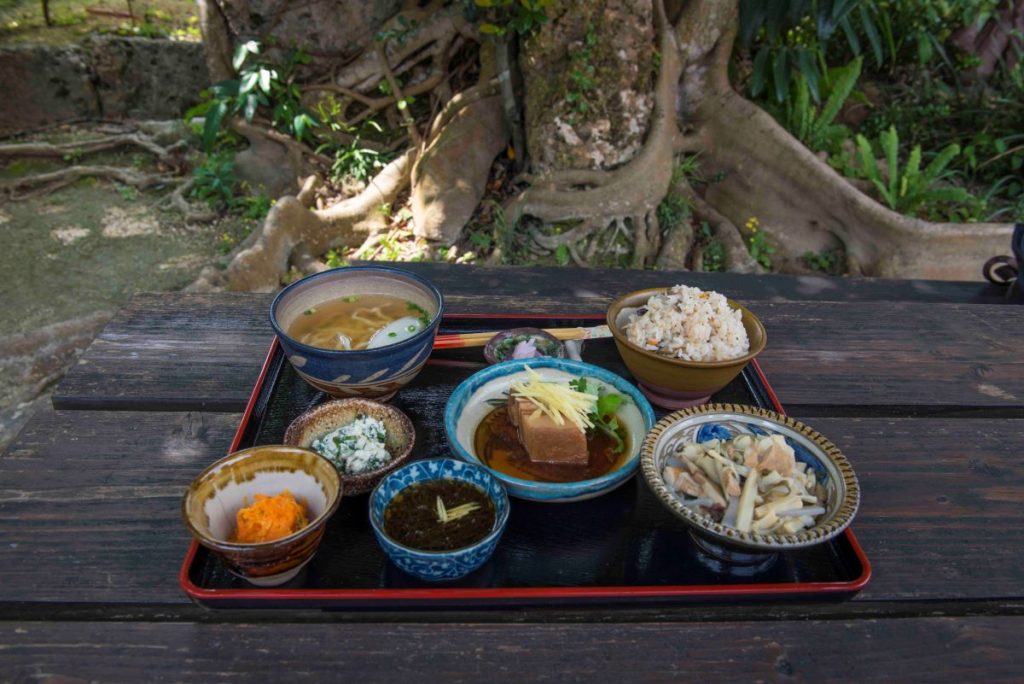
Okinawan cuisine is one of the most distinctive food cultures within Okinawa travel.
Okinawa soba, made with wheat noodles rather than the buckwheat associated with soba elsewhere in Japan, is an essential starting point. Goya, the island’s famously bitter melon, appears in champuru dishes alongside tofu, vegetables and other local ingredients. Sea grapes add a delicate texture and a burst of saline freshness.
Then there is rafute, slow-braised pork belly, purple sweet potato, island tofu, mozuku seaweed and a wide range of seafood shaped by the surrounding waters.
Awamori is the drink most closely associated with Okinawa. Made from indica rice and traditionally aged in clay pots, it develops greater complexity over time; bottles aged for three years or more are known as kusu.
The finest Okinawa travel itineraries leave room for food without turning every meal into an event. A market breakfast, a family-run soba shop, a refined island dinner and an evening glass of awamori can tell you as much about Okinawa as a landmark.
The Art of Slowing Down
Okinawa travel has a rhythm often associated with its cultural identity: uchinaa time, or Okinawan time.
The phrase captures something visitors notice quickly. Life can feel less governed by urgency. Conversations linger. Meals stretch. The sea dictates plans. A short drive can become an hour because you stopped to photograph a village road or watch clouds gather above the water.
This does not mean everything is slow. Naha can be lively, roads can be busy, ferries operate to schedules and popular beaches can fill quickly.
The luxury lies elsewhere: in having enough time to choose your own pace.
Build fewer commitments into your Okinawa travel itinerary. Stay longer on fewer islands. Leave one afternoon entirely open. Let the destination have the final word.
Luxury Hotels & Distinctive Island Stays
The most memorable luxury stays in Okinawa are not necessarily the largest resorts. They are the properties that understand their setting.
HOSHINOYA Taketomi Island — Living with the Island
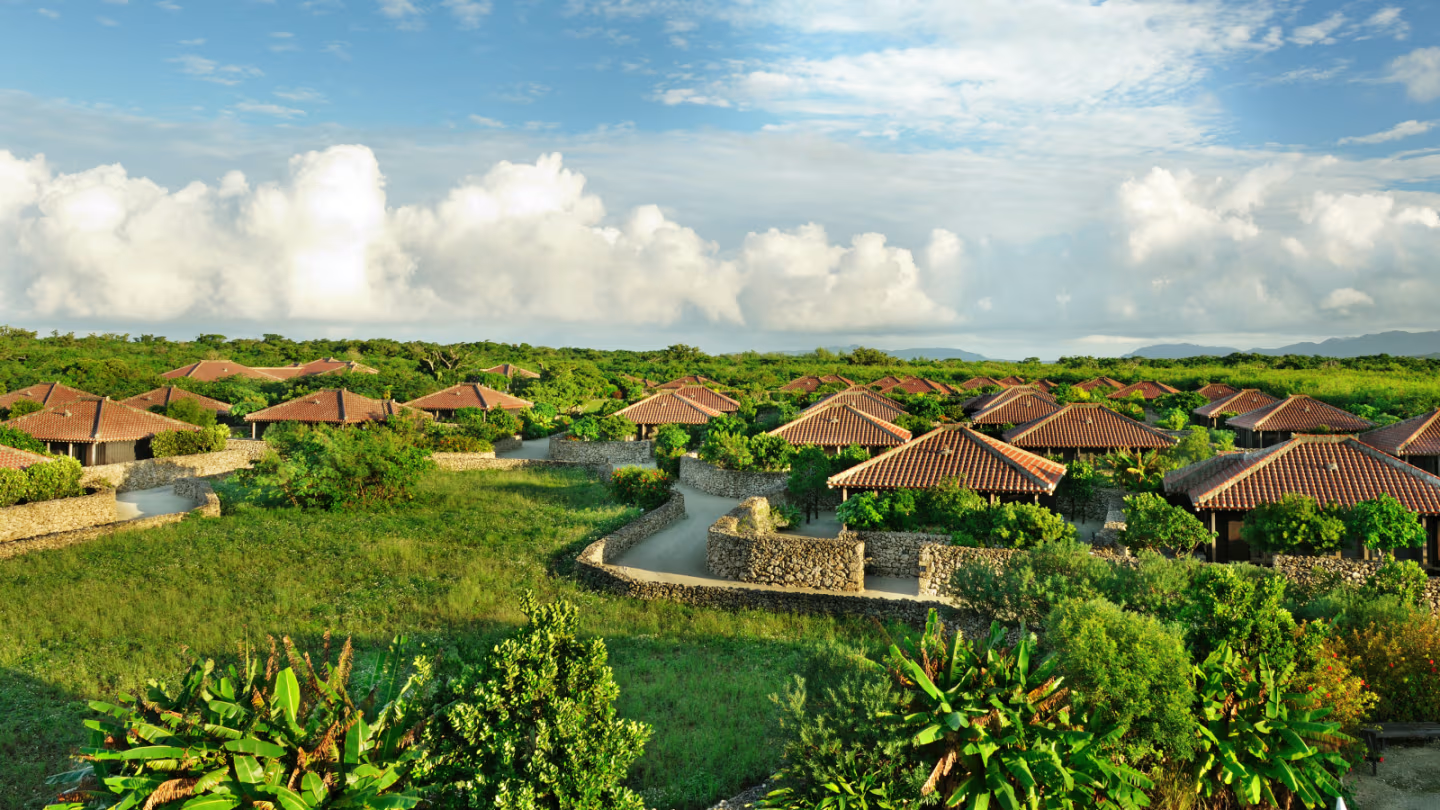
On Taketomi, HOSHINOYA is designed around the architecture and atmosphere of the island itself. Low villas, white coral-sand yards and traditional visual references create a sense of place rather than a generic tropical resort.
Its philosophy is especially suited to a refined Okinawa travel journey: stay close to the island’s traditions, move slowly, and allow the landscape to become part of the room. The property also offers experiences connected to local culture, the sea and the rhythms of island life.
The Ritz-Carlton, Okinawa — Resort Refinement
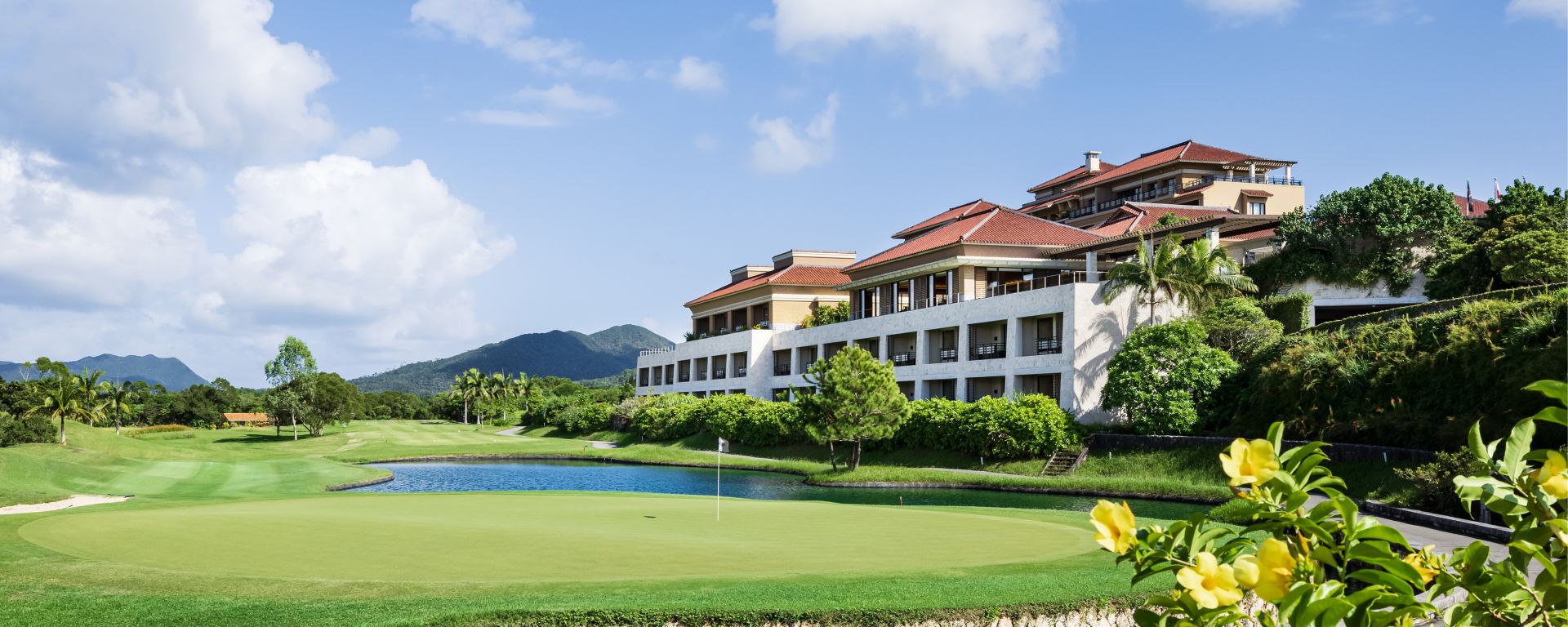
On the main island, The Ritz-Carlton, Okinawa offers a more conventional expression of high-end resort life, with golf, spa experiences, refined dining and views across the surrounding landscape.
It works particularly well as a beginning or ending to an Okinawa travel itinerary when you want the ease of a full-service resort without losing access to the island’s wider experiences.
Other Distinctive Stays
Okinawa rewards travellers who choose accommodation according to landscape. On the main island, look toward the northern coast for properties that place nature ahead of urban intensity. In the Yaeyama Islands, choose villas or intimate resorts that make the sea and village life part of the experience.
The guiding principle is simple: the best hotel in Okinawa is the one that makes you want to stay in the destination rather than merely sleep there.
Okinawa Travel After Dark
After sunset, Okinawa changes character.
Naha is the liveliest expression, with izakaya, music, markets and streets that remain active late into the evening. In smaller islands, darkness arrives differently. There may be little nightlife, but there is something better: the sound of insects, distant surf and a sky increasingly free of city light.
Try a small bar serving awamori. Listen for sanshin music. Walk through a quiet village. On a clear night in the islands, simply look upward.
Okinawa after dark is not about entertainment for entertainment’s sake. It is about discovering what the islands sound like when the heat falls away.
Okinawa Travel Before 8 AM
Early morning is when Okinawa feels most private.
On the coast, the water is often calmer and the light softer. Beaches can be almost empty. Fishermen are already moving through the harbour while the first cafés prepare breakfast.
On Taketomi, walk the village before the day’s visitors arrive. On Miyako, drive toward the coast with no fixed destination. On Ishigaki, watch the morning develop over the bay. In Naha, visit a market early and observe the city beginning its day.
One of the simplest luxuries in Okinawa travel is time before the itinerary starts.
Okinawa Travel Through the Seasons
Spring — Early Warmth
Okinawa enters spring earlier than most of Japan. January and February can bring cherry blossoms, while the islands move quickly toward warmer days. This is also a strong period for whale watching around the Kerama Islands.
Summer — The Sea Takes Over
Summer is made for swimming, diving, boating and long evenings outdoors. The sea becomes the centre of the itinerary, but travellers should plan around Okinawa’s powerful heat and the possibility of typhoons.
Autumn — Softer Light
Autumn can offer warm sea temperatures and a more relaxed atmosphere after the height of summer. It is an appealing period for combining cultural exploration with island stays.
Winter — Whales & Clear Horizons
Winter is one of Okinawa’s great surprises. Temperatures remain comparatively mild, while humpback whales gather around the Kerama Islands. For travellers seeking a quieter Okinawa travel experience, winter can be exceptionally rewarding.
Weather matters here. Okinawa is a subtropical island chain, and marine conditions can change quickly. Build flexibility into ferry connections and island-hopping plans.
A Luminara Five-Day Okinawa Travel Journey
Day 1 — Naha & Shuri
Arrive in Naha. Explore Shuri’s historic landscape, then spend the evening discovering Okinawan cuisine and music.
Day 2 — The Central Coast
Travel toward Onna. Combine a relaxed coastal afternoon with a marine experience and a refined dinner by the sea.
Day 3 — Northern Okinawa
Head toward Yanbaru. Spend the day in forest and coastal landscapes before returning to a quieter northern base.
Day 4 — Island Day
Take a day trip to the Kerama Islands, choosing Zamami or another island according to sea conditions and interests.
Day 5 — Naha & Departure
Return to Naha slowly. Leave space for one final meal, craft purchase or coffee before departure.
A Luminara Seven-Day Okinawa Travel Journey
Day 1 — Naha & the Ryukyu Kingdom
Arrive and settle into Naha. Explore Shuri and begin the historical story of Okinawa.
Day 2 — Naha to the Coast
Move toward the central coast, with time for craft, local food and the sea.
Day 3 — Yanbaru
Travel north into the forests. Choose a guided nature experience and spend the night close to the landscape.
Day 4 — Kerama Blue
Return toward the south and cross to the Kerama Islands for snorkelling, diving or whale watching according to season.
Day 5 — Ishigaki
Fly onward to Ishigaki. Slow the pace immediately.
Day 6 — Taketomi
Cross to Taketomi for a day shaped by coral-sand lanes, traditional houses and an unhurried island rhythm. Stay overnight if possible.
Day 7 — Return
Return through Ishigaki and onward, carrying a different image of Japan with you.
Okinawa Travel for Different Travellers
For Couples — Choose an island stay, private boat time and long dinners rather than an itinerary packed with attractions.
For Families — Combine beaches, aquariums, gentle marine activities and short nature experiences. Keep transfer days manageable.
For Design & Culture Travellers — Focus on Shuri, Ryukyuan craft, traditional architecture, Taketomi and the relationship between contemporary hospitality and island heritage.
For Divers & Ocean Lovers — Prioritise Kerama, Ishigaki and Miyako, allowing enough flexibility for marine conditions.
For Slow Travellers — Stay longer on one island. The less you move, the more Okinawa reveals.
For First-Time Visitors — Combine Naha and the main island with one outlying island rather than trying to cover the entire prefecture.
Beyond the Famous Okinawa Travel
The obvious Okinawa is beautiful. The less obvious Okinawa is often more memorable.
Look beyond the resort strip. Spend time in northern forests. Explore villages rather than only beaches. Visit a pottery or textile studio. Take a local food recommendation seriously. Stay overnight on an island that most visitors only see for a few hours.
Consider Iriomote when you want wilderness. Choose Taketomi when you want traditional village life. Choose Miyako when you want open space and long coastlines. Choose Ishigaki when you want a balance of comfort, nature and access to other islands.
Okinawa becomes more sophisticated as you stop asking, “What should I see?” and begin asking, “Where would I like to wake up tomorrow?”
Combining Okinawa with Tokyo, Kyoto & Osaka
Okinawa travel works beautifully as the final movement of a larger Japan journey.
Begin in Tokyo for scale, design and contemporary energy. Continue to Kyoto for temples, gardens and centuries of cultural refinement. Add Osaka for food, nightlife and urban warmth. Then fly south.
The contrast is extraordinary.
After Tokyo’s towers and Kyoto’s stone lanes, Okinawa opens the horizon. After crowded stations and carefully timed trains, the sea asks you to wait. After Japan’s northern seasons, the subtropical islands offer another climate and another cultural vocabulary.
For a two-week journey, Okinawa can become the final four to six nights: a deliberate slowing of the pace before returning home.
For a longer journey, combine the main island with one Yaeyama or Miyako stay rather than attempting to see every island.
Before You Arrive
Okinawa travel is easy to begin from major Japanese cities, with frequent flights to Naha and direct services to some outlying islands such as Ishigaki. The experience becomes more complex once you begin island hopping.
Ferries and flights are affected by weather. Typhoons can disrupt schedules, especially during the warmer months. Always keep some flexibility around inter-island transfers.
A rental car is useful on Okinawa’s main island and particularly valuable in the north, while smaller islands may be easier on foot, by bicycle, taxi or local transport.
Pack for heat and humidity, but also bring a light layer for air-conditioned spaces. For marine activities, use reef-conscious products and follow local instructions.
Most importantly, do not over-plan. Okinawa travel rewards empty space in the itinerary.
Luminara Note
Okinawa travel is where a Japan journey can become unexpectedly personal.
It is easy to arrive looking for a beach. It is harder—and far more rewarding—to leave having understood something about an island culture shaped by the sea.
Stay for the food. Stay for the music. Stay for the forests and coral reefs. Stay for the quiet roads, the red roofs, the old stories and the evenings when the horizon seems to have no edge.
Okinawa travel is not the Japan you expected.
That is precisely why it belongs at the end.
Continue Your Japan Journey
Okinawa travel can stand alone, but it also completes a broader Japanese journey.
Continue north toward Kyoto and the cultural heart of Japan, return to Osaka for its energetic food culture, or begin a completely different chapter in Hokkaido, where snow, forests and wide northern landscapes replace Okinawa’s subtropical sea.
For the final chapter of Japan, however, there is something fitting about ending here.
The country narrows into islands. The road becomes a ferry. The horizon opens.
And Japan, at last, slows down.