Osaka rarely introduces itself quietly. It arrives in layers.
The low rumble of a train beneath the city. The glow of lanterns appearing as evening settles. The hiss of batter meeting a hot iron plate. The smell of charcoal drifting from a narrow doorway. Laughter rising from an izakaya. Neon beginning to tremble across the dark water of the Dōtonbori canal.
This is Osaka.
A city that has always understood the pleasure of living well.
Here, food is conversation. Hospitality is instinct. A perfect bowl of noodles can feel as luxurious as a beautifully appointed suite. A counter seat can become an evening you remember for years. And sometimes the most sophisticated thing you can do is order one more dish and stay a little longer.
Come for the neon. Come for the food. Come for the extraordinary energy that makes Osaka one of Japan’s most magnetic cities. Then stay for the quieter Osaka: riverside evenings in Nakanoshima, old wooden lanes, temples before breakfast, craft shops tucked between modern buildings, and hotel rooms high above the city.
Osaka does something rare. It makes you feel welcome.
It is not a city to observe from a distance. It is a city to enter.
Osaka at a glance
- Best time: March to May and October to November
- Ideal stay: 3 to 5 days
- Best for: Gastronomy, nightlife, culture, design and luxury city breaks
- Begin with: Dōtonbori, Osaka Castle, Nakanoshima and Shitennō-ji
- Currency: Japanese yen (JPY)
The Essence of Osaka Luxury Travel
For travellers seeking Osaka luxury travel, the city’s greatest strength is that refinement never has to feel distant.
A city that would rather feed you than impress you
Osaka has none of Tokyo’s need to prove that it is enormous. It does not rely on scale alone. Its appeal is more intimate: a chef working quietly behind a counter, a lantern glowing above an alley, a tiny shop selling something made by hand, a conversation that lasts longer than expected.
The city’s character was shaped by commerce, craftsmanship and food. That history still lives in the streets. Osaka feels practical, curious and generous. Even its most polished experiences rarely feel distant.
For the luxury traveller, this is where Osaka becomes especially interesting. Luxury here is less about spectacle and more about quality: the right ingredients, the right room, the right table, the right neighbourhood, the right person guiding you through it.
Give Osaka an appetite. Give it evenings. Give it time.
Osaka is not Japan’s quietest city. It may be one of its most human.
Osaka at a Glance: How the City Works
A well-planned Osaka luxury travel itinerary balances efficient movement with enough time to wander.
Arriving in Osaka
Kansai International Airport is the principal international gateway, while Osaka Itami Airport is particularly convenient for domestic connections. From either airport, rail and airport transfer options make reaching the central districts straightforward.
For Osaka luxury travel, the city is built for movement, yet the best experiences still reward walking. JR trains, private railway lines and the Osaka Metro connect the city’s major areas, while rechargeable IC cards make everyday travel simple.
But do not mistake efficiency for the whole experience. Some of the most memorable Osaka moments begin when you leave the station without rushing to the next landmark.
The city rewards walking, especially when an Osaka luxury travel itinerary leaves room for spontaneous discoveries.
The best way to explore Osaka
- Use rail for longer crossings between neighbourhoods.
- Walk within neighbourhoods to discover smaller restaurants, shrines, cafés and craft shops.
- Travel early when visiting major cultural sites.
- Build evenings around one neighbourhood rather than crossing the city repeatedly.
- Keep some space in the itinerary for unplanned meals and discoveries.
Osaka Neighbourhood by Neighbourhood
The best Osaka luxury travel experiences often begin when you move beyond the obvious route.
Dōtonbori — the city turned theatrical
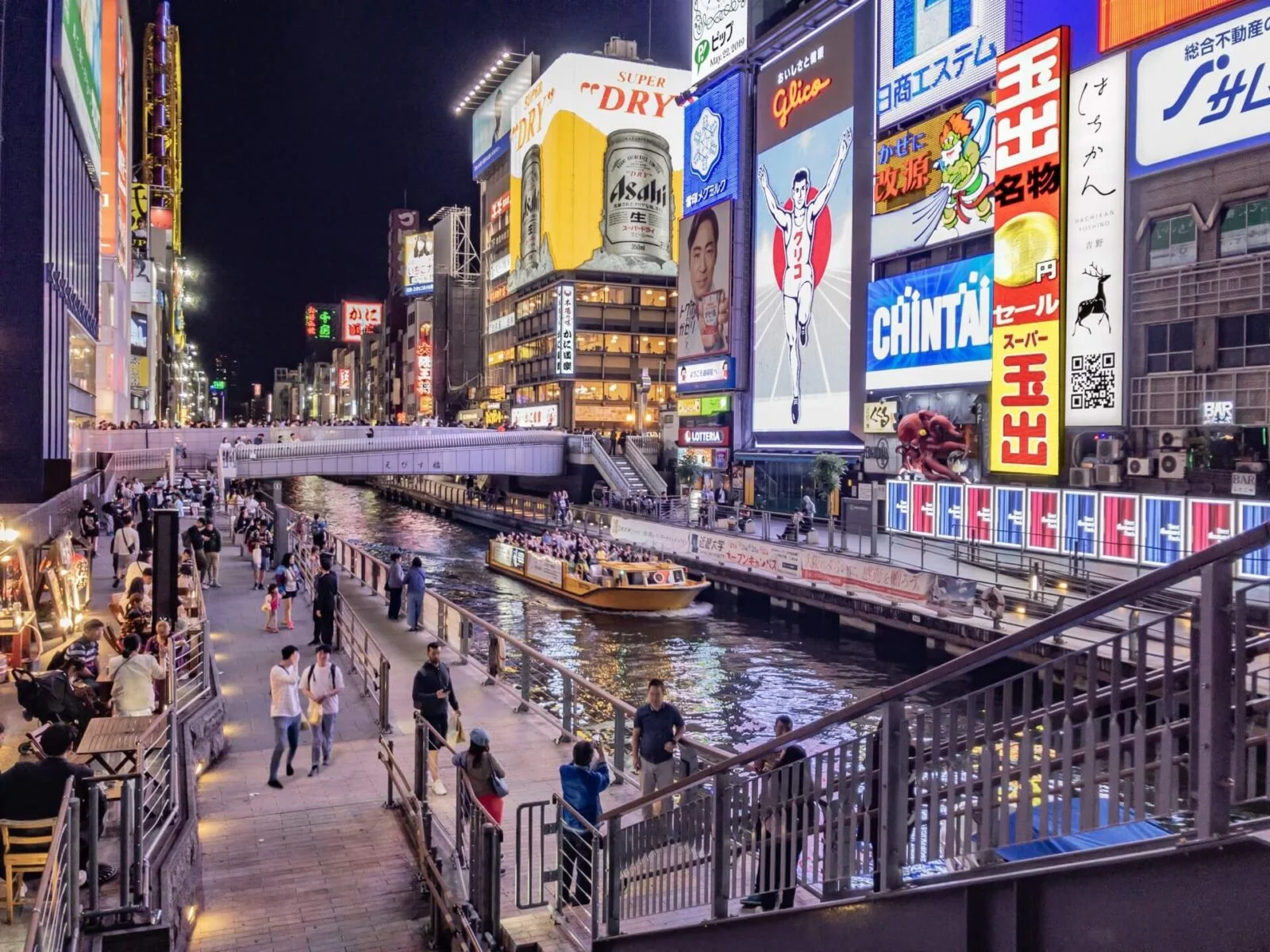
Dōtonbori is the Osaka most visitors imagine: illuminated signs, animated storefronts, food counters, crowds, canal reflections and a constant sense that something is about to happen.
Arrive before sunset. Watch the light change. Let the canal become a mirror of neon. Then leave the busiest stretch behind and find a smaller restaurant where the city suddenly becomes intimate.
Luminara moment: experience Dōtonbori at blue hour, when the transition from ordinary street to illuminated Osaka feels almost cinematic.
Namba — the pulse of modern Osaka
Namba is shopping, dining and entertainment compressed into one energetic district. It is a natural base for exploring Dōtonbori, Hozenji and the surrounding streets, and it is particularly compelling after dark.
Umeda — polished, vertical and contemporary
Umeda presents another side of Osaka: towers, department stores, sophisticated dining, contemporary architecture and extraordinary city views. It is ideal for travellers who want the energy of Osaka with a more polished urban edge.
Come for blue hour. Stay until the skyline becomes a field of light.
Shinsekai — old Osaka with a mischievous spirit
Shinsekai feels deliberately nostalgic. Its retro streets, kushikatsu restaurants and Tsutenkaku tower create an atmosphere unlike the polished districts farther north.
It is imperfect, colourful and deeply characterful — exactly the sort of place that reminds you why luxury travel should never mean seeing only the polished surface of a city.
Nakazakichō — the city’s creative side
Old wooden houses, small cafés, independent studios and creative spaces give Nakazakichō a slower rhythm. It is a neighbourhood for wandering rather than collecting sights.
Nakanoshima — Osaka in a quieter register
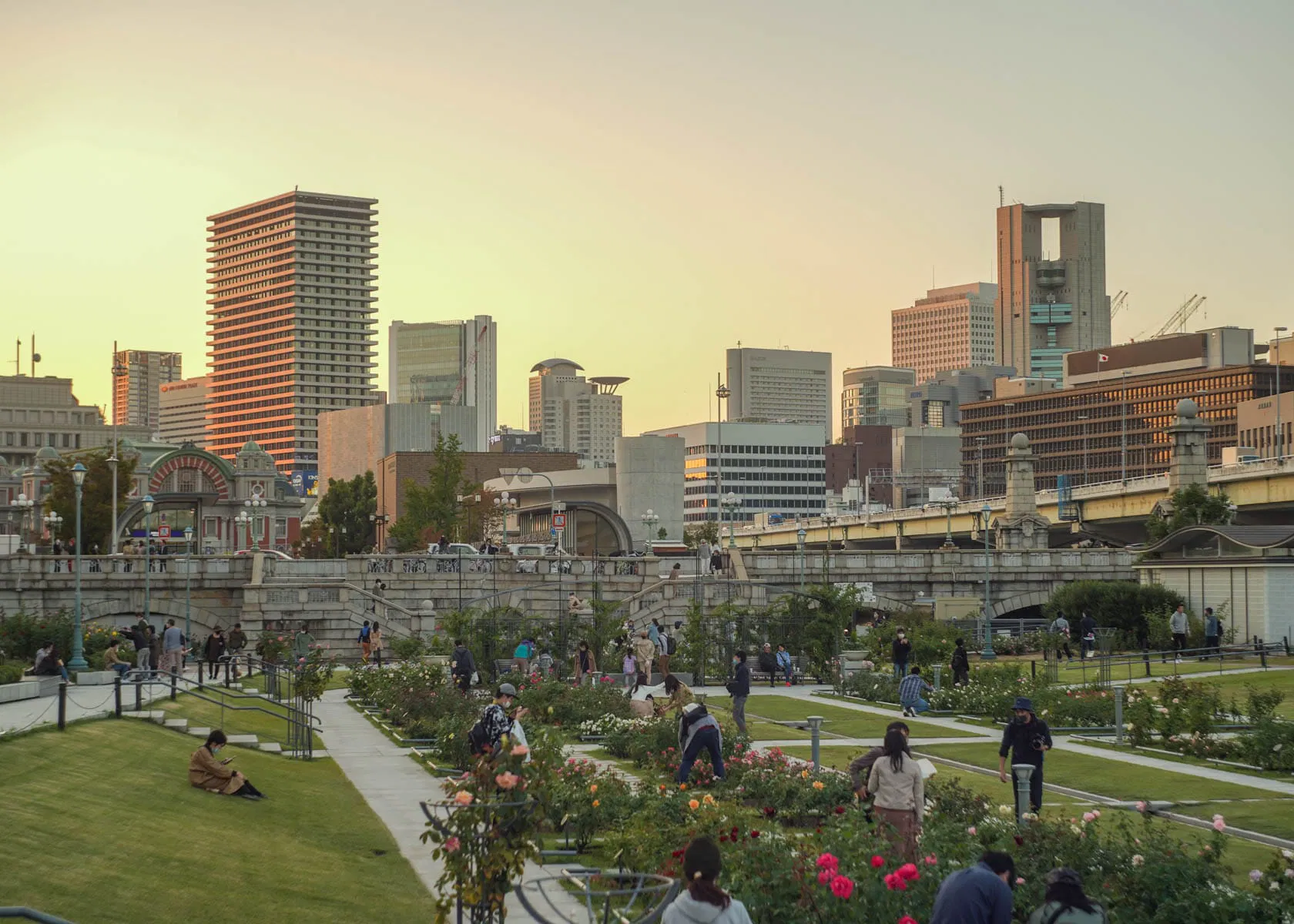
Between rivers and architecture, Nakanoshima feels composed. Historic buildings, galleries, cultural institutions and contemporary towers create a refined contrast to the intensity of Dōtonbori.
This is where the city begins to breathe differently.
Hozenji and Hozenji Yokocho — lantern light and intimacy
Near Namba, the small temple of Hozenji and its narrow lantern-lit lanes offer a remarkably intimate counterpoint to the surrounding city. Come in the evening, when the atmosphere becomes softer and more atmospheric.
Tennoji — temples, gardens and a different pace
Tennoji opens the door to a more contemplative Osaka, with historic temples, gardens and broad urban views. It is particularly rewarding for travellers who want culture without spending the entire day in the busiest tourist zones.
The Osaka You Came to See
Osaka Castle
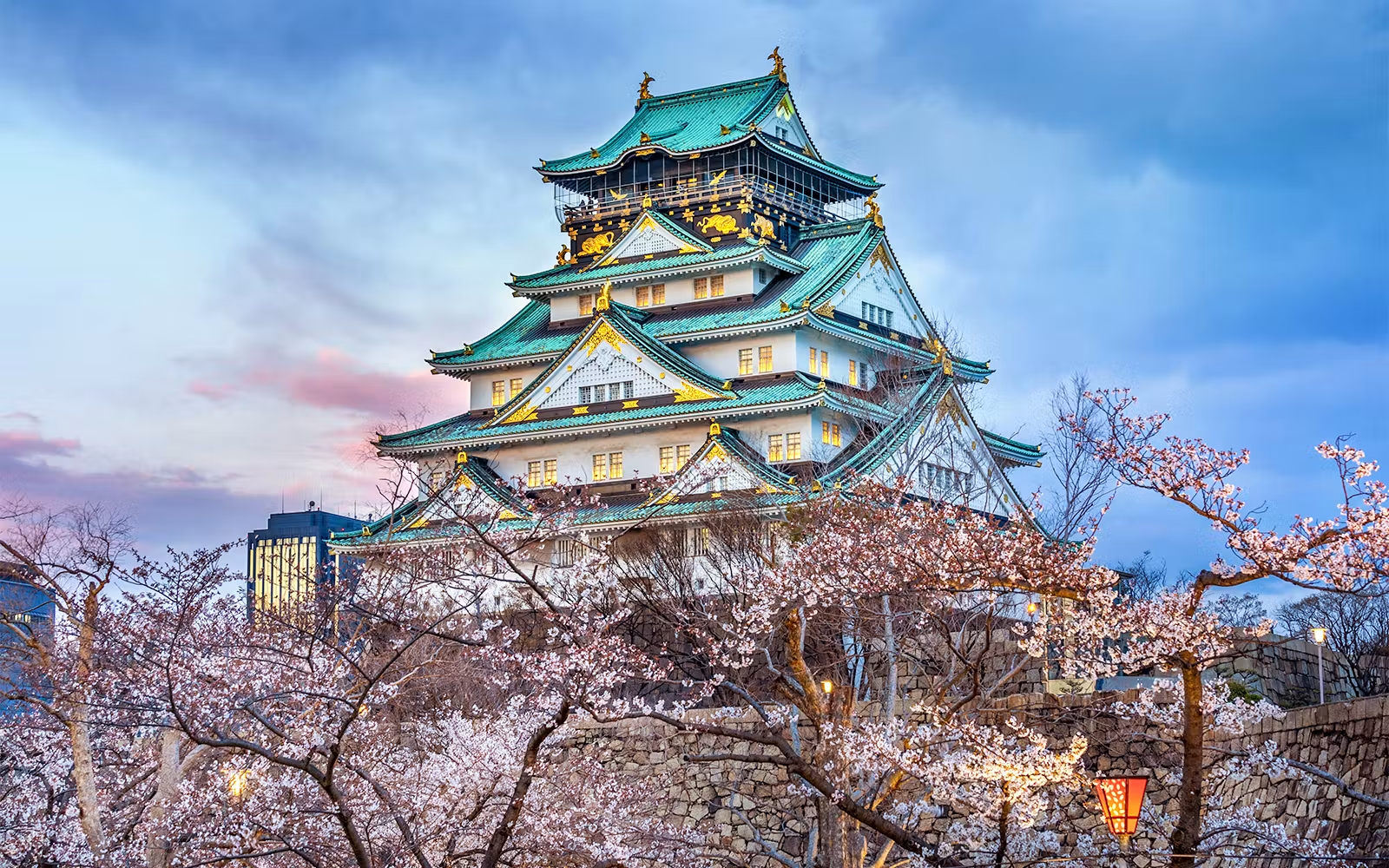
Osaka Castle carries the visual language of power: stone walls, moats, layered roofs and a silhouette that rises above the surrounding city. Explore the grounds as much as the castle itself. The changing relationship between stone, water, trees and skyline is part of the experience.
Dōtonbori
If Osaka has a stage, Dōtonbori is it. The lights, food and crowds create the city’s most recognisable evening scene. But the real pleasure comes from staying long enough for the spectacle to become ordinary.
Shitennō-ji
One of Japan’s oldest Buddhist temple traditions is represented here, giving visitors a glimpse of Osaka before the modern metropolis existed. Arrive early and let the quiet architecture set the tone for the day.
Tsutenkaku
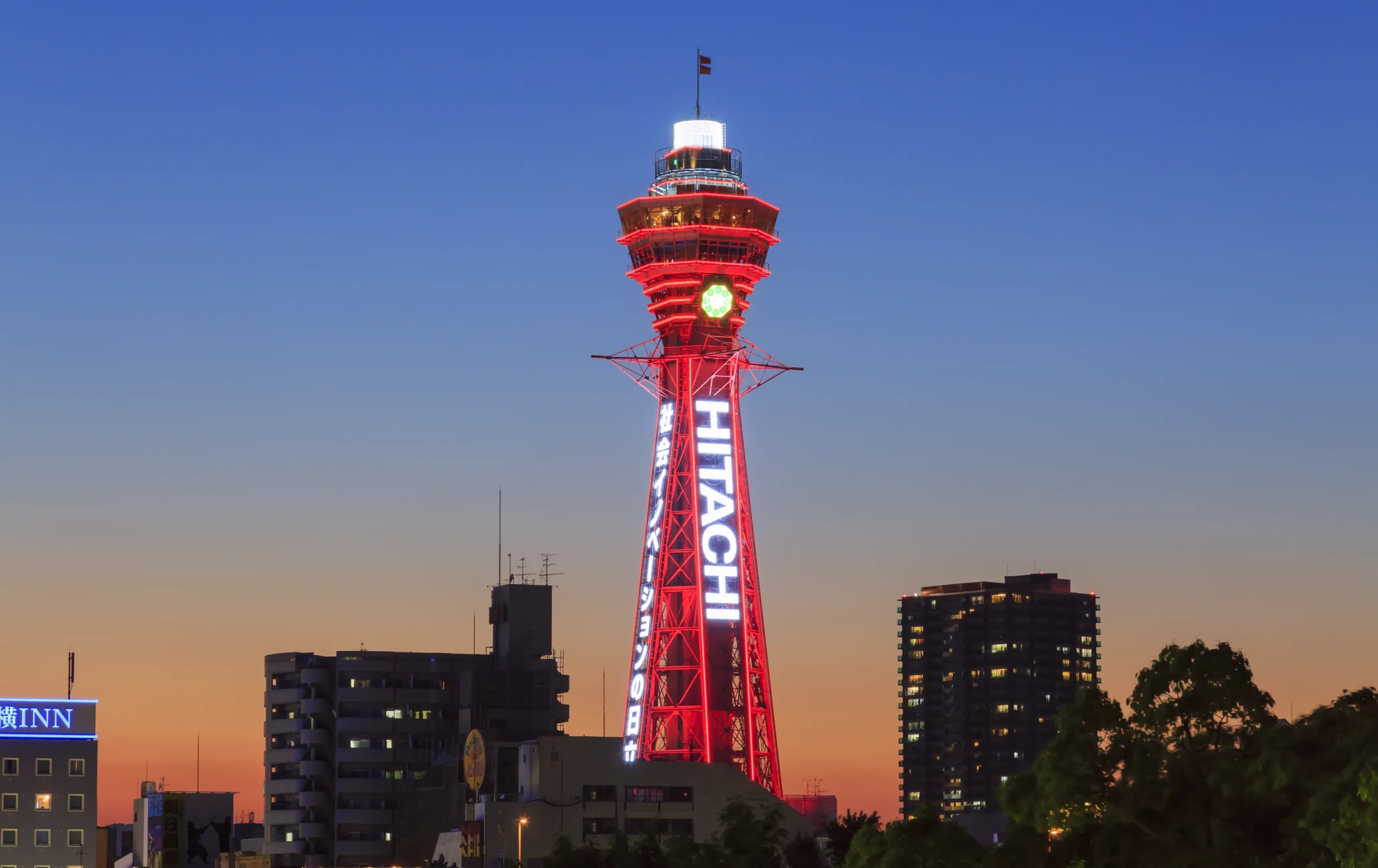
Rising above Shinsekai, Tsutenkaku is less about conventional grandeur and more about atmosphere. Its surrounding streets are part of the experience.
Kuromon Market
Kuromon is Osaka at the table: seafood, produce, prepared foods and the constant movement of people buying, cooking and eating. Go with curiosity rather than a checklist.
Umeda Sky Building
For a broad view of Osaka, head upward. The Umeda Sky Building offers a striking perspective on the city’s density, geometry and horizon. Arriving before sunset allows you to watch Osaka transform from architecture into light.
See the icons. Then give Osaka enough time to show you what happens after the photograph.
Osaka Before 8:00 AM
Before the city eats, Osaka whispers
Early morning reveals an entirely different Osaka. The streets are cleaner, quieter and more spacious. The city’s architecture becomes easier to notice, and places that feel crowded later can suddenly feel almost private.
- Around 6:00 AM — begin around Shitennō-ji.
- Around 6:30 AM — move toward the market district and watch Osaka begin to prepare for the day.
- Around 7:00 AM — walk through the quieter edges of Dōtonbori.
- Around 7:30 AM — explore Osaka Castle Park while the city is still waking.
- Around 8:00 AM — settle into breakfast and let the day begin slowly.
In a city built around appetite, the greatest luxury may be having the morning to yourself.
Osaka, Made by Hand
This attention to craft is central to the Luminara approach to Osaka luxury travel.
Osaka’s sophistication is inseparable from craftsmanship. Knives, ceramics, textiles, sweets, sake and tableware all reveal a culture where usefulness and beauty are often inseparable.
Look beyond the finished object. Notice the hands behind it. The weight of a knife. The texture of a ceramic cup. The precision of a sweet. The restraint of a beautifully arranged table.
This is one of the quiet lessons of Japanese luxury: excellence does not need to announce itself.
Osaka at the Table
For Osaka luxury travel, the table is as important as the hotel: choose meals for atmosphere, craft and a sense of place.
Some cities have great food. Osaka built a personality around it.
Osaka’s food culture is one of the reasons the city feels so immediate. Meals are social, sensory and often wonderfully unpretentious. The city invites you to eat with your eyes, your hands, your curiosity and your appetite.
Okonomiyaki
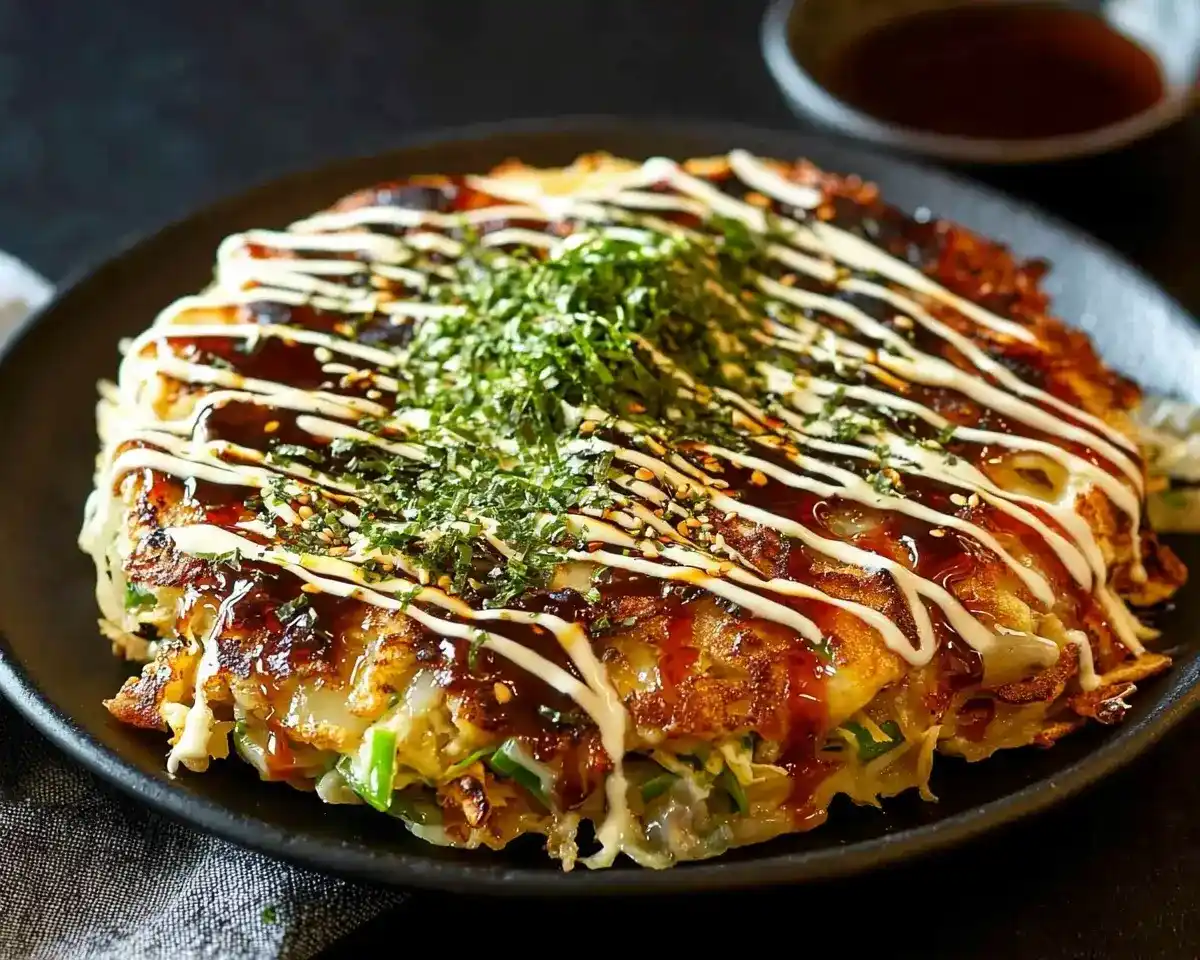
A savoury, layered Osaka classic that feels especially memorable when prepared in front of you. The pleasure is not only the dish but the theatre of the hot plate and the rhythm of the meal.
Takoyaki
Small, steaming and unmistakably Osaka. Eat them carefully, slowly and preferably fresh from the grill.
Kushikatsu
Skewered ingredients, crisp coating and the lively atmosphere of neighbourhood dining make kushikatsu inseparable from Osaka’s street-food personality.
Sushi and seafood
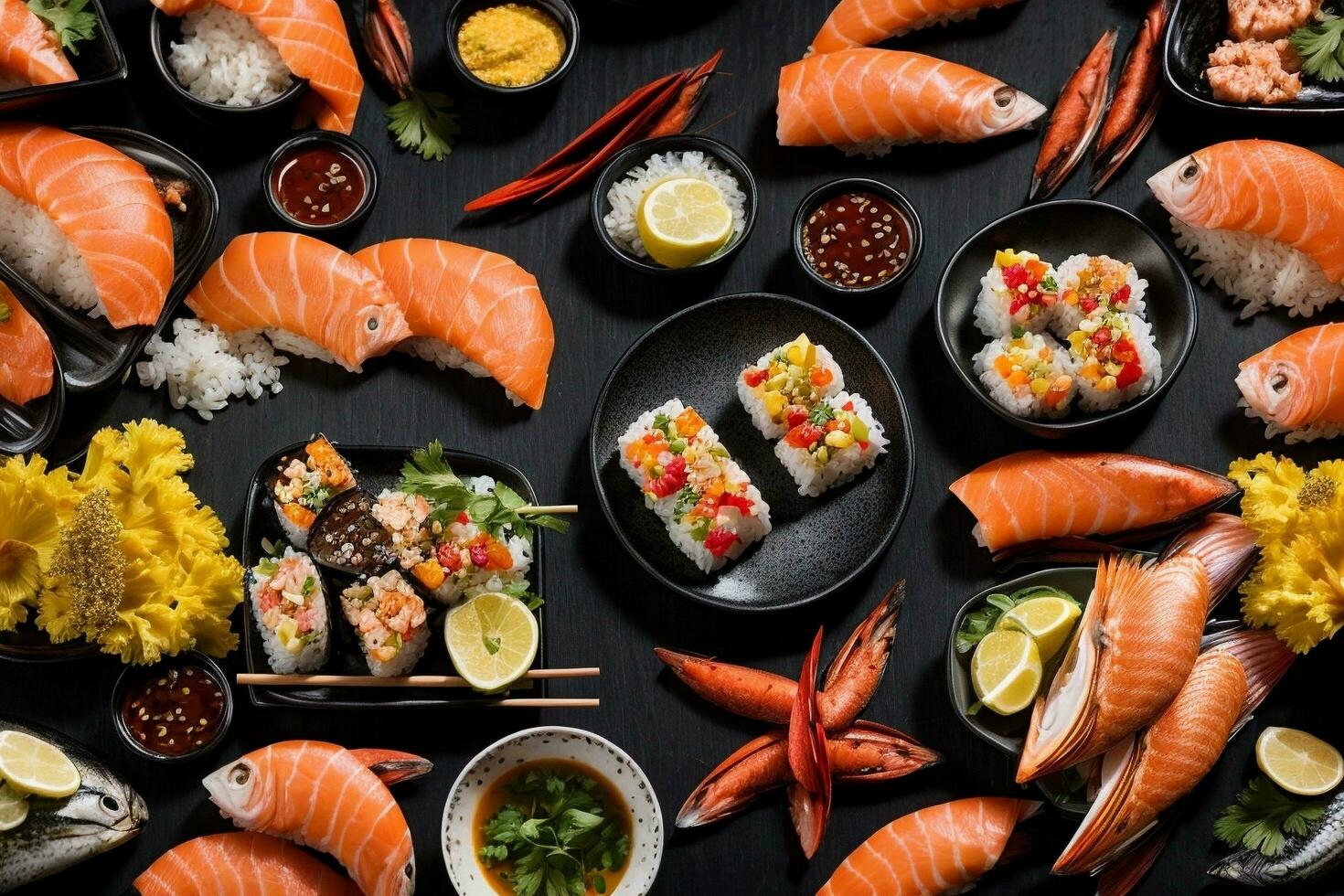
Osaka’s proximity to the sea and its long commercial history make seafood central to the city’s culinary identity. For a refined experience, look for intimate counters where the meal unfolds at the chef’s pace.
Udon and kitsune udon
Simple dishes can reveal a city more clearly than elaborate ones. A warm bowl of udon is exactly the kind of meal that makes Osaka feel generous.
Kappō and kaiseki
For travellers seeking a more elevated expression of Japanese cuisine, intimate kappō counters and refined kaiseki experiences offer precision, seasonality and a deeper sense of ceremony.
Izakaya and kissaten
An izakaya is where the evening stretches. A kissaten is where time slows down over coffee and conversation. Both belong in a luxury itinerary because both reveal the life of the city.
The counter
The counter is perhaps the most intimate way to eat in Osaka, and an essential detail of thoughtful Osaka luxury travel. You are close enough to see the ingredients, the gestures, the timing and the craft. It transforms dinner from a meal into an experience.
Osaka does not ask what you want to eat. It asks how long you are willing to stay at the table.
Osaka After Dark
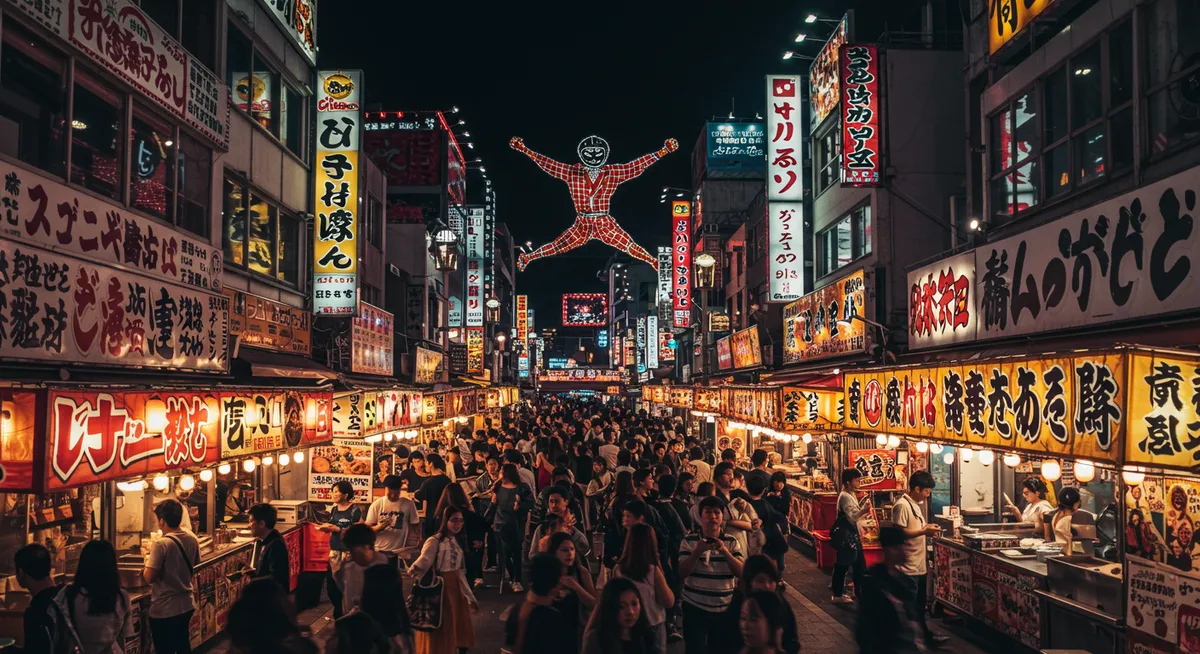
A considered Osaka luxury travel evening is less about checking venues off a list and more about following the city’s mood.
When the lanterns glow, Osaka becomes more Osaka
The city changes after sunset, which is why Osaka luxury travel feels especially compelling once dinner turns into an evening. Dōtonbori becomes electric. Hozenji Yokocho glows beneath lanterns. Shinsekai feels even more nostalgic. Nakanoshima becomes a ribbon of reflections. Umeda turns vertical.
For a sophisticated evening, resist the temptation to over-plan. Choose one neighbourhood. Begin with dinner. Move to a small bar. Walk. Listen. Find somewhere that feels almost hidden.
And when the night refuses to end, Osaka has one final ritual: ramen.
Osaka after dark is not one evening. It is a collection of small invitations.
Where Osaka Rises Above Itself
For travellers planning Osaka luxury travel, choosing the right hotel changes the rhythm of the entire stay.
Conrad Osaka — your address in the sky
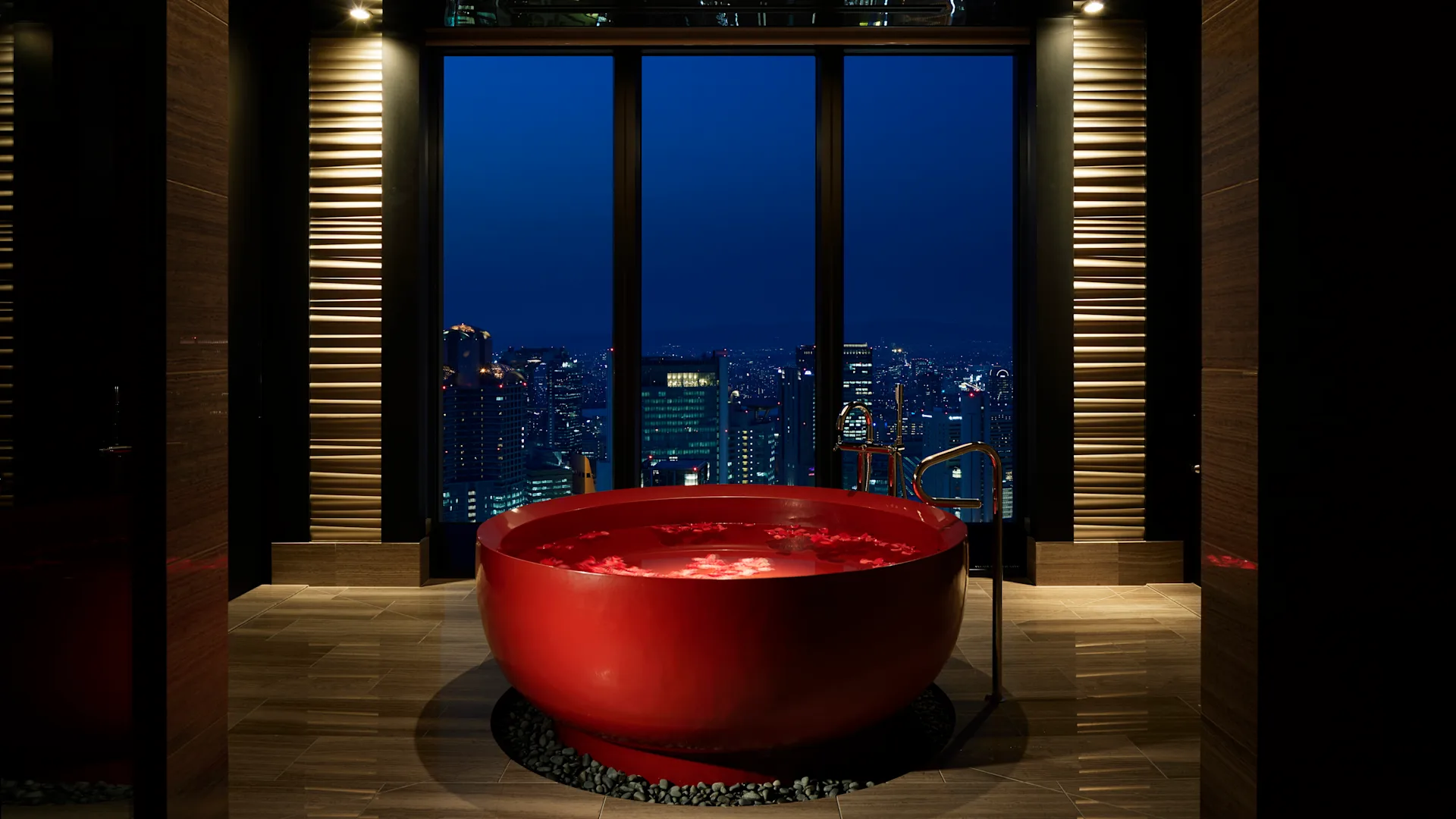
High above Nakanoshima, Conrad Osaka offers a distinctly modern expression of luxury: dramatic city views, floor-to-ceiling windows and an atmosphere that feels suspended above the movement of Osaka.
The experience becomes especially powerful at night. You leave Dōtonbori beneath a storm of neon. You return to Nakanoshima. The city becomes distant. The rivers become lines of light. Osaka stretches beneath you.
And for a moment, the city that never seemed to stop becomes completely still.
Best for: skyline views, contemporary luxury, gastronomy and couples.
Luminara choice: for the traveller who wants to experience Osaka completely — and then watch it disappear beneath the window at the end of the night.
Four Seasons Hotel Osaka — the new Japanese luxury
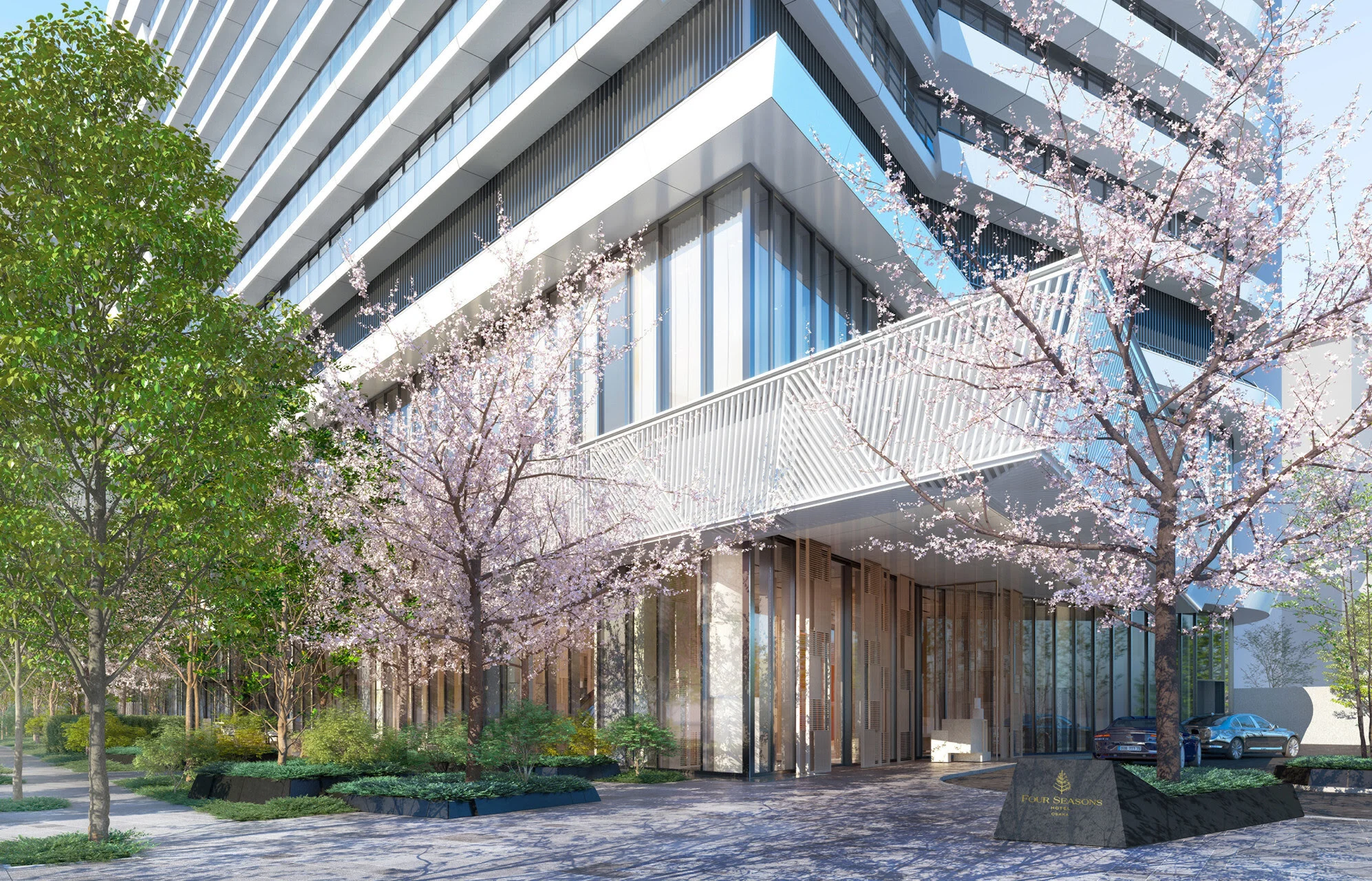
Four Seasons Hotel Osaka brings a contemporary interpretation of Japanese hospitality to central Osaka. Its design language, elevated dining and Japanese-inspired experiences create a stay that feels polished without losing its sense of place.
The GENSUI floor, with its modern ryokan-inspired atmosphere, offers a particularly distinctive expression of this idea: Japanese tradition translated into a contemporary luxury setting.
Best for: design, wellness, contemporary Japanese refinement and travellers seeking a quieter luxury aesthetic.
Luminara choice: for travellers who want Osaka’s future to feel unmistakably Japanese.
The Ritz-Carlton, Osaka — a different kind of grandeur
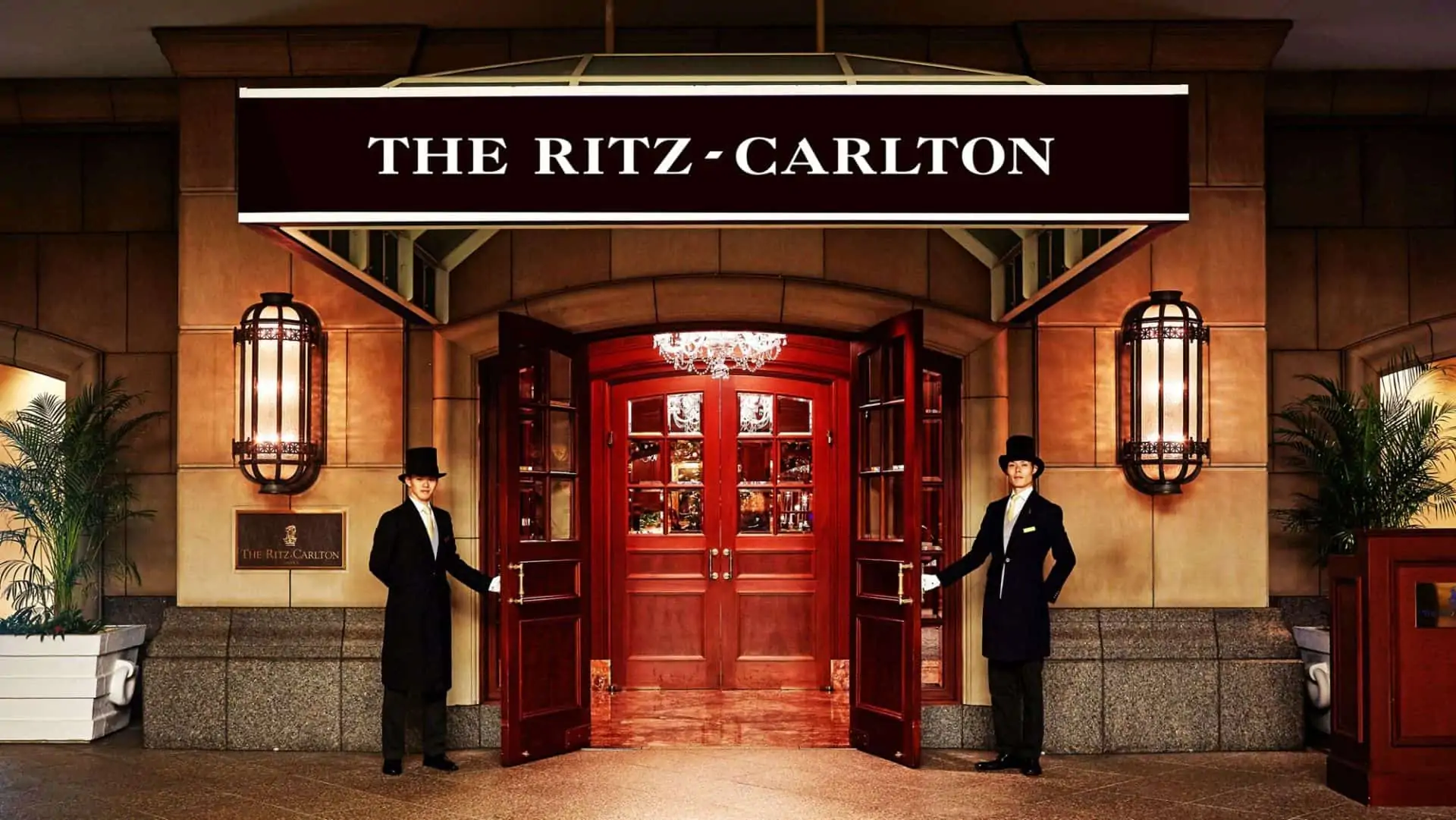
For travellers who prefer timeless luxury, The Ritz-Carlton, Osaka offers a more classical interpretation of the city. Its residence-inspired atmosphere, polished service and refined dining create a sense of old-world elegance within modern Umeda.
Best for: classic luxury, romance, service and traditional notions of grandeur.
Luminara choice: for travellers who believe luxury should feel timeless rather than fashionable.
The Luminara hotel edit
- Conrad Osaka — for skyline drama and contemporary city luxury.
- Four Seasons Hotel Osaka — for contemporary Japanese refinement.
- The Ritz-Carlton, Osaka — for timeless grandeur and classic elegance.
The right hotel does not take you away from Osaka; it elevates the rhythm of Osaka luxury travel. It gives you another way to experience it.
Osaka Through the Seasons
The best season for Osaka luxury travel depends on whether you prefer blossoms, cooler walking weather, summer nights or winter atmosphere.
Spring — light, blossoms and new energy
For Osaka luxury travel, spring brings a beautiful balance of mild weather, outdoor walks and seasonal colour. It is ideal for travellers who want to combine cultural exploration with long evenings outdoors.
Summer — warm nights and festival energy
For Osaka luxury travel, summer is lively and humid, but Osaka’s nightlife comes into its own. Late dinners, riverside walks and illuminated streets make evenings especially memorable.
Autumn — Osaka at its most elegant
For Osaka luxury travel, October and November bring cooler air and a refined atmosphere. It is one of the strongest seasons for walking, food, architecture and cultural exploration.
Winter — neon against cold air
For Osaka luxury travel, winter sharpens the city. The air feels clearer, warm bowls of noodles become more comforting, and Osaka’s illuminated streets feel particularly cinematic after dark.
The Luminara 48 Hours in Osaka
This Osaka luxury travel itinerary is designed to feel immersive rather than rushed.
Day one — the classic city, seen differently
- Morning: Osaka Castle and its surrounding grounds.
- Late morning: Nakanoshima and a slow lunch.
- Afternoon: Kuromon Market and Namba.
- Blue hour: Dōtonbori.
- Evening: Hozenji Yokocho and a carefully chosen dinner.
The first day of an Osaka luxury travel itinerary should establish the city without exhausting it.
Day two — old Osaka, creative Osaka, night Osaka
- Early morning: Shitennō-ji and Tennoji.
- Late morning: a traditional breakfast or kissaten.
- Afternoon: Nakazakichō and independent cafés or craft spaces.
- Sunset: Umeda Sky Building.
- Night: Shinsekai, a refined dinner or intimate bar, then late-night ramen.
Two days should leave you wanting more Osaka, not exhausted from trying to finish it.
Four Days in Osaka
Four days allow Osaka luxury travel to become more personal, with time for neighbourhoods, dining and slower discoveries.
Day one — imperial Osaka and the rivers
Begin with Osaka Castle, then slow down around Nakanoshima. Finish with dinner in Namba and an evening walk through Hozenji.
Day two — the city at the table
Build the day around food. Explore Kuromon, discover local specialities, take time for an intimate lunch and reserve the evening for a kappō, sushi or other carefully chosen dining experience.
Day three — old Osaka
Explore Shitennō-ji, Tennoji and Shinsekai. This is the day to look for the Osaka beneath the glossy surface.
Day four — your Osaka
Choose what you loved most: architecture, craft, food, shopping, cafés, neighbourhood walks or simply doing less. Luxury travel becomes memorable when the itinerary starts making room for personal instinct.
Five Days in Osaka
With five days, Osaka luxury travel becomes less about sightseeing and more about inhabiting the city.
With five days, resist the urge to add another dozen attractions. Use the extra day as space.
Return to the neighbourhood that surprised you. Book the restaurant you could not fit in. Spend an afternoon shopping for craft. Take a long lunch. Walk beside the river. Visit a garden. Or simply leave the hotel without a plan.
The longer you stay, the less Osaka luxury travel feels like a destination experience and the more the city begins to feel like a place you know. and the more it begins to feel like a place you know.
Beyond Central Osaka
Beyond the headline districts, Osaka luxury travel becomes an invitation to discover the city at a more local pace.
Fukushima
A lively dining neighbourhood close to Umeda, known for a strong restaurant culture and a more local evening atmosphere.
Kitahama
A sophisticated riverside district with historic architecture, cafés and a calmer business-city rhythm.
Sakuranomiya
A riverside area that becomes especially attractive for walking during seasonal blooms.
Tengachaya
A less polished, more everyday expression of Osaka that rewards travellers who want to see the city beyond its headline districts.
Day Journeys from Osaka
The finest Osaka luxury travel itineraries can also make room for carefully chosen journeys beyond the city.
Nara
For temple architecture, deer-filled parkland, ancient atmosphere and a slower cultural rhythm.
Kobe
For harbour views, elegant dining, mountain-backed streets and a different expression of Kansai sophistication.
Himeji
For one of Japan’s most striking castle experiences and a rewarding change of scale from Osaka.
Kōyasan
For a more contemplative journey into temple culture, mountain landscapes and spiritual heritage.
Kurashiki
For preserved historic streets, canals and a quieter visual atmosphere.
Kyoto
Kyoto is close enough to make a natural extension, but it deserves its own pace. If included, avoid treating it as a checklist day trip.
Before You Arrive in Osaka
The smartest Osaka luxury travel plans reserve what matters and leave room for discovery.
Plan by neighbourhood, not by attraction
Grouping experiences geographically saves time and creates a better rhythm. Osaka luxury travel is best experienced as a sequence of neighbourhood moods rather than a race between individual sights.
Reserve selectively
For Osaka luxury travel, reserve the experiences that genuinely matter to you — especially sought-after restaurants or intimate counters. Leave the rest flexible.
Start early
On Osaka luxury travel, major cultural sites are dramatically more enjoyable before the crowds build.
Eat outside the obvious
Do not judge Osaka’s food culture only by the most photographed streets. Some of the city’s most rewarding meals happen behind quiet doors.
Look above street level
Restaurants and bars are not always at street level. In Osaka, some of the best experiences are hidden upstairs, in basements or behind understated entrances.
Leave space
The most luxurious Osaka luxury travel itinerary is not necessarily the fullest one. Osaka rewards spontaneity.
The Luminara Note
That is what makes Osaka luxury travel so memorable: the city rewards curiosity long after the itinerary ends.
Osaka will feed you. Then it will stay with you.
You may remember the neon first.
Then the steam rising from a bowl late at night. The moss-covered statue in a quiet temple. The bartender who remembered your order. The sound of charcoal. The first bite of something you could not pronounce. The river beneath the lights. The silence of your hotel room high above the city.
That is the secret of Osaka luxury travel.
It does not demand your attention. It earns your affection.
And somewhere between the first morning walk and the last late-night meal, you stop feeling like you are visiting.
You are simply there.
Osaka luxury travel is not about completing a city.
It is a city to fall into.
Continue Your Japan Journey
Osaka is only one expression of Japan. Beyond its neon nights, extraordinary food and unmistakable energy, three very different destinations invite you to continue the journey — from the futuristic pulse of Tokyo to the quiet mountain landscapes of Hakone and the timeless elegance of Kyoto.
Tokyo — Japan in Motion
If Osaka is Japan at its most spontaneous, Tokyo is Japan in perpetual motion. A city of extraordinary scale and contrast, where Michelin-starred dining, contemporary architecture, ancient shrines, hidden cocktail bars and quietly refined neighbourhoods exist side by side.
Move from the electric streets of Shibuya to the serene gardens of the Imperial Palace. Discover intimate sushi counters, design-led hotels and neighbourhoods that reveal a more personal side of the capital.
For travellers beginning their Japan journey in Osaka, Tokyo offers a fascinating contrast — more expansive, more futuristic and endlessly layered.
→ Discover Tokyo
Hakone — Japan in Stillness
After the energy of Osaka, Hakone offers something completely different: space, silence and time.
Set among mountains, forests and volcanic landscapes, Hakone is a place for slowing down. Stay in a beautifully considered ryokan, step into a private onsen, cruise across Lake Ashi or wake to views of Mount Fuji when the weather allows.
It is the perfect transition between Japan’s energetic cities and its quieter traditions — a destination where luxury is measured not by what you add to the itinerary, but by what you are able to leave behind.
→ Discover Hakone
Kyoto — Japan Through the Ages
Where Osaka feels immediate, Kyoto feels timeless.
Its temple gardens, wooden machiya, traditional tea culture, refined kaiseki dining and centuries-old craftsmanship reveal a quieter and more contemplative side of Japan. Walk through Gion in the early morning, discover hidden temple gardens or experience the rituals of Japanese hospitality at a traditional ryokan.
For travellers who have experienced Osaka through its food, streets and nightlife, Kyoto provides the perfect cultural counterpoint — elegant, atmospheric and deeply connected to Japan’s heritage.
→ Discover Kyoto
One Japan. Four Extraordinary Experiences.
Tokyo brings the energy.
Hakone brings the stillness.
Kyoto brings the heritage.
Osaka brings the appetite.
Together, they create a Japan journey that moves beyond sightseeing and into something far more memorable — experiencing the country through its contrasting personalities.
Tokyo → Hakone → Kyoto → Osaka
Continue Your Journey Through Japan →