
Mykonos knows how to make an entrance. Whitewashed houses gather above the harbour, the windmills stand against a vast Aegean sky, and the island’s celebrated beach clubs capture the spirit of summer at its most sophisticated.
Yet beyond the glamour lies a more intimate island: quiet chapels tucked between narrow lanes, fishing boats resting in sheltered harbours, long lunches that drift into the afternoon, and corners of coastline where the Aegean seems to belong entirely to you.
For the discerning traveller, Mykonos is not simply a destination to see; it is an island to experience at your own pace. Wander through Hora before the streets awaken. Follow the coast beyond its celebrated beaches. Cross the water to ancient Delos, where the remains of an extraordinary civilisation rise beneath the Mediterranean sun. The island’s glamour is unmistakable. Its deeper beauty reveals itself when you look beyond the obvious.
Hora, Before the Island Wakes
Known locally as Chora as well as Mykonos Town, Hora is a maze of white façades, blue shutters, tiny chapels and lanes that open unexpectedly onto the sea. Its character is revealed in details rather than grand gestures: bougainvillea spilling across a wall, a quiet courtyard behind a doorway, a small gallery tucked into a passage, or sunlight turning a whitewashed corner almost luminous.
Come early, when the town belongs more to residents than to the day’s visitors. Wander without trying to cover every lane, pause for coffee, and notice how the light changes the architecture. Return later for independent boutiques, galleries and design stores, then let the town’s mood shift as the afternoon fades. Mykonos may be famous for being seen, but Hora is best discovered by looking closely.
Little Venice and the Windmills at the Edge of Light
At Little Venice, historic houses lean towards the water, their balconies and terraces poised above the waves. Nearby, the windmills form one of the island’s most recognisable silhouettes. Both are popular for good reason, but their appeal is greater when you allow time to experience the waterfront rather than treating it as a quick stop for a photograph.
Arrive before sunset and watch the light move across the buildings as the sea deepens from blue to silver. The area can be busy in high season; a little patience and a willingness to explore the neighbouring lanes can make the moment feel more personal. Stay as the sky darkens and the lights begin to glow across the harbour.
Panagia Paraportiani and the Island Beyond Its Image
Near the old waterfront, the sculptural white forms of Panagia Paraportiani rise in an arrangement shaped by centuries of building and rebuilding. It is one of Mykonos’ most distinctive religious landmarks and a reminder that the island’s identity reaches far beyond contemporary leisure culture.
Inland, Ano Mera offers a quieter view of everyday island life. Explore the village square and, where open to visitors, the historic Monastery of Panagia Tourliani. Dress respectfully and observe any restrictions around photography or access. These quieter moments bring balance to the coastline and offer a glimpse of the traditions that continue beneath Mykonos’ polished public image.
The Beaches: A Different Character Around Every Curve
Mykonos’ beaches each have a distinct personality. Psarou is associated with an elevated beach-club scene; Ornos and Platis Gialos combine swimming with dining and useful transport connections; and Elia offers a broader sweep of sand with a resort-oriented atmosphere. Agios Ioannis can feel gentler, with views across the water, while northern shores such as Agios Sostis and Fokos may appeal to travellers seeking a less developed setting.
Choose by mood, not reputation. A lively beach club can be part of the Mykonos experience, but so can a quiet swim followed by a long lunch. The island is exposed to the wind, which can change conditions from one day to the next. Check local advice before swimming or arranging a boat outing, and remember that facilities may be limited at more secluded beaches.
Delos: A Journey into the Ancient Aegean
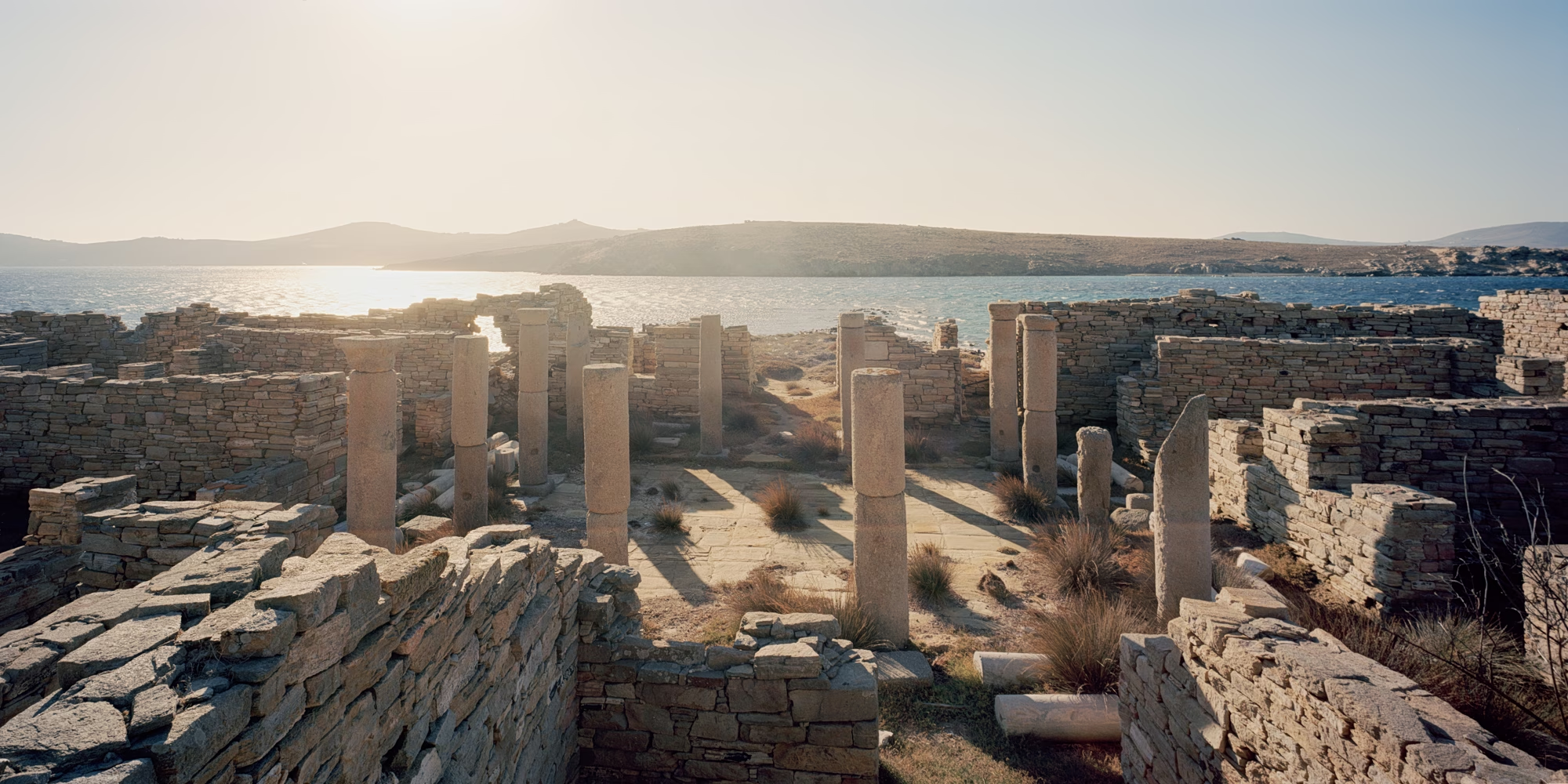
One of the most rewarding excursions from Mykonos begins with a short journey across the water to Delos. Revered in ancient Greek tradition and associated with Apollo and Artemis, the island became an important sacred and commercial centre. Today, sanctuaries, streets, mosaics and traces of residential life occupy an open landscape where the scale of history feels inseparable from the sunlight and sea.
Plan the visit around current boat schedules, site opening information and weather. A knowledgeable guide can add context to the ruins, but even an independent visit rewards patience: look closely, walk slowly, and allow the landscape to speak. Some boat excursions also include swimming stops near neighbouring Rinia, depending on the operator and sea conditions. Confirm the itinerary before booking.
Dining: Aegean Ingredients and Unhurried Tables
Dining on Mykonos ranges from contemporary kitchens with ambitious menus to tavernas where the pleasure lies in fresh ingredients and a table that is never hurried. Look for seasonal seafood, grilled fish, local cheeses, fresh vegetables, herb-led dishes and meze made for sharing. A memorable meal might be an elegant dinner in town—or a relaxed lunch beside the water that stretches well into the afternoon.
For sought-after restaurants, particularly in high summer, reserve ahead and confirm details directly. Leave room, too, for a spontaneous discovery. Ask your hotel or a trusted local host for recommendations that match your taste: a lively terrace, a romantic setting, or a quieter expression of island cooking. On Mykonos, the right atmosphere can matter as much as the menu.
Aegean Nights, on Your Own Terms
Mykonos has an international reputation for nightlife, but there is no single way to spend an evening here. Some travellers come for beach clubs and music that continues late into the night; others prefer sunset drinks, a candlelit dinner or a quiet walk through Hora after the busiest hours have passed.
Before visiting a popular venue, confirm its seasonal opening dates, reservation requirements, minimum spend and transport arrangements. These can vary considerably between venues and across the season. If privacy and rest matter as much as access to the scene, choose accommodation that gives you a genuine retreat at the end of the night.
The Island’s Finest Addresses
On Mykonos, where you stay shapes the island you experience. A base near Hora makes spontaneous dinners and evening walks easier; a beachfront setting places swimming and slow mornings at the centre of the day; a hillside retreat can offer distance from the busiest roads and a wider view of the Aegean. These properties offer different interpretations of high-end island hospitality. Confirm current facilities, seasonal opening dates, room categories and services directly before booking.
Kalesma Mykonos
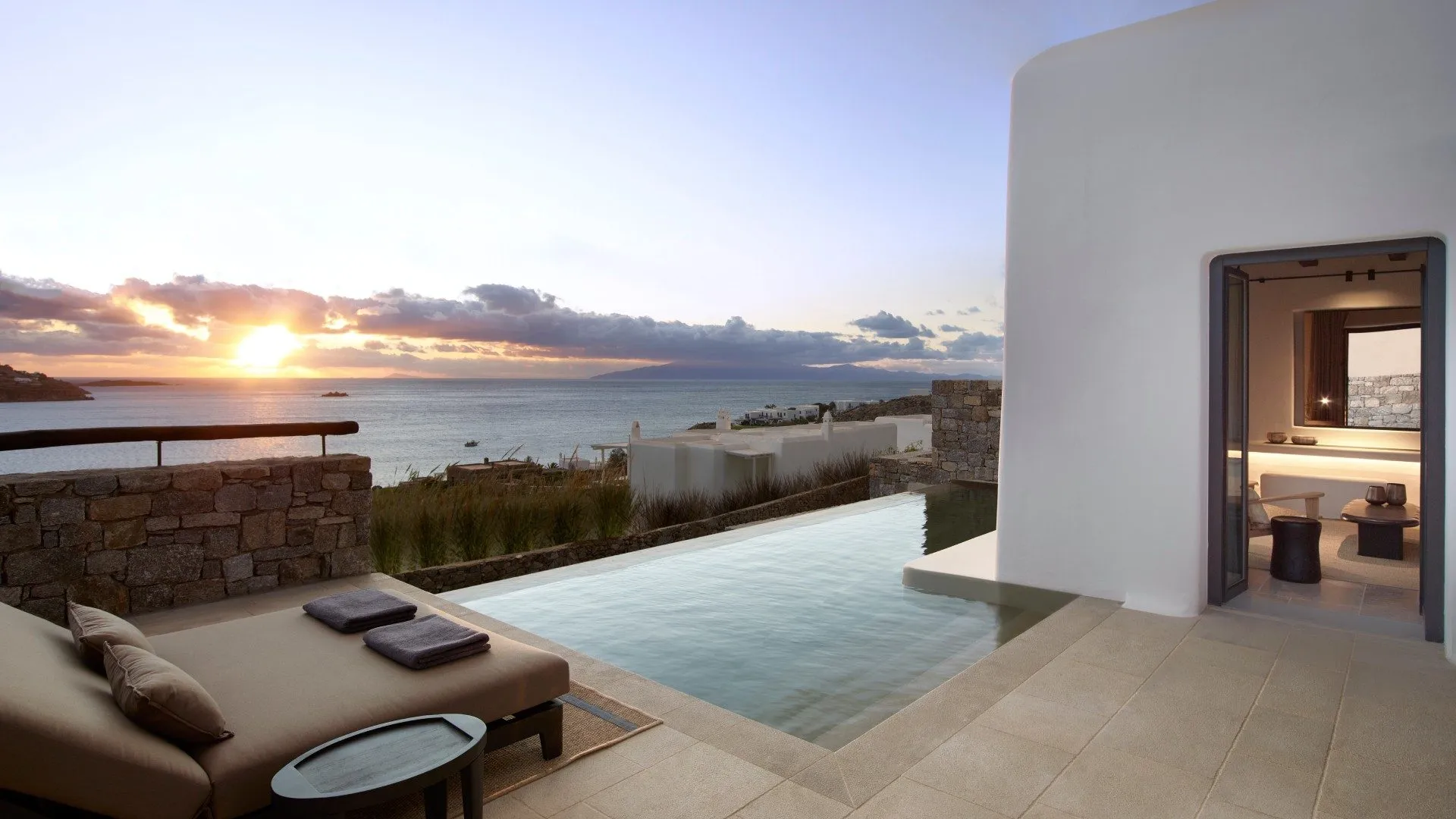
Set on the Aleomandra peninsula, Kalesma is known for a contemporary interpretation of Cycladic design, with natural textures, white forms and expansive sea views. Its atmosphere is closer to a private retreat than a town-centred hotel, making it a compelling option for travellers who value space, thoughtful design and a slower rhythm between outings. Its setting means that transport planning is useful when dining or exploring elsewhere on the island.
Bill & Coo Suites and Lounge
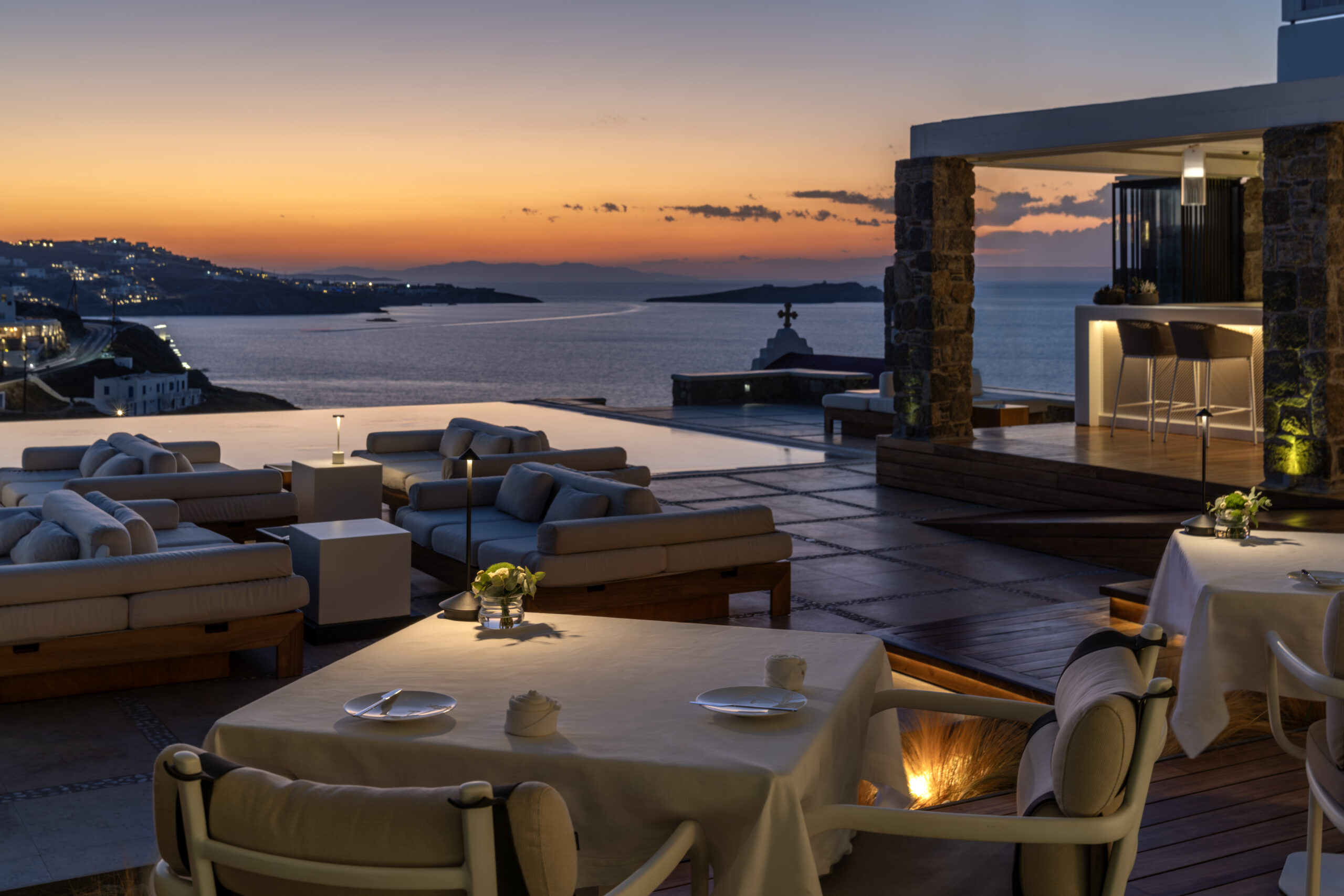
Close to Mykonos Town, Bill & Coo pairs a refined boutique-hotel atmosphere with convenient access to the island’s restaurants and evening life. It may suit couples and travellers who want attentive hospitality and sea-facing moments without feeling far removed from Hora. When comparing rooms, check the specific category, as views, layouts and amenities can differ.
Santa Marina, a Luxury Collection Resort
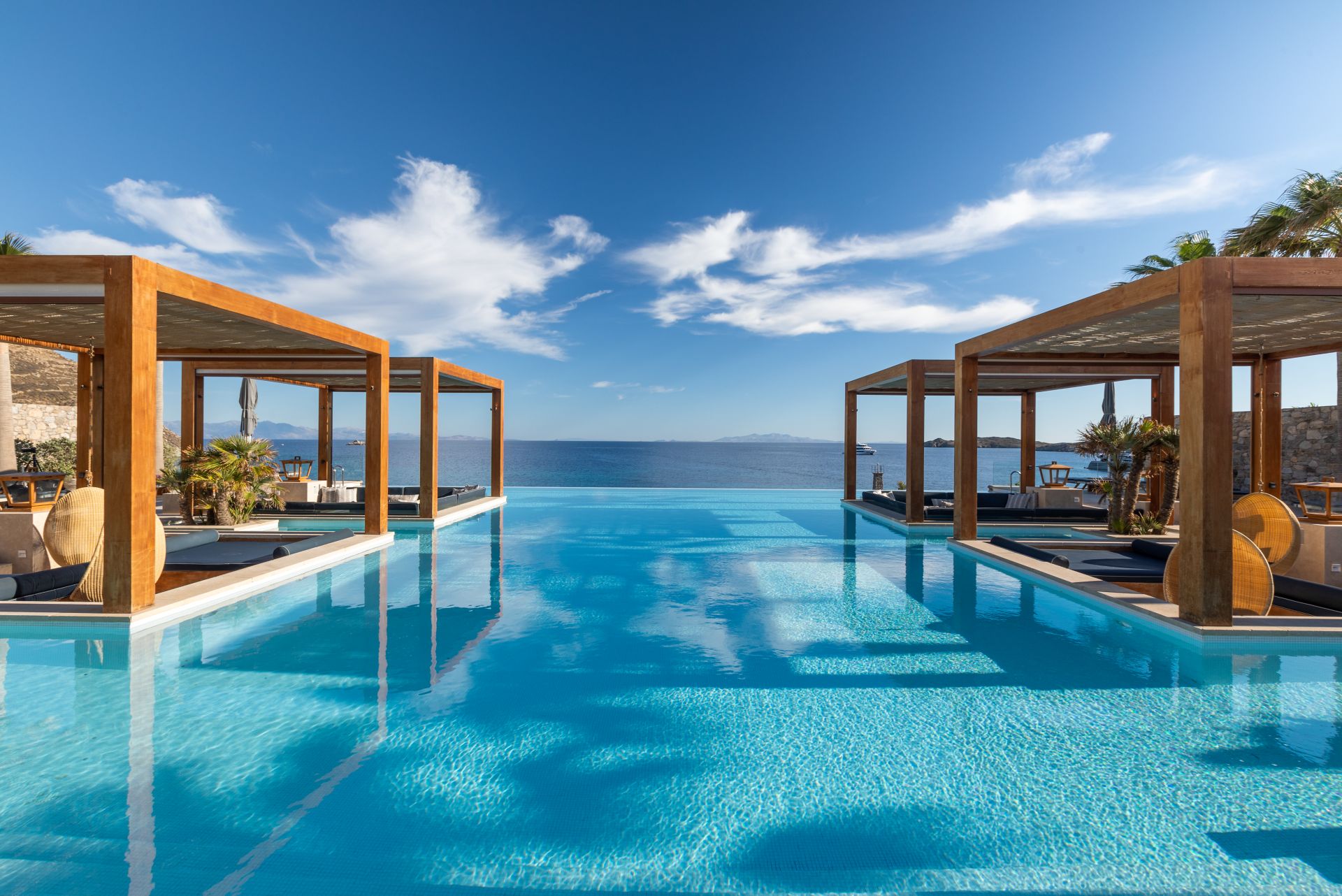
On the Ornos peninsula, Santa Marina offers a resort-style stay with a sheltered setting, private beach access and a range of dining and leisure facilities. It can work well for families, couples or groups who appreciate having much of the day’s experience close at hand. Confirm which facilities and services are available for your dates, particularly outside the main summer period.
Cali Mykonos
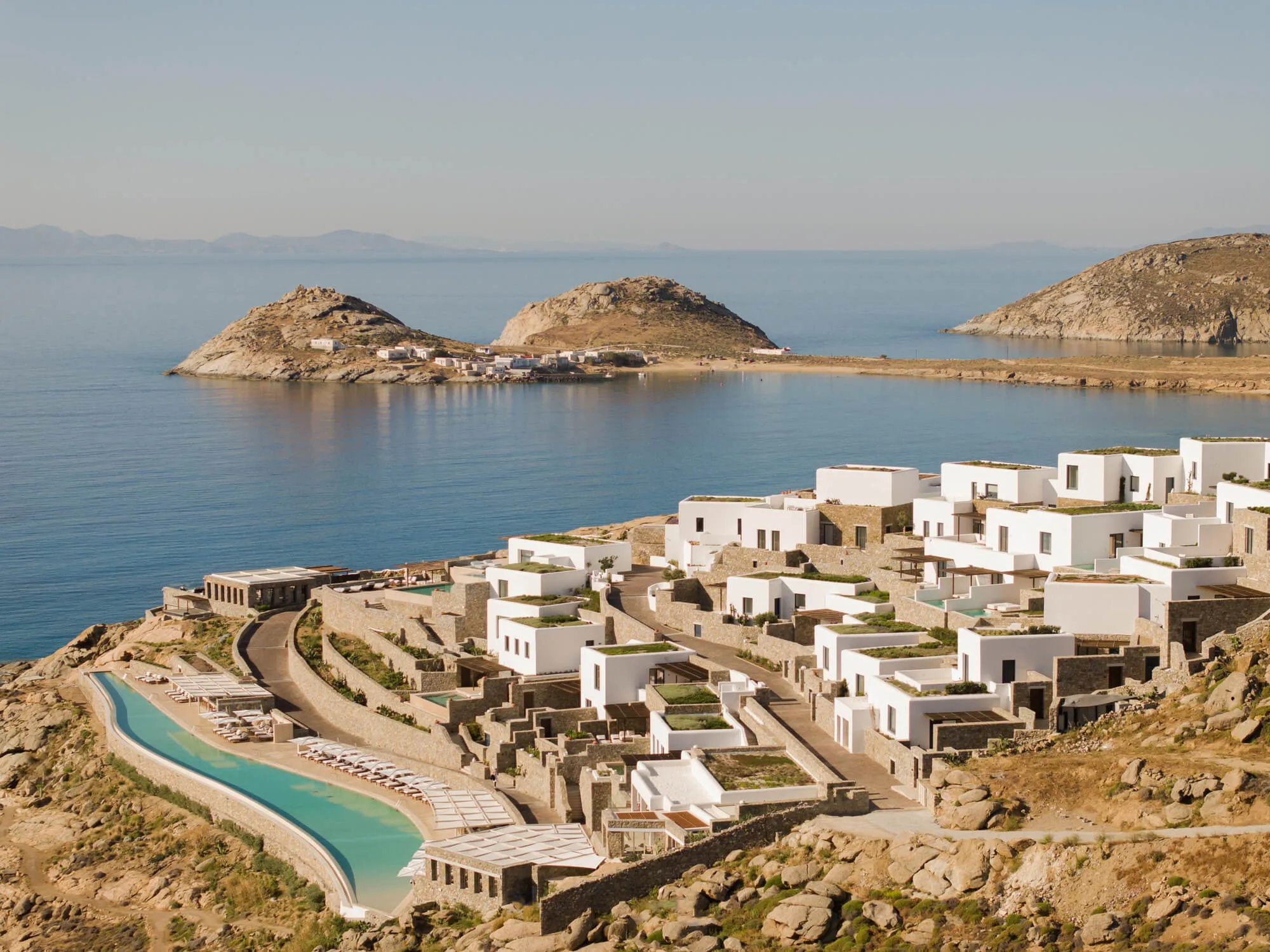
On the island’s eastern coast near Kalafati, Cali offers a more secluded, design-led resort experience, with the surrounding landscape and sea central to its atmosphere. Its position can appeal to travellers seeking privacy and distance from the busiest hubs. That quieter setting also makes transport planning important, especially for evenings spent in Hora or at restaurants elsewhere.
Choosing the Right Base
Hora is ideal for travellers who want restaurants, galleries, boutiques and evening walks close at hand. Ornos and Platis Gialos suit a beach-led stay with dining and transport connections nearby. Elia and more distant coastal settings tend to appeal to guests prioritising resort facilities, views and a sense of retreat. The island’s quieter corners can be rewarding, but may require greater independence with transport.
Before booking, think beyond the hotel itself: consider airport or port transfers, distances to the places you want to visit, seasonal traffic, and the availability and cost of taxis or private drivers. The best base is not simply the most beautiful property; it is the one that supports the pace you want from Mykonos.
When to Visit Mykonos
Late spring and early autumn can offer a more measured experience, with pleasant conditions and more room to enjoy the island at your own pace. High summer brings the fullest calendar of beach clubs, restaurants and nightlife, along with greater demand, busier roads and a stronger need to plan ahead. Many hospitality businesses operate seasonally, so check opening dates for your travel period.
Wind is part of the island’s character and can affect beach comfort and boat excursions. Keep your itinerary flexible, especially if time on the water is a priority. For peak-season travel, reserve accommodation early and secure important dining plans in advance, while leaving unstructured time for the discoveries that make an island stay feel personal.
A Four-Day Mykonos Itinerary
Day One — Hora and the Waterfront: Settle in before exploring Hora on foot. Visit Panagia Paraportiani, wander the lanes, and continue towards Little Venice and the windmills. Choose a sunset table or a relaxed dinner, keeping the first evening deliberately unhurried.
Day Two — A Beach Chosen for Your Mood: Spend the day at a beach that suits your style, from the energy of the southern coast to a quieter stretch away from the main scene. Make time for a long lunch and return to your hotel for a swim or rest before dinner.
Day Three — Ancient Delos: Take a morning boat to Delos after confirming departures, site access and weather. Explore the archaeological site at a thoughtful pace, ideally with context from a guide, then return to Mykonos for a restorative afternoon and relaxed evening.
Day Four — Ano Mera and a Last Look at the Sea: Explore Ano Mera and its village atmosphere, then choose between another beach, a boat outing if conditions allow, or time at your hotel. End with a meal that reflects the Mykonos you most enjoyed—lively, intimate or quietly beautiful.
Before You Go
Book accommodation and popular restaurants well ahead for peak dates. Arrange airport or port transfers if arriving during busy periods, and confirm meeting points for boat trips. Pack sun protection, comfortable shoes for uneven lanes and a light layer for breezy evenings. Check local conditions before swimming or going out by boat, respect religious sites and residential neighbourhoods, and leave no waste on quieter beaches.
Frequently Asked Questions
Is Mykonos only for nightlife? No. Alongside its celebrated nightlife, Mykonos offers Cycladic architecture, traditional villages, archaeological heritage, distinctive beaches, food and boat excursions.
How many days should I spend in Mykonos? Four days is a useful starting point for combining Hora, beaches, Delos and inland exploration. A longer stay allows more time for swimming, dining and a slower pace.
Which area is best for a luxury stay? Hora suits travellers who want restaurants and culture close by; Ornos and Platis Gialos are practical for beach access; more secluded coastal or hillside properties can suit guests prioritising privacy and resort facilities.
Can I visit Delos from Mykonos? Boat excursions commonly connect the islands, but schedules, access and opening arrangements can change. Check current details before travelling.
When is Mykonos quieter? Late spring and early autumn are often less intense than peak summer, though weather and seasonal opening schedules vary.
Continue Your Journey Through Greece
Mykonos is one expression of Greece’s many moods. Continue through the Luminara Voyages collection to discover Santorini’s volcanic drama, the layered history of Athens, Crete’s expansive landscapes, Rhodes’ Venetian character and Corfu’s emerald coastline. Together, these destinations reveal a Greece far more varied than any single postcard can suggest.
The Luminara Perspective
The most memorable Mykonos is not necessarily the loudest or most photographed. It may be a quiet lane before breakfast, the salt on your skin after a swim, the stillness of Delos beneath an open sky, or a table where dinner continues long after the light has faded. Come for the Aegean glamour, if you wish—but leave room for the island’s softer, more enduring beauty. That is where Mykonos becomes more than a destination and begins to feel like a memory of your own.

