
Long before Hallstatt became one of Austria’s most recognised lakeside silhouettes, salt had already made this narrow Alpine valley consequential. For generations, the mineral drawn from the mountain above the village travelled far beyond the Salzkammergut, bringing trade and prosperity to a community hemmed between rock and water. Today, that history remains woven into the landscape: church towers rise above the shore, old houses follow the edge of Lake Hallstatt, and the Dachstein mountains form a dramatic wall behind the rooftops. To understand Hallstatt, Austria, look beyond the familiar view across the lake. Its enduring character lies in the relationship between a working mountain, a historic settlement and the water that has connected them to the wider world.
Yet the real character of Hallstatt reaches far beyond its celebrated view. Salt, the mineral that once made this remote Alpine community prosperous, connected the region to a much wider world. The surrounding Hallstatt-Dachstein/Salzkammergut Cultural Landscape was inscribed on the UNESCO World Heritage List in 1997, recognising the extraordinary relationship between human history and the Alpine environment. Here, heritage is not a decorative layer laid over nature; it is part of the same story.
For travellers drawn to quiet luxury, Hallstatt offers a different kind of indulgence. It is found in waking beside the lake, taking the long way through the old town, lingering over regional food, and allowing the mountains to set the pace. The most rewarding visit is not a race through viewpoints. It is a considered stay that leaves room for atmosphere, history and the changing light.
Why Hallstatt Belongs on a Thoughtful Austrian Journey
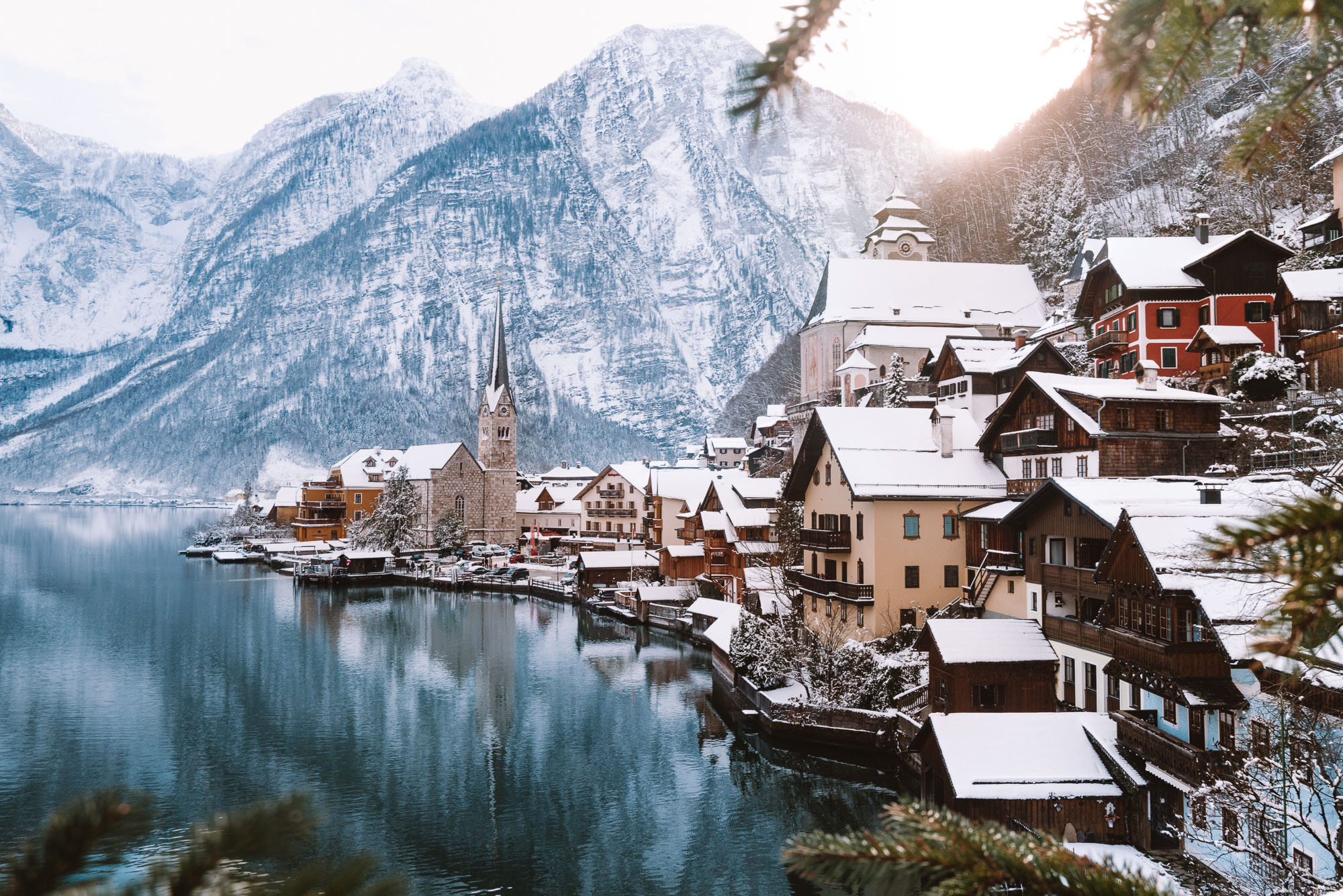
Hallstatt is often photographed as a perfect Alpine postcard, but the image becomes more compelling when understood in context. The town sits within a wider cultural landscape where salt mining, forestry, farming, architecture and mountain geography developed in close relationship over many centuries. UNESCO notes that salt extraction was already central to the region’s prosperity in prehistoric times, with major evidence of salt production extending back to the Middle Bronze Age. [1]
That layered past gives Hallstatt an unusual balance: intimate village scale, dramatic natural surroundings and a history that reaches well beyond its present-day fame. It is a compelling addition to a luxury travel in Austria itinerary for couples, photographers, design-minded travellers and anyone who prefers a destination with a strong sense of place. Its appeal is not based on spectacle alone. The pleasure lies in the transition from water to mountain, from quiet lane to open panorama, and from the visible village to the older story beneath it.
The Art of Arriving: Lake, Mountains and the Old Town
The first encounter with Hallstatt is often best experienced from the water. Travellers arriving by rail reach Hallstatt station on the opposite shore of the lake and continue by ferry to the village. The crossing takes roughly 15 minutes, according to regional visitor information, and turns the arrival itself into part of the experience. As the shoreline draws closer, the village reveals itself gradually: roofs, church towers and timbered façades framed by steep green slopes.
Once ashore, explore on foot. Hallstatt’s historic centre is compact, and its character emerges in small details: the way houses fit into the narrow strip between mountain and lake, the textures of old façades, flower-filled balconies in season, and the sudden appearance of water at the end of a lane. Give yourself time to look beyond the familiar postcard angle. Early morning and later afternoon can offer a gentler atmosphere than the busiest middle hours, though conditions vary by season and visitor numbers.
The Market Square is a natural place to pause, observe the architecture and settle into the rhythm of the village. Rather than treating it as a quick photo stop, use it as a starting point for a slow walk through the old streets, a café break or a return visit when the light changes.
Churches, Memory and the Hallstatt Ossuary
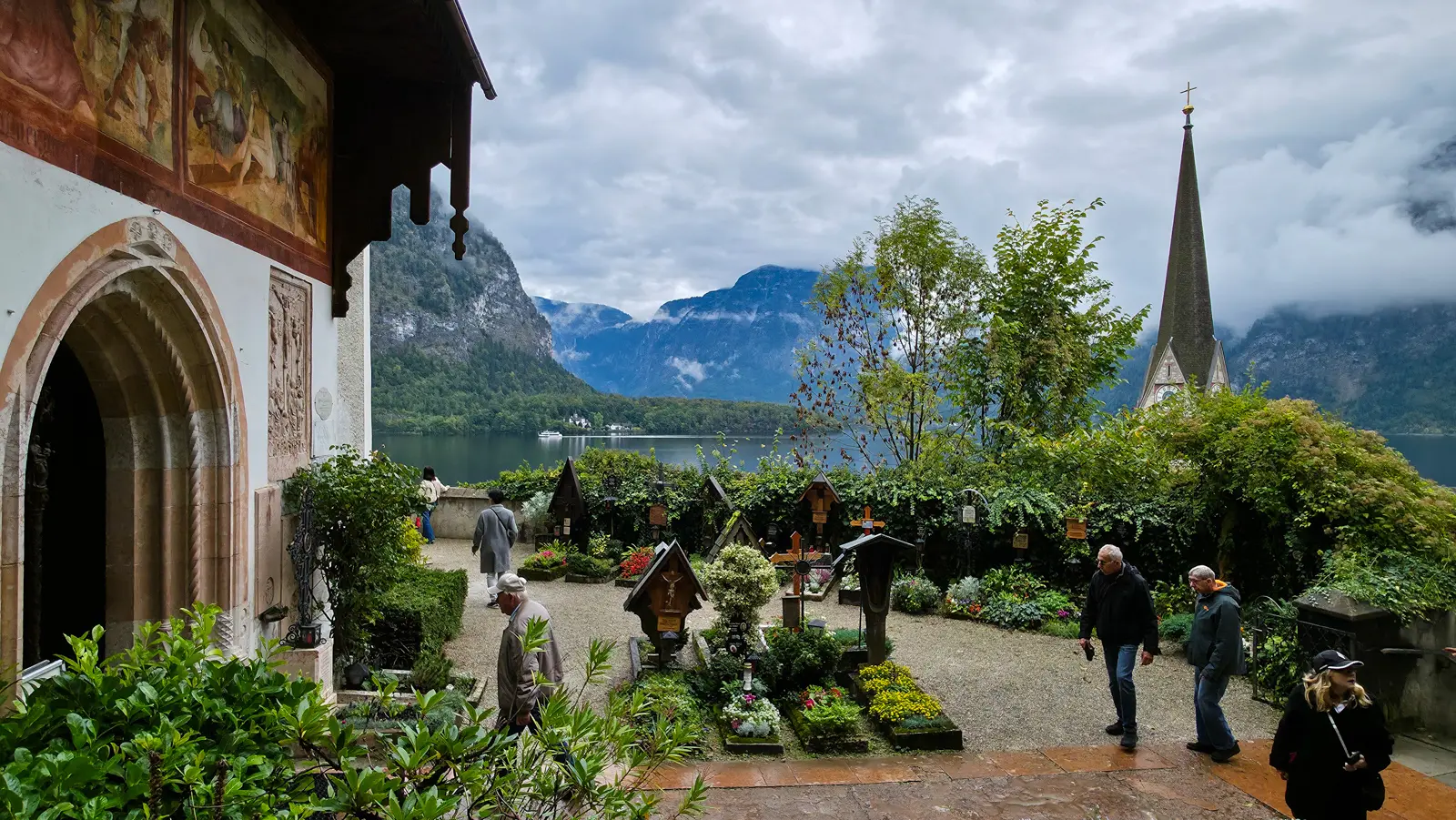
Hallstatt’s religious landmarks form part of its historic silhouette and its living community. The Catholic parish church and the nearby Michaeli Chapel are especially significant for visitors interested in the village’s traditions. The chapel’s ossuary, often called the Bone House, preserves a striking local custom: more than 600 painted skulls are recorded by the regional tourism authority. The practice reflects a history of limited burial space and carefully maintained remembrance and should be approached with respect rather than treated as a curiosity alone.
The short uphill walk to the church area also rewards visitors with a different perspective over the settlement and lake. It is a place to slow down, read the setting and remember that Hallstatt is not simply a scenic backdrop; it is a community with a long cultural memory.
Salzberg: The Mountain Above the Village
Salt is the thread that connects Hallstatt’s landscape to its deeper history. The Salzberg above the village has been associated with salt extraction for millennia, and archaeological discoveries from the area helped give the Hallstatt Culture of the Early Iron Age its name. The region’s heritage is inseparable from the work carried out inside the mountain and from the trade networks that salt helped sustain.
The Salzwelten Hallstatt salt mine and the World Heritage View / Skywalk offer visitors a way to encounter this story alongside expansive views over the lake and surrounding mountains. These attractions underwent major works and reopened in 2026; the official Salzwelten site lists seasonal operating hours and ticket options, while regional tourism information notes that the serpentine hiking trail to the high valley remains subject to closure. [4][5] Check the official operating page immediately before visiting, as access, weather and trail conditions can change. Do not assume every path or facility is open simply because the main attraction is operating.
For a more comfortable visit, plan the mountain excursion around the day’s weather, wear suitable footwear and bring an extra layer. If the high valley is on your itinerary, reserve enough time to enjoy the experience without rushing back through the village.
Lake Hallstatt: A Slower Kind of Luxury
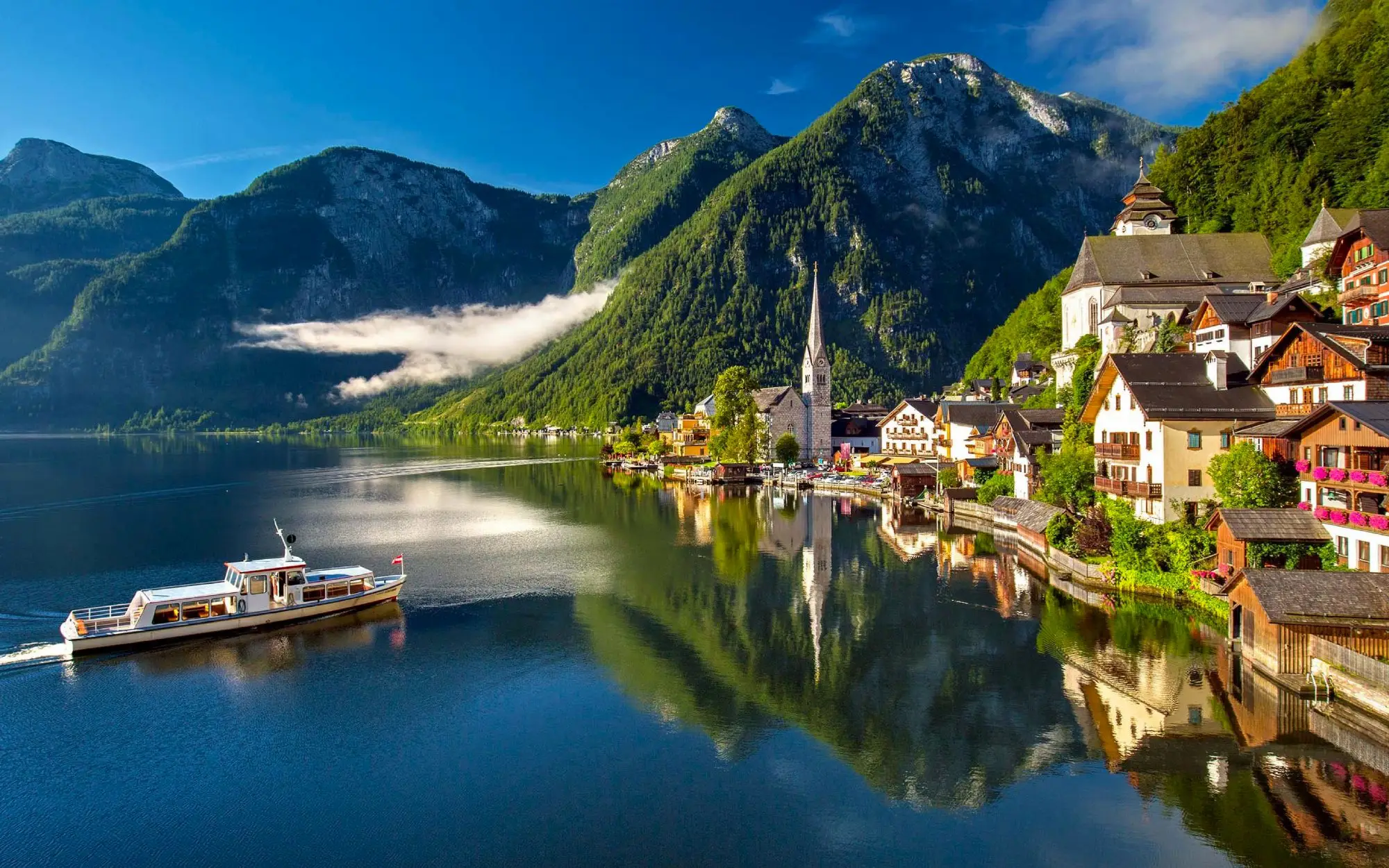
The lake is Hallstatt’s emotional centre. Its surface changes with the weather: silver under cloud, deep blue in clear light, and softly reflective when the air is still. A lakeside walk, a ferry crossing or a quiet stretch of time watching the mountains can become the most memorable part of the stay. In a destination celebrated for a single view, it is worth allowing the view to become a whole experience.
Choose lake activities according to the season and the conditions on the day. Boat services and water-based experiences may follow seasonal schedules, so verify local timetables rather than relying on an old itinerary. For photographers, the most meaningful images often come from observing how the village sits within the landscape rather than repeating only the most familiar composition.
Luxury Stays: Where to Make Hallstatt Your Own
Hallstatt’s accommodation scene is intimate rather than dominated by large international resort properties. The strongest choice is often a well-located historic hotel or a carefully selected lakeside room that lets the setting become part of the stay. Room categories, views and facilities vary, so confirm the exact room type directly with the property.
Heritage. Hôtel Hallstatt
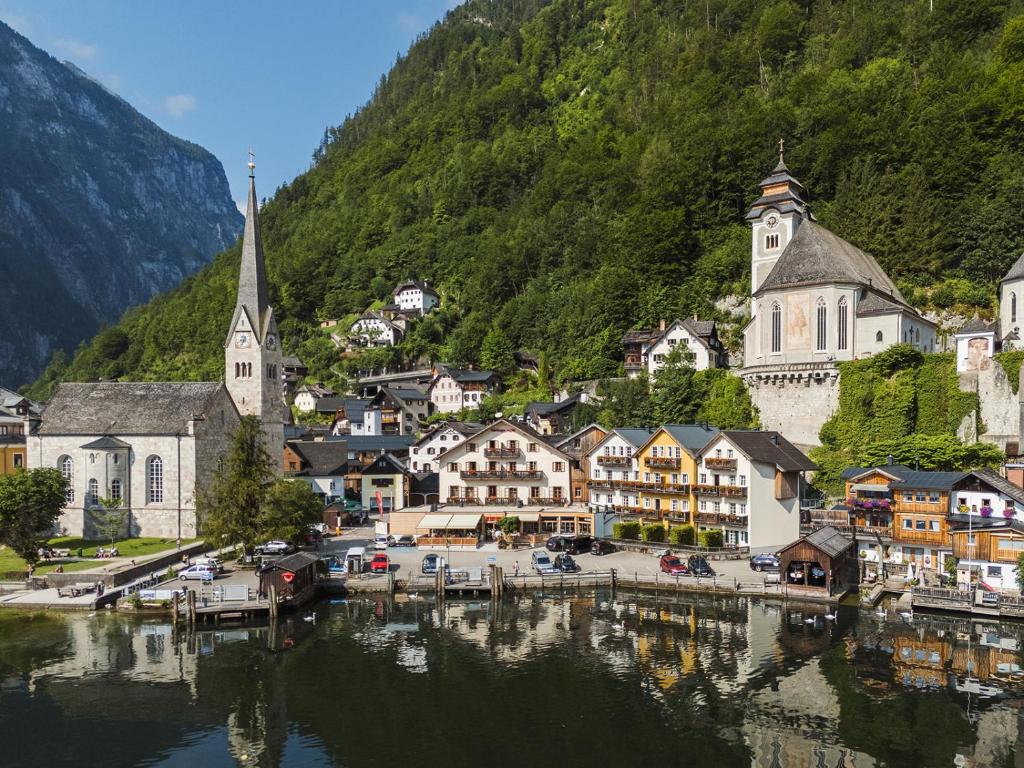
For travellers who want to remain close to the lake and historic centre, Heritage.Hotel Hallstatt is a notable option. The hotel brings together three historic houses: Kainz House by the jetty, Stocker House a short walk away, and Seethaler House on the hillside with views across Lake Hallstatt. The property’s official information describes breakfast service and a sauna at the main house. Its multi-building layout makes it especially important to confirm which house and room category you are booking, particularly if lake views or minimal walking distances are priorities.
Hotel Grüner Baum
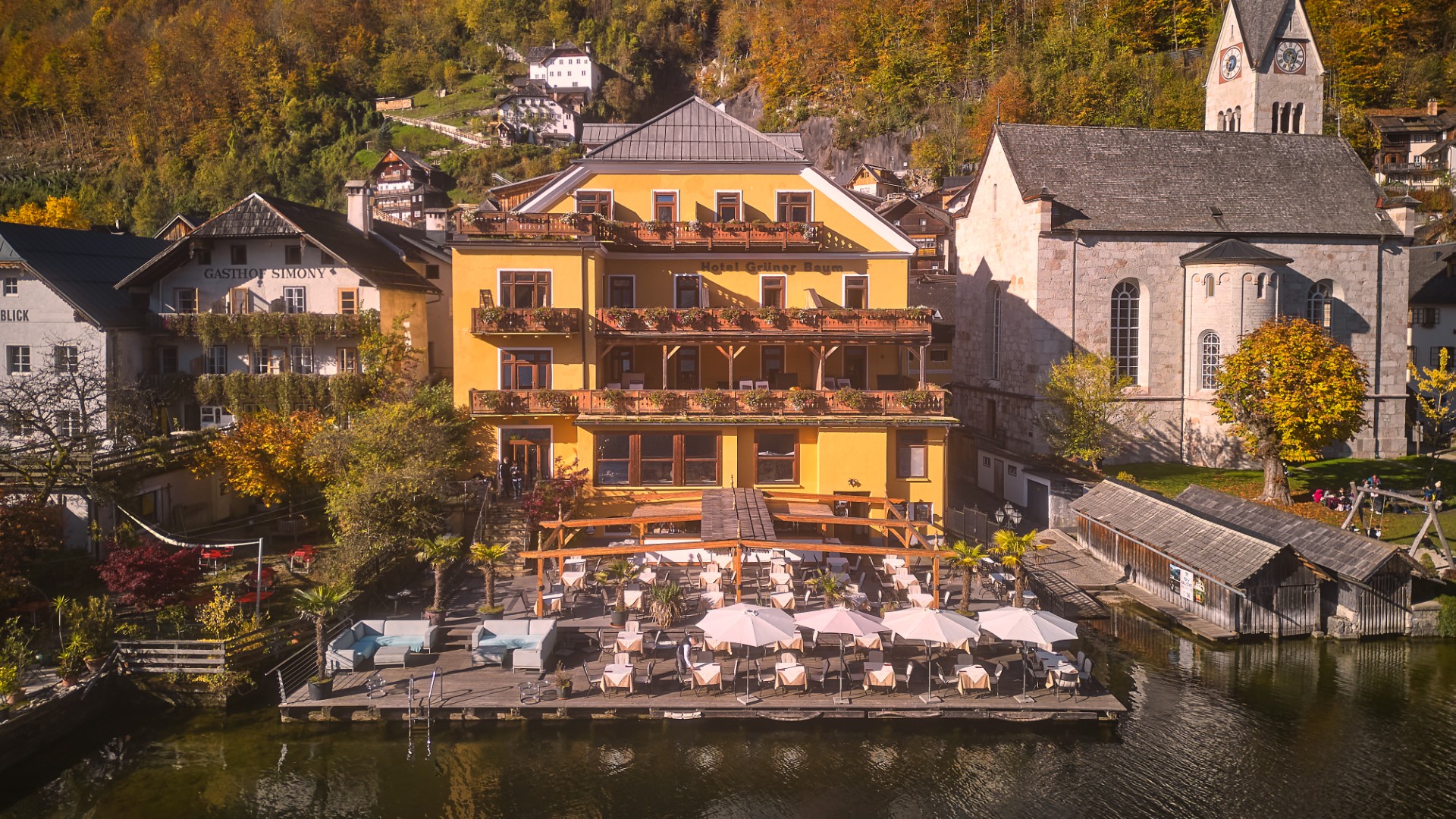
Hotel Grüner Baum occupies a prominent position by Hallstatt’s market square, with views towards the lake and surrounding mountains described by the regional tourism authority. Its central setting suits travellers who want to step directly into the old town and return easily between walks, meals and moments of rest. When reserving, verify the current room category, view, dining arrangements and any seasonal service changes directly with the hotel.
A considered stay beyond the village
Travellers seeking a broader choice of resort facilities may also compare accommodation in nearby parts of the Salzkammergut, including Obertraun and other lakeside communities. This can provide a useful alternative when Hallstatt’s limited room inventory is unavailable or when a larger property better suits the trip. The trade-off is that the experience may be less centred on stepping straight into Hallstatt’s historic lanes. Check transfer times and transport schedules before choosing a base.
Dining with a Sense of Place
Hallstatt is best approached through regional character rather than expectations of a large metropolitan dining scene. Look for Austrian and Salzkammergut cooking, seasonal menus, lake-and-mountain views where available, and a meal that gives the day room to settle. The most satisfying choice may be a relaxed lunch after exploring the old town or an early dinner before the evening light fades from the water.
Restaurant opening days and seasonal service can vary in a small destination, so confirm hours and reserve ahead where appropriate, especially during popular travel periods. If a particular dining experience is central to your visit, contact the venue directly rather than building the day around unverified listings.
Experiences Worth Making Time For
- Walk the old town without a checklist. Leave time for the lanes between the main square and the waterfront; the details are often more memorable than a hurried sequence of landmarks.
- See Hallstatt from the lake. Use the ferry crossing as an intentional part of the journey, or look into currently operating boat services when planning your dates.
- Explore the salt story. Visit Salzwelten and the World Heritage View if operating conditions permit, and allow time to understand why salt shaped the region’s history.
- Pause at the parish church and ossuary. Approach the site as a place of remembrance and local tradition, not simply a photographic stop.
- Make room for the surrounding landscape. If staying longer, consider nearby Salzkammergut communities and nature experiences, checking local trail conditions and transport connections first.
When to Visit Hallstatt
Spring brings a fresh green edge to the slopes, though mountain weather can be changeable and some services may still be moving into their seasonal schedules. Summer offers long daylight hours and strong opportunities for walking and lake-focused experiences, but it is also a popular period; an overnight stay and an early start can make the visit feel more considered. Autumn can bring rich colour and softer light, with cooler conditions and changing operating hours. Winter gives the village a quieter, more atmospheric character when snow arrives, but access, walking routes and transport can be affected by weather.
There is no single perfect month for every traveller. Choose summer for longer days and a wider range of outdoor possibilities; spring or autumn for a more contemplative mood, while accepting variable weather; and winter for atmosphere if you are prepared to plan around seasonal limitations. Before confirming dates, check current accommodation availability, ferry and train schedules, and official opening times for Salzwelten and the Skywalk.
A Thoughtful Three-Day Hallstatt Itinerary
Day One — Arrival by Water and the Historic Centre
Arrive by train and ferry where practical, check in, then explore the market square, waterfront and old lanes at an unhurried pace. Keep the first afternoon light: enjoy a regional meal, take photographs as the light changes and return to the lake after the busiest part of the day.
Day Two — Salzberg and the Region’s Living History
Set aside the main part of the day for Salzwelten and the World Heritage View, subject to official opening information and trail access. Wear sturdy shoes and carry a warm layer. Later, return to the village for the parish church area and the ossuary, allowing enough time to approach these sites respectfully rather than squeezing them between transfers.
Day Three — Lake, Leisure and the Wider Salzkammergut
Begin with a quiet lakeside walk or a boat experience if services are operating. Use the remainder of the day for a slow breakfast, a final wander through the village or a carefully planned excursion to a nearby community. Build in transport time and check connections before committing to a tight schedule.
Getting There and Moving Around
Hallstatt is reachable by rail, road and regional connections, but the final approach matters. Regional tourism information explains that the train station is on the opposite side of Lake Hallstatt from the village, with a ferry crossing of around 15 minutes linking the station and town. [2] Check ferry times against your arrival and departure trains, especially for late arrivals; the service timetable can affect the practicality of a connection.
If travelling by car, use the designated parking areas and follow local access rules. Hallstatt’s narrow historic layout is best explored on foot, and regional tourism information recommends public transport because of traffic pressure. [5] For a smoother trip, plan luggage transfers with your accommodation, confirm any parking arrangements in advance, and avoid assuming that a car can reach the door of a historic property.
Responsible Travel in a Living Heritage Site
Hallstatt’s popularity is part of its present reality, but the village remains a lived-in place. Keep residential entrances clear, respect quiet hours and private property, follow local photography guidance, and use marked paths. Treat the church and ossuary with the same consideration you would give any place of worship or remembrance. Where possible, travel by public transport, support local businesses and give the destination enough time to be more than a brief stop.
Practical Notes Before You Go
- Check official Salzwelten and Skywalk opening hours shortly before travel; seasonal schedules and access conditions can change.
- Verify ferry and train times together, since Hallstatt station is across the lake from the village.
- Book accommodation early for peak periods and confirm the precise building and room category.
- Pack layers and sturdy shoes for mountain excursions, even when the village feels mild.
- Allow flexibility for weather, trail closures and seasonal restaurant schedules.
- Respect the privacy of residents and the cultural significance of heritage and religious sites.
Frequently Asked Questions About Hallstatt, Austria
Is Hallstatt worth visiting for luxury travellers?
Yes, particularly for travellers who value atmosphere, scenery, cultural depth and intimate accommodation over large-resort facilities. The luxury is in the setting and pace rather than an extensive collection of high-end resorts.
How many days should I spend in Hallstatt?
One full day covers a brief visit, but two nights or around three days allow time for the old town, lake, salt heritage and a more relaxed pace. Seasonal conditions and nearby excursions may justify a longer stay.
Can I visit Hallstatt by train?
Yes. The regional rail route brings you to Hallstatt station across the lake; a ferry connects the station with the village. Check the current train and ferry schedules together before departure.
Is the Hallstatt Skywalk open?
The Skywalk and Salzwelten reopened in 2026 after works, but operating hours are seasonal and access to some trails may remain restricted. Check the official Salzwelten page and local visitor information for your travel date.
Which hotels should I consider in Hallstatt?
Heritage.Hotel Hallstatt and Hotel Grüner Baum are two established options to compare. Confirm room views, exact building, facilities, current rates and availability directly with each property.
When is the best time to visit Hallstatt?
Summer offers longer days and more outdoor opportunities; spring and autumn can feel quieter but have changeable weather and seasonal schedules; winter is atmospheric but requires extra care with transport and access.
The Luminara Perspective
Hallstatt does not need to be made grander than it is. Its elegance is already present in the way the lake holds the village’s reflection, in the mountain paths that lead into an older history, and in the quiet dignity of a place shaped by work, faith and landscape. The most meaningful visit is one that resists the urge to collect every view and instead allows the destination to reveal its layers.
For Luminara Voyages, Hallstatt is a reminder that luxury travel is not measured only in amenities. It can be the privilege of time: a room chosen for its setting, a ferry crossing without hurry, a meal enjoyed without watching the clock, and a morning when the mountains appear slowly through the mist. In this corner of Austria, refinement begins with attention.
Continue Your Journey
Hallstatt is one chapter in a wider Austrian story. Continue through our Austria collection with Vienna, where imperial avenues and grand cultural institutions reveal the country’s more cosmopolitan side, and Salzburg, where baroque architecture and musical heritage create a different rhythm. For a broader European journey, connect these destinations with our Switzerland collection, from the mountain scenery around Grindelwald and Interlaken to the refined lakeside atmosphere of Lucerne.
- Vienna, Austria — Imperial architecture, refined culture and the art of the grand city.
- Salzburg, Austria — Baroque beauty, musical heritage and the alpine edge of Austria.
- Grindelwald, Switzerland — A dramatic mountain setting for travellers drawn to the high Alps.
- Interlaken, Switzerland — Lakes, mountain panoramas and a gateway to the Bernese Oberland.
- Lucerne, Switzerland — Historic streets and a graceful lakeside setting.